
In the world of personal finance, few terms carry as much weight or historical significance as the S&P 500. For decades, it has served as the primary barometer for the health of the United States economy and the performance of the stock market at large. However, for the individual investor, the S&P 500 is more than just a headline on the evening news; it is one of the most powerful tools available for building long-term wealth. An S&P 500 index fund offers a way for everyday individuals to own a piece of the 500 largest, most successful companies in America through a single, low-cost investment.

Whether you are a seasoned investor or someone just opening their first brokerage account, understanding the mechanics, benefits, and strategic implementation of an S&P 500 index fund is essential. This guide explores the depths of index investing, why it often outperforms professional stock pickers, and how you can use it to secure your financial future.
Understanding the Foundation of the S&P 500 Index
Before diving into how the funds work, one must understand the underlying index itself. The Standard & Poor’s 500, commonly known as the S&P 500, is a stock market index that tracks the performance of 500 of the largest companies listed on stock exchanges in the United States.
The Composition and Selection Process
The S&P 500 is not a random collection of companies. It is curated by a committee at S&P Dow Jones Indices. To be included, a company must meet strict criteria regarding liquidity, share count, and, most importantly, market capitalization. As of recent standards, a company must have a market cap of several billion dollars and must have posted positive earnings over the most recent four quarters. Because of these requirements, the S&P 500 represents the “blue-chip” core of the American economy, spanning industries from technology and healthcare to consumer staples and energy.
Market Capitalization Weighting Explained
One of the most critical aspects of the S&P 500 is that it is a float-adjusted market-capitalization-weighted index. This means that the larger the company (in terms of the total market value of its outstanding shares), the greater its impact on the index’s performance. For example, tech giants like Apple, Microsoft, and Amazon carry much more weight than a smaller utility company at the bottom of the list. When these massive companies perform well, the entire index moves upward; conversely, their decline can pull the index down, regardless of how the smaller 400 companies are performing.
Sector Diversification and Economic Representation
While the S&P 500 is often associated with the “tech sector” due to the massive growth of Silicon Valley giants, it is actually quite diversified. It includes eleven different sectors: Information Technology, Health Care, Financials, Consumer Discretionary, Communication Services, Industrials, Consumer Staples, Energy, Real Estate, Materials, and Utilities. By investing in an S&P 500 index fund, you are effectively betting on the collective ingenuity and resilience of the entire U.S. corporate landscape rather than the success of a single industry.
Why S&P 500 Index Funds are the Gold Standard for Wealth Building
For many years, the investment world was dominated by “active management,” where highly paid fund managers tried to pick winning stocks to beat the market. However, the rise of “passive investing”—championed by figures like John Bogle, the founder of Vanguard—changed everything.
Historically Consistent Returns
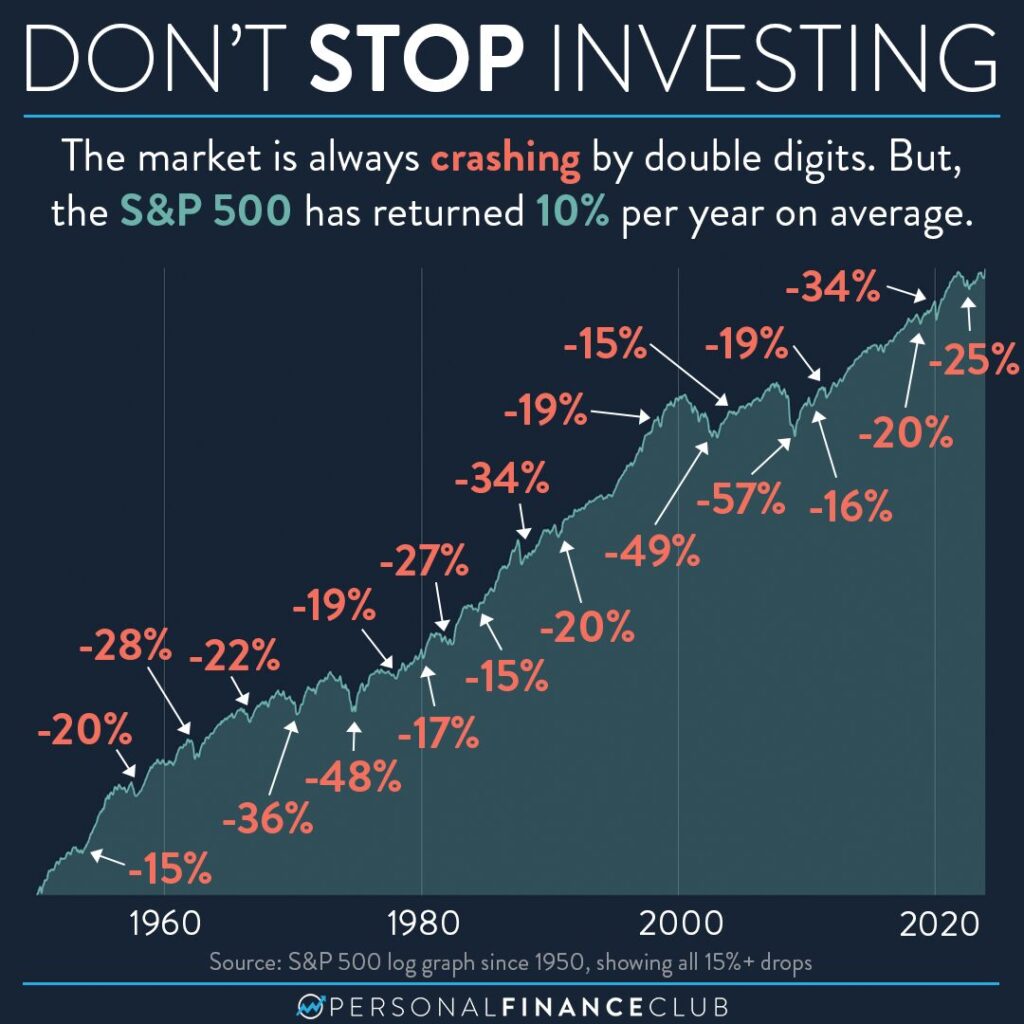
While the stock market is volatile in the short term, the S&P 500 has a remarkable track record over the long term. Historically, the index has provided an average annual return of approximately 10% (before inflation) over several decades. While there are years where the market may drop by 20% or 30%, the long-term trajectory has consistently been upward. For an investor, this consistency provides a reliable framework for retirement planning and wealth projection.
The Advantage of Low Expense Ratios
One of the primary reasons S&P 500 index funds are so effective is their cost. Because the fund simply replicates an existing list of companies (the index), there is no need to pay a team of expensive analysts to research stocks. These savings are passed on to the investor in the form of low “expense ratios.” Many popular S&P 500 funds have expense ratios as low as 0.03%, meaning you pay only $3 per year for every $10,000 invested. In contrast, actively managed funds often charge 1.00% or more, which significantly eats into your compound interest over time.
Outperforming the Professionals
It is a humbling reality in the financial world that most professional fund managers fail to beat the S&P 500 over long periods. According to S&P Dow Jones Indices’ SPIVA scorecards, over a 15-year period, nearly 90% of active fund managers underperform the S&P 500. By choosing an index fund, you are choosing to accept the “market return,” which paradoxically puts you ahead of the vast majority of professionals who are trying to “beat” it.
Index Funds vs. ETFs: Choosing Your Investment Vehicle
When you decide to invest in the S&P 500, you will generally encounter two primary vehicles: Mutual Funds and Exchange-Traded Funds (ETFs). While both track the same 500 companies, they function differently in a brokerage account.
Traditional Index Mutual Funds
Index mutual funds, such as the Vanguard 500 Index Fund (VFIAX) or the Fidelity 500 Index Fund (FXAIX), are priced once at the end of the trading day. They are ideal for investors who want to set up automatic contributions. You can often tell the system to invest $500 every month, and the fund will purchase fractional shares regardless of the current price. However, some mutual funds require a minimum initial investment (e.g., $3,000).
Exchange-Traded Funds (ETFs)
S&P 500 ETFs, like the SPDR S&P 500 ETF Trust (SPY) or the Vanguard S&P 500 ETF (VOO), trade on an exchange just like individual stocks. You can buy or sell them at any time during market hours. ETFs are often more tax-efficient than mutual funds due to their unique “in-kind” redemption process, which minimizes capital gains distributions. They also typically have no minimum investment beyond the price of a single share (and many modern brokers now allow for fractional shares of ETFs as well).
Tax Efficiency and Dividend Reinvestment
Regardless of whether you choose a mutual fund or an ETF, most S&P 500 funds offer a “Dividend Reinvestment Plan” (DRIP). The companies within the S&P 500 frequently pay dividends. Instead of taking that cash, a DRIP automatically uses those payments to buy more shares of the fund. Over 20 or 30 years, the compounding effect of reinvested dividends accounts for a massive portion of total wealth accumulation.
How to Strategically Integrate the S&P 500 into Your Portfolio
Investing is not just about choosing a fund; it is about how that fund fits into your broader financial life. Success in index investing requires a combination of discipline and a long-term perspective.
The Power of Dollar-Cost Averaging
The biggest mistake many investors make is trying to “time the market”—waiting for a crash to buy or selling when they fear a downturn. A more successful strategy is Dollar-Cost Averaging (DCA). By investing a fixed amount of money at regular intervals (e.g., every payday), you buy more shares when prices are low and fewer shares when prices are high. This removes emotion from the process and ensures you are consistently building your position.
Selecting the Right Brokerage and Ticker
To start, you need a brokerage account (such as Vanguard, Fidelity, Charles Schwab, or Robinhood). Once your account is funded, you look for the ticker symbols associated with the S&P 500. The most prominent choices include:
- VOO (Vanguard S&P 500 ETF): Known for extremely low fees.
- IVV (iShares Core S&P 500 ETF): Another highly liquid, low-cost institutional favorite.
- SPY (SPDR S&P 500 ETF Trust): The oldest and most liquid, often favored by active traders.
- SWPPX (Schwab S&P 500 Index Fund): A top-tier mutual fund option with no minimum investment.
Risk Management and Asset Allocation
While the S&P 500 is diversified across 500 companies, it is still 100% equities (stocks). This means it can be volatile. A “Money” strategy often involves balancing an S&P 500 fund with other assets, such as bonds or international stocks, depending on your age and risk tolerance. If you are in your 20s or 30s, you might have a high percentage of your portfolio in an S&P 500 fund. As you approach retirement, you might shift some of that wealth into more stable “Income” assets to protect your capital.
The Risks and Realities of Index Investing
No investment is without risk, and it is vital to approach the S&P 500 with a clear understanding of its limitations. Professional financial planning requires acknowledging the “downside” to remain disciplined during market turbulence.
Market Volatility and Drawdowns
Because the S&P 500 tracks the stock market, it is subject to market cycles. In 2008, the index lost approximately 37% of its value. In 2020, during the onset of the pandemic, it saw a rapid and terrifying decline. Investors who “panic sell” during these periods lock in their losses. The S&P 500 index fund is only an effective wealth-building tool if the investor has the stomach to hold through the “red” years, trusting in the eventual recovery of the U.S. economy.
Concentration Risk
As mentioned earlier, the S&P 500 is market-cap weighted. In recent years, this has led to a high level of concentration in the “Magnificent Seven” tech stocks. If the technology sector faces a systemic crisis or regulatory crackdown, the S&P 500 will suffer disproportionately, even if other sectors like energy or retail are doing well. This is why some investors supplement their S&P 500 holdings with “Equal Weight” index funds or small-cap funds to ensure they aren’t overly dependent on a handful of tech giants.

The Absence of “Alpha”
Investing in an index fund means you are settling for average market returns. You will never “beat” the market because you are the market. If you are looking to “get rich quick” by finding the next breakout startup before anyone else, an index fund will not provide that thrill. However, for the vast majority of people, the pursuit of “alpha” (outperformance) leads to “beta” (market) underperformance due to fees and poor timing. Accepting the market return is often the most professional and successful financial decision one can make.
In conclusion, an S&P 500 index fund is perhaps the most efficient wealth-creation engine ever designed for the general public. It offers a combination of low costs, broad diversification, and a proven track record of growth. By understanding how these funds work and committing to a long-term strategy of consistent contribution, any individual can harness the power of the American economy to build a substantial financial legacy.
aViewFromTheCave is a participant in the Amazon Services LLC Associates Program, an affiliate advertising program designed to provide a means for sites to earn advertising fees by advertising and linking to Amazon.com. Amazon, the Amazon logo, AmazonSupply, and the AmazonSupply logo are trademarks of Amazon.com, Inc. or its affiliates. As an Amazon Associate we earn affiliate commissions from qualifying purchases.