
Navigating the world of stocks and trading can seem daunting at first glance. Images of fast-paced trading floors, complex charts, and financial jargon often create a barrier for newcomers. However, with the right approach and a commitment to continuous learning, anyone can demystify the stock market and harness its potential for personal wealth creation. This article serves as a comprehensive guide for those eager to embark on their journey into investing and trading, providing a structured pathway to understanding, applying, and mastering the essentials of the financial markets. It’s not just about making money; it’s about financial empowerment, understanding the economic landscape, and securing your future.
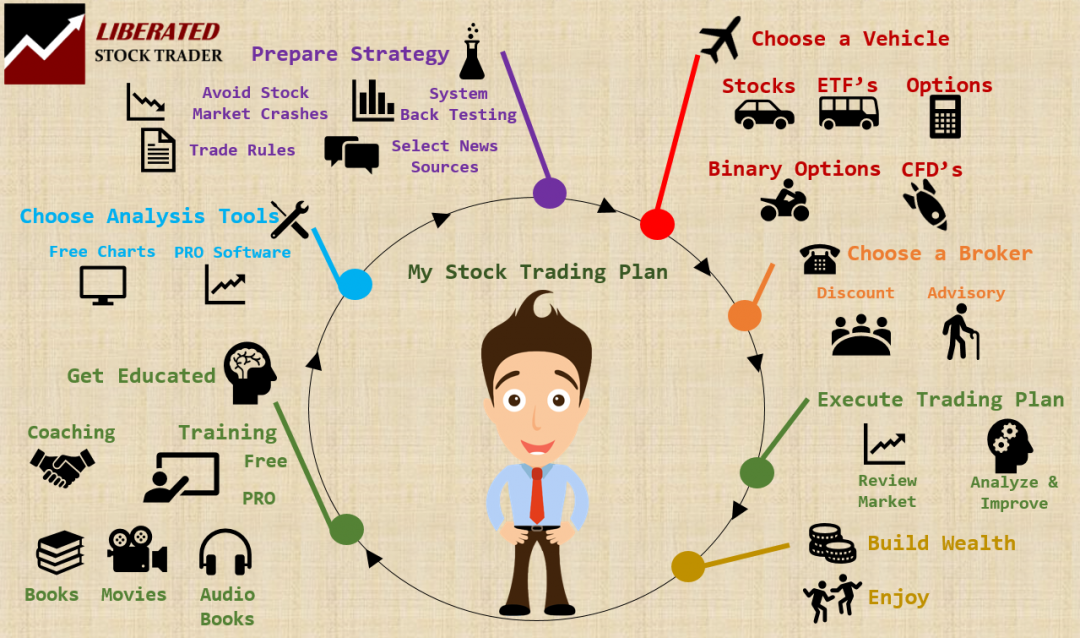
Laying the Foundation: Understanding the Basics
Before diving into the complexities of market analysis or investment strategies, it’s crucial to establish a solid understanding of the fundamental concepts that underpin the stock market. Think of it as learning the alphabet before you can read a book – each piece of foundational knowledge builds upon the last, making more advanced topics accessible.
What Are Stocks and Why Do Companies Issue Them?
At its core, a stock represents a fractional ownership interest in a company. When you buy a stock, you become a shareholder, meaning you own a tiny piece of that business. Companies issue stocks, also known as equity, primarily to raise capital. This capital can be used for expansion, research and development, debt repayment, or other corporate initiatives. By selling shares to the public, companies gain access to a broad pool of investors who, in turn, hope to profit from the company’s future success through capital appreciation (the stock price increasing) or dividends (a share of the company’s profits).
The Basics of Trading vs. Investing
While often used interchangeably, “trading” and “investing” represent distinct approaches to participating in the stock market.
- Investing typically involves a long-term perspective, often spanning years or even decades. Investors focus on the fundamental value of a company, aiming to buy and hold assets that they believe will grow over time. Their goal is wealth accumulation through compounding returns and capital appreciation, often riding out short-term market fluctuations.
- Trading, on the other hand, is a more short-term activity, involving frequent buying and selling of securities with the aim of profiting from price volatility. Traders might hold positions for days, hours, or even minutes, relying heavily on technical analysis and market timing. While potentially offering quicker returns, trading also carries significantly higher risk and demands more active involvement and specialized knowledge.
Key Market Terminology
The stock market has its own lexicon. Familiarizing yourself with common terms is essential for understanding market news, analyst reports, and investment discussions.
- Bulls and Bears: A “bull market” signifies a period of rising stock prices and investor optimism, while a “bear market” indicates falling prices and pessimism. A “bull” is an optimistic investor expecting prices to rise; a “bear” anticipates a decline.
- Dividends: A portion of a company’s earnings paid out to its shareholders, usually quarterly. Not all companies pay dividends.
- Market Capitalization (Market Cap): The total value of a company’s outstanding shares, calculated by multiplying the current stock price by the number of shares outstanding. It’s often used to categorize companies (large-cap, mid-cap, small-cap).
- Volatility: The degree of variation of a trading price series over time. High volatility means prices fluctuate wildly, while low volatility suggests more stable prices.
- Liquidity: The ease with which an asset can be converted into cash without affecting its market price. Highly liquid stocks can be bought and sold quickly without significant price impact.
- Risk: The potential for loss or the degree of uncertainty associated with an investment. Understanding and managing risk is paramount.
Understanding Market Indices
Market indices are hypothetical portfolios of investment holdings that represent a segment of the financial market. They serve as benchmarks, providing a quick way to gauge the performance of the overall market or a specific sector.
- The S&P 500 tracks 500 of the largest U.S. publicly traded companies, widely considered the best gauge of large-cap U.S. equities and the overall health of the U.S. stock market.
- The Dow Jones Industrial Average (DJIA) is a price-weighted average of 30 significant stocks traded on the New York Stock Exchange and the NASDAQ.
- The NASDAQ Composite includes almost all stocks listed on the NASDAQ stock exchange, heavily weighted towards technology and growth companies.
Understanding these indices helps you contextualize individual stock performance within the broader market.
Educational Pathways: Where to Find Reliable Information
The sheer volume of information available about stocks and trading can be overwhelming. The key is to identify reliable, high-quality sources that provide accurate, unbiased, and actionable insights. Avoid get-rich-quick schemes and focus on educational materials that emphasize sound principles and risk management.
Books and Online Courses
For structured learning, books and online courses are invaluable.
- Books: Classics like “The Intelligent Investor” by Benjamin Graham, “A Random Walk Down Wall Street” by Burton Malkiel, and “Common Stocks and Uncommon Profits” by Philip Fisher offer timeless wisdom on investing principles. For trading, “Market Wizards” by Jack D. Schwager provides insights into successful traders’ mindsets.
- Online Courses: Platforms like Coursera, Udemy, and edX offer courses from reputable universities and financial experts, often covering everything from beginner basics to advanced strategies. Specialized financial education sites like Investopedia Academy also provide comprehensive modules. Look for courses with good reviews and transparent instructors.
Reputable Financial News Sources and Blogs
Staying current with market news and economic trends is crucial.
- News Outlets: The Wall Street Journal, Bloomberg, Reuters, and the Financial Times are leading sources for in-depth financial reporting, economic analysis, and global market news.
- Specialized Platforms: Investopedia is an excellent resource for definitions, tutorials, and explanations of complex financial concepts. Seeking Alpha offers a platform for investment research, news, and analysis, often from a variety of contributors. Always cross-reference information and consider different perspectives.
Financial Podcasts and YouTube Channels
For auditory and visual learners, podcasts and YouTube offer accessible ways to absorb information.
- Podcasts: “NPR’s Planet Money,” “The Investor’s Podcast,” “We Study Billionaires,” and “Masters in Business” often feature interviews with financial experts, market commentary, and educational segments.
- YouTube Channels: Channels from established financial news organizations (e.g., Bloomberg, CNBC) provide daily market updates and expert commentary. Independent educators often create tutorials on technical analysis, fundamental investing, and trading strategies. Exercise caution and verify credentials when consuming content from independent channels.
Mentorship and Community Learning
Learning from experienced individuals and engaging with a community can significantly accelerate your understanding.
- Mentorship: If possible, seek out a mentor who has a proven track record in investing or trading. A good mentor can provide personalized advice, share practical wisdom, and help you avoid common pitfalls.
- Investment Clubs and Forums: Joining an investment club allows you to learn collectively, discuss strategies, and make investment decisions as a group. Online forums (e.g., Reddit’s r/investing, r/stocks) can be a good place to ask questions and engage with other learners, but always approach advice with skepticism and do your own due diligence.
Practical Application: Moving from Theory to Practice
Knowledge is power, but only when applied effectively. Transitioning from theoretical understanding to practical application is where real learning begins. This phase involves setting up your financial infrastructure and gaining hands-on experience without undue risk.
Demystifying Brokerage Accounts
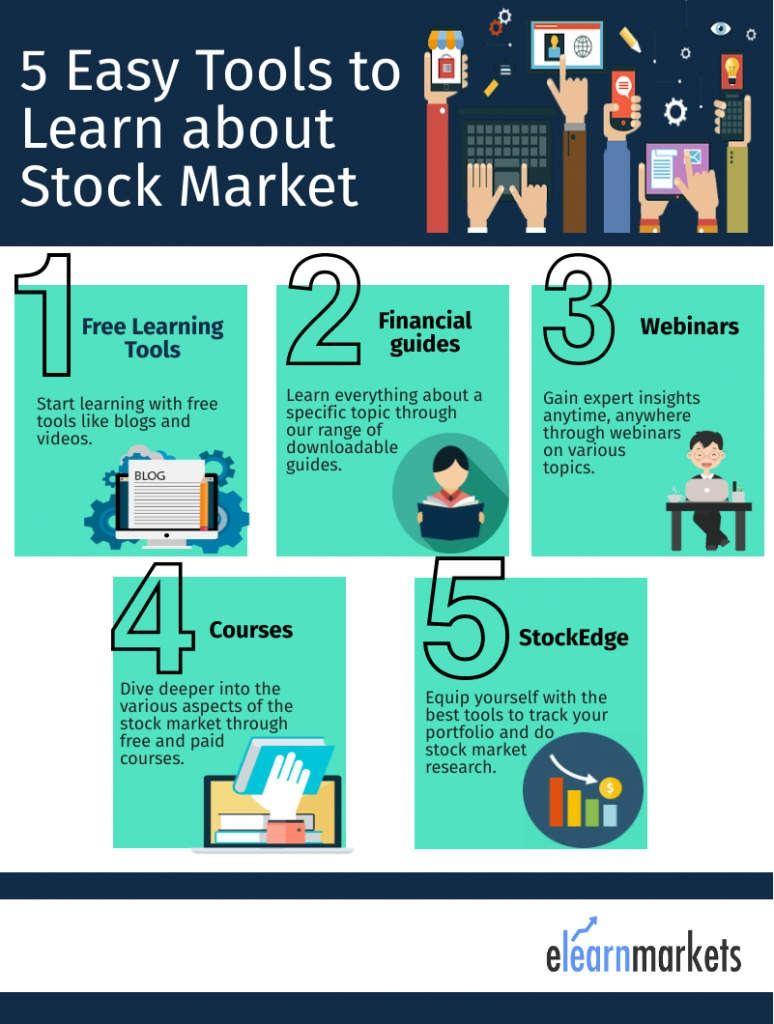
To buy and sell stocks, you’ll need a brokerage account.
- Types of Accounts: You can open a standard taxable brokerage account, or explore tax-advantaged accounts like an Individual Retirement Account (IRA) or a 401(k) if offered by your employer.
- Choosing a Broker: Key factors include commission fees (many offer commission-free stock and ETF trades), minimum deposit requirements, available investment products, research tools, customer service, and platform usability. Popular choices include Fidelity, Charles Schwab, E*TRADE, Vanguard, and Robinhood. Start by comparing several options that align with your needs.
The Power of Paper Trading and Simulation
Before committing real capital, paper trading (also known as simulated trading or virtual trading) is an indispensable step. Many brokerage firms offer free paper trading accounts where you can practice buying and selling stocks with virtual money, using real-time market data. This allows you to:
- Test different investment or trading strategies without financial risk.
- Familiarize yourself with the brokerage platform and order types.
- Develop confidence and discipline in decision-making.
Treat your paper trading as if it were real money to cultivate a serious approach.
Starting Small: Low-Cost Investment Options
Once you’re ready to invest real money, start small and with diversified, low-cost options.
- Exchange-Traded Funds (ETFs): These are baskets of securities that track an index, sector, commodity, or other asset. They offer instant diversification at a low cost, making them excellent for beginners. Examples include ETFs that track the S&P 500 (e.g., SPY, VOO).
- Mutual Funds: Similar to ETFs, mutual funds pool money from many investors to invest in a diversified portfolio. They are professionally managed but often have higher expense ratios than ETFs.
- Fractional Shares: Many brokers now allow you to buy fractions of a share, meaning you can invest a specific dollar amount (e.g., $50) into a high-priced stock like Amazon or Google, rather than having to buy a whole share. This lowers the barrier to entry for many popular stocks.
Developing a Personal Investment Strategy
Your investment strategy should be a reflection of your individual financial circumstances, goals, and risk tolerance.
- Risk Tolerance: Understand how much risk you are comfortable taking. Are you comfortable with significant market fluctuations for potentially higher returns, or do you prefer more stable, albeit potentially lower, growth?
- Financial Goals: What are you investing for? Retirement, a down payment on a house, your child’s education? Your goals will dictate your time horizon and how aggressively you should invest.
- Time Horizon: How long do you plan to keep your money invested? A longer time horizon typically allows you to take on more risk, as you have more time to recover from market downturns.
Essential Skills and Mindset for Successful Trading and Investing
Success in the markets isn’t just about understanding concepts; it’s about developing critical analytical skills and cultivating a disciplined, resilient mindset.
Fundamental Analysis: Valuing Companies
Fundamental analysis is the process of evaluating a company’s intrinsic value by examining its financial statements, management, competitive landscape, and economic outlook. The goal is to determine if a stock is currently undervalued or overvalued by the market.
- Financial Statements: Learn to read and interpret a company’s income statement, balance sheet, and cash flow statement.
- Economic Indicators: Understand how macroeconomic factors (e.g., interest rates, inflation, GDP growth) can impact corporate earnings and stock prices.
- Industry Analysis: Evaluate the industry in which a company operates, including its growth prospects, competitive intensity, and regulatory environment.
Technical Analysis: Interpreting Market Charts
Technical analysis is the study of past market data, primarily price and volume, to forecast future price movements. Technical analysts believe that all relevant information is already reflected in a stock’s price, and patterns tend to repeat.
- Candlesticks: Learn to read candlestick charts, which visually represent price movements (open, high, low, close) over a specific period.
- Indicators: Familiarize yourself with common technical indicators like Moving Averages (MA), Relative Strength Index (RSI), and Moving Average Convergence Divergence (MACD), which can help identify trends, momentum, and overbought/oversold conditions.
- Patterns: Recognize chart patterns (e.g., head and shoulders, double top/bottom) that may signal reversals or continuations of trends.
Risk Management: Protecting Your Capital
Effective risk management is arguably the most crucial aspect of trading and investing. It’s not about avoiding all risk, but about understanding, quantifying, and mitigating it.
- Diversification: Do not put all your eggs in one basket. Spread your investments across different companies, industries, and asset classes (stocks, bonds, real estate) to reduce the impact of any single poor-performing asset.
- Stop-Loss Orders: For traders, a stop-loss order automatically sells a security if it drops to a certain price, limiting potential losses on a position.
- Position Sizing: Determine how much capital to allocate to any single trade or investment based on your risk tolerance and the potential loss you’re willing to absorb. Never risk more than a small percentage of your total capital on a single position.
The Psychological Aspect: Discipline and Emotional Control
The human element is often the biggest hurdle to successful investing and trading. Emotions like fear, greed, and hope can lead to irrational decisions.
- Avoiding Common Biases: Be aware of psychological biases such as confirmation bias (seeking information that confirms your beliefs), herd mentality (following the crowd), and anchoring (relying too heavily on initial information).
- Fear of Missing Out (FOMO): Resist the urge to jump into hyped stocks or trends without proper due diligence.
- Panic Selling: Avoid selling assets during market downturns solely out of fear, as this often locks in losses and prevents participation in subsequent recoveries.
Develop a disciplined approach, stick to your strategy, and make decisions based on analysis, not emotion.
Continuous Learning and Adaptation
The financial markets are dynamic and constantly evolving. What works today might not work tomorrow, and new opportunities and challenges are always emerging. Therefore, continuous learning and adaptability are paramount for long-term success.
Staying Informed with Market Trends
Beyond daily news, focus on understanding broader market trends.
- Macroeconomics: Keep an eye on global economic indicators, central bank policies, and geopolitical events that can influence market sentiment and asset prices.
- Industry Shifts: Be aware of technological advancements, consumer behavior changes, and regulatory shifts that could impact specific sectors or companies.
- New Asset Classes: While the focus here is stocks, maintain awareness of emerging asset classes like cryptocurrencies or alternative investments, understanding their potential impact on traditional markets.
Reviewing and Adjusting Your Strategy
Regularly review the performance of your investments and strategies.
- Learning from Successes and Failures: Analyze what went right and what went wrong. Document your trades/investments, including your rationale, and review them periodically to identify patterns and areas for improvement.
- Adapting to Change: The market environment changes, and your personal financial situation will too. Be prepared to adjust your investment goals, risk tolerance, and strategies accordingly. This might involve rebalancing your portfolio or exploring new investment vehicles.
Exploring Advanced Concepts (Optional)
Once you’ve mastered the basics and developed a consistent approach, you might consider exploring more advanced topics:
- Options and Futures: These are complex derivative instruments that can be used for speculation or hedging. They carry significant risk and are not for beginners.
- Foreign Exchange (Forex): Trading currencies on the global forex market.
- Cryptocurrencies: Digital assets built on blockchain technology, known for their high volatility.
Approach these with extreme caution, and only after thorough research and understanding of the heightened risks involved.
Learning about stocks and trading is a journey, not a destination. It demands patience, discipline, and a commitment to lifelong education. By systematically building your knowledge, gaining practical experience through simulated trading, managing your risks prudently, and cultivating a resilient mindset, you can transform what initially seems complex into a powerful tool for achieving your financial aspirations. Remember, every expert was once a beginner, and the most valuable asset you can invest in is yourself.
aViewFromTheCave is a participant in the Amazon Services LLC Associates Program, an affiliate advertising program designed to provide a means for sites to earn advertising fees by advertising and linking to Amazon.com. Amazon, the Amazon logo, AmazonSupply, and the AmazonSupply logo are trademarks of Amazon.com, Inc. or its affiliates. As an Amazon Associate we earn affiliate commissions from qualifying purchases.