
Growing a business is often mistaken for a purely creative or operational endeavor. While product-market fit and customer satisfaction are the prerequisites for survival, sustainable growth is fundamentally a financial challenge. To scale a venture from a boutique operation into a market leader, a founder must transition from a “maker” mindset to a “capital allocator” mindset. Growth requires oxygen, and in the world of commerce, that oxygen is capital.
This guide explores the financial architecture necessary to grow your business, focusing on reinvestment strategies, cash flow optimization, unit economics, and the sophisticated use of leverage. By mastering the movement of money within your organization, you transform growth from a series of lucky breaks into a predictable, repeatable process.
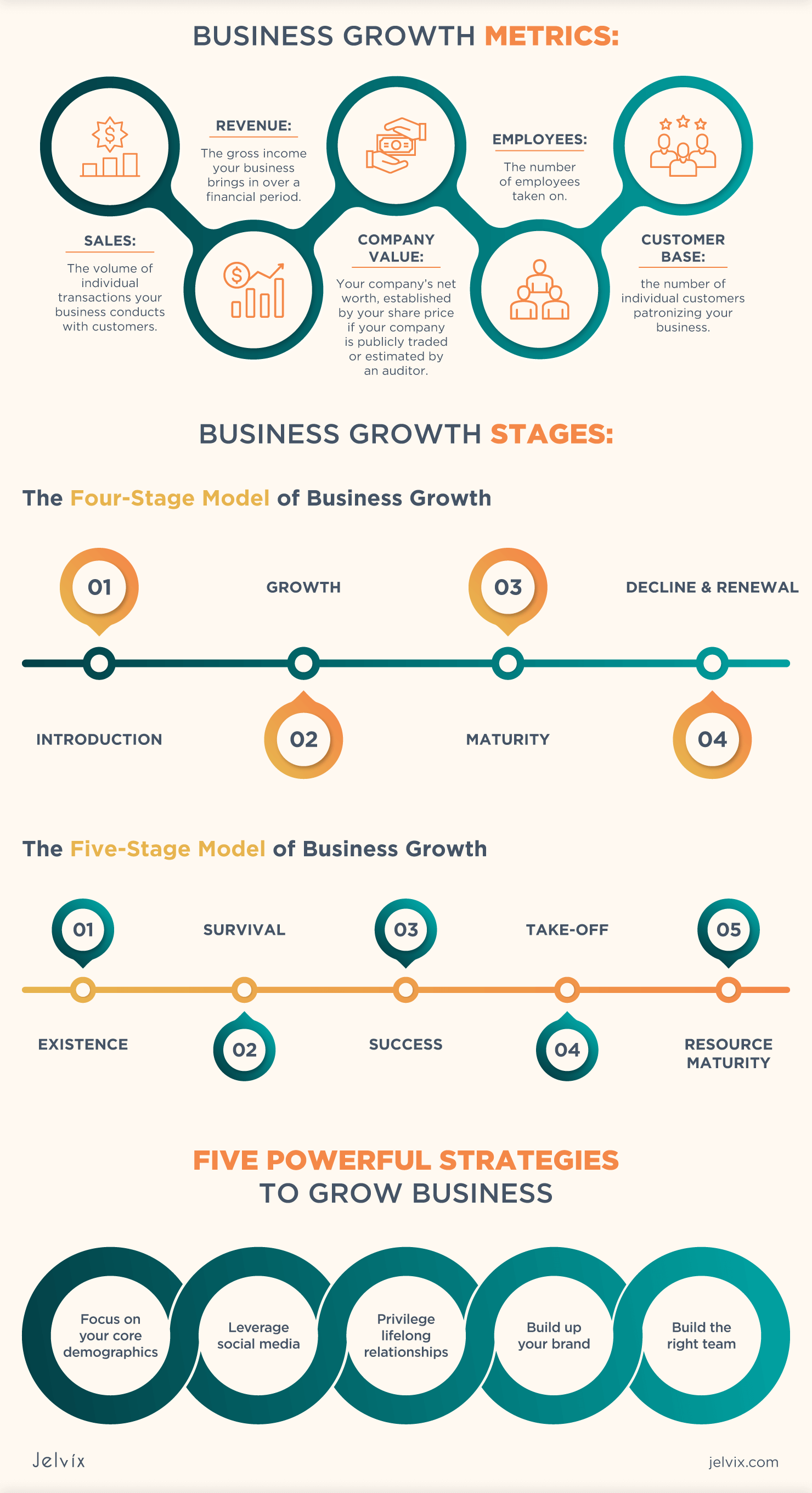
Mastering Capital Allocation and the Reinvestment Flywheel
The primary engine of business growth is the internal rate of return (IRR) on your own operations. Most small to mid-sized businesses fail not because they lack ideas, but because they misallocate the capital they generate. To grow, you must view every dollar spent not as an expense, but as a seed for future revenue.
The Power of Compounding Profits
Compounding is often discussed in the context of personal investing, but it is equally potent within a corporate structure. When a business generates a profit, the leadership faces a choice: distribute that profit to owners or reinvest it into the company. Strategic growth relies on the latter. By consistently funneling net income back into productive assets—whether that is more inventory, a larger sales force, or more efficient production machinery—you create a “flywheel” effect. The more you reinvest wisely, the faster the business grows, which in turn generates more profit for further reinvestment.
Identifying High-ROI Growth Channels
Not all reinvestment is created equal. To grow effectively, you must identify which “levers” in your business provide the highest Return on Investment (ROI). This requires a granular audit of your current spending. For instance, if spending $1,000 on a specific customer acquisition channel yields $5,000 in lifetime value (LTV), that is a high-ROI channel that deserves more capital. Conversely, many businesses waste capital on “vanity growth”—increasing headcount or office space without a clear link to revenue generation. True growth-focused finance prioritizes capital allocation toward activities that have a direct, measurable impact on the bottom line.
Optimizing Cash Flow for Rapid Expansion
A business can be profitable on paper and still go bankrupt during a growth phase. This is the paradox of “growing broke.” Rapid expansion often requires upfront payments for inventory, staff, and marketing, while the revenue from those investments might not arrive for months. Managing this gap is the essence of cash flow optimization.
Managing the Working Capital Gap
The working capital gap is the time between when you pay for the costs of doing business and when you collect payment from your customers. As you grow, this gap often widens. If you sell physical goods, you may need to purchase massive amounts of stock to meet projected demand. If you offer services, you may need to hire and train staff before the first invoice is sent. To bridge this gap, businesses must focus on their “Cash Conversion Cycle” (CCC). Reducing the time it takes to flip cash out of the business back into cash in the bank is the secret to scaling without constant external funding. This involves negotiating better terms with suppliers, incentivizing early payments from clients, and maintaining a lean inventory.
Leveraging Debt vs. Equity Financing
There comes a point where internal cash flow is insufficient to capture a massive market opportunity. At this stage, a business must decide between debt and equity. Debt (loans, lines of credit) allows you to maintain full ownership but requires regular interest payments, which can strain cash flow if growth slows. Equity (venture capital, angel investors) provides a cushion of cash without the burden of repayment but requires you to give up a percentage of future profits and control. In a high-interest-rate environment, the “cost of capital” becomes a critical metric. Successful growth involves using the cheapest possible capital to fund the highest-yielding opportunities, balancing the risks of debt with the dilutive nature of equity.
Strategic Financial Modeling and Unit Economics
You cannot grow what you cannot measure. Many entrepreneurs operate on “gut feeling,” but professional-grade growth is built on rigorous financial modeling. This involves looking past the total revenue and diving deep into the math of a single transaction.
Unit Economics: The Foundation of Scalability
Before pouring money into growth, you must prove that your “unit economics” are sound. This essentially means answering the question: “Does this business make a profit on a per-customer basis after all variable costs are considered?” The two most important metrics here are Customer Acquisition Cost (CAC) and Lifetime Value (LTV).
A healthy, scalable business typically maintains an LTV to CAC ratio of at least 3:1. If it costs you $100 to acquire a customer, that customer should bring in at least $300 in profit over their relationship with you. If your unit economics are broken—meaning you lose money on every new customer in the hopes of “making it up on volume”—growth will only accelerate your path to insolvency.
Stress-Testing Your Revenue Streams
Financial modeling also involves forecasting various “what-if” scenarios. As you grow, the environment changes. Competitors enter the market, supply chains break, and consumer spending shifts. A professional growth strategy includes stress-testing your financial model against these variables. What happens to your growth trajectory if your CAC doubles? What happens if your top three clients leave? By modeling these scenarios, you can build a “margin of safety” into your business finance. This ensures that your growth is not just fast, but resilient.
Building for Valuation and Exit
Even if you have no immediate plans to sell your business, you should grow it as if you do. Building a business with a high “valuation mindset” ensures that the growth you are achieving is creating a tangible, liquid asset rather than just a high-paying job for yourself.
EBITDA and the Multiplier Effect
In the world of business finance, companies are often valued as a multiple of their EBITDA (Earnings Before Interest, Taxes, Depreciation, and Amortization). To grow the value of your business, you must focus on two things: increasing the absolute number of EBITDA and increasing the “multiple” that a buyer is willing to pay.
Multiples are influenced by the quality of your revenue. Recurring revenue (subscriptions) attracts a much higher multiple than one-time transactional revenue because it is more predictable. Similarly, a business that can operate without the founder’s daily involvement is worth more than one that is dependent on a single individual. Strategic growth focuses on building systems and recurring income streams that drive that valuation multiple upward.
Building an Asset, Not Just a Job
True growth is reflected in the balance sheet, not just the income statement. This means investing in “intangible assets” like proprietary processes, exclusive distribution rights, or a highly trained management team. From a financial perspective, growth should result in a “turnkey” operation. When a business is financially systematized—meaning its books are clean, its margins are defended, and its growth is predictable—it becomes an attractive target for acquisition or an Initial Public Offering (IPO). This is the ultimate goal of business growth: transforming a vision into a high-value financial instrument.

Conclusion
Growing a business is a disciplined financial exercise. It requires the courage to reinvest profits, the technical skill to manage complex cash flows, and the analytical rigor to understand unit economics. By focusing on the “Money” niche of business growth, you ensure that your expansion is built on a foundation of reality rather than hope.
When you treat your business as a portfolio of investments, allocating capital to the highest-return activities and protecting your cash flow at all costs, growth becomes an inevitable byproduct of your financial strategy. Scaling is not about working harder; it is about making your money work harder for you. Through strategic capital management, you can turn a small spark of an idea into a massive, sustainable, and highly valuable enterprise.
aViewFromTheCave is a participant in the Amazon Services LLC Associates Program, an affiliate advertising program designed to provide a means for sites to earn advertising fees by advertising and linking to Amazon.com. Amazon, the Amazon logo, AmazonSupply, and the AmazonSupply logo are trademarks of Amazon.com, Inc. or its affiliates. As an Amazon Associate we earn affiliate commissions from qualifying purchases.