
In the landscape of modern technology, the ability to calculate the percentage of two numbers is more than just a basic mathematical requirement; it is a fundamental building block of data analysis, software development, and digital literacy. Whether you are a data scientist tracking user engagement, a software engineer building a progress bar, or a digital marketer analyzing click-through rates, understanding the logic and the tools behind percentage calculations is essential.
While the core mathematical formula remains constant, the methods we use to execute these calculations have evolved. We have moved beyond manual long division into an era of sophisticated spreadsheet functions, programmable algorithms, and artificial intelligence. This guide explores the technical methodologies for calculating percentages, the software tools that streamline the process, and the programmatic logic required to integrate these calculations into modern tech stacks.

The Fundamental Logic of Percentages in Digital Systems
At its core, a percentage is a way of expressing a number as a fraction of 100. In the world of technology, this serves as a standardized metric for comparison. Before diving into complex software or code, one must understand the underlying logic that powers these digital tools.
The Basic Mathematical Formula for Tech Applications
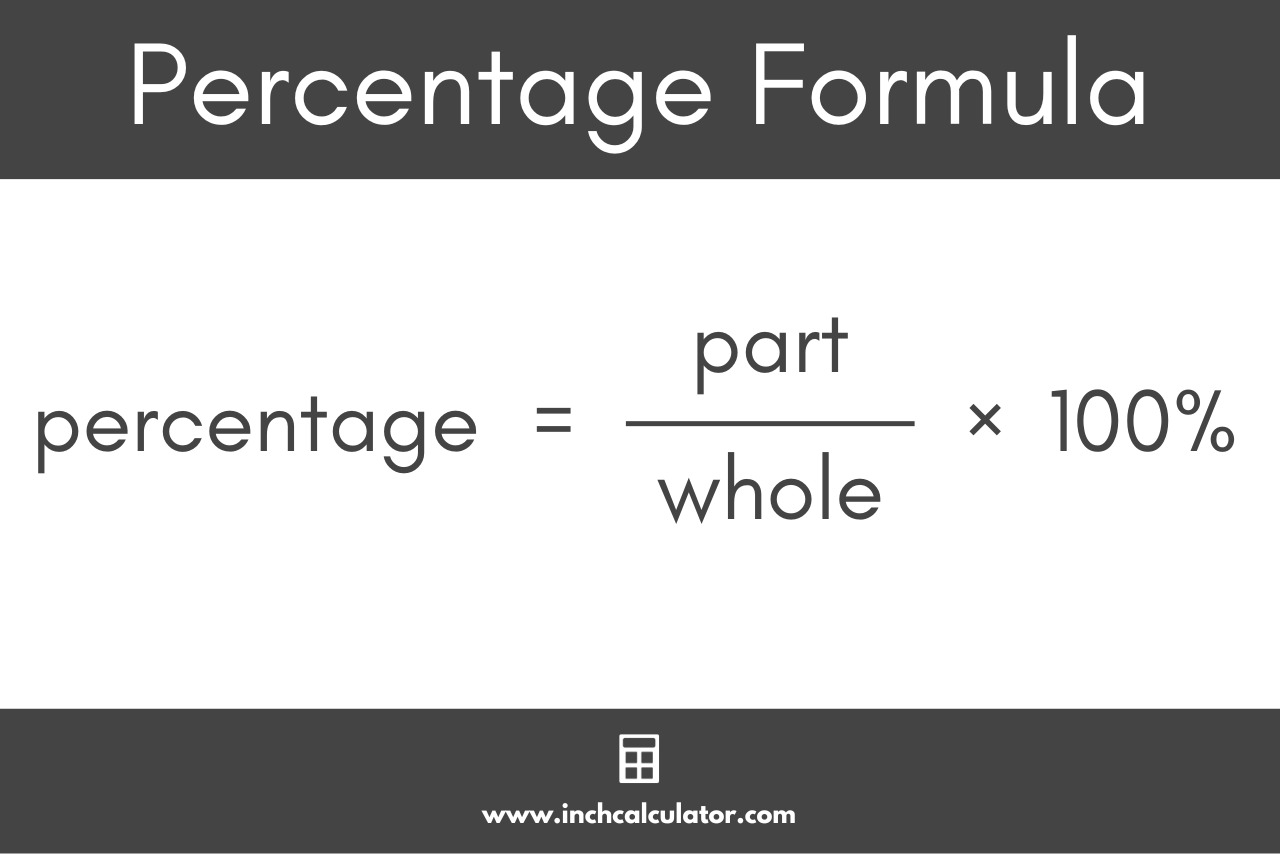
In any technical environment, the formula to find the percentage of two numbers—let’s call them the “part” and the “whole”—is:
Percentage = (Part / Whole) × 100
In a digital context, this is often handled as a two-step process: division followed by formatting. For instance, if a server has a capacity of 500GB and is currently using 400GB, the system first calculates the decimal (0.8) and then converts it to a human-readable percentage (80%). Understanding this sequence is vital because software often stores the value as a float (0.8) while displaying it as a percentage string.
Why Accuracy Matters in Data Analysis
In tech-driven fields like machine learning or cybersecurity, the “percentage of two numbers” often dictates critical thresholds. For example, a “99.9% uptime” requirement (the “three nines”) leaves almost no room for calculation errors. A slight miscalculation in the percentage of packets lost during a network transmission or the percentage of false positives in an AI model can lead to systemic failures. Therefore, the technical implementation of this simple formula must account for precision and scale, ensuring that the results are consistent across different platforms and hardware architectures.
Leveraging Productivity Software: Excel and Google Sheets
For most professionals in the tech and business sectors, spreadsheets are the primary environment for calculating percentages. These tools have built-in engines designed to handle massive datasets with high computational efficiency.
Automating Percentage Growth Formulas
One of the most common tasks in a spreadsheet is determining the percentage increase or decrease between two numbers—such as comparing this month’s app downloads to last month’s. The logic follows a variation of the standard formula:
Percentage Change = ((New Value – Old Value) / Old Value) * 100
In Excel or Google Sheets, this is automated using cell references. If your “Old Value” is in cell A2 and the “New Value” is in B2, the formula = (B2-A2)/A2 will return the decimal. By clicking the “Percent Style” button in the toolbar, the software automatically multiplies the result by 100 and adds the “%” symbol. This automation reduces human error, especially when dealing with thousands of rows of data.
Using Percentage Formatting Tools Effectively
Modern spreadsheet software handles the “Percentage” data type differently than a standard “Number” or “Currency” type. When you apply a percentage format, the software retains the underlying decimal value for calculations while displaying the rounded percentage.
Tech-savvy users must be aware of “Precision as Displayed” settings. If a cell displays 12% but the actual value is 11.55%, subsequent calculations based on that cell may produce unexpected results if the software is configured to use the displayed value rather than the underlying data. Mastering the formatting ribbon and the rounding functions (like ROUND, ROUNDUP, and ROUNDDOWN) is crucial for maintaining data integrity in complex technical reports.
Calculating Percentages in Programming and Development
For developers, calculating the percentage of two numbers is a frequent task, ranging from adjusting the opacity of a UI element to determining the load balance of a distributed system.

Implementation in Python and JavaScript
In most programming languages, the syntax for calculating a percentage is straightforward, but it requires an understanding of data types. In Python, for example, you might write:
part = 45
whole = 200
percentage = (part / whole) * 100
print(f"The percentage is {percentage}%")
In JavaScript, which powers the majority of web interfaces, calculating a percentage for a progress bar might look like this:
let currentStep = 5;
let totalSteps = 10;
let progressPercentage = (currentStep / totalSteps) * 100;
document.getElementById("progress-bar").style.width = progressPercentage + "%";
The technical nuance here is ensuring that the variables are treated as floats or doubles rather than integers to avoid “integer division” errors, where the decimal remainder is truncated, resulting in an inaccurate 0% or 100%.
Handling Floating Point Errors in Calculations
A significant challenge in tech-centric math is the way computers handle floating-point arithmetic. Binary systems sometimes struggle to represent certain decimal fractions precisely. For example, in many languages, 0.1 + 0.2 does not exactly equal 0.3 due to the way numbers are stored in memory.
When calculating the percentage of two numbers in a high-stakes environment (like fintech or scientific computing), developers often use specialized libraries like Decimal.js in JavaScript or the decimal module in Python. These tools provide arbitrary-precision arithmetic, ensuring that a calculation like (1 / 3) * 100 is handled with the necessary number of decimal places to prevent compounding errors in large systems.
Advanced Tech Tools and AI Calculators
We have entered an era where manual formula entry is often bypassed in favor of AI-assisted computation and specialized SaaS (Software as a Service) platforms.
Using AI Prompting for Complex Statistical Ratios
Artificial Intelligence tools like ChatGPT, Claude, and specialized coding assistants have revolutionized how we derive percentages from raw data. Instead of writing a formula, a user can upload a CSV file and prompt the AI: “Calculate the percentage of users who returned to the app more than three times based on these two columns.”
The AI doesn’t just perform the division; it identifies the “part” and the “whole” from unstructured data, cleans the dataset, and provides a summarized percentage. This shift from “calculation” to “interpretation” allows tech professionals to focus on the insights derived from the percentages rather than the mechanics of the math itself.
Cloud-Based Analytical Gadgets
Beyond general-purpose AI, specialized cloud tools like Google Analytics, Mixpanel, and Tableau automatically calculate percentages of two numbers as part of their core functionality. These “analytical gadgets” provide real-time dashboards where percentages (such as bounce rates or conversion ratios) are calculated on the fly as data streams into the system. The technical infrastructure behind these tools involves complex “OLAP cubes” (Online Analytical Processing) that allow for the instantaneous calculation of percentages across millions of data points, a feat impossible with traditional manual methods.
Security and Integrity in Data Calculation
In the tech world, the way we calculate and display percentages can also be a matter of digital security and transparency.
Avoiding Rounding Errors in Large Datasets
When processing “Big Data,” small rounding errors in percentage calculations can lead to massive discrepancies. For instance, in a cloud billing system that processes billions of micro-transactions, rounding a 0.005% fee up or down can result in thousands of dollars in lost or overcharged revenue.
Engineers mitigate this by using “banker’s rounding” or keeping values in their most granular form until the final output stage. When you are learning how to get the percentage of two numbers in a professional tech capacity, you must always ask: At what stage should I round this number? The industry standard is to perform all intermediate calculations at maximum precision and only round the final percentage for the user interface.
The Role of Percentages in Digital Security Metrics
Percentages are also vital in the realm of cybersecurity. Threat detection systems often rely on “percentage variance.” If a user typically uploads 10MB of data, and suddenly uploads 1GB, the system calculates the percentage increase. If that increase exceeds a defined threshold (e.g., a 10,000% increase), it triggers a security alert. In this context, the percentage of two numbers is the “trigger” for automated defense protocols. Understanding how to calibrate these percentages is a core skill for security analysts and DevOps engineers who manage automated response systems.
Conclusion
Calculating the percentage of two numbers is a deceptive task; while the math is simple, the technological implementation is rich with complexity. From the way a spreadsheet formats a cell to the way a Python script handles floating-point decimals, the “how-to” of percentages is central to the digital world. By mastering these tools—spreadsheets, programming languages, and AI assistants—tech professionals can ensure that their data is accurate, their code is efficient, and their insights are reliable. In an era defined by data, the humble percentage remains one of our most powerful tools for making sense of the digital landscape.
aViewFromTheCave is a participant in the Amazon Services LLC Associates Program, an affiliate advertising program designed to provide a means for sites to earn advertising fees by advertising and linking to Amazon.com. Amazon, the Amazon logo, AmazonSupply, and the AmazonSupply logo are trademarks of Amazon.com, Inc. or its affiliates. As an Amazon Associate we earn affiliate commissions from qualifying purchases.