
In the realm of mathematics, a reflection is defined as a transformation that “flips” a figure over a line, creating a mirror image. While this concept is a staple of middle-school geometry, its implications in the world of technology are profound. From the rendering engines that power photorealistic video games to the algorithms used in facial recognition and the architectural frameworks of user interfaces, geometric reflection is a cornerstone of digital construction.
Understanding what a reflection is in geometry—and how it translates into code—allows developers, engineers, and designers to create symmetry, optimize data, and simulate reality. This article explores the technical evolution of geometric reflection and its indispensable role across the modern tech landscape.
Understanding Geometric Reflection in the Digital Space
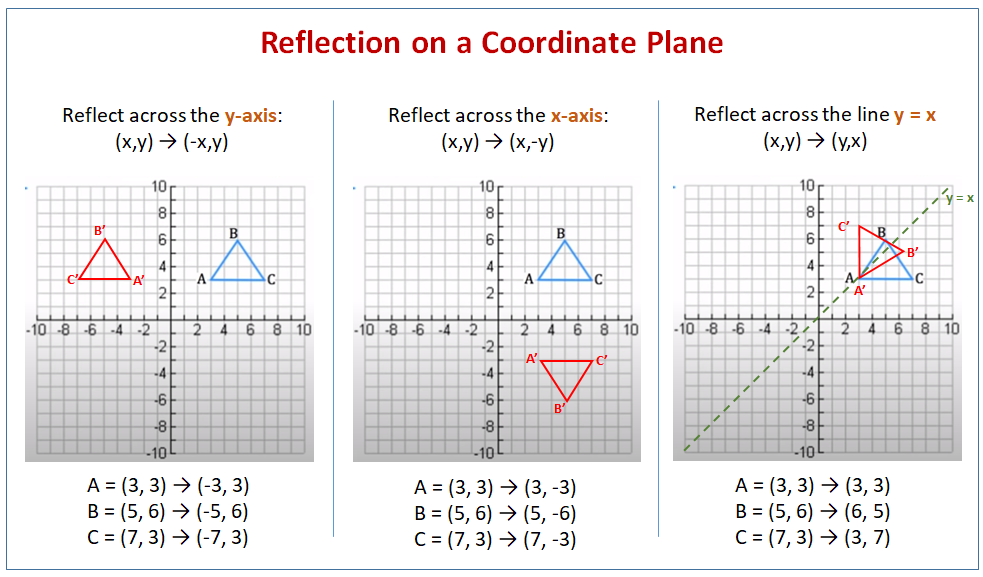
At its core, a reflection is a rigid transformation. In a two-dimensional Cartesian plane, reflecting a point across an axis involves changing the sign of one of its coordinates. For example, reflecting a point (x, y) over the y-axis results in (-x, y). In a three-dimensional digital environment, this becomes more complex as reflections occur across planes rather than just lines.
The Mathematics of Coordinate Transformation
In software engineering, specifically within computer graphics, these reflections are handled through matrix multiplication. To reflect an object, a transformation matrix is applied to every vertex of a digital model. This mathematical precision ensures that the “mirror image” maintains the exact proportions and distances of the original, a necessity for everything from CAD (Computer-Aided Design) to mobile app animations.
The Axis of Symmetry in Coding
When developers build responsive layouts, they often use the concept of reflection to handle symmetry. In CSS or specialized UI frameworks like Flutter and React Native, “transform: scaleX(-1)” is a common snippet used to reflect an icon or a container. This geometric logic allows for a “write once, flip many” approach, reducing the asset load on applications and improving performance.
Data Reflection and Redundancy
Beyond visual pixels, the concept of reflection exists in data structures. While “reflection” in programming often refers to the ability of a process to examine its own structure (introspection), geometric reflection principles are used in data visualization and spatial partitioning. By mirroring datasets, developers can test the robustness of algorithms against skewed data, ensuring that a system functions regardless of the “orientation” of the input.
Applications in Computer Graphics and Game Development
Perhaps the most visible use of geometric reflection is in the field of 3D rendering. When you see a character’s image in a virtual puddle or the glare on a metallic surface in a video game, you are witnessing real-time geometric transformations.
Ray Tracing and the Physics of Light
Ray tracing is a rendering technique that simulates the physical behavior of light. To render a reflection, the engine must calculate the “angle of incidence” and the “angle of reflection.” If a light ray hits a surface, the computer treats that surface as a geometric plane. By applying the laws of reflection, the engine calculates where the light bounces next. This requires immense computational power, leading to the development of specialized hardware like NVIDIA’s RTX series, which features dedicated cores to handle these geometric calculations.
Symmetry in 3D Modeling and Character Design
In the pipeline of character creation, 3D artists rarely model both sides of a character. Instead, they model one half—the “master” side—and use a geometric reflection modifier (often called a “Mirror Modifier” in software like Blender or Autodesk Maya). This ensures perfect bilateral symmetry. Once the reflection is applied, the software merges the vertices along the axis of reflection, creating a single, seamless mesh. This optimization saves thousands of man-hours in the tech industry.
Environment Mapping and Cube Maps
To simulate reflections without the heavy lifting of real-time ray tracing, developers often use “Cube Maps.” This involves projecting a 360-degree texture onto the inside of a cube. The geometric reflection of the environment is then mapped onto an object’s surface based on the camera’s perspective. It is an ingenious use of geometry to “fake” complex physics, allowing high-quality visuals to run on lower-end hardware like mobile phones and consoles.
Geometric Reflection in AI and Computer Vision
Artificial Intelligence, particularly Computer Vision, relies heavily on geometric transformations to “understand” the world. Reflection is not just a visual effect here; it is a tool for data enrichment and pattern recognition.
Data Augmentation for Machine Learning
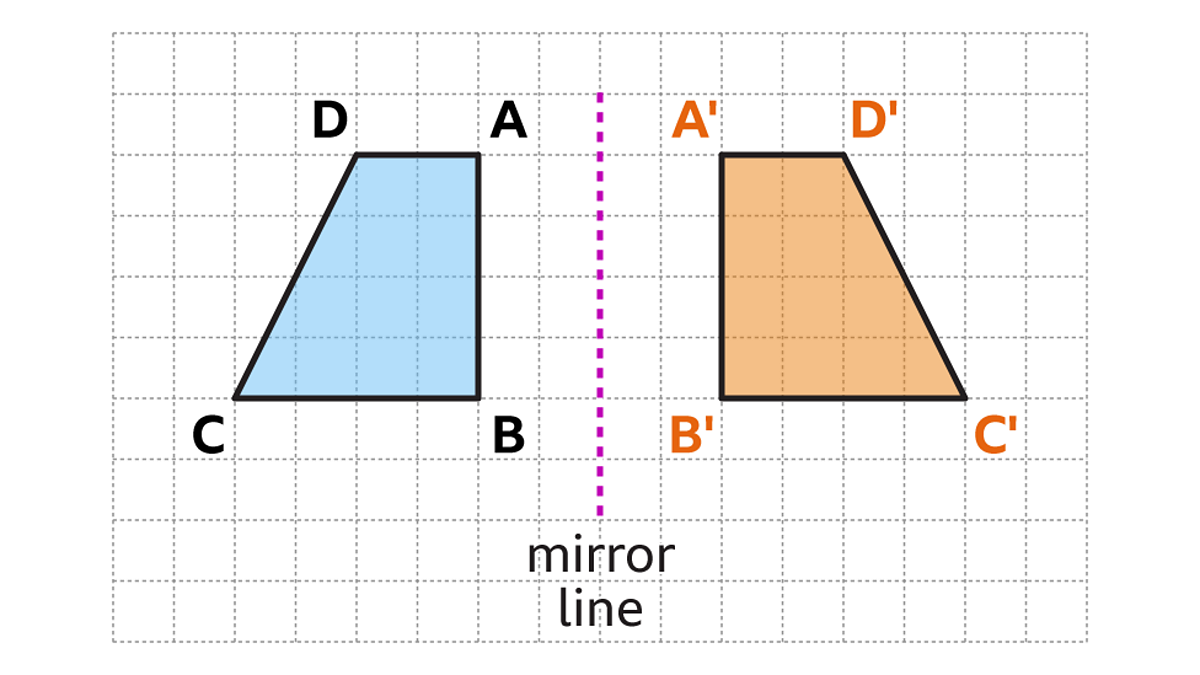
When training a convolutional neural network (CNN) to recognize an object—say, a car—the model needs to see that car from many angles. “Horizontal flipping” is a standard data augmentation technique. By taking a dataset of 10,000 images and geometrically reflecting them, developers instantly double the size of their training set. This teaches the AI that a car is still a car, whether it is driving left-to-right or right-to-left.
Facial Recognition and Biometric Symmetry
The human face is roughly symmetrical. Facial recognition software uses geometric reflection to map “landmarks” on the face. If one side of a user’s face is obscured or in deep shadow, the algorithm can use the geometry of the visible side to “reflect” and predict the hidden features. This geometric reconstruction is vital for the accuracy of biometric security systems found in modern smartphones.
Spatial Navigation in Robotics
Robots and autonomous vehicles use LiDAR and cameras to map their surroundings. When a robot encounters a mirrored surface, it can cause “ghost objects” in its point-cloud map. Engineers must program these systems to recognize the geometry of a reflection to distinguish between a real hallway and a reflection of a hallway in a glass window. This involves complex geometric filtering to ensure the robot doesn’t attempt to drive through a mirror.
Reflection and Symmetry in UI/UX Design Systems
User Experience (UX) design often utilizes geometric reflection to create balance and intuitive navigation. The way a user’s eye moves across a screen is often dictated by the symmetry—or lack thereof—in the layout.
Mirroring for Internationalization (RTL Support)
One of the most practical applications of geometric reflection in software localization is “Mirroring.” For languages that read from right-to-left (RTL), such as Arabic or Hebrew, the entire UI must be reflected. This isn’t just about translating text; it’s about flipping the geometry of the layout. Back buttons that pointed left must now point right, and progress bars must fill in the opposite direction. Modern design systems like Google’s Material Design provide strict guidelines on which elements should be reflected to maintain usability across cultures.
Iconography and Vector Graphics
Vector graphics (SVGs) are built on mathematical paths. Reflection is a core tool in creating consistent iconography. When a designer creates a “Settings” gear or a “Home” icon, they use reflection to ensure the paths are perfectly balanced. Because vectors are math-based, these reflections scale infinitely without pixelation, making them the standard for modern high-resolution displays.
The Psychology of Visual Balance
In UX, symmetry (achieved through reflection) conveys a sense of stability and professionalism. Many tech brands use reflected geometric shapes in their logos and interfaces to create a “Golden Ratio” effect. When a user interacts with a perfectly symmetrical interface, the cognitive load is reduced because the layout is predictable and harmonious.
Developing for Precision: Tools Leveraging Geometric Logic
The sophisticated tech we use today is built on platforms that treat geometric reflection as a first-class citizen. Understanding the tools available can help developers leverage these concepts more effectively.
High-Level Game Engines (Unity and Unreal)
Engines like Unity and Unreal Engine have built-in components for reflection. “Reflection Probes” capture a view of their surroundings and apply it to reflective objects. This allows developers to toggle between “Static Reflections” (for performance) and “Dynamic Reflections” (for realism), all governed by the underlying geometry of the scene.
Computer-Aided Design (CAD) in Hardware Engineering
In the tech hardware world, designing the chassis of a laptop or the internal circuitry of a smartphone requires extreme geometric precision. CAD software uses “Reflection Analysis” to check the smoothness of a surface. By reflecting a series of lines (Zebra stripes) across a 3D model, engineers can see if there are any dents or imperfections in the geometry that would affect the final product’s aesthetics or aerodynamics.
The Future: Quantum Computing and Geometric Gates
As we look toward the future of tech, geometry even plays a role in quantum computing. Quantum gates, which manipulate qubits, can sometimes be visualized as rotations and reflections on a “Bloch Sphere.” While the math is significantly more advanced than basic geometry, the foundational concept of a “flip” or an “inverse” remains a key component in the logic of the next generation of computing.
Conclusion
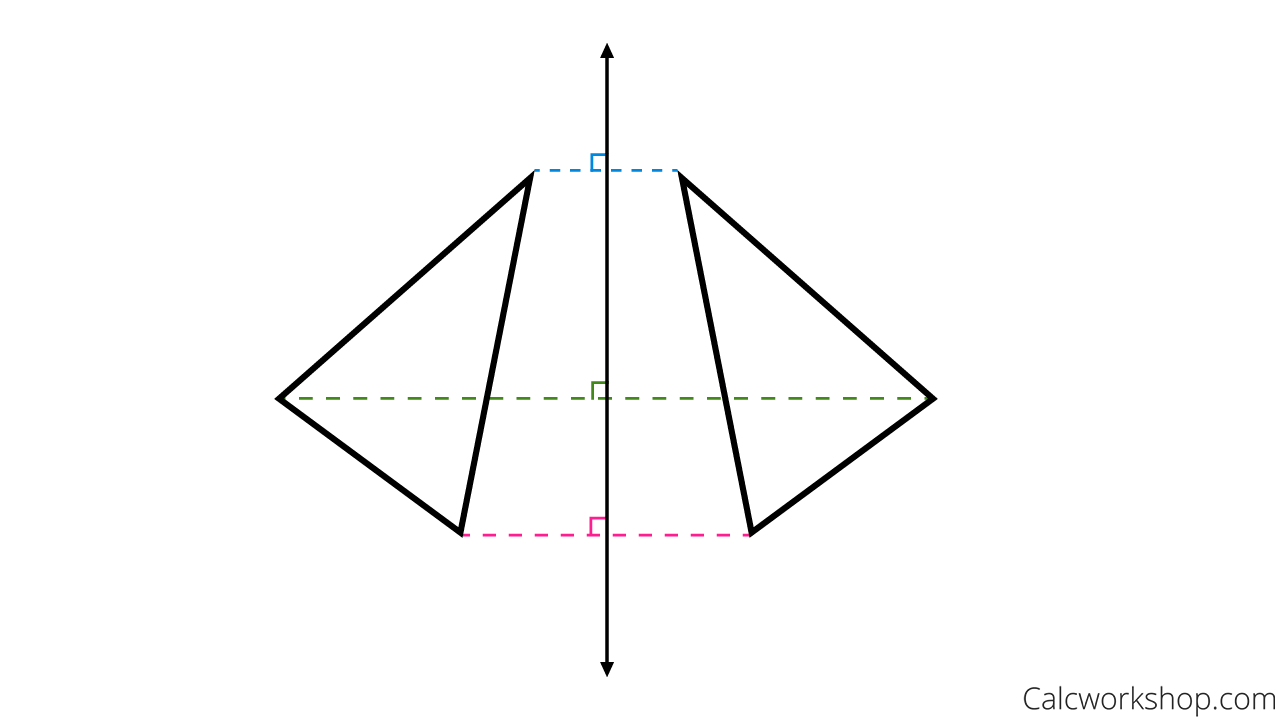
What is a reflection in geometry? In a textbook, it is a simple flip. In the tech industry, it is a multi-billion dollar pillar of innovation. It is the reason our video games look real, our AI is intelligent, and our apps are easy to navigate. By mastering the geometry of reflection, technology continues to blur the line between the digital and the physical, creating mirror worlds of data and design that are as precise as they are beautiful. Whether you are a software developer, a UI designer, or a hardware engineer, the axis of reflection is a tool that allows you to build a more symmetrical, efficient, and visually stunning digital future.
aViewFromTheCave is a participant in the Amazon Services LLC Associates Program, an affiliate advertising program designed to provide a means for sites to earn advertising fees by advertising and linking to Amazon.com. Amazon, the Amazon logo, AmazonSupply, and the AmazonSupply logo are trademarks of Amazon.com, Inc. or its affiliates. As an Amazon Associate we earn affiliate commissions from qualifying purchases.