
Securing adequate funding is often the single most critical hurdle for aspiring entrepreneurs and existing small business owners alike. It’s the lifeblood that fuels innovation, drives growth, and ensures operational continuity. Without a solid financial foundation, even the most brilliant business ideas can falter. Navigating the diverse landscape of funding options can be daunting, but with strategic planning and a clear understanding of the available avenues, small businesses can successfully acquire the capital they need to thrive.
This comprehensive guide will break down the essential steps, traditional routes, modern alternatives, and crucial preparations necessary to put your small business on the path to financial stability and growth.

Understanding Your Funding Needs and Business Stage
Before embarking on any funding search, a thorough internal assessment is paramount. Knowing precisely how much capital you need, what it will be used for, and how that aligns with your business’s current stage is the cornerstone of a successful funding strategy.
Assessing Your Financial Requirements
The first step is to create a detailed financial projection. This isn’t just a wish list; it’s a meticulously calculated breakdown of your startup costs, operational expenses, inventory, marketing budget, salaries, and a realistic cash flow forecast for at least the next 12-24 months. Don’t forget to factor in an emergency fund – unexpected expenses are a certainty in business. Overestimating your needs can make you appear less prudent, while underestimating can leave you in a dire situation shortly after securing funds. Be realistic, specific, and able to justify every figure.
Matching Funding to Business Lifecycle
Different stages of a business require different types of funding.
-
Startup Phase: At this nascent stage, often referred to as the “seed” stage, businesses typically seek initial capital for product development, market research, legal setup, and basic operations. Angel investors, personal savings, friends and family, and crowdfunding are common here.
-
Growth Phase: Once a business has proven its concept and started generating revenue, it may need funds to scale operations, expand market reach, hire more staff, or increase production. Bank loans, lines of credit, or even venture capital might become viable.
-
Expansion/Maturity Phase: Established businesses looking to enter new markets, acquire competitors, or significantly diversify their offerings will seek larger sums, potentially from traditional lenders, private equity, or even public offerings for very large small businesses.
Understanding where your business sits in this lifecycle helps narrow down the most appropriate and accessible funding sources.
The Importance of a Solid Business Plan
A well-crafted business plan is not merely a formality; it’s your roadmap and your primary sales tool for potential funders. It demonstrates your vision, strategy, market understanding, financial projections, and the strength of your management team. Lenders and investors rely heavily on this document to assess risk and potential return. Ensure it includes:
-
An executive summary
-
Company description
-
Market analysis
-
Organization and management structure
-
Service or product line
-
Marketing and sales strategy
-
Funding request (detailed)
-
Financial projections
A compelling business plan not only answers potential questions but also instills confidence in your ability to execute your vision.
Traditional Funding Avenues for Small Businesses
For decades, certain funding methods have stood as pillars of small business finance. While the landscape is evolving, these traditional routes remain highly relevant and often provide the most stable forms of capital.
Bank Loans and Lines of Credit
Traditional banks are a cornerstone for small business funding, especially for businesses with a solid operating history and good credit.
-
Term Loans: These provide a lump sum of money that is repaid over a set period, with fixed or variable interest rates. They’re suitable for significant one-time investments like equipment purchases or property.
-
Lines of Credit: Similar to a credit card, a line of credit allows businesses to draw funds as needed, up to a certain limit, and repay them over time. This offers flexibility for managing working capital or bridging cash flow gaps.
Qualifying for bank loans typically requires a strong credit score (personal and business), collateral, a robust business plan, and demonstrable cash flow.
Small Business Administration (SBA) Loans
The U.S. Small Business Administration (SBA) does not directly lend money but guarantees a portion of loans made by commercial lenders. This reduces the risk for banks, making them more willing to lend to small businesses that might not qualify for conventional loans. SBA loans, such as the popular 7(a) Loan Program or CDC/504 Loan Program, often feature lower down payments, longer repayment terms, and competitive interest rates, making them highly attractive. However, the application process can be rigorous and time-consuming.
Equity Financing: Angel Investors and Venture Capital
For businesses with high growth potential, equity financing offers a different model: exchanging a share of ownership in your company for capital.
-
Angel Investors: Typically wealthy individuals who invest their own money in early-stage companies, often in exchange for equity. They frequently provide mentorship and industry connections in addition to capital.
-
Venture Capital (VC) Firms: These firms invest in companies with significant growth potential, usually those beyond the initial startup phase, in exchange for substantial equity. VCs often seek high returns on their investments and typically get involved in the strategic direction of the company.
While equity financing brings significant capital and expertise, it means giving up a portion of your ownership and control. This route is often pursued by tech startups or businesses with scalable models promising significant returns.
Bootstrapping and Personal Savings
Many entrepreneurs begin by “bootstrapping” – funding their business with personal savings, credit cards, or revenue generated from early sales. This approach allows founders to retain full ownership and control while proving the viability of their business concept with minimal external influence. While challenging, bootstrapping forces fiscal discipline and lean operations, which can be invaluable in the long run. It also serves as a strong indicator to future investors that you have skin in the game.
Alternative and Emerging Funding Options
The digital age and evolving financial markets have given rise to numerous non-traditional funding avenues, democratizing access to capital for a wider range of small businesses.
Crowdfunding Platforms
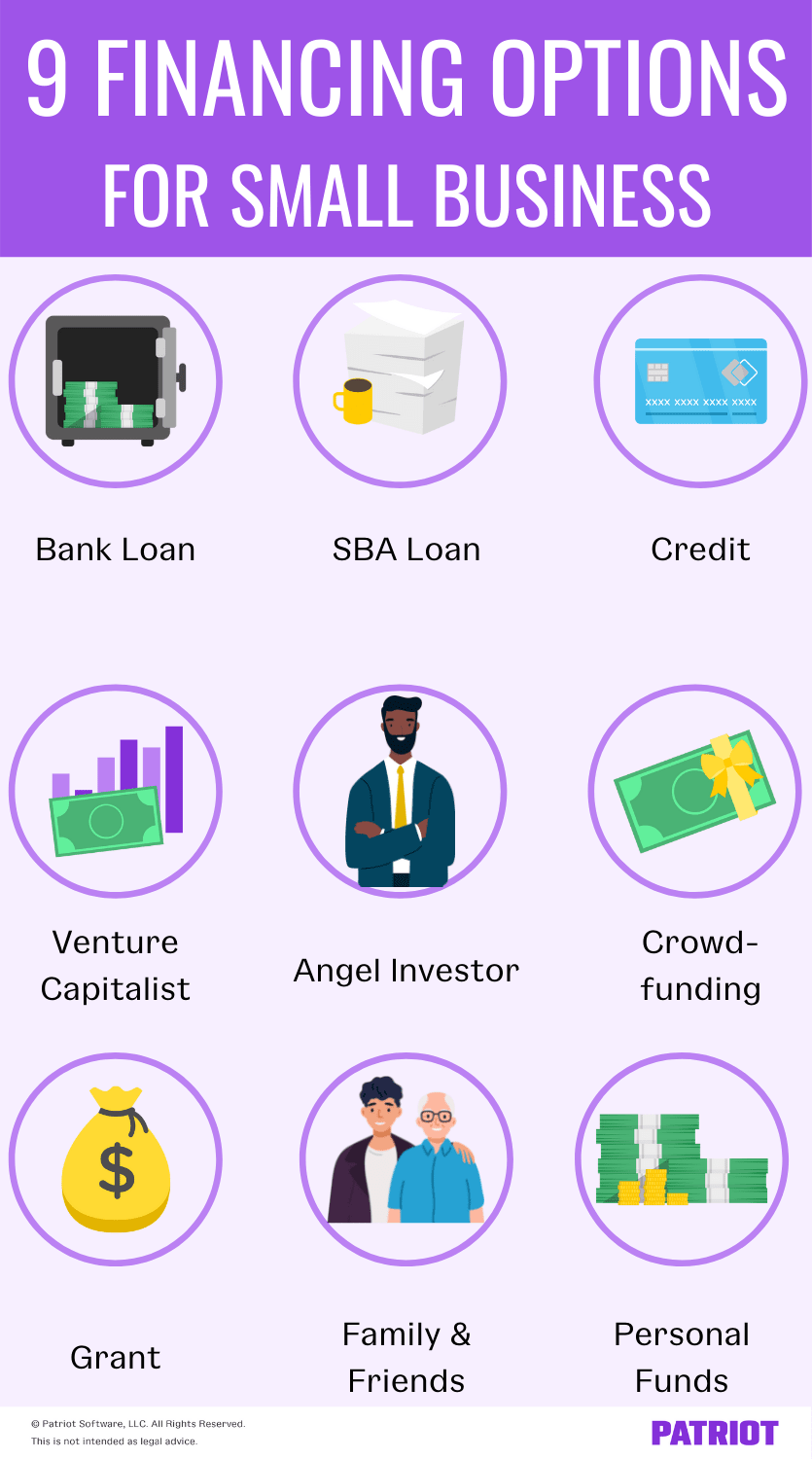
Crowdfunding involves raising small amounts of money from a large number of people, typically via online platforms.
-
Rewards-based Crowdfunding (e.g., Kickstarter, Indiegogo): Businesses offer products or unique experiences in exchange for financial pledges. Ideal for product development and gauging market interest.
-
Equity Crowdfunding (e.g., StartEngine, Republic): Individuals invest in a company in exchange for equity, opening up investment opportunities to non-accredited investors. This can be a significant source of capital for early-stage companies.
-
Debt Crowdfunding/P2P Lending (e.g., Funding Circle): Businesses borrow money from multiple individual lenders who receive interest payments.
Crowdfunding can not only provide capital but also build a community around your brand and validate your product or service.
Invoice Factoring and Merchant Cash Advances
These options provide quick access to capital, often at a higher cost, and are typically used to manage short-term cash flow issues.
-
Invoice Factoring: A business sells its unpaid invoices to a third-party “factor” at a discount in exchange for immediate cash. The factor then collects payment from the customer. This is useful for businesses with long payment terms from clients.
-
Merchant Cash Advances (MCAs): Businesses receive an upfront lump sum in exchange for a percentage of their future credit card sales. Repayment is often daily or weekly, directly from credit card transactions. MCAs are quick to obtain but come with very high effective interest rates.
Government Grants and Incubator Programs
Various government agencies at federal, state, and local levels offer grants to small businesses, particularly those engaged in research and development, innovation, or operating in specific underserved areas. These funds do not need to be repaid, making them highly desirable, but competition is fierce, and the application process is rigorous.
Incubator and accelerator programs also provide funding (often in exchange for equity), mentorship, office space, and networking opportunities. These are particularly valuable for tech startups or businesses with high growth potential, offering a supportive environment to refine their business model.
Peer-to-Peer (P2P) Lending
Online platforms connect borrowers directly with individual investors or groups of investors, bypassing traditional banks. These loans can be faster to secure than traditional bank loans and may have more flexible terms, especially for businesses with less-than-perfect credit. Interest rates vary widely depending on the platform, borrower’s creditworthiness, and loan terms.
Preparing Your Business for Funding Success
Regardless of the funding source, preparation is key. Funders are looking for responsible, well-managed businesses with a clear path to profitability.
Building a Robust Financial Foundation
-
Strong Credit Score: Both your personal and business credit scores are crucial. A good credit score demonstrates financial responsibility and significantly improves your chances of securing favorable loan terms.
-
Accurate Financial Statements: Lenders and investors will scrutinize your balance sheets, income statements, and cash flow statements. Ensure these are up-to-date, accurate, and professionally prepared. Consider using accounting software to maintain meticulous records.
-
Manage Debt Responsibly: Demonstrating a history of managing existing debt well is a positive indicator. Avoid taking on excessive debt that could impair your ability to repay new obligations.
Crafting a Compelling Pitch Deck
For equity investors, a pitch deck is a concise visual presentation (typically 10-15 slides) that tells your company’s story, highlights your value proposition, market opportunity, team, business model, and financial projections. It needs to be engaging, professional, and clearly articulate why your business is a worthwhile investment. Practice your pitch to deliver it confidently and persuasively.
Due Diligence and Legal Considerations
Be prepared for intense scrutiny. Lenders and investors will conduct thorough due diligence, examining your financial records, legal documents, contracts, and business operations. Ensure all your legal documents (e.g., articles of incorporation, intellectual property registrations, contracts with suppliers/customers) are in order and up-to-date. Understand the legal implications of any funding agreement, especially regarding equity dilution, repayment terms, and collateral. Consulting with a business attorney is highly recommended before signing any agreements.
Networking and Relationship Building
Many funding opportunities arise from connections. Attend industry events, join entrepreneurship groups, and connect with other business owners, mentors, and financial professionals. A strong network can provide introductions to potential investors, advisors, or even directly lead to funding opportunities. Building relationships with local bankers, for instance, can be beneficial long before you actually need a loan.
Navigating the Application and Approval Process
Once you’ve identified potential funding sources and prepared your business, the final stage is the application and approval process. This requires attention to detail and patience.
Understanding Lender Criteria and Requirements
Each lender or investor has specific criteria. Before applying, thoroughly research what they look for in a business. Do they specialize in certain industries? What are their minimum revenue requirements? What level of collateral do they demand? Tailor your application and pitch to meet their specific interests and requirements. Submitting a generic application is a surefire way to get overlooked.
The Application Process: Documentation and Timelines
Gather all necessary documentation well in advance: business plan, financial statements (P&L, balance sheet, cash flow), tax returns (personal and business), personal financial statement, legal documents, and résumés of key personnel. Be prepared for follow-up questions and requests for additional information. The timeline from application to approval can vary significantly, from a few days for some alternative lenders to several months for complex bank loans or venture capital deals. Patience and persistent follow-up are essential.

Post-Approval: Managing Your Funds Responsibly
Securing funding is not the end goal; it’s the beginning. Once you receive capital, manage it judiciously. Stick to the budget outlined in your business plan, track your spending diligently, and provide regular updates to your lenders or investors as required. Responsible financial management demonstrates your capability, builds trust, and positions you for future funding rounds or expansions.
In conclusion, acquiring funding for a small business is a multifaceted journey that demands preparation, research, and perseverance. By understanding your needs, exploring both traditional and alternative options, meticulously preparing your business, and diligently navigating the application process, you can successfully secure the financial resources needed to launch, grow, and sustain your entrepreneurial vision.
aViewFromTheCave is a participant in the Amazon Services LLC Associates Program, an affiliate advertising program designed to provide a means for sites to earn advertising fees by advertising and linking to Amazon.com. Amazon, the Amazon logo, AmazonSupply, and the AmazonSupply logo are trademarks of Amazon.com, Inc. or its affiliates. As an Amazon Associate we earn affiliate commissions from qualifying purchases.