
The conventional wisdom regarding luxury travel suggests that a first-class seat is an indulgence reserved for the ultra-wealthy or those with corporate expense accounts. However, from a personal finance and strategic investment perspective, a first-class ticket is simply a commodity with a fluctuating market value. Like any asset, its price is subject to supply, demand, and market inefficiencies. By treating travel as a form of “luxury arbitrage,” savvy individuals can secure premium cabin experiences for a fraction of their retail value, often paying less than the price of a standard economy ticket.

To master this, one must move beyond simple “couponing” and enter the realm of financial optimization. This involves understanding the valuation of loyalty currencies, leveraging credit card ecosystems, and exploiting geographical price disparities.
The Economics of the Premium Cabin and Reward Valuation
To get first-class tickets at a steep discount, one must first understand the “hidden economy” of airline pricing. Airlines operate on a sophisticated revenue management model that prioritizes filling seats at the highest possible price point until the very last minute. However, they also create “backdoor” entry points through loyalty programs and partner alliances to ensure that cabins remain full without diluting the brand’s perceived value.
Calculating Cents-Per-Point (CPP)
The most critical financial tool in the luxury traveler’s arsenal is the calculation of Cents-Per-Point (CPP). This is the benchmark used to determine the true value of a redemption. To calculate CPP, subtract any taxes and fees from the cash price of the ticket, then divide that number by the total miles required.
For example, if a first-class ticket from New York to Tokyo costs $12,000 in cash, but can be purchased for 120,000 miles plus $200 in taxes, the value of each mile is approximately 9.8 cents. Since most reward points are “earned” at a cost of roughly 1 cent per point (through credit card spend or direct purchase during promotions), this represents a nearly 1,000% return on investment. If a redemption offers less than 2.0 CPP, it is often more financially prudent to pay cash or save the points for a higher-yield opportunity.
The Power of Transferable Currencies
From a financial planning perspective, hoarding miles within a single airline’s program is a high-risk strategy. Miles are a devaluing currency; airlines can—and do—increase redemption rates without notice. Instead, the focus should be on “transferable currencies” offered by major financial institutions. These points act as a hedge against devaluation because they can be moved to dozens of different airline partners, allowing the traveler to “shop around” for the lowest redemption rate across different global alliances.
Strategic Arbitrage: Positioning and Currency Inefficiencies
The price of a first-class ticket is rarely determined by the distance flown; it is determined by the “point of sale” and the competitive landscape of the departure city. This creates an opportunity for geographical arbitrage.
The “Positioning Flight” Strategy
International airfares are often significantly cheaper when departing from specific “hub” cities where competition is fierce or the local economy dictates lower price points. For instance, a first-class ticket departing from London to Singapore might be priced at $8,000. However, the exact same airline, flying the same route but starting in Colombo or Cairo, might price that same ticket at $2,500.
The financially savvy traveler uses a “positioning flight”—a separate, inexpensive ticket—to get to the cheaper departure city. By spending $300 on a regional flight, the traveler captures thousands of dollars in savings on the long-haul first-class segment. This is not merely a “travel hack”; it is a calculated move to exploit regional price variations in the global transport market.
Exploiting Currency Fluctuations
Airlines often price tickets in the local currency of the departure country. When a specific country’s currency undergoes a period of high volatility or sudden devaluation, the airline’s automated pricing systems may lag behind the real-time exchange rate. By using a credit card with no foreign transaction fees and booking through the airline’s local version of their website, travelers can effectively secure a “de facto” discount on premium fares. This requires monitoring global forex trends and understanding which markets currently offer the highest purchasing power for your base currency.
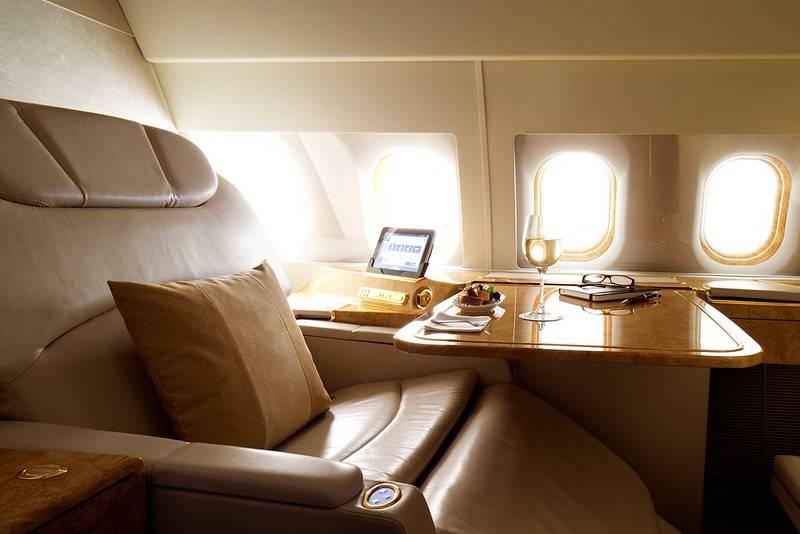
The Financial Logic of Upgrade Bidding and Last-Minute Inventory
For those who do not wish to rely entirely on points, the “Bid-to-Upgrade” system represents a sophisticated way to access first class. Many airlines now utilize a blind auction system, managed by third-party software like Plusgrade, to fill empty premium seats in the 72 hours leading up to a flight.
The “Low-Ball” Strategic Bid
The mistake many travelers make is bidding based on emotion. A financial approach requires looking at the “upgrade delta”—the difference between the price paid for economy and the current retail price of first class. Most systems provide a “strength meter” for your bid. Data analysis suggests that the most efficient bids are often just slightly above the minimum required amount.
Airlines would rather take $500 for a seat that would otherwise go empty than leave it vacant, even if they were originally selling it for $5,000. By calculating the value of the amenities (lounge access, dining, saved hotel costs due to better sleep), a traveler can determine a “break-even” bid price that justifies the expense as a productivity or health investment rather than a luxury spend.
Monitoring “R” and “O” Fare Classes
In the world of airline inventory, every seat is assigned a letter code. “F” or “A” usually denotes full-fare first class, while “R” or “O” often represents upgrade or award inventory. Financial tools and specialized search engines allow users to track these specific sub-classes. By setting alerts for when “O” class inventory opens up, a traveler can instantly convert a cheap economy or business class ticket into a first-class suite using a small number of miles or a fixed-price upgrade. This is the equivalent of “buying the dip” in the stock market—executing a trade only when the price hits a predetermined, advantageous level.
Leveraging Elite Status as a Financial Asset
While often viewed as a vanity metric, elite status with an airline is a financial tool that, if managed correctly, yields a high Return on Investment (ROI). The goal of attaining status should not be the status itself, but the “soft benefits” that translate into hard cash savings.
The Break-Even Analysis of Status Runs
For a frequent traveler, the value of elite status can be quantified. If status grants four “Systemwide Upgrades” (SWUs), and each SWU can move a $1,000 economy ticket to a $6,000 first-class seat, the status is worth at least $20,000 in theoretical travel value. When you factor in the elimination of baggage fees, lounge catering (replacing airport meals), and bonus mile earning rates, the financial profile of the status becomes clear.
A “Status Run”—buying a cheap flight specifically to hit a mileage threshold—is only a sound financial move if the cost of the flight is significantly lower than the projected value of the benefits for the following year. This is a classic capital expenditure calculation.
Status Matching and Challenges
One of the most efficient “side hustles” in the travel world is the Status Match. Competing airlines are often willing to “poach” high-value customers by matching their existing status from another carrier. By strategically timing these matches, a traveler can enjoy the perks of first-class upgrades across multiple alliances while only ever “earning” status on one. This maximizes the utility of their travel spend and ensures that they are always at the front of the line for “operational upgrades” (OPUPs), which occur when economy is oversold and the airline is forced to move passengers to first class for free.
The “Business Expense” Framework for Luxury Travel
Finally, for business owners and freelancers, the cost of a first-class ticket can be viewed through the lens of tax efficiency. When a premium ticket is purchased for a legitimate business purpose, the “luxury” component is often tax-deductible as a business travel expense.

Offsetting Opportunity Cost
A professional who arrives at a destination after a 14-hour flight in a first-class suite is often capable of going straight into a high-stakes meeting or a day of billable work. In contrast, an economy traveler may require a “recovery day” at a hotel. From a personal finance perspective, if your daily billing rate is $1,000, and a first-class upgrade costs $800 but saves you one day of downtime, the upgrade has a positive net value of $200. This is the “Productivity ROI” of luxury travel.
By shifting the perspective from “spending money on a flight” to “investing in an arrival state,” the cost of first class becomes a justifiable line item in a sophisticated financial plan. Through a combination of CPP optimization, geographical arbitrage, and tax-efficient planning, the “cheap” first-class ticket is not an anomaly—it is a predictable outcome of disciplined financial management.
aViewFromTheCave is a participant in the Amazon Services LLC Associates Program, an affiliate advertising program designed to provide a means for sites to earn advertising fees by advertising and linking to Amazon.com. Amazon, the Amazon logo, AmazonSupply, and the AmazonSupply logo are trademarks of Amazon.com, Inc. or its affiliates. As an Amazon Associate we earn affiliate commissions from qualifying purchases.