
At first glance, the question “what is 1 divided by 1/3?” appears to be a simple arithmetic problem, perhaps even a trick question from an elementary school textbook. The answer, of course, is 3. However, within the intricate world of finance, this seemingly basic mathematical operation holds profound implications, serving as a cornerstone for understanding a myriad of financial concepts, from personal budgeting to complex investment strategies and business valuation. In an era where financial literacy is paramount, dissecting such fundamental principles isn’t just an academic exercise; it’s a vital step towards cultivating robust financial acumen and making informed decisions that shape our economic well-being. This article will delve into the mathematical explanation and, more importantly, explore its widespread practical applications within the “Money” niche, illustrating why a solid grasp of fractions and division is indispensable for anyone navigating the financial landscape.

The Foundational Math Explained: More Than Just a Number
Before we dive into its financial relevance, let’s briefly revisit the mathematical principle behind “1 divided by 1/3.” Division by a fraction is equivalent to multiplication by its reciprocal. The reciprocal of 1/3 is 3/1, or simply 3. Therefore, 1 ÷ (1/3) = 1 × 3 = 3.
This concept, while straightforward, represents a crucial building block for understanding how quantities relate to parts of a whole, how rates are calculated, and how resources can be efficiently allocated or divided. In finance, where every dollar, every percentage point, and every share represents a part of a larger whole, this foundational understanding translates directly into the ability to dissect and interpret financial data, calculate returns, assess risks, and structure deals. It moves beyond rote memorization to foster an intuitive grasp of proportionality and distribution—skills that are invaluable in personal finance, investing, and business operations.
Practical Applications in Personal Finance
Understanding how a whole can be broken down into parts, or how many “parts” are contained within a “whole,” is central to effective personal financial management. The concept of dividing by a fraction finds surprisingly diverse applications, helping individuals optimize their budgets, track savings, and manage debt more effectively.
Budgeting for the Future: Allocating Your Income
Consider your income as the “1” – the whole. When you allocate your income into different categories (savings, housing, food, entertainment), you are essentially dividing it into fractions. For instance, if you decide to dedicate 1/3 of your income to savings, you are calculating how many “thirds” of your spending capacity are left for other categories. Conversely, if you want to know how many times your monthly savings goal (e.g., 1/3 of your income) fits into your total income, you’re essentially performing the “1 divided by 1/3” operation. This helps in understanding the impact of each financial decision on your overall budget. It highlights that if a certain expenditure represents, say, 1/3 of your discretionary income, that expenditure effectively “consumes” three times that portion of your overall spending power relative to what it represents as a fraction of total income. This perspective fosters a more disciplined approach to budgeting, allowing for a clearer visualization of how each fractional expense impacts the larger financial picture.
Understanding Interest and Returns: The Power of Compounding
When it comes to savings and investments, understanding fractions is crucial for calculating interest and returns. If an investment promises a return that can be expressed as a fraction of the principal over a certain period, knowing how many such periods it takes to double your money, or how many ‘portions’ of return you accumulate, often involves similar fractional calculations. For example, if you aim for a specific fractional increase in your portfolio value, knowing how many small, incremental gains (fractions) contribute to a larger whole helps in setting realistic expectations and tracking progress. The concept also extends to understanding how frequently interest is compounded, which can be thought of as dividing the annual interest rate into smaller fractions for shorter periods, ultimately influencing the total return over the investment horizon.
Navigating Debt Repayment: Breaking Down Liabilities
Debt, particularly complex liabilities like mortgages or student loans, is often structured around fractional payments over extended periods. Understanding “1 divided by 1/3” helps in conceptualizing how each payment represents a fraction of the total debt, and how many such payments are required to eliminate the whole. If your monthly payment covers 1/300th of your total mortgage, then it will take 300 payments to clear it (assuming no interest). More nuanced applications involve understanding interest calculations on debt, where a portion of each payment goes towards interest, and the remainder towards the principal. By dissecting these fractions, individuals can gain clarity on how to accelerate debt repayment, such as by making additional fractional payments that directly reduce the principal.
Decoding Business Finance and Investment Scenarios
In the realm of business and investing, the simple concept of “1 divided by 1/3” scales up to explain fundamental principles of ownership, profit distribution, and portfolio construction. For financial professionals, entrepreneurs, and investors, this core mathematical insight is invaluable for strategic decision-making.
Equity Distribution and Ownership: Dividing the Company Pie
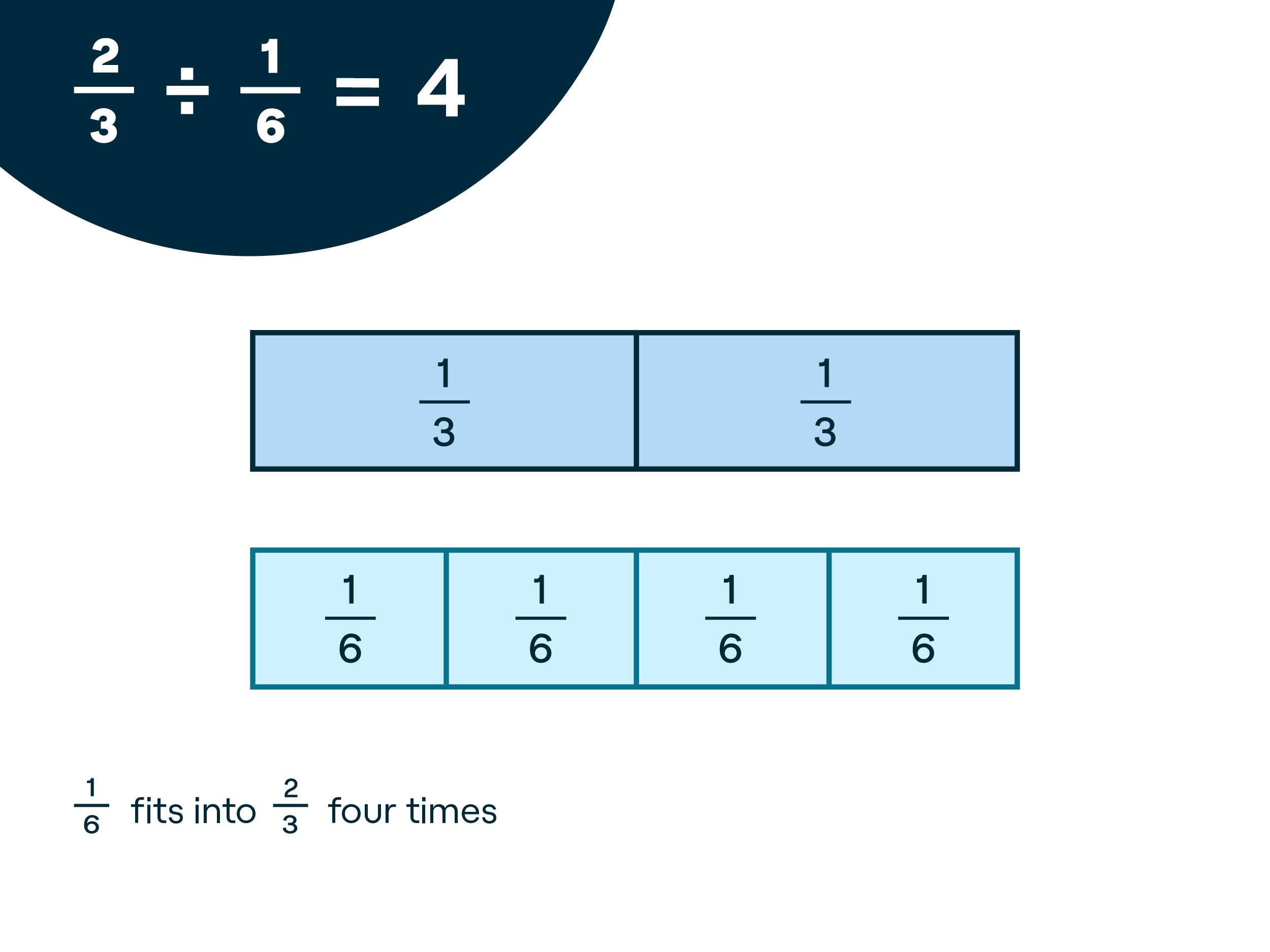
Businesses, especially startups, frequently deal with equity distribution among founders, employees, and investors. If an investor owns 1/3 of a company, understanding how many “thirds” constitute the entire company (three) is fundamental. This simple calculation underpins complex cap table management, dilution analysis, and valuation discussions. When a company is worth “1” (the whole), and an investor is offered a 1/3 stake, they are taking ownership of a significant portion. Entrepreneurs often grapple with how much equity to give away for funding, constantly performing mental (or actual) calculations of how each fraction given away impacts their remaining ownership, ultimately determining how many “slices” of the original “pie” they still control.
Profit Sharing Agreements: Fair Distribution Among Stakeholders
Profit-sharing models in partnerships, joint ventures, or employee incentive programs frequently involve distributing a company’s net income based on pre-defined fractional splits. If a business generates a profit (the “1”) and a partner is entitled to 1/3 of that profit, the calculation is straightforward. However, these agreements can become complex when multiple partners have varying fractional stakes, or when certain expenses are deducted before profit distribution. A clear understanding of how to divide the whole profit by its fractional components ensures transparency, fairness, and avoids disputes among stakeholders. It allows each party to understand precisely how many “portions” of the total profit they are entitled to, and how their share stacks up against the whole.
Investment Portfolio Allocation: Diversifying and Managing Risk
Investors meticulously divide their total capital (the “1”) across various asset classes—stocks, bonds, real estate, commodities—to achieve diversification and manage risk. This is essentially an exercise in fractional allocation. An investor might decide to allocate 1/3 of their portfolio to growth stocks, 1/3 to bonds, and 1/3 to real estate. The decision to invest “1” across “thirds” helps in balancing risk and return. Furthermore, understanding the impact of each fractional allocation on the overall portfolio’s performance is critical. If a particular asset class represents a small fraction of the total, its individual volatility might have a limited impact. Conversely, if one asset class dominates, its performance will disproportionately affect the entire portfolio. Calculating how many “units” of risk or return are present in each fractional segment allows for more informed portfolio rebalancing and strategic adjustments.
The Hidden Power of Fractions and Division in Financial Decision-Making
Beyond specific scenarios, the underlying mathematical principle of “1 divided by 1/3” empowers more sophisticated financial thinking, enabling individuals and businesses to make more precise and strategic decisions.
Unpacking Ratios and Proportions: Benchmarking Performance
Financial analysis heavily relies on ratios – comparisons between two numbers, often expressed as fractions or decimals. Profit margins (net income / revenue), debt-to-equity ratios, and price-to-earnings ratios are all forms of fractional relationships that provide insights into a company’s health and performance. Understanding how a whole (e.g., revenue) is divided to yield a specific ratio (e.g., profit margin) is crucial for benchmarking against competitors or industry standards. If a company’s profit is 1/3 of its revenue, it means that for every dollar of revenue, 33 cents are profit. This fraction provides a clearer picture of efficiency than raw numbers alone. The ability to manipulate and interpret these fractions allows for deeper insights into operational efficiency, liquidity, and solvency, guiding investment and management decisions.
Evaluating “Per Unit” Costs and Benefits: Economic Efficiency
Many economic and financial decisions hinge on understanding “per unit” costs or benefits. Whether it’s the cost per item produced, the revenue per customer, or the return per share, these calculations involve dividing a whole by a number of units. The concept of “1 divided by 1/3” resonates here by illustrating how much of the whole “resource” (time, money, material) is consumed by a “unit” or, conversely, how many “units” are contained within a given “whole.” This is fundamental for pricing strategies, cost control, and assessing the profitability of individual products or services. If a product costs 1/3 of the selling price to produce, then two-thirds is gross profit. This clarity helps businesses optimize their production processes and pricing models.
Strategic Resource Allocation: Maximizing Output
Effective financial management is ultimately about strategic resource allocation. Whether it’s allocating capital, time, or personnel, decisions often involve distributing a finite “whole” among various competing “parts.” Understanding how different fractional allocations impact overall outcomes is critical. If a marketing budget (the “1”) is divided, with 1/3 going to digital advertising, 1/3 to traditional media, and 1/3 to content creation, the goal is to maximize the return from each fractional investment. The intuitive understanding that “1 divided by 1/3” yields 3 helps in thinking about multipliers and leverage – how a small fractional input can lead to a larger output, or how many times a certain ‘effort’ is required to achieve a total ‘effect’.
Cultivating Financial Acumen: Beyond Basic Arithmetic
The lesson from “1 divided by 1/3” extends beyond mere calculation; it’s about developing a mindset that appreciates the interconnectedness of numbers and their real-world financial implications. In a world awash with financial data, the ability to decompose complex figures into simpler, understandable fractions, and to grasp the relationships between these parts and the whole, is a powerful tool.
Financial literacy is not just about knowing facts; it’s about applying foundational principles to navigate dynamic financial environments. By internalizing concepts like fractions and division, individuals and businesses can gain a competitive edge, making more precise estimations, identifying hidden opportunities, and mitigating risks. It reinforces the idea that every financial decision, no matter how small, is a piece of a larger puzzle, and understanding its fractional contribution is key to assembling a complete and prosperous financial picture. This foundational mathematical fluency equips one to move beyond superficial understanding to deep, insightful analysis, ultimately fostering greater control and confidence over one’s financial destiny.
aViewFromTheCave is a participant in the Amazon Services LLC Associates Program, an affiliate advertising program designed to provide a means for sites to earn advertising fees by advertising and linking to Amazon.com. Amazon, the Amazon logo, AmazonSupply, and the AmazonSupply logo are trademarks of Amazon.com, Inc. or its affiliates. As an Amazon Associate we earn affiliate commissions from qualifying purchases.