
In the intricate world of finance, where every dollar counts and every decision holds weight, understanding percentages isn’t just a useful skill—it’s an absolute necessity. Whether you’re a savvy investor tracking portfolio gains, a diligent individual budgeting household expenses, a budding entrepreneur analyzing profit margins, or a seasoned business owner evaluating market share, percentages serve as the universal language for comparison, proportion, and growth. They transform raw numbers into meaningful insights, allowing us to grasp relative values and make informed choices.
At its core, “finding the percentage of a total” is a fundamental mathematical operation that reveals what proportion of a whole a specific part represents. It’s a simple calculation with profound implications across personal finance, investing, business strategy, and economic analysis. This article will demystify the process, explain its critical applications within the money niche, and equip you with the knowledge and tools to confidently wield percentages in your financial life. From managing your personal budget to dissecting complex business financials, mastering percentages is your gateway to greater financial literacy and control.

The Foundational Math: Understanding Percentages for Financial Clarity
Before diving into complex financial scenarios, it’s crucial to establish a solid understanding of what a percentage truly is and the basic mathematical principle behind its calculation. This foundation will empower you to apply the concept accurately in various monetary contexts.
What is a Percentage?
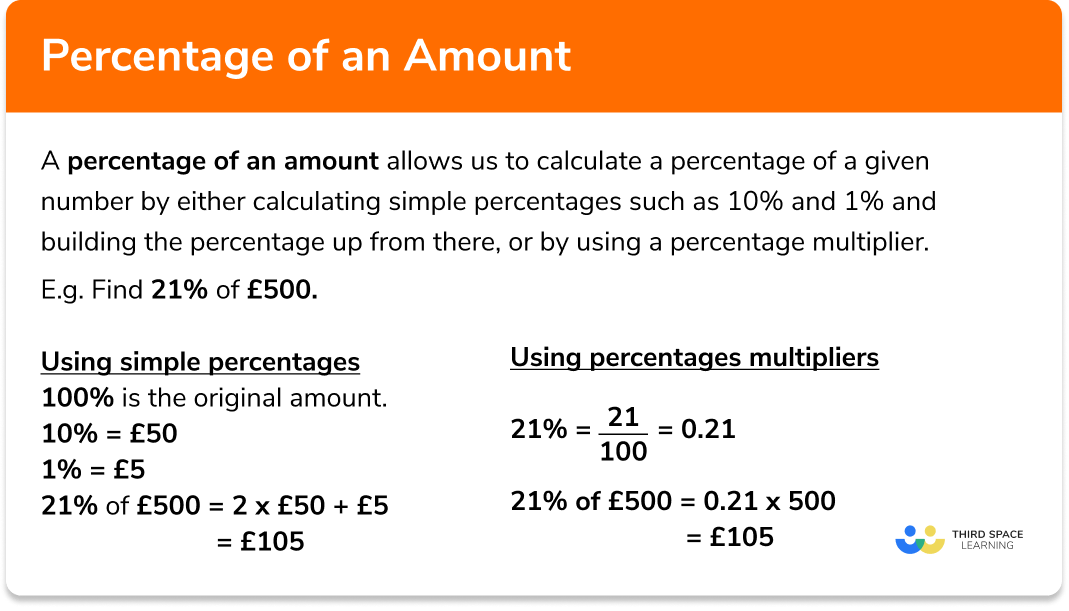
A percentage literally means “per hundred” or “out of one hundred.” It’s a way of expressing a number as a fraction of 100. For instance, 50% means 50 out of 100, which can also be written as the fraction 50/100 or the decimal 0.50. Percentages allow us to standardize comparisons, regardless of the size of the total. Instead of saying you spent “$50 on coffee out of $500 total expenses,” expressing it as “10% of your total expenses went to coffee” provides a more intuitive and comparable metric, especially when comparing different months or different spending categories. This standardization is invaluable for financial analysis, as it offers a clear snapshot of proportion.
The Basic Formula: Part / Whole * 100
Calculating a percentage is straightforward and relies on a simple formula:
Percentage = (Part / Whole) * 100
Let’s break down each component:
-
Part: This is the specific amount, quantity, or value that you want to express as a percentage. In financial terms, this could be your rent payment, a particular investment gain, or the cost of goods sold.
-
Whole (or Total): This is the entire amount, quantity, or value against which the “part” is being compared. Financially, this might be your gross monthly income, the initial investment capital, or your company’s total revenue.
-
* 100: Multiplying by 100 converts the decimal result of the division into a percentage format.
For example, if your monthly income (Whole) is $4,000 and your rent payment (Part) is $1,200, to find what percentage of your income goes to rent, you would calculate:
($1,200 / $4,000) * 100 = 0.30 * 100 = 30%.
This tells you that 30% of your income is allocated to rent, a crucial insight for budgeting.
Practical Examples in Personal Finance
Understanding this basic formula unlocks countless applications in personal finance:
-
Savings Rate: If you save $500 from your $3,000 monthly income, your savings rate is ($500 / $3,000) * 100 = 16.67%. This metric helps you track your progress towards financial goals.
-
Debt-to-Income Ratio: A common metric used by lenders, if your total monthly debt payments are $800 and your gross monthly income is $4,000, your debt-to-income ratio is ($800 / $4,000) * 100 = 20%. Keeping this percentage low is vital for financial health and loan approvals.
-
Emergency Fund Adequacy: If your monthly expenses are $2,500 and you have $7,500 in your emergency fund, your fund covers ($7,500 / $2,500) * 100 = 300% of one month’s expenses, meaning you have three months’ worth.
These examples illustrate how a simple percentage calculation transforms raw figures into actionable financial insights, allowing you to monitor, evaluate, and adjust your financial behaviors.
Essential Applications of Percentages in Personal Finance
Percentages are the bedrock of sound personal financial management. They provide clarity on spending habits, facilitate effective savings strategies, and offer vital insights into investment performance. Without the ability to calculate and interpret percentages, managing your personal money would be like navigating a complex maze in the dark.
Budgeting and Expense Analysis
One of the most immediate and impactful uses of percentages in personal finance is within budgeting. A budget is essentially a plan for your money, and percentages help you understand where your money is actually going relative to your income.
-
Categorizing Spending: By calculating the percentage of your total income or total expenses allocated to different categories (e.g., housing, transportation, food, entertainment), you gain a powerful overview of your spending priorities. For instance, if your housing costs (rent/mortgage, utilities) consume 45% of your net income, while financial experts often recommend keeping it under 30%, this percentage immediately flags a potential area for adjustment.
-
The 50/30/20 Rule: A popular budgeting guideline suggests allocating 50% of your income to needs, 30% to wants, and 20% to savings and debt repayment. These percentages offer a quick benchmark against which you can measure your own spending patterns. Finding the percentage of your income going into each category helps you adhere to, or deviate from, this rule and understand the implications.
-
Identifying Overspending: If you find that “eating out” consumes 15% of your discretionary budget, but your goal was 5%, the percentage highlights a clear area for spending reduction. Percentages make it easier to compare actual spending against budgeted amounts, providing a crucial feedback loop.
Savings and Debt Management
Percentages are equally indispensable in charting your path to financial freedom through saving and debt reduction.
-
Calculating Savings Rate: Your savings rate—the percentage of your income that you save—is a primary indicator of your financial health and future wealth-building potential. A higher savings rate means you’re building your nest egg faster. Tracking this percentage month over month allows you to see progress and make necessary adjustments to increase your savings.
-
Debt-to-Income (DTI) Ratio: As mentioned earlier, your DTI is a critical metric for lenders. It’s calculated as your total monthly debt payments divided by your gross monthly income, expressed as a percentage. A low DTI (typically below 36%) signals to lenders that you can responsibly manage more debt, impacting your eligibility for mortgages and other loans. Understanding and actively managing this percentage is key to accessing favorable credit terms.
-
Interest Rate Impact: Whether it’s the interest rate on your savings account, credit card debt, or a loan, these are all expressed as percentages. Grasping how these percentages apply to your principal amount helps you understand the true cost of borrowing and the potential for compound growth in savings. Calculating the percentage of your payment that goes towards interest versus principal is crucial for understanding debt amortization.
Investment Performance and Allocation
In the realm of investments, percentages are the universal language for measuring returns, assessing risk, and structuring portfolios.
-
Return on Investment (ROI): This is perhaps the most fundamental percentage in investing. ROI measures the profitability of an investment relative to its cost. If you invest $1,000 and it grows to $1,200, your gain is $200. Your ROI is ($200 / $1,000) * 100 = 20%. This allows for direct comparison of the performance of different investments, regardless of their initial cost.
-
Portfolio Allocation: A well-diversified investment portfolio often allocates funds across different asset classes (e.g., stocks, bonds, real estate, cash) based on percentages. For example, you might aim for 70% stocks and 30% bonds. Regularly calculating the current percentage allocation of your portfolio helps you rebalance to maintain your desired risk profile and strategic objectives. If stocks perform exceptionally well, their percentage of your portfolio might grow, necessitating a rebalance to bring it back to your target.
-
Expense Ratios: In mutual funds and ETFs, expense ratios (expressed as a percentage) represent the annual cost of owning the fund. Lower expense ratios mean more of your money is working for you, highlighting the importance of understanding and comparing these percentages.
By consistently applying percentage calculations, individuals can gain unparalleled clarity into their personal financial landscape, making smarter decisions about how to earn, save, spend, and invest their money.
Percentages in Business Finance and Entrepreneurship

For businesses and entrepreneurs, percentages are more than just numbers; they are key performance indicators (KPIs) that dictate strategy, evaluate success, and inform critical operational decisions. From analyzing sales to managing costs and understanding market position, percentages provide the necessary context to thrive in a competitive landscape.
Revenue and Profitability Analysis
The ultimate goal for most businesses is profitability, and percentages offer the most effective way to measure and dissect it.
-
Gross Profit Margin: This vital metric calculates the percentage of revenue left after deducting the cost of goods sold (COGS). Formula: ((Revenue – COGS) / Revenue) * 100. A high gross profit margin indicates efficient production and strong pricing power. For instance, if a product sells for $100 and its COGS is $40, the gross profit is $60, and the margin is ($60 / $100) * 100 = 60%. This tells you how much profit you’re making on each sale before overheads.
-
Net Profit Margin: Taking it a step further, net profit margin calculates the percentage of revenue remaining after all expenses—COGS, operating expenses, interest, and taxes—have been deducted. Formula: (Net Profit / Revenue) * 100. This is the true bottom-line profitability and a critical indicator of a company’s overall financial health and operational efficiency.
-
Market Share: Understanding what percentage of the total market your business captures is crucial for strategic planning. If the total market revenue for a product is $1 billion, and your company generates $100 million in sales for that product, your market share is ($100 million / $1 billion) * 100 = 10%. This percentage helps evaluate competitive position and growth potential.
-
Revenue Growth Rate: Expressing revenue growth as a percentage year-over-year provides a clear measure of a business’s expansion. If last year’s revenue was $500,000 and this year’s is $600,000, the growth is ($100,000 / $500,000) * 100 = 20%.
Cost Management and Efficiency
Controlling costs is as important as generating revenue, and percentages illuminate where resources are being allocated and where efficiencies can be found.
-
Operating Expense Ratio: This ratio expresses operating expenses as a percentage of revenue. Formula: (Operating Expenses / Revenue) * 100. A rising operating expense ratio might signal inefficiencies or uncontrolled spending, prompting a review of overheads, marketing budgets, or administrative costs.
-
Labor Costs as a Percentage of Revenue: For service-based businesses, labor costs are often the largest expense. Calculating what percentage of your revenue goes towards salaries and benefits (e.g., ($200,000 labor costs / $500,000 revenue) * 100 = 40%) helps assess staffing efficiency and pricing strategies.
-
Customer Acquisition Cost (CAC): While often a raw number, expressing CAC as a percentage of customer lifetime value (LTV) is vital. If your CAC is $50 and your LTV is $200, the CAC is ($50 / $200) * 100 = 25% of the LTV, providing context for marketing effectiveness.
Funding and Ownership Structures
Percentages are fundamental in defining ownership stakes and distributing profits or funding responsibilities, particularly in startups and partnerships.
-
Equity Ownership: When raising capital or forming partnerships, ownership stakes are almost always expressed as percentages. An investor might receive 15% equity in exchange for a certain investment, or co-founders might agree to a 60/40 split. These percentages determine control, voting rights, and share of future profits.
-
Revenue Share Models: In many business collaborations, especially in online platforms or affiliate marketing, revenue is split based on pre-agreed percentages. A content creator might receive 70% of ad revenue, with the platform taking 30%. These percentages define the financial terms of collaboration.
-
Debt Ratios: Similar to personal finance, businesses use debt-to-equity ratios and debt-to-asset ratios (both percentage-based) to assess their financial leverage and solvency. These percentages are crucial for lenders evaluating loan applications and for investors assessing risk.
By mastering these percentage-based analyses, entrepreneurs and business leaders can gain profound insights into their operations, make data-driven decisions, identify opportunities for growth, and proactively address financial challenges.
Tools and Strategies for Accurate Percentage Calculation
While the underlying formula for percentages is simple, applying it consistently and accurately across diverse financial scenarios requires a combination of understanding, the right tools, and an awareness of common pitfalls. Whether you’re crunching numbers for your personal budget or preparing detailed financial reports for a business, leveraging efficient methods is key.
Manual Calculation and Mental Math Tricks
For quick estimations or simple figures, manual calculation is perfectly adequate. Having a basic calculator on hand is always good. For mental math, try to simplify fractions. For instance, to find 25% of $200, remember 25% is 1/4, so divide $200 by 4, which is $50. To find 10% of $1,500, simply move the decimal one place to the left, getting $150. These shortcuts can be useful for on-the-fly financial decisions, like quickly estimating a tip or a discount.
Leveraging Spreadsheets (Excel, Google Sheets)
For anything beyond simple, one-off calculations, spreadsheets like Microsoft Excel or Google Sheets are indispensable financial tools. They offer unparalleled power and flexibility for managing large datasets and performing complex calculations automatically.
-
Direct Formula Application: To calculate a percentage, you simply enter the formula. If ‘Part’ is in cell A2 and ‘Whole’ is in cell B2, the formula would be
=(A2/B2)*100. -
Percentage Formatting: Even better, you can often just use
=(A2/B2)and then apply the “Percentage” format to the cell. The spreadsheet automatically multiplies by 100 and adds the percentage symbol. This is particularly useful when creating dashboards or reports where consistency is vital. -
Dynamic Calculations: One of the greatest advantages of spreadsheets is their dynamic nature. If your ‘Part’ or ‘Whole’ values change, the percentage automatically updates, saving immense time and reducing errors, especially when tracking fluctuating financial data like monthly expenses or investment performance.
-
Conditional Formatting: You can use percentages to highlight key financial metrics. For example, you might set up conditional formatting to turn a cell red if your debt-to-income ratio exceeds 36% or green if your savings rate is above 15%.
Financial Calculators and Apps
Dedicated financial calculators and budgeting apps often have built-in percentage functions that streamline calculations.
-
Financial Calculators: Many scientific or business calculators have a ‘%’ button that can simplify operations, such as adding a percentage markup or deducting a discount. For more advanced financial planning, specialized calculators can compute compound interest, loan payments, and investment growth, all of which heavily rely on percentage mechanics.
-
Budgeting Apps (e.g., Mint, YNAB): These apps often automatically categorize your spending and display percentages of your income spent in each category. They provide instant visual feedback on your financial health, making it easier to stick to a budget and identify areas for improvement without manual calculation.
-
Investment Platforms: Online brokerage accounts and investment platforms typically show your portfolio gains/losses as percentages, as well as the percentage allocation of your assets, providing real-time financial insights.
Avoiding Common Mistakes
Even with powerful tools, mistakes can happen. Be mindful of these common pitfalls:
-
Misidentifying Part and Whole: This is the most frequent error. Always double-check that you’re dividing the specific component you’re interested in by the correct total. Forgetting this simple step can lead to wildly inaccurate results.
-
Inconsistent Units: Ensure that both the ‘Part’ and the ‘Whole’ are expressed in the same units (e.g., both in dollars, both in units of product). Mixing units will lead to incorrect percentages.
-
Rounding Errors: While minor rounding might seem insignificant, it can accumulate, especially in complex financial models or large-scale business accounting. Be aware of the level of precision required for your calculations and round appropriately, usually at the final step.
-
Ignoring the Context: A percentage itself doesn’t always tell the whole story. 100% growth on a $10 investment is $10, while 10% growth on a $1 million investment is $100,000. Always consider the absolute numbers alongside the percentages for a complete financial picture.
By understanding the basic formula, leveraging the right tools, and being vigilant about potential errors, you can confidently and accurately calculate percentages, transforming raw financial data into meaningful and actionable insights.
Conclusion
The ability to find the percentage of a total is far more than a simple mathematical trick; it’s a fundamental pillar of financial literacy and effective decision-making in both personal and business contexts. From the meticulous planning of a household budget to the strategic analysis of corporate profitability, percentages provide a universal language for comparison, proportion, and progress. They empower us to decode complex financial data, transforming raw numbers into clear, actionable insights.
We’ve explored how percentages illuminate personal financial health through budgeting, savings rates, and investment returns, enabling individuals to make informed choices about their money. Similarly, in the entrepreneurial and business world, these calculations are critical for understanding profit margins, managing costs, evaluating market share, and structuring ownership—all essential elements for sustainable growth and success.
By mastering the basic formula, utilizing efficient tools like spreadsheets, and remaining mindful of common calculation pitfalls, anyone can confidently apply this powerful concept. Embrace percentages not just as numbers, but as lenses through which to view, understand, and ultimately control your financial narrative. Armed with this skill, you are better equipped to navigate the complexities of the monetary world, make smarter financial decisions, and work towards achieving your economic aspirations.
aViewFromTheCave is a participant in the Amazon Services LLC Associates Program, an affiliate advertising program designed to provide a means for sites to earn advertising fees by advertising and linking to Amazon.com. Amazon, the Amazon logo, AmazonSupply, and the AmazonSupply logo are trademarks of Amazon.com, Inc. or its affiliates. As an Amazon Associate we earn affiliate commissions from qualifying purchases.