
The quest for the “best” stock is a journey that every investor, from the novice with a few hundred dollars to the institutional fund manager, embarks upon daily. The reality of the financial markets is that there is no singular, permanent answer to this question. The “best” stock is a moving target, influenced by macroeconomic shifts, technological disruptions, and individual financial goals. However, by understanding the mechanics of valuation, the nuances of market cycles, and the importance of personal risk tolerance, an investor can identify high-quality assets that align with their specific path to wealth.

This guide explores the multifaceted approach to stock selection, moving beyond the hype of “get-rich-quick” tickers to focus on the fundamental principles of value, growth, and long-term sustainability.
Understanding Your Investment Profile: The Foundation of Stock Selection
Before diving into balance sheets or price-to-earnings ratios, the most critical step in identifying the best stock is a deep dive into your own financial psychology and objectives. The stock that is perfect for a 25-year-old software engineer may be a disastrous choice for a 65-year-old retiree.
Defining Your Risk Tolerance
Risk tolerance is not just a theoretical concept; it is a measure of how much volatility your portfolio—and your nerves—can withstand. High-growth stocks, often found in the technology or biotech sectors, offer the potential for massive gains but come with the risk of significant drawdowns. Conversely, blue-chip companies in the consumer staples sector offer lower returns but provide a “cushion” during market corrections. To find the best stock, you must first determine if you are a “capital preservation” investor or a “capital appreciation” seeker.
Time Horizon and Financial Goals
The “best” stock is also defined by when you need your money. If your goal is to buy a house in two years, the best “stock” might actually be a high-yield savings account or a short-term bond fund, as the equity market is too volatile for such a short window. If your goal is retirement 30 years from now, the best stocks are likely those with compounding growth potential and the ability to weather multiple economic cycles.
The Psychology of Investing
The best stock is one you can hold. Many investors flock to the most popular stocks during a bull market, only to sell at the first sign of a 10% dip. Finding the best stock requires choosing companies whose business models you understand and believe in, providing you with the conviction to stay invested when the market gets “noisy.”
Evaluating Growth vs. Value: Two Paths to Market Success
In the world of investing, stocks are generally categorized into two main camps: growth and value. Identifying which style suits the current economic environment is key to selecting the right investment.
The Allure of Growth Stocks
Growth stocks are companies that are expected to grow their sales and earnings at a faster rate than the average company in the market. They often reinvest all their profits into expansion, research, and development rather than paying dividends. The “best” growth stocks are usually leaders in innovative industries like cloud computing, artificial intelligence, or renewable energy. While they often carry high valuations (high P/E ratios), their potential for exponential returns makes them attractive for long-term investors.
The Stability of Value Investing
Value investing, a philosophy championed by legends like Benjamin Graham and Warren Buffett, involves looking for stocks that are trading for less than their intrinsic value. These are “companies on sale.” The best value stocks are often found in mature industries such as banking, energy, or manufacturing. These companies may have fallen out of favor due to temporary setbacks or broader market pessimism, but they possess strong fundamentals, solid cash flows, and often pay reliable dividends.
Blending the Two: Growth at a Reasonable Price (GARP)
For many, the best stock is a hybrid. The GARP strategy looks for companies that show consistent growth but are not priced at the astronomical levels often seen in pure growth plays. This balanced approach seeks to capture the upside of expansion while maintaining a margin of safety against overvaluation.
Key Metrics for Identifying High-Quality Companies
Once you have identified your strategy, you need objective tools to vet potential investments. Successful stock selection is part art and part science, requiring a close look at a company’s financial health.

Analyzing Financial Statements: Revenue and Earnings
The lifeblood of any company is its ability to generate income. Revenue (top-line growth) shows demand for a company’s products or services. However, earnings (bottom-line profit) are what ultimately drive stock prices over the long term. Look for companies with a “consistent track record” of increasing both. A company that grows revenue but loses more money every year is a risky bet that relies on constant infusions of external capital.
The Importance of Free Cash Flow
While earnings can be influenced by accounting maneuvers, Free Cash Flow (FCF) is harder to manipulate. FCF is the cash a company generates after accounting for cash outflows to support operations and maintain its capital assets. A company with high FCF has the flexibility to pay dividends, buy back shares, acquire competitors, or reinvest in its own growth—all of which are catalysts for a rising stock price.
Assessing Competitive Moats
Coined by Warren Buffett, the “moat” refers to a company’s sustainable competitive advantage. What prevents a competitor from stealing their customers? A moat can be a powerful brand (like Coca-Cola), a massive network effect (like Meta), high switching costs (like enterprise software), or a cost advantage (like Walmart). The best stock to invest in is almost always a company with a wide, defensible moat.
Diversification Strategies and the Power of Indexing
A common mistake in the search for the “best” stock is the belief that you must find a single “winner” to be successful. In reality, the most successful investors understand that the best “stock” might actually be a basket of stocks.
Why You Might Not Need “The One” Stock
Individual stock picking is difficult and carries “idiosyncratic risk”—the risk that a single company will fail due to poor management, a lawsuit, or a localized disaster. For many, the best investment is an Index Fund or an Exchange-Traded Fund (ETF) that tracks the S&P 500 or the total stock market. This allows you to own a piece of all the best companies simultaneously, ensuring that you don’t miss out on the winners while mitigating the impact of the losers.
Sector Allocation and Risk Mitigation
If you do choose to pick individual stocks, the best approach involves sector diversification. If you only own tech stocks, your portfolio will suffer during a tech-led downturn. By spreading investments across healthcare, finance, consumer goods, and technology, you create a more resilient portfolio. The “best” stock in your portfolio should be balanced by other stocks that behave differently under various market conditions.
The Role of Dividends in Total Return
Investors often overlook the power of dividends. The best stocks for long-term wealth are often “Dividend Aristocrats”—companies that have increased their dividend payouts for 25 consecutive years or more. Reinvesting these dividends can significantly boost total returns over decades, thanks to the power of compounding.
The Role of Macroeconomic Factors in Stock Performance
No stock exists in a vacuum. The broader economic environment plays a massive role in determining which stocks will perform best at any given time.
Interest Rates and Inflation
Interest rates are the “gravity” of the financial markets. When the Federal Reserve raises interest rates, growth stocks typically suffer because their future earnings are worth less in today’s dollars, and borrowing costs increase. Conversely, banks often benefit from higher interest rates. Understanding the interest rate cycle is essential for timing your entry into different types of stocks.
Geopolitical Stability and Supply Chains
In a globalized economy, a conflict in Europe or a manufacturing shutdown in Asia can impact a domestic company’s bottom line. The best stocks to invest in during periods of uncertainty are often “defensive” stocks—companies that provide essential services (like utilities or healthcare) that people need regardless of the state of the economy or global politics.
Innovation and Technological Displacement
Finally, the “best” stock of the last decade may not be the best of the next. Investors must remain vigilant about “creative destruction.” The rise of digital streaming killed the video rental industry; the rise of e-commerce transformed retail. To find the best stock, you must look forward, identifying companies that are either leading the next wave of innovation or are agile enough to adapt to it.
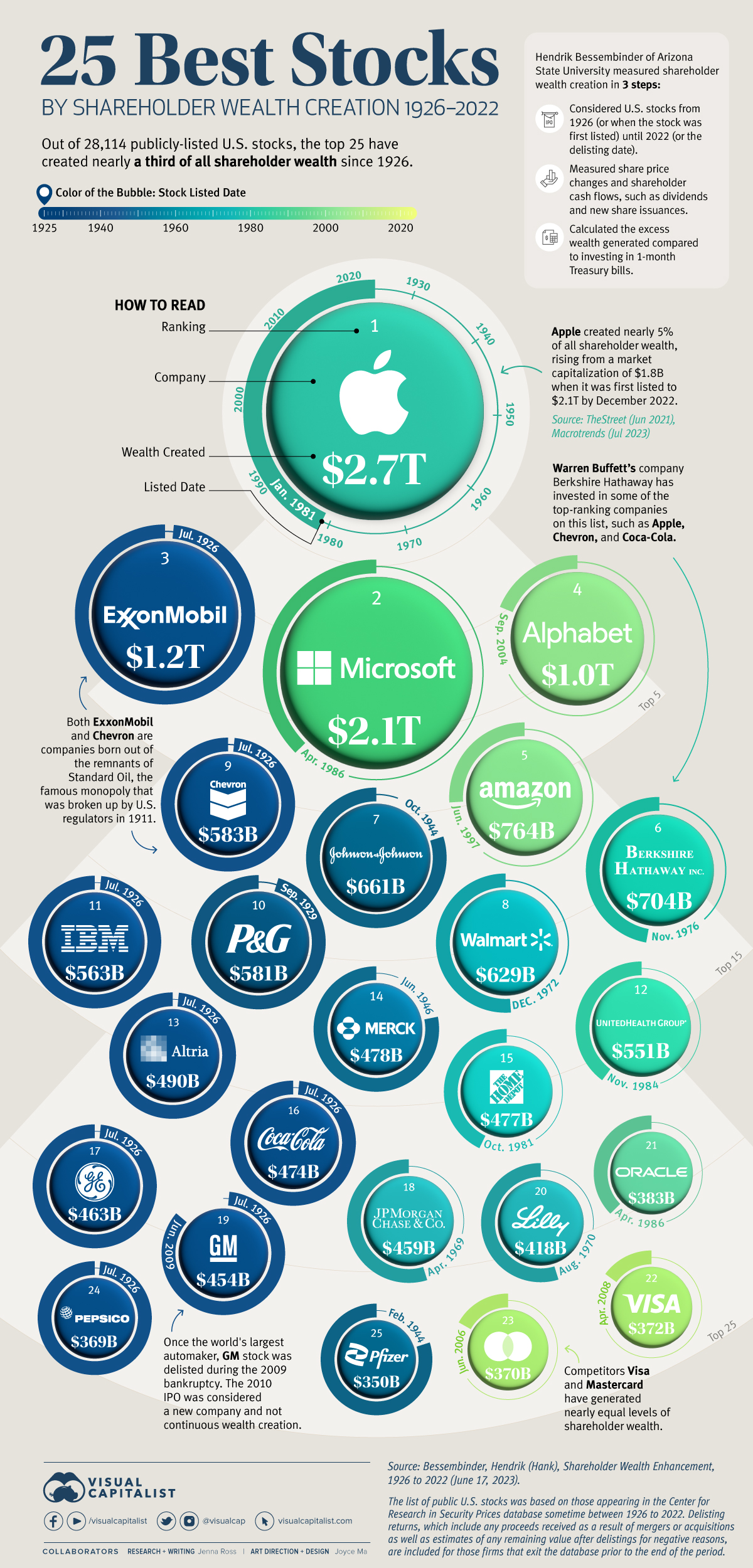
Conclusion: The Best Stock Is a Continuous Commitment
The search for the best stock to invest in is ultimately a search for quality, value, and alignment with your personal financial journey. There is no magic ticker symbol that guarantees success. Instead, the “best” investment is one that is made after rigorous research, fits within a diversified strategy, and is held with the discipline to ignore short-term market noise.
Whether you choose to invest in high-flying tech innovators, steady dividend-paying giants, or broad-market index funds, the most important factor is the time you spend in the market, not just the timing of the market. By focusing on fundamental health, competitive advantages, and macroeconomic trends, you can build a portfolio that stands the test of time and turns the “best” stocks into lasting personal wealth.
aViewFromTheCave is a participant in the Amazon Services LLC Associates Program, an affiliate advertising program designed to provide a means for sites to earn advertising fees by advertising and linking to Amazon.com. Amazon, the Amazon logo, AmazonSupply, and the AmazonSupply logo are trademarks of Amazon.com, Inc. or its affiliates. As an Amazon Associate we earn affiliate commissions from qualifying purchases.