
In the intricate world of finance, numbers tell a story. They reveal growth, highlight trends, and provide the insights necessary for sound decision-making, whether you’re managing a household budget, running a multinational corporation, or navigating the volatile waters of the stock market. Among the myriad of financial metrics, understanding and calculating the “percentage of increase” stands out as an indispensable skill. It’s not just an academic exercise; it’s the lens through which we measure progress, evaluate performance, and project future potential. From tracking the growth of your investments and monitoring rising expenses to assessing business revenue surges and analyzing market trends, the ability to accurately figure percentage increases empowers individuals and organizations alike to make informed, strategic choices. This guide will demystify the calculation, explore its profound relevance across various financial domains, and equip you with the knowledge to wield this powerful financial tool effectively.
Understanding the Essence of Percentage Increase
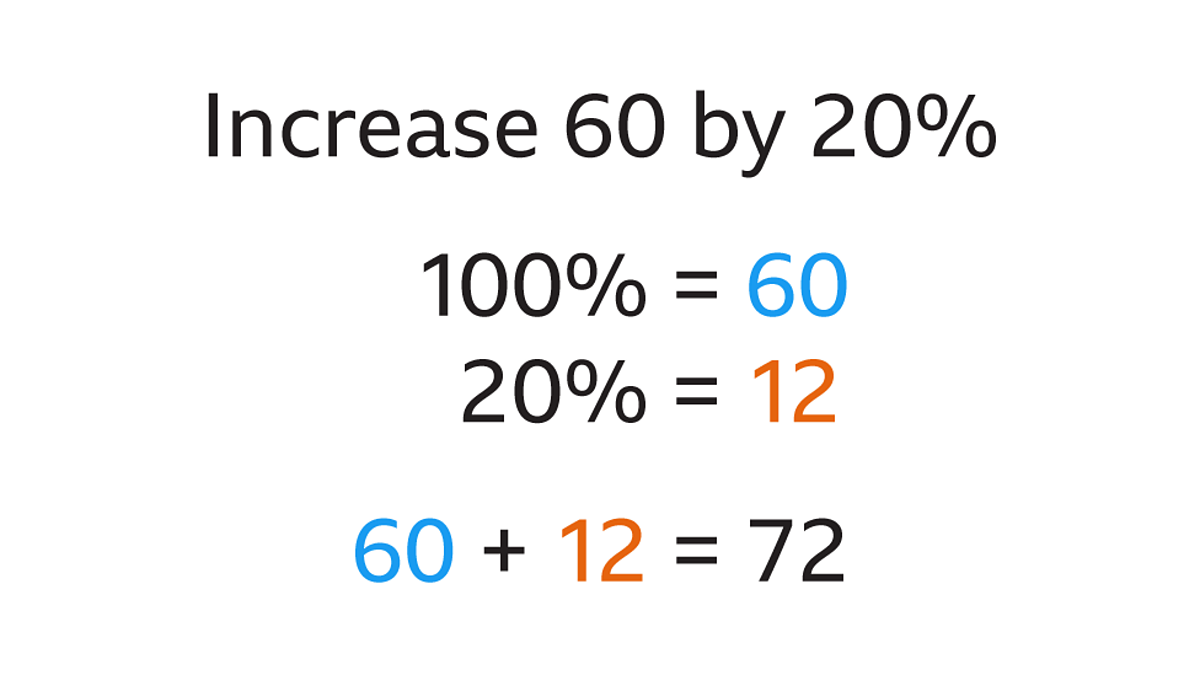
At its core, a percentage increase quantifies the relative change between two numbers, expressing that change as a proportion of the original amount. It provides a standardized way to compare growth or expansion, irrespective of the absolute values involved. Without percentages, comparing a $100 profit increase on a $1,000 investment to a $10,000 profit increase on a $1,000,000 investment would be less intuitive. Percentages level the playing field, showing that both represent a 10% increase, thus making their growth directly comparable.
What is Percentage Increase?
Percentage increase refers to the extent to which a quantity has grown over a period, expressed as a percentage of its initial value. It’s a powerful relative measure that provides context far beyond simple subtraction. For instance, knowing your salary increased by $5,000 is good, but knowing it increased by 10% tells you much more about your financial trajectory relative to your starting point and potentially, relative to inflation or industry standards. It allows for a standardized interpretation of growth, making comparisons between different entities or periods more meaningful.
Why is it Crucial in Finance?
The importance of percentage increase in finance cannot be overstated. It’s the language of growth, enabling clear communication and precise analysis across all financial sectors. For personal finance, it helps individuals track the appreciation of assets, the escalation of liabilities, or the rise in income. In business, it’s vital for measuring sales growth, profit margins, and operational efficiency improvements. Investors rely on it to evaluate stock performance, portfolio returns, and the effectiveness of their investment strategies. Without this metric, financial analysis would be a cumbersome task of comparing raw numbers, devoid of the crucial context that percentages provide. It allows for the comparison of apples to oranges, transforming disparate absolute figures into comparable growth rates.
Key Scenarios Where Percentage Increase Matters
The application of percentage increase is ubiquitous in financial discussions. Consider these common scenarios:
-
Investment Performance: How much has your stock portfolio grown this year?
-
Salary Negotiations: What was the percentage increase in your salary from the previous year?
-
Business Growth: By what percentage did sales revenue increase quarter-over-quarter?
-
Expense Management: What is the percentage increase in your utility bills compared to last year?
-
Economic Indicators: What is the percentage increase in the Consumer Price Index (CPI), indicating inflation?
-
Loan Interest: What is the annual percentage rate (APR) increase on a variable-rate loan?
In each scenario, a simple percentage increase calculation provides immediate clarity and actionable insights.
The Core Formula: Demystifying the Calculation
Calculating the percentage of increase is straightforward once you understand the underlying formula and the logic behind it. It involves three key components: the initial value, the final value, and the difference between them.
Breaking Down the Formula
The fundamental formula to calculate the percentage of increase is:
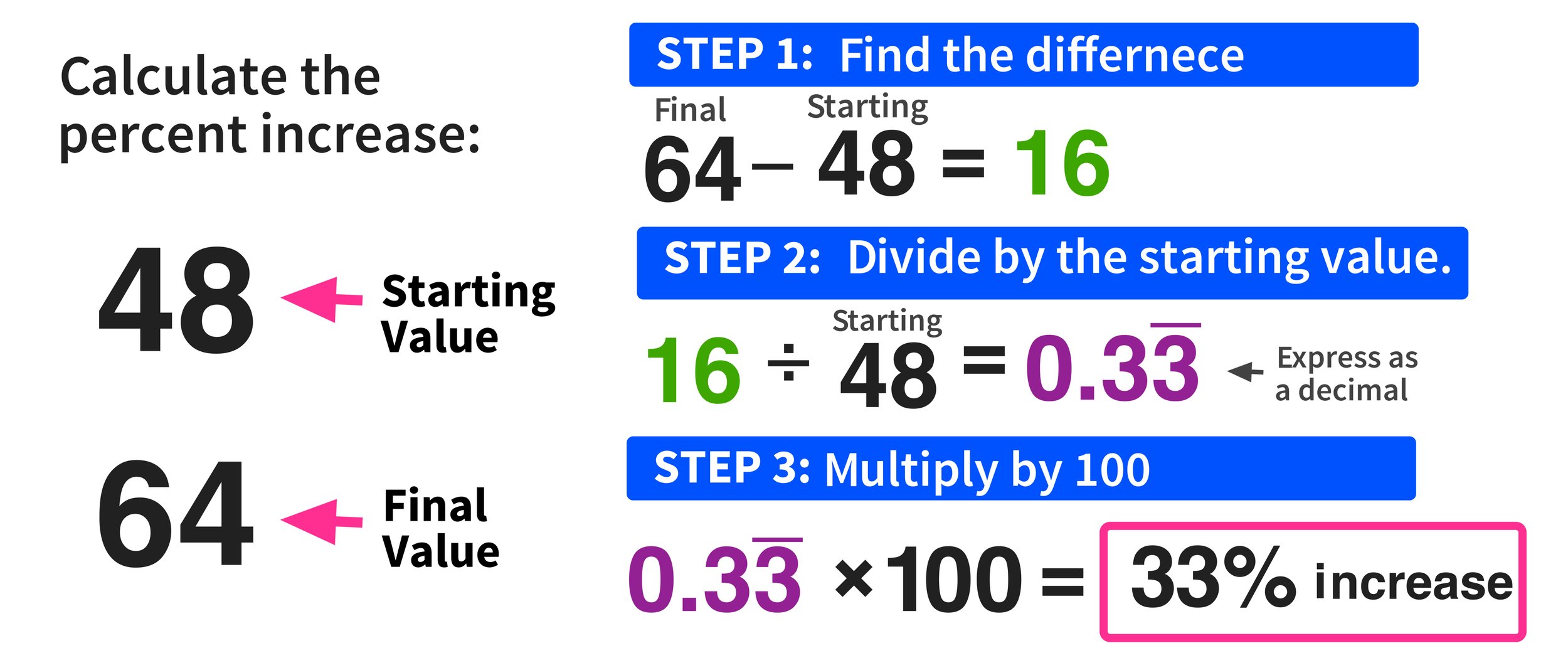
Percentage Increase = ((Final Value – Initial Value) / Initial Value) * 100
Let’s break down each part:
-
Final Value: This is the newer, larger number after the increase has occurred.
-
Initial Value: This is the original, smaller number before the increase.
-
(Final Value – Initial Value): This part calculates the absolute amount of the increase. It tells you how much the value has gone up in raw numbers.
-
(/ Initial Value): Dividing the absolute increase by the initial value converts the raw increase into a decimal representation of growth relative to the starting point.
-
(* 100): Multiplying by 100 converts that decimal into a percentage, making it easier to read and understand.
Step-by-Step Calculation Guide
Let’s walk through an example to solidify your understanding.
Scenario: Your investment portfolio was worth $50,000 at the beginning of the year and grew to $57,500 by the end of the year. What is the percentage increase in your portfolio’s value?
-
Identify the Initial Value: $50,000
-
Identify the Final Value: $57,500
-
Calculate the Absolute Increase:
- Final Value – Initial Value = $57,500 – $50,000 = $7,500
-
Divide the Absolute Increase by the Initial Value:
- $7,500 / $50,000 = 0.15
-
Multiply by 100 to get the Percentage:
- 0.15 * 100 = 15%
Therefore, your investment portfolio experienced a 15% increase in value.
Common Pitfalls to Avoid
While the formula is simple, a few common mistakes can lead to incorrect results:
-
Interchanging Initial and Final Values: Always ensure you subtract the initial value from the final value, and then divide by the initial value. Reversing these will yield incorrect results.
-
Forgetting to Multiply by 100: The result of the division (e.g., 0.15) is a decimal, not a percentage. Always multiply by 100 to express it as a percentage.
-
Rounding Too Early: When performing complex calculations, avoid rounding intermediate results. Round only the final percentage to the desired number of decimal places for accuracy.
-
Negative Initial Values: The concept of percentage increase is generally applied to positive initial values. If your initial value is zero or negative, the interpretation of a percentage increase can become problematic or undefined.
Practical Applications Across Financial Domains
The utility of figuring percentage increases extends across virtually every facet of finance, providing invaluable insights for different stakeholders.
Personal Finance: Tracking Growth and Changes
For individuals, percentage increase is a critical tool for managing personal wealth, understanding spending patterns, and planning for the future.
Savings and Investments
Monitoring the percentage growth of savings accounts, mutual funds, or individual stocks helps you assess the effectiveness of your investment strategies and benchmark your returns against market averages or personal goals. A 7% annual return on an investment portfolio is much more informative than just knowing the dollar amount, as it provides a clear picture of its compounding power over time.
Salary and Income
When discussing raises or promotions, a percentage increase puts the new compensation into perspective. A 5% raise on a $60,000 salary ($3,000) feels different from a 5% raise on a $100,000 salary ($5,000), but the relative growth rate is consistent, allowing for comparison against inflation or industry benchmarks.
Expense Management
Tracking the percentage increase in various household expenses, such as groceries, utilities, or housing costs, can highlight areas where spending is growing rapidly. If your utility bill increased by 15% last quarter, it prompts you to investigate energy consumption or look for more cost-effective providers. This proactive monitoring is essential for budget adherence and financial control.
Business Finance: Gauging Performance and Health
In the corporate world, percentage increase is a cornerstone of financial reporting, strategic planning, and performance evaluation.
Revenue Growth
Companies meticulously track the percentage increase in their revenue year-over-year or quarter-over-quarter. A high percentage growth indicates market penetration, successful product launches, or effective sales strategies, signaling a healthy and expanding business. Investors often look for strong revenue growth percentages as a key indicator of a company’s potential.
Profit Margin Expansion
While revenue growth is crucial, profit margin growth (the percentage increase in profit relative to revenue) is equally vital. An increase in gross profit margin or net profit margin percentage shows that a company is becoming more efficient in its operations or pricing its products more effectively, leading to greater profitability.
Operational Efficiency
Metrics like percentage increase in production output per employee, or percentage decrease in customer acquisition cost, help businesses identify operational improvements and cost efficiencies. These percentages are crucial for optimizing resource allocation and enhancing overall productivity.
Investing: Evaluating Returns and Potential
For investors, percentage increase is the primary metric for understanding the performance of their assets and portfolios.
Stock Performance
The daily, monthly, or annual percentage increase of a stock price is what investors focus on. A stock that went from $100 to $110 experienced a 10% increase, a clear and concise way to understand its performance relative to other stocks or market indices.
Portfolio Appreciation
Investors routinely calculate the percentage increase of their entire investment portfolio. This allows them to compare their portfolio’s performance against benchmarks like the S&P 500, assess the effectiveness of their asset allocation, and make necessary adjustments to meet their financial goals.
Return on Investment (ROI)
ROI is essentially a percentage increase calculation applied to an investment, often considering the profit generated relative to the initial capital invested. A 20% ROI on a new business venture clearly indicates its profitability and helps in making decisions about future investments.
Leveraging Financial Tools for Seamless Calculation
While understanding the manual calculation is essential, modern financial management often relies on tools that automate these calculations, saving time and reducing the risk of error.
Spreadsheets and Software: Your Analytical Allies
Programs like Microsoft Excel or Google Sheets are indispensable for financial analysis. They allow you to input large datasets and use simple formulas to calculate percentage increases automatically. By setting up columns for “Initial Value” and “Final Value,” you can drag a formula down thousands of rows, instantly calculating the percentage increase for each item. Financial software like QuickBooks or various investment tracking platforms also have built-in functionalities to display percentage changes in reports and dashboards, providing real-time insights.
Online Calculators and Financial Apps
For quick, one-off calculations, numerous online percentage calculators and financial apps are readily available. These tools are perfect for checking a quick investment gain, a raise offer, or a change in a budget item without setting up a full spreadsheet. Many banking and brokerage apps also present your account and investment growth in percentage terms, making it easy to track performance on the go.
When to Use Manual vs. Automated Methods
The choice between manual calculation and automated tools depends on the context:
-
Manual Calculation: Best for understanding the core concept, double-checking critical figures, or when dealing with a very small number of data points. It reinforces the financial literacy.
-
Automated Methods: Ideal for managing large datasets, recurring calculations, comprehensive financial reporting, or when speed and accuracy for multiple entries are paramount. They free up time for analysis rather than computation.
Interpreting and Acting on Percentage Increase Data
Calculating the percentage of increase is only half the battle. The true value lies in interpreting these numbers within their proper context and using them to drive informed financial decisions.
Beyond the Numbers: Context is King
A 10% increase might sound good, but its significance varies greatly depending on the context. A 10% salary increase during a period of 2% inflation is excellent. A 10% investment return when the market average is 20% might suggest underperformance. Similarly, a 10% increase in production costs might be acceptable if it leads to a 20% increase in product quality and customer satisfaction, but concerning if it’s due to inefficiencies. Always compare the percentage increase to relevant benchmarks, historical data, and prevailing economic conditions.
Setting Benchmarks and Goals
Percentage increases are fundamental for setting and tracking financial goals. Whether it’s aiming for a 15% annual return on investments, limiting expense growth to under 5%, or achieving a 20% increase in quarterly sales, these percentage-based targets provide clear, measurable objectives. Regularly calculating and comparing actual percentage increases against these benchmarks helps in evaluating progress and identifying areas that need attention.

Making Informed Financial Decisions
Ultimately, understanding percentage increases empowers you to make better financial decisions.
-
If your expenses are increasing by a higher percentage than your income, it signals a need to adjust spending or find ways to boost earnings.
-
If a particular investment consistently shows lower percentage gains than others in your portfolio, it might warrant re-evaluation.
-
For businesses, identifying products with high percentage revenue growth can guide resource allocation and marketing efforts.
-
Analyzing the percentage increase in bad debt can prompt a review of credit policies.
In conclusion, the ability to accurately figure the percentage of increase is more than just a mathematical skill; it’s a vital component of financial literacy and strategic thinking. It provides a universal language for measuring change, fostering comparisons, and uncovering the narratives hidden within financial data. By mastering this fundamental concept and applying it diligently across your personal and professional financial endeavors, you unlock a deeper understanding of economic trends, enhance your decision-making capabilities, and pave the way for greater financial success.
aViewFromTheCave is a participant in the Amazon Services LLC Associates Program, an affiliate advertising program designed to provide a means for sites to earn advertising fees by advertising and linking to Amazon.com. Amazon, the Amazon logo, AmazonSupply, and the AmazonSupply logo are trademarks of Amazon.com, Inc. or its affiliates. As an Amazon Associate we earn affiliate commissions from qualifying purchases.