
Understanding the concept of percent increase is not merely a mathematical exercise; it is a fundamental pillar of financial literacy. Whether you are tracking the growth of a stock portfolio, assessing the expansion of a business’s revenue, or negotiating a salary raise to keep up with inflation, the ability to calculate and interpret percentage changes is essential. In the world of money, numbers tell a story, and the percent increase is the narrative arc of progress.
This guide provides a comprehensive breakdown of how to calculate percent increase, its strategic importance in personal and business finance, and how to use these metrics to make informed financial decisions.
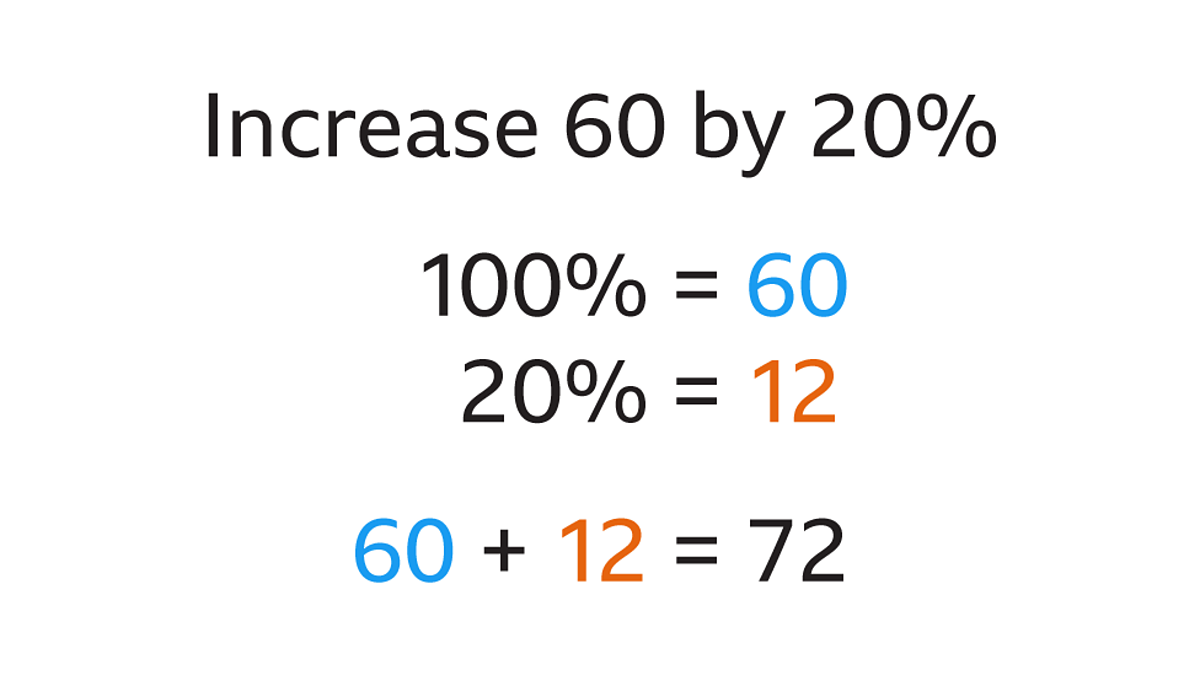
The Mechanics of Growth: Mastering the Percent Increase Formula
At its core, a percent increase represents the difference between a final value and an initial value, expressed as a fraction of the initial value. In finance, this allows investors and business owners to normalize data, making it easier to compare the performance of different assets or time periods regardless of their absolute dollar amounts.
The Standard Formula
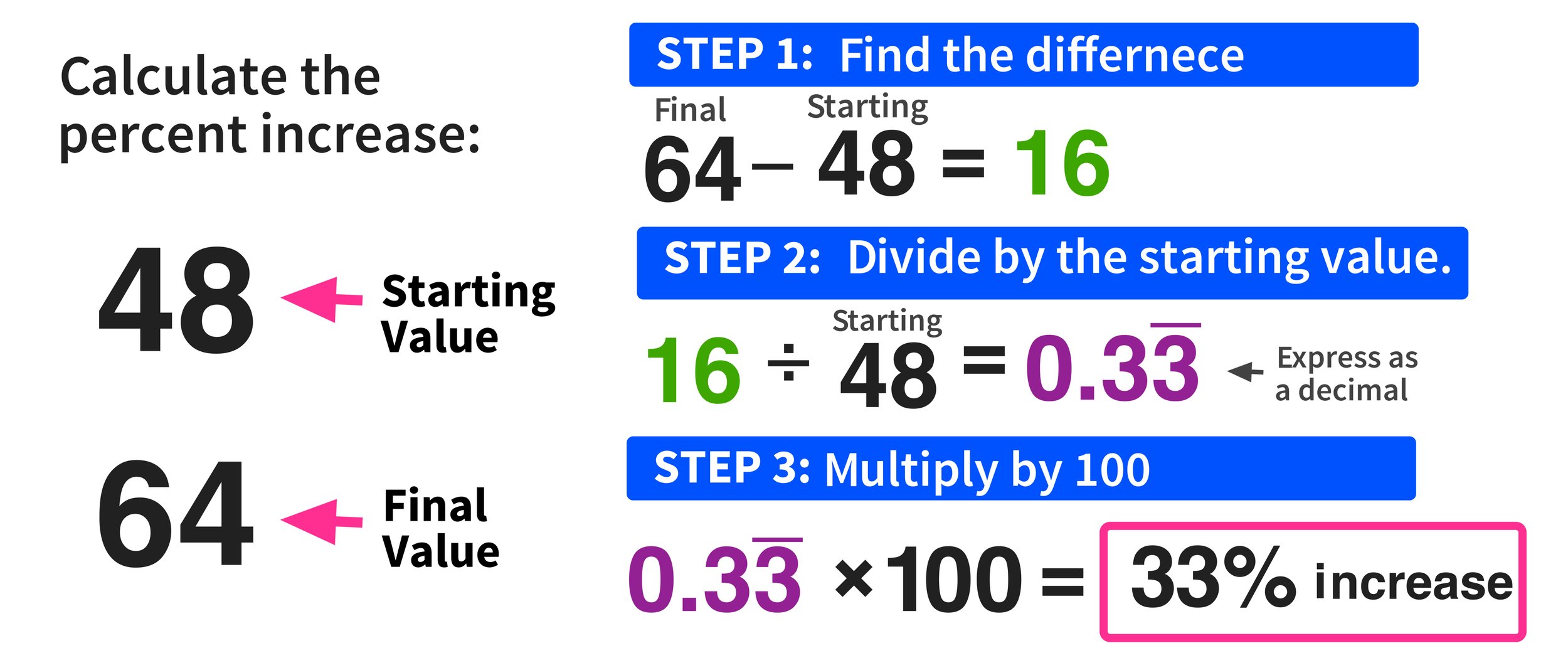
To calculate the percent increase, you follow a simple three-step process:
- Subtract the original (old) value from the new value to find the “increase.”
- Divide that increase by the original value.
- Multiply the result by 100 to convert it into a percentage.
Mathematically, it looks like this:
((New Value – Old Value) / Old Value) × 100 = Percent Increase
For example, if you invested $5,000 in a brokerage account last year and it is now worth $6,200, your calculation would be:
($6,200 – $5,000) = $1,200
($1,200 / $5,000) = 0.24
0.24 × 100 = 24% increase.
Why the “Old Value” Matters
A common mistake in financial analysis is dividing the increase by the new value. This is a critical error because it changes the context of the growth. In finance, we measure growth relative to where we started. If you start with $100 and end with $150, you have gained 50% of your initial capital. If you were to divide by the new value ($50/$150), you would get 33.3%, which describes the “margin” or the portion of the final value that is profit—not the growth rate itself. Understanding this distinction is vital for accurate reporting and goal setting.
Handling Negative Results
If your calculation yields a negative number, you are looking at a percent decrease rather than an increase. In the context of money, this indicates a loss or a contraction. Professional investors often refer to this as “drawdown.” While the formula remains the same, the interpretation shifts from growth to risk management.
Investing and Portfolio Performance: Beyond the Basic Increase
In the world of investing, percent increase is the primary metric for measuring Return on Investment (ROI). However, looking at a simple percent increase in isolation can sometimes be misleading. To truly understand money, you must look at how these increases interact with time and compounding.
Tracking Asset Appreciation
Whether you are holding equities, real estate, or cryptocurrencies, the percent increase tells you how much your capital has appreciated. For a real estate investor, if a property purchased for $300,000 sells for $450,000 five years later, the total percent increase is 50%. This figure is crucial for comparing the performance of that real estate asset against other potential investments, like the S&P 500 or a high-yield savings account.
The Impact of Compounding
While simple percent increase measures growth from Point A to Point B, the “Money” niche often focuses on Compound Annual Growth Rate (CAGR). This is the geometric progression ratio that provides a constant rate of return over a time period.
If your portfolio increases by 10% one year and 10% the next, your total increase isn’t just 20%; it’s 21% because the second year’s 10% increase applied to the already-grown amount from the first year. Understanding how percent increases stack—compounding—is the key to long-term wealth building. Financial tools and calculators often use the percent increase formula as their base, but savvy investors look for the “yield,” which is the percent increase generated by dividends or interest.
Benchmarking Against the Market
A 15% increase in your portfolio might seem excellent in a vacuum. However, if the broader market (like the Nasdaq or Dow Jones) saw a 25% increase in the same period, your “relative” performance is actually lagging. In business finance, we use percent increase to benchmark our success against competitors and historical norms. If your revenue increased by 5% but your industry average increased by 12%, the percent increase serves as a signal that you may be losing market share.

Personal Finance: Inflation, Salaries, and Purchasing Power
For the individual, the percent increase formula is a shield against the erosion of wealth. It is the most effective tool for measuring how your personal economy is performing relative to the macro-economy.
Measuring Purchasing Power Erosion (Inflation)
Inflation is essentially a percent increase in the cost of goods and services. When the Consumer Price Index (CPI) reports a 4% increase, it means that, on average, your money buys 4% less than it did a year ago. To maintain your standard of living, your income must see a percent increase that meets or exceeds the inflation rate. If your salary stays the same while the cost of living increases by 5%, you have effectively taken a 5% pay cut in terms of “real” purchasing power.
Salary Negotiations and Cost of Living Adjustments (COLA)
When entering a performance review, coming prepared with percent increase data is a powerful negotiation tactic. Instead of saying, “I want a $5,000 raise,” a more professional approach is to frame it within the context of value and inflation: “Based on my 15% increase in departmental efficiency and the current 4% cost-of-living increase, a 10% adjustment to my base salary would align my compensation with the value I am delivering.”
This shows a high level of financial literacy and links your personal “money” goals to the “money” logic of the corporation.
Budgeting and Expense Tracking
On the expense side, calculating the percent increase in your recurring bills can help you identify “lifestyle creep.” If your grocery bill has seen a 20% increase over six months, but your consumption habits haven’t changed, it’s time to analyze whether this is due to external price hikes or a lack of disciplined spending. By applying the percent increase formula to your monthly budget categories, you can pinpoint exactly where your cash flow is leaking.
Advanced Business Applications: Margins and Scaling
For entrepreneurs and business finance professionals, the percent increase is a diagnostic tool used to measure the health and scalability of a venture.
Revenue vs. Profit Growth
A common pitfall in business is focusing exclusively on the percent increase in revenue (top-line growth) while ignoring the percent increase in expenses. A company might boast a 50% increase in sales, but if the cost of goods sold (COGS) increased by 70%, the business is actually becoming less profitable.
Sophisticated financial analysis involves comparing the percent increase of different line items on an income statement. Ideally, you want to see “operating leverage,” where your revenue percent increase is higher than your expense percent increase.
Scaling Your Side Hustle
For those managing a side hustle or a small online business, percent increase is the best way to determine when to “scale up.” If you spend $100 on ads and make $200 in sales, you have a 100% return. If you can maintain that 100% increase as you scale your ad spend to $1,000, your business model is proven. Tracking the percent increase in Customer Acquisition Cost (CAC) versus the percent increase in Lifetime Value (LTV) is the golden ratio for sustainable online income.
Margin Analysis vs. Percent Increase
It is important to distinguish between “markup” (a percent increase) and “profit margin.”
- Markup is the percent increase applied to the cost to get the selling price. If an item costs $10 and you sell it for $15, the markup is 50%.
- Profit Margin is the percentage of the selling price that is profit. In the same example, the $5 profit divided by the $15 selling price is a 33.3% margin.
Confusing these two can lead to disastrous pricing strategies. A business owner must understand that a 50% markup does not equal a 50% profit margin.
Conclusion: The Language of Financial Success
In the realm of money, the percent increase is more than just a calculation—it is the language of growth, risk, and opportunity. Mastering this simple formula allows you to see past the raw numbers and understand the underlying trends of your financial life.
By consistently applying percent increase calculations to your investments, your career earnings, and your business ventures, you gain the clarity needed to optimize your wealth. Whether you are aiming for a 7% annual return in the stock market or trying to reduce your overhead by 10%, the path to financial freedom is paved with percentages. Use them to measure your past, manage your present, and project your future.
aViewFromTheCave is a participant in the Amazon Services LLC Associates Program, an affiliate advertising program designed to provide a means for sites to earn advertising fees by advertising and linking to Amazon.com. Amazon, the Amazon logo, AmazonSupply, and the AmazonSupply logo are trademarks of Amazon.com, Inc. or its affiliates. As an Amazon Associate we earn affiliate commissions from qualifying purchases.