
Building a secure financial future requires a combination of discipline, time, and the strategic use of tax-advantaged investment vehicles. Among the most potent tools available to the American investor is the Traditional Individual Retirement Account (IRA). Designed to encourage long-term saving, the Traditional IRA offers immediate tax benefits that can significantly lower your annual tax bill while providing a robust framework for capital appreciation. However, contributing to one is not merely a matter of moving money from a checking account to an investment account; it requires an understanding of IRS regulations, income thresholds, and strategic timing.

Understanding the Fundamentals of Traditional IRAs
Before initiating a contribution, it is essential to understand what a Traditional IRA is and how it functions within the broader context of a financial plan. At its core, a Traditional IRA is a tax-deferred retirement savings account. Unlike a standard brokerage account, where you pay taxes on dividends and capital gains every year, the growth within an IRA is shielded from the Internal Revenue Service until you begin making withdrawals in retirement.
Tax Advantages and the Deduction Mechanism
The primary draw of the Traditional IRA is the potential for an upfront tax deduction. When you contribute “pre-tax” dollars, you effectively lower your Modified Adjusted Gross Income (MAGI) for that year. For example, if you earn $70,000 and contribute $7,000 to a Traditional IRA, the IRS only taxes you as if you earned $63,000, provided you meet the eligibility requirements for a full deduction. This immediate tax relief provides more “dry powder” for your investments to grow.
Eligibility Criteria: Who Can Contribute?
Eligibility for a Traditional IRA is relatively broad, but there are two non-negotiable requirements. First, you must have “earned income.” This includes wages, salaries, bonuses, commissions, and self-employment income. Passive income, such as rental income or stock dividends, does not count toward the contribution limit. Second, while there used to be an age cap for contributions, the SECURE Act of 2019 eliminated the age limit, meaning you can contribute at any age as long as you are still working.
Step-by-Step Guide to Making Your Contribution
Once you have determined that you are eligible, the process of actually placing your money into the account involves several logistical steps. Professionalism in managing these steps ensures that your funds are tracked correctly and that you remain in compliance with federal law.
Choosing a Custodian or Brokerage
The first step is selecting a custodian—the financial institution that will hold your IRA. Most investors choose between large discount brokerages, mutual fund companies, or robo-advisors. When selecting a custodian, consider the fee structure. Look for “no-fee” IRAs that do not charge annual maintenance fees and offer commission-free trading for stocks and Exchange-Traded Funds (ETFs).
Opening and Categorizing the Account
When you sign up, you must specifically designate the account as a “Traditional IRA.” During the application process, you will provide your Social Security number, employment information, and beneficiary designations. Beneficiary designations are critical; they determine who inherits the account assets upon your passing, bypassing the often lengthy and expensive probate process.
Funding the Account: Methods of Transfer
There are several ways to move money into your IRA:
-
Electronic Transfer (ACH): This is the most common method, linking your bank account to your brokerage.
-
Check: You can mail a physical check to the custodian, though this is becoming less common.
-
Wire Transfer: Useful for large, one-time movements of cash, though banks often charge a fee for this service.
-
Rollovers: If you have an old 401(k) from a previous employer, you can “roll” those funds into your Traditional IRA. While this isn’t a “contribution” in the sense that it doesn’t count against your annual limit, it is a primary way these accounts are funded.
Selecting Your Investment Assets
A common mistake among novice investors is contributing cash to an IRA and leaving it there. A Traditional IRA is a “shell” or a “bucket”; once the money is inside, you must use it to purchase assets. Depending on your risk tolerance and time horizon, you might invest in a diversified portfolio of low-cost index funds, target-date funds, individual equities, or high-grade bonds.
Contribution Limits, Deadlines, and Income Thresholds
The IRS strictly regulates how much you can put into a Traditional IRA and whether those contributions are tax-deductible. These numbers are often adjusted annually to account for inflation.

Annual Contribution Limits
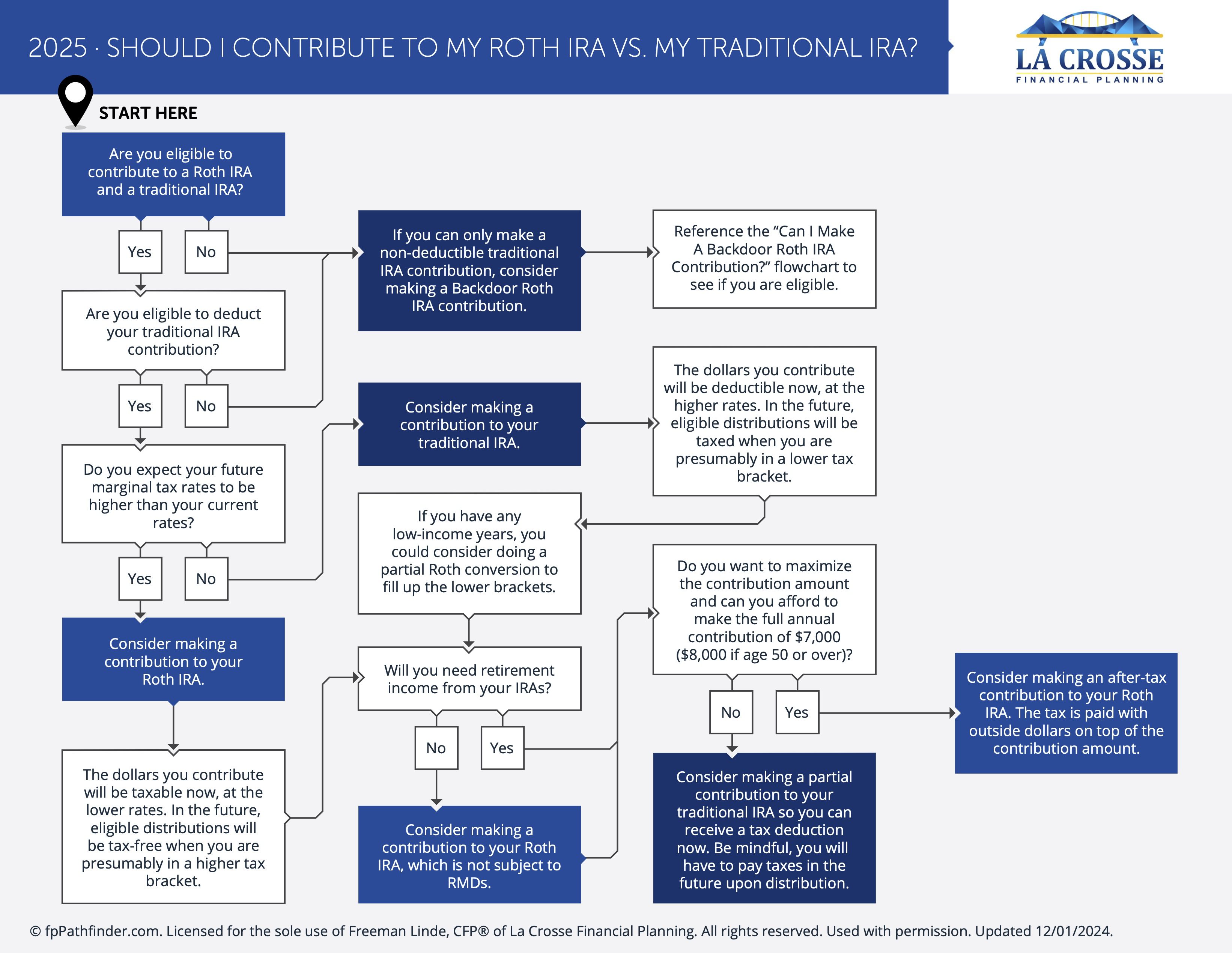
For the 2023 tax year, the contribution limit is $6,500. For the 2024 tax year, this limit increased to $7,000. These limits apply across all your IRAs combined. If you have both a Roth IRA and a Traditional IRA, your total contributions to both cannot exceed the annual limit.
The “Catch-Up” Provision
Investors aged 50 and older are granted a “catch-up” contribution. This allows for an additional $1,000 per year above the standard limit. This provision is designed to help those closer to retirement age accelerate their savings rate.
The April 15 Rule
One of the unique features of the IRA is the ability to contribute “retroactively.” You have until the tax filing deadline—typically April 15—to make a contribution for the previous tax year. For instance, you could make a contribution in March 2024 and designate it for the 2023 tax year. This provides a valuable window for taxpayers to assess their tax liability and use an IRA contribution to lower their bill at the last minute.
Deductibility and Income Phase-Outs
While anyone with earned income can contribute to a Traditional IRA, not everyone can deduct those contributions from their taxes. If you or your spouse are covered by a retirement plan at work (like a 401(k)), your ability to deduct the contribution is phased out based on your MAGI.
-
Single Filers: For 2024, the deduction begins to phase out at a MAGI of $77,000 and is completely eliminated at $87,000.
-
Married Filing Jointly: If the spouse making the contribution is covered by a workplace plan, the phase-out range is $123,000 to $143,000.
If you exceed these limits, you can still make a “non-deductible” contribution, which allows the money to grow tax-deferred, though you don’t get the immediate tax break.
Strategic Considerations for Maximum Growth
Simply making a contribution is the baseline. To truly optimize a Traditional IRA, an investor should employ strategies that leverage the power of the tax code and market mechanics.
Automating Your Contributions
The most successful investors treat their IRA contribution like a monthly utility bill. By setting up an automated transfer of $583.33 per month (to reach the $7,000 annual limit), you benefit from Dollar Cost Averaging (DCA). This strategy involves buying more shares when prices are low and fewer when prices are high, lowering your average cost per share over time and removing the emotional stress of trying to “time the market.”
Spousal IRAs for Non-Working Partners
Generally, you need earned income to contribute to an IRA. However, the “Spousal IRA” rule is a significant exception. If one spouse works and the other does not, the working spouse can contribute to an IRA on behalf of the non-working spouse, provided the couple files a joint tax return and the working spouse’s income covers both contributions. This is an excellent way for single-income households to double their retirement savings capacity.
Tax-Efficient Asset Placement
Since the Traditional IRA is tax-deferred, it is the ideal place to hold investments that generate significant taxable income. This includes Real Estate Investment Trusts (REITs), which pay high dividends, or high-yield bond funds. By holding these in an IRA rather than a taxable brokerage account, you avoid paying annual taxes on those distributions, allowing the full amount to be reinvested.
Common Pitfalls and Tax Implications
Navigating the IRS code requires precision. Mistakes can lead to penalties that erode the very growth you are trying to build.
Excess Contributions and Penalties
If you accidentally contribute more than the allowed limit, the IRS imposes a 6% excise tax on the excess amount for each year it remains in the account. To fix this, you must withdraw the excess contribution and any earnings associated with it before you file your tax return for that year.
Early Withdrawal Rules
The Traditional IRA is a long-term commitment. Generally, if you withdraw funds before age 59½, you will face a 10% early withdrawal penalty in addition to regular income taxes on the amount withdrawn. There are exceptions for first-time home purchases (up to $10,000), qualified higher education expenses, and certain medical emergencies, but these should be used as a last resort.
Required Minimum Distributions (RMDs)
The IRS eventually wants its tax money. Under current law (following the SECURE 2.0 Act), you must begin taking Required Minimum Distributions (RMDs) from your Traditional IRA starting at age 73 (rising to 75 in 2033). Failure to take an RMD can result in a penalty of up to 25% of the amount that should have been withdrawn. Planning for these distributions is a vital part of late-stage retirement strategy, as they can push you into a higher tax bracket during your retirement years.
In summary, contributing to a Traditional IRA is a foundational move for any serious investor. By understanding the nuances of deductibility, staying within annual limits, and selecting a diversified range of investments, you can effectively use this vehicle to mitigate your current tax burden while building a substantial nest egg for the future. Consistency and adherence to IRS guidelines are the keys to transforming a simple contribution into a cornerstone of financial independence.
aViewFromTheCave is a participant in the Amazon Services LLC Associates Program, an affiliate advertising program designed to provide a means for sites to earn advertising fees by advertising and linking to Amazon.com. Amazon, the Amazon logo, AmazonSupply, and the AmazonSupply logo are trademarks of Amazon.com, Inc. or its affiliates. As an Amazon Associate we earn affiliate commissions from qualifying purchases.