
In the intricate world of finance, from personal budgeting to complex corporate analysis, understanding percentages is not merely a mathematical exercise; it’s a foundational skill for informed decision-making. Whether you’re trying to decode a sales discount, evaluate investment returns, calculate loan interest, or even just understand your tax obligations, percentages provide a universal language for proportional relationships. They allow us to compare quantities, track growth or decline, and make sense of financial data in a standardized, easily digestible format.
This guide delves deep into the methodology of calculating percentages of amounts, framing each explanation and example within the vital context of money management. By mastering these calculations, you equip yourself with the analytical prowess necessary to navigate the financial landscape with confidence and precision, ensuring that every financial choice you make is backed by solid understanding.
Understanding the Fundamentals of Percentages in Finance
Before we dive into the specific calculations, it’s crucial to establish a solid understanding of what a percentage truly represents and how it functions within the financial realm. This fundamental knowledge forms the bedrock for all subsequent, more complex financial computations.
What is a Percentage? The Financial Context
At its core, a “percentage” means “per hundred” or “out of every hundred.” It’s a way of expressing a number as a fraction of 100. The symbol “%” is universally recognized as the indicator for percentages. In finance, this concept is incredibly powerful because it allows for easy comparison of different amounts, regardless of their original scale. For instance, knowing that a company’s profit margin is 15% tells you more about its efficiency than simply knowing it made $1.5 million in profit, especially if you don’t know its total revenue. Similarly, comparing the interest rates of two different loans, expressed as percentages, immediately clarifies which one is more costly, rather than trying to compare the raw dollar figures which might be tied to different principal amounts.
The Core Formula: Part / Whole * 100%
The universal formula for calculating a percentage is elegantly simple and profoundly versatile:
Percentage = (Part / Whole) * 100%
Let’s break down these components in a financial context:
- Part: This refers to the specific amount or quantity you are interested in expressing as a percentage. In finance, this could be the discount amount, the interest earned, a portion of your budget allocated to a specific category, or the amount of tax paid.
- Whole: This is the total amount, the baseline against which the “part” is being compared. Financially, this might be the original price of an item, the principal amount of a loan or investment, your total monthly income, or a company’s total revenue.
- 100%: We multiply by 100 to convert the resulting decimal fraction into a percentage, making it easier to interpret.
Consider a simple example: If you spend $300 on groceries from a total monthly income of $3,000, your grocery expense is (300 / 3000) * 100% = 0.1 * 100% = 10% of your income. This instantly provides a clearer picture of your spending habits than just the raw dollar figure.
Converting Between Decimals, Fractions, and Percentages for Financial Clarity
Financial calculations often require switching between percentages, decimals, and sometimes even fractions. Understanding these conversions is key to accuracy and flexibility.
- Percentage to Decimal: To convert a percentage to a decimal, simply divide by 100 (or move the decimal point two places to the left). For example, 25% becomes 0.25; 5% becomes 0.05. This is frequently necessary when using percentages in formulas, such as calculating interest: 5% interest rate is used as 0.05 in a calculation.
- Decimal to Percentage: To convert a decimal to a percentage, multiply by 100 (or move the decimal point two places to the right) and add the “%” symbol. For example, 0.75 becomes 75%; 0.035 becomes 3.5%.
- Fraction to Percentage: Convert the fraction to a decimal first by dividing the numerator by the denominator, then convert the decimal to a percentage. For instance, 1/4 becomes 0.25, which is 25%. While less common for direct percentage calculations in modern finance, understanding this linkage reinforces the “part of a whole” concept.
These conversions are crucial for accurate financial modeling, spreadsheet work, and understanding reports where data might be presented in different formats.
Practical Applications: Calculating a Percentage of a Given Amount
The ability to calculate a percentage of a given amount is perhaps the most frequently used percentage skill in daily financial life. It underpins numerous transactions and analyses.
Finding Discounted Prices and Sales Tax
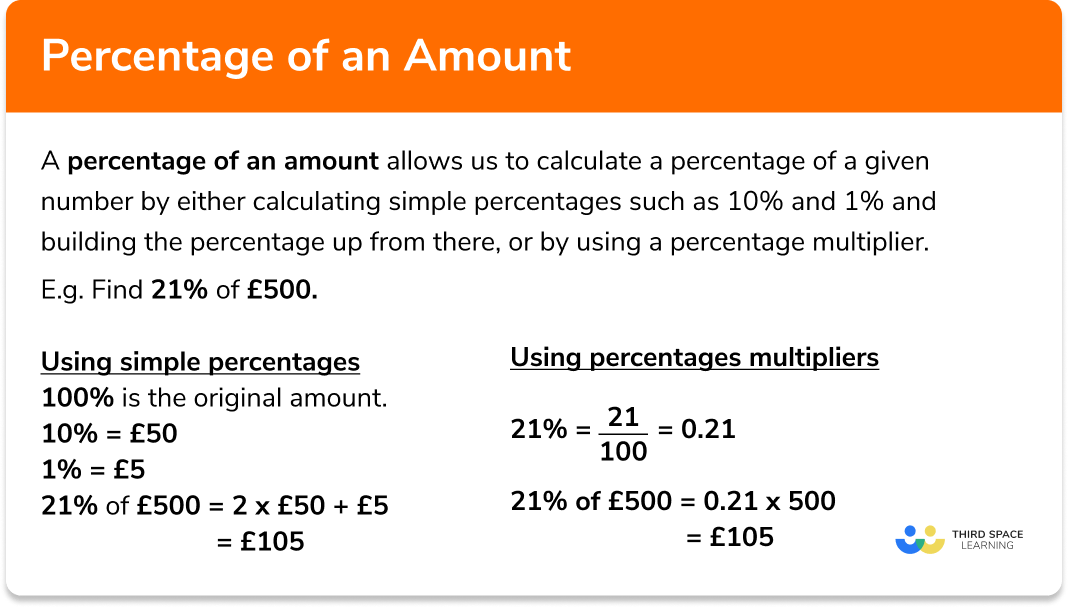
Discounts: When you see a “20% off” sign, you’re looking at a percentage discount. To calculate the discount amount, you multiply the original price by the discount percentage (as a decimal).
- Example: An item costs $150, with a 20% discount.
- Discount amount = $150 * 0.20 = $30
- New price = $150 – $30 = $120
Alternatively, you can calculate the remaining percentage (100% – 20% = 80%) and multiply that by the original price: $150 * 0.80 = $120. This method is often quicker.
Sales Tax: Similarly, sales tax is calculated as a percentage of the purchase price.
- Example: An item costs $80, and the sales tax is 7%.
- Sales tax amount = $80 * 0.07 = $5.60
- Total cost = $80 + $5.60 = $85.60
Again, a shortcut is to multiply the original price by (1 + tax rate): $80 * (1 + 0.07) = $80 * 1.07 = $85.60.
Calculating Interest on Loans or Investments
Interest is essentially the cost of borrowing money or the income earned from lending or investing money, typically expressed as a percentage rate over a period (e.g., annually).
Simple Interest: The simplest form of interest calculation involves multiplying the principal amount by the interest rate and the time period.
- Formula: Interest = Principal * Rate * Time
- Example: You take out a $10,000 loan at a 5% simple annual interest rate for 3 years.
- Annual Interest = $10,000 * 0.05 = $500
- Total Interest over 3 years = $500 * 3 = $1,500
- Total Repayment = $10,000 + $1,500 = $11,500
Compound Interest: More common in investments and many loans, compound interest calculates interest not only on the initial principal but also on the accumulated interest from previous periods. While the core calculation involves percentages, the formula is more complex, often using an exponential function. Understanding the percentage rate is still the starting point, significantly impacting long-term growth or debt.
Determining Commission and Profit Margins
Commissions: Many sales roles involve commissions, a percentage of the sales revenue or profit.
- Example: A salesperson earns a 10% commission on sales. If they sell $5,000 worth of products.
- Commission earned = $5,000 * 0.10 = $500
Profit Margins: Businesses use profit margins (gross profit margin, net profit margin) to gauge profitability.
- Gross Profit Margin: (Gross Profit / Revenue) * 100%
- Net Profit Margin: (Net Profit / Revenue) * 100%
- Example: A business has $100,000 in revenue and $30,000 in net profit.
- Net Profit Margin = ($30,000 / $100,000) * 100% = 0.30 * 100% = 30%.
This tells investors and management that for every dollar of revenue, 30 cents translate to net profit.
- Net Profit Margin = ($30,000 / $100,000) * 100% = 0.30 * 100% = 30%.
Mastering Percentage Increase and Decrease for Financial Analysis
Beyond calculating a percentage of an amount, financial analysis frequently requires understanding percentage changes. This is vital for tracking performance, comparing trends, and forecasting.

Tracking Investment Growth and Portfolio Performance
Percentage increase is the standard metric for evaluating investment performance.
- Formula: Percentage Increase = ((New Value – Original Value) / Original Value) * 100%
- Example: You invested $5,000, and it grew to $6,250.
- Percentage Increase = (($6,250 – $5,000) / $5,000) * 100%
- = ($1,250 / $5,000) * 100% = 0.25 * 100% = 25% growth.
This allows for easy comparison of different investments or different periods, regardless of the initial capital.
Analyzing Price Changes and Inflation Rates
Percentage decrease is used to measure reductions, such as price drops or depreciation.
- Formula: Percentage Decrease = ((Original Value – New Value) / Original Value) * 100%
- Example: A stock dropped from $100 to $85.
- Percentage Decrease = (($100 – $85) / $100) * 100%
- = ($15 / $100) * 100% = 0.15 * 100% = 15% decrease.
Inflation, often expressed as a percentage, measures the rate at which the general level of prices for goods and services is rising, and subsequently, purchasing power is falling. Understanding the Consumer Price Index (CPI) percentage change helps gauge the impact on your money’s value.
Calculating Salary Raises and Budget Adjustments
When your salary increases, or you adjust your budget, these changes are often expressed as percentages.
-
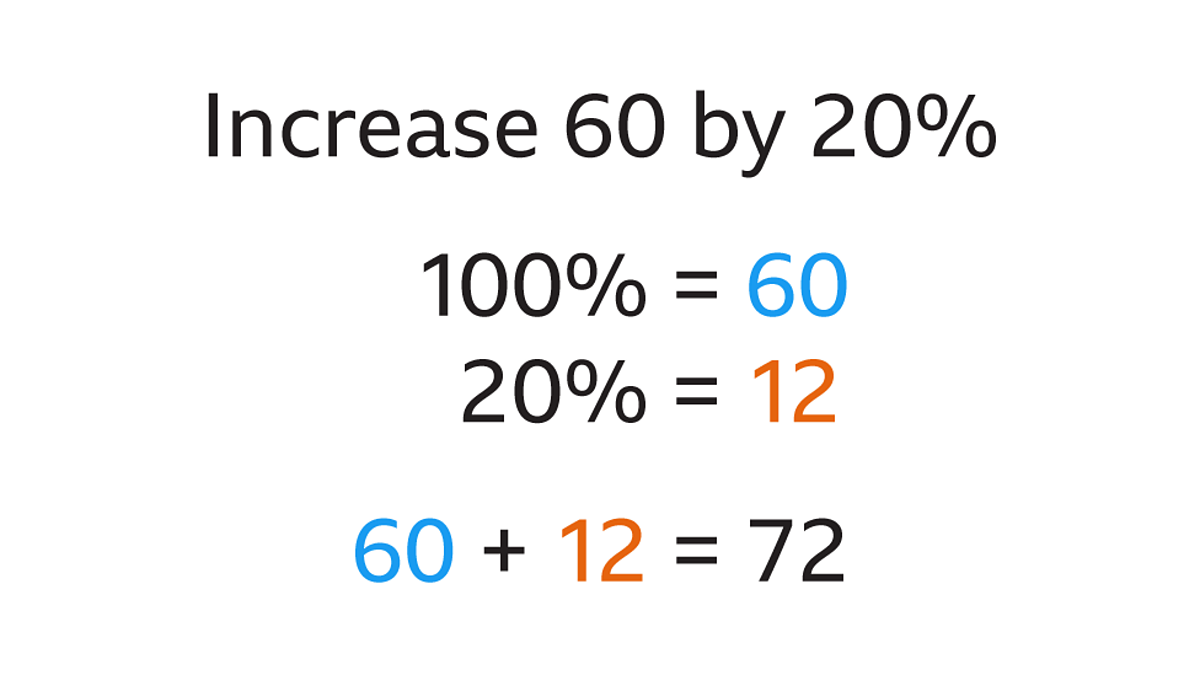
Example: Salary Raise: Your current salary is $60,000, and you receive a 5% raise.
- Raise amount = $60,000 * 0.05 = $3,000
- New salary = $60,000 + $3,000 = $63,000
- Alternatively: $60,000 * (1 + 0.05) = $63,000
-
Example: Budget Cut: You need to reduce your entertainment budget of $200 by 15%.
- Reduction amount = $200 * 0.15 = $30
- New budget = $200 – $30 = $170
- Alternatively: $200 * (1 – 0.15) = $170
These calculations are essential for personal financial planning and business operational adjustments.
Advanced Scenarios: Working Backwards with Percentages
Sometimes, you know the final amount after a percentage change and need to find the original amount. This “working backward” skill is invaluable in specific financial situations.
Uncovering Original Prices Before Discounts or Taxes
Imagine you bought an item on sale, and you know the discounted price and the percentage discount, but you want to know the original price.
-
Example: Discount: You paid $80 for an item after a 20% discount. What was the original price?
- The $80 represents 100% – 20% = 80% of the original price.
- Let ‘X’ be the original price. So, 0.80 * X = $80
- X = $80 / 0.80 = $100.
The original price was $100.
-
Example: Sales Tax: A receipt shows a total of $107, including a 7% sales tax. What was the price before tax?
- The $107 represents 100% + 7% = 107% of the original price.
- Let ‘Y’ be the price before tax. So, 1.07 * Y = $107
- Y = $107 / 1.07 = $100.
The price before tax was $100.
Determining Initial Investment from Future Value
This concept is crucial in financial planning, particularly when you know how much money you want to have in the future and need to figure out how much to invest now, assuming a certain growth rate. While often involving complex compound interest formulas, the fundamental idea relies on inverting percentage increases.
- Simplified Example (single period): You want to have $10,500 in one year, and your investment is expected to grow by 5%. How much should you invest today?
- Let ‘Z’ be the initial investment. Z * (1 + 0.05) = $10,500
- Z * 1.05 = $10,500
- Z = $10,500 / 1.05 = $10,000.
You need to invest $10,000 today.
Adjusting for Markups and Reversing Percentage Changes
Businesses often calculate selling prices by applying a markup percentage to their cost. Reversing this calculation helps understand the cost component.
- Example: Markup: An item sells for $120, and the markup was 20% of the cost. What was the cost?
- The selling price of $120 represents 100% (cost) + 20% (markup) = 120% of the cost.
- Let ‘C’ be the cost. So, 1.20 * C = $120
- C = $120 / 1.20 = $100.
The cost was $100.
These “reverse percentage” calculations are vital for financial analysts, business owners, and savvy consumers to truly understand the underlying economics of prices and values.
Leveraging Financial Tools and Technology for Percentage Calculations
While understanding the manual calculations is fundamental, in today’s fast-paced financial world, technology provides powerful tools to perform these calculations quickly, accurately, and at scale.
Spreadsheets (Excel/Google Sheets) for Complex Calculations
Spreadsheet software like Microsoft Excel or Google Sheets are indispensable financial tools. They allow you to set up formulas that automatically calculate percentages, apply them across large datasets, and even build dynamic financial models.
- Basic Percentage: If you have ‘Part’ in cell A1 and ‘Whole’ in cell B1, the formula
=(A1/B1)*100will give you the percentage. - Percentage of Amount: If you have an ‘Amount’ in A1 and a ‘Percentage Rate’ (as a decimal, e.g., 0.05 for 5%) in B1, the formula
=A1*B1will give you the percentage of the amount. - Percentage Increase/Decrease: For an original value in A1 and a new value in B1,
=( (B1-A1)/A1 )*100calculates the percentage change.
Spreadsheets handle large data sets, automate repetitive calculations, and reduce the risk of manual error, making them essential for budgeting, financial analysis, investment tracking, and business reporting.
Financial Calculators and Online Tools
For quick, on-the-go calculations or more specific financial scenarios, dedicated financial calculators and online tools are incredibly useful.
- Handheld Financial Calculators: Devices like the HP 12c or TI BA II Plus are programmed with built-in functions for time value of money (TVM), interest rates, loan payments, and more, all of which heavily rely on percentage calculations.
- Online Percentage Calculators: Numerous websites offer free percentage calculators for basic tasks like “what is X% of Y?” or “X is what % of Y?”.
- Loan and Mortgage Calculators: These tools often require percentage-based inputs (interest rates, down payment percentages) and output percentage-based results (effective interest rate, percentage of income for payments).
Mobile Apps for Everyday Financial Percentage Needs
The proliferation of smartphones means there’s an app for almost every financial calculation. From simple percentage calculators to robust budgeting apps and investment trackers, mobile applications put powerful percentage-based analysis at your fingertips.
- Budgeting Apps: Many apps automatically categorize your spending and display it as percentages of your income or budget categories, offering instant insights into your financial habits.
- Tip Calculators: A common everyday use of percentages, these apps quickly calculate tip amounts and total bills.
- Investment Apps: Provide real-time percentage changes in stock prices, portfolio growth rates, and return on investment (ROI).
These tools, while simplifying the process, still require a fundamental understanding of what percentages represent to interpret their outputs correctly and apply them wisely to your financial decisions.
Conclusion
Mastering how to calculate percentages of amounts is more than just learning a mathematical formula; it is about acquiring a critical financial literacy skill that empowers you in countless real-world scenarios. From the mundane tasks of daily budgeting and understanding sales tax to the more complex domains of investment analysis, loan comparisons, and business profitability, percentages are the common thread that weaves through nearly every aspect of personal and corporate finance.
By understanding the core mechanics of percentage calculation, its various applications for increases and decreases, and even the ability to reverse-engineer percentage changes, you gain unparalleled insight into the true cost of purchases, the potential growth of investments, and the overall health of your financial standing. Coupled with the judicious use of modern financial tools, this mastery transforms you from a passive observer of numbers into an active, informed participant in your financial journey, capable of making strategic decisions that lead to greater financial well-being and success. Embrace the power of percentages, and unlock a clearer, more confident path to financial acumen.
aViewFromTheCave is a participant in the Amazon Services LLC Associates Program, an affiliate advertising program designed to provide a means for sites to earn advertising fees by advertising and linking to Amazon.com. Amazon, the Amazon logo, AmazonSupply, and the AmazonSupply logo are trademarks of Amazon.com, Inc. or its affiliates. As an Amazon Associate we earn affiliate commissions from qualifying purchases.