
Understanding how to calculate percentages of money is perhaps the most fundamental skill in the realm of personal and business finance. Whether you are balancing a household budget, evaluating a potential investment, or managing a corporate profit and loss statement, the “percentage” is the universal language of financial health. It allows us to compare values of different scales, measure growth, and understand the relative cost of our decisions.
In this comprehensive guide, we will break down the mechanics of percentage calculations, explore their diverse applications in daily financial life, and delve into advanced metrics that can help you build long-term wealth.
Understanding the Fundamentals of Percentage Calculations in Finance
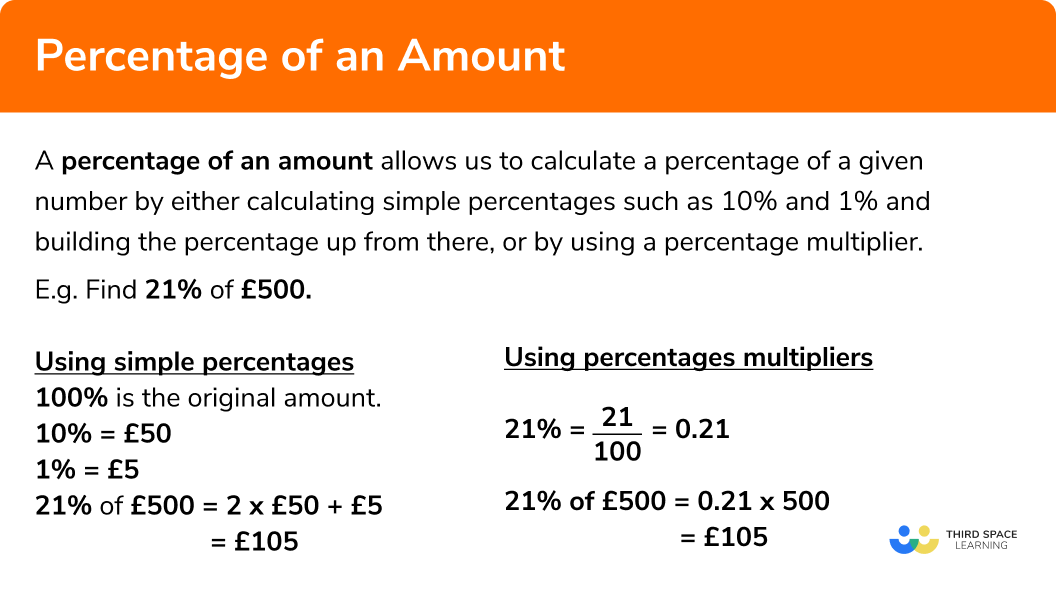
At its core, the word “percent” comes from the Latin per centum, meaning “by the hundred.” In the world of money, a percentage represents a portion of a total amount, expressed as a fraction of 100. This standardization is what makes financial comparison possible.
The Basic Formula: Part over Whole
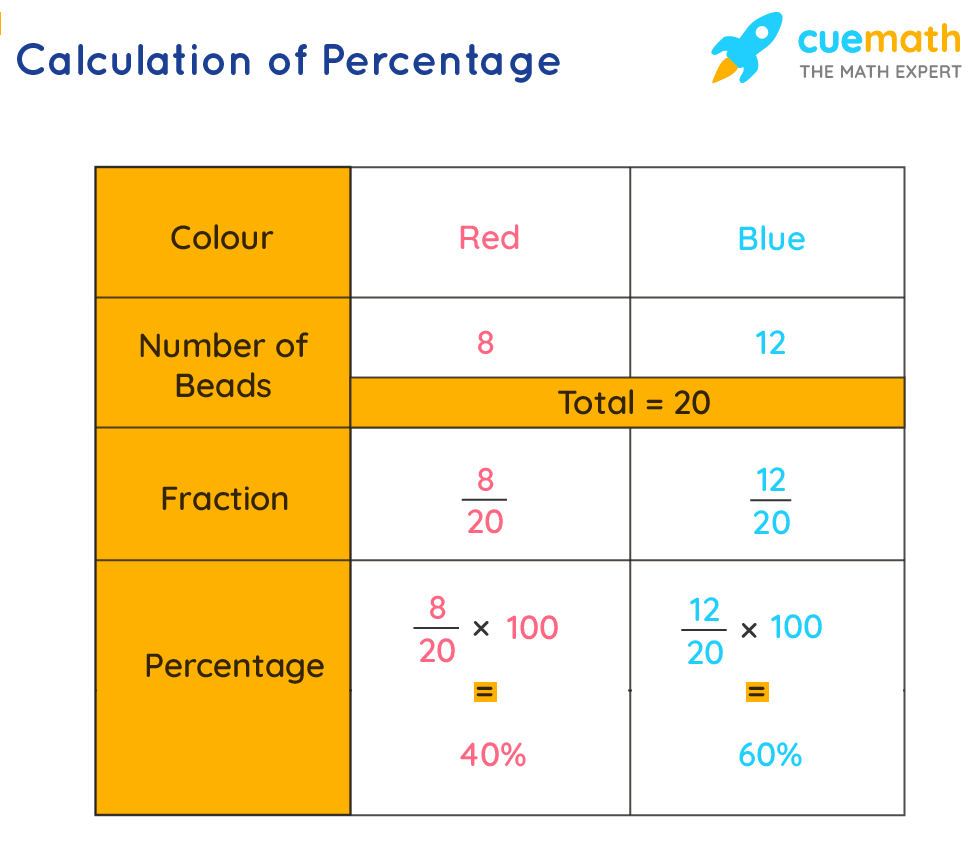
To find what percentage one amount of money is of another, you use the fundamental formula:
(Part / Whole) × 100 = Percentage
For example, if you saved $150 out of a $1,000 paycheck, you would divide 150 by 1,000 to get 0.15. Multiplying by 100 gives you 15%. This simple calculation is the bedrock of financial analysis. It tells you exactly what “slice” of your total financial pie is being allocated to a specific category.
Converting Decimals to Percentages (and Vice Versa)
In financial modeling and when using calculators, you will often work with decimals rather than whole percentage numbers.
- To convert a percentage to a decimal, move the decimal point two places to the left (25% becomes 0.25).
- To convert a decimal to a percentage, move the decimal point two places to the right (0.05 becomes 5%).
Mastering this conversion is essential when you need to calculate a specific dollar amount from a percentage. For instance, if you want to find 8% of $500, you simply multiply $500 by 0.08, resulting in $40. This “multiplication method” is the fastest way to handle sales tax, discounts, and interest rates on the fly.
Practical Applications in Personal Finance
Financial literacy begins with the ability to apply these formulas to everyday transactions. In your daily life, percentages act as a shield against overspending and a tool for smarter consumerism.
Calculating Discounts and Sales Tax
We are constantly bombarded with “percentage off” marketing. However, many consumers struggle to calculate the actual price of an item until they reach the register. To calculate a discount, you can use one of two methods:
- The Subtraction Method: Find the value of the discount (Price × Discount Rate) and subtract it from the original price.
- The Complement Method: If an item is 30% off, you are paying 70% of the price. Simply multiply the original price by 0.70 to get the final cost instantly.
Sales tax works in the opposite direction. If your local sales tax is 8.5% and you are buying a $100 item, you multiply $100 by 1.085 to find the total “out-the-door” price of $108.50.
Determining Tip Percentages for Service
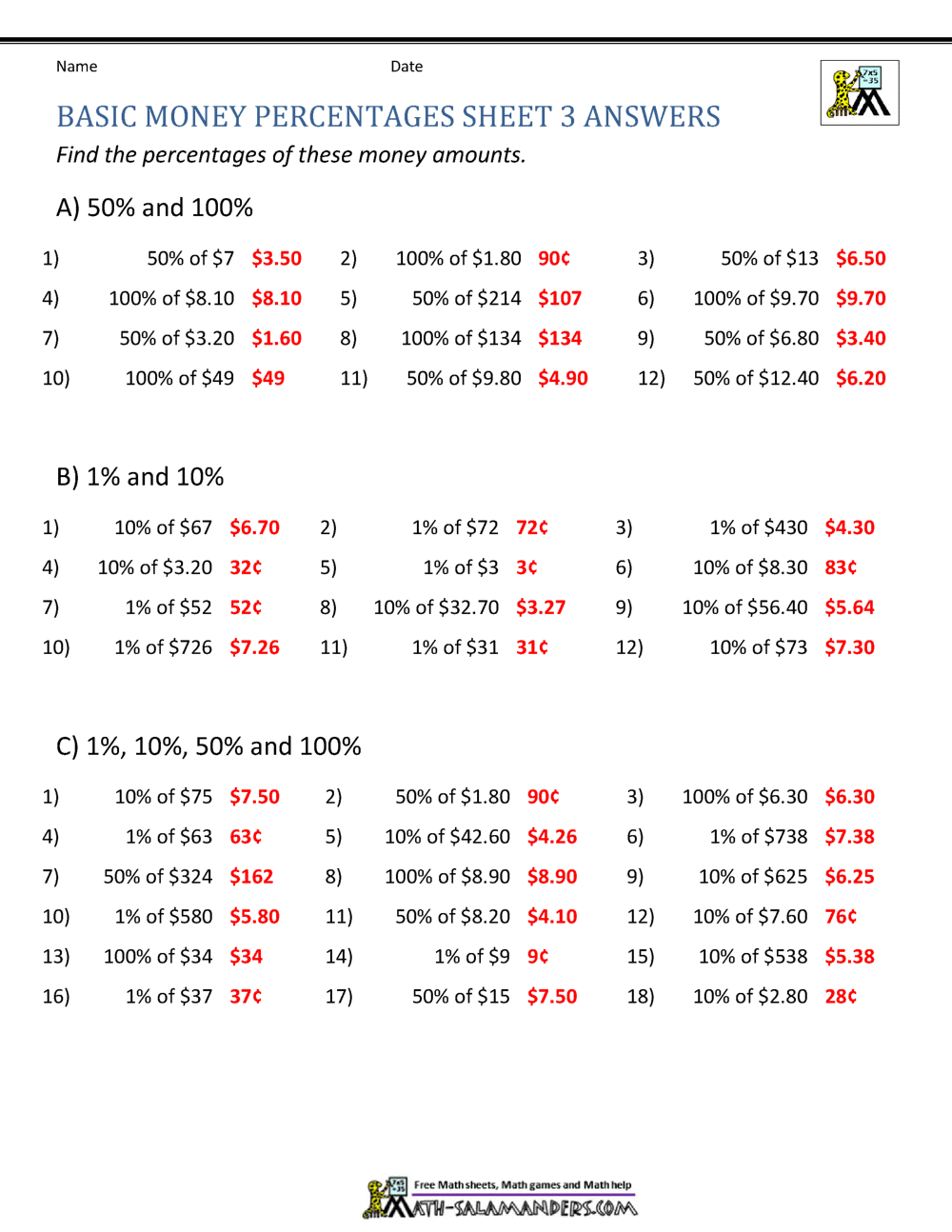
In many cultures, tipping is a standard part of the service economy. Calculating a 15%, 18%, or 20% tip is a frequent mental exercise. A professional tip for quick calculation is the “10% rule.” To find 10% of any bill, simply move the decimal one place to the left. If your bill is $64.50, 10% is $6.45. To find 20%, simply double that amount ($12.90). This logic allows for rapid financial decision-making without the need for a digital device.
Managing Your Budget with the 50/30/20 Rule
One of the most effective personal finance frameworks is the 50/30/20 budget. This rule relies entirely on percentage-based allocation of your after-tax income:
- 50% for Needs: Housing, groceries, utilities, and insurance.
- 30% for Wants: Dining out, travel, and hobbies.
- 20% for Savings and Debt Repayment: Building an emergency fund or paying down credit cards.
By viewing your money through the lens of percentages rather than fixed dollar amounts, your budget becomes scalable. Whether you earn $3,000 a month or $30,000, the percentage-based discipline remains the same, ensuring that your lifestyle does not outpace your financial security.
Advanced Financial Calculations for Wealth Building
As you move from daily spending to long-term wealth creation, percentages become even more critical. In investing, the dollar amount of a gain is less important than the percentage return relative to the risk taken.
Calculating Return on Investment (ROI)
ROI is the gold standard for measuring the efficiency of an investment. The formula is:
[(Current Value – Initial Cost) / Initial Cost] × 100 = ROI
If you buy a stock for $1,000 and sell it for $1,250, your profit is $250. While $250 might seem like a modest gain, the ROI is a healthy 25%. Understanding ROI allows you to compare different asset classes—such as real estate, stocks, or a small business—on a level playing field.
Understanding Interest Rates and Annual Percentage Yield (APY)
When you borrow money or deposit it into a savings account, you are dealing with interest. Interest is the “cost” of money, expressed as a percentage.
- Simple Interest: Calculated only on the principal amount.
- Compound Interest: Calculated on the principal and the accumulated interest.
The Annual Percentage Yield (APY) is a crucial figure because it accounts for the effects of compounding within a year. When comparing savings accounts, a 4.5% APY is significantly better than a 4.5% simple interest rate. Percentage-based awareness prevents you from falling into the trap of high-interest debt, such as credit cards that often carry a 20-25% APR (Annual Percentage Rate).
Dividend Yields and Portfolio Allocation
For income-focused investors, the “Dividend Yield” is a vital percentage. It represents how much a company pays out in dividends each year relative to its stock price. If a stock is $100 and pays $4 in annual dividends, the yield is 4%.
Furthermore, “Asset Allocation” is the practice of dividing your investment portfolio among different asset categories based on percentages (e.g., 60% stocks, 40% bonds). Maintaining these percentages through a process called “rebalancing” is a proven strategy for managing risk over time.
Business and Corporate Finance Perspectives
In a business context, percentages are used to measure performance, efficiency, and sustainability. A company with high revenue but low percentage margins is often in a more precarious position than a smaller company with high margins.
Profit Margin Analysis
There are two primary ways businesses look at profit percentages:
- Gross Profit Margin: This measures the percentage of revenue that exceeds the cost of goods sold (COGS). It shows how efficiently a company produces its products.
- Net Profit Margin: This is the “bottom line.” It is the percentage of revenue left over after all operating expenses, interest, and taxes have been paid.
A net profit margin of 10% means that for every dollar the company brings in, it keeps $0.10 as profit. Monitoring these percentages helps business owners identify where they might be overspending on overhead or underpricing their services.
Overhead and Expense Ratios
Businesses use “expense ratios” to determine what percentage of their total revenue is consumed by fixed costs like rent, payroll, and utilities. If a business’s rent takes up 30% of its revenue, but the industry standard is 15%, the business owner knows exactly where the financial leak is. Percentages turn raw data into actionable intelligence.
Tools and Tips for Error-Free Calculations
In the modern era, while mental math is useful, precision is paramount. Small errors in percentage calculations can lead to significant financial discrepancies over time.
Leveraging Spreadsheet Software (Excel/Google Sheets)
For complex financial planning, spreadsheets are indispensable. In Excel, you don’t need to multiply by 100 manually. If you have a value in cell A1 and the total in B1, typing =A1/B1 and then clicking the “Percent Style” button (%) will automatically format the result correctly. Spreadsheets also allow you to perform “What-If” analysis—for example, seeing how a 1% increase in your savings rate affects your retirement fund over 30 years.
Avoiding Common Mathematical Pitfalls
One of the most common mistakes in financial math is the “Percentage Increase vs. Decrease” trap. If your investment drops by 50%, it must increase by 100% to get back to its original value. Many people mistakenly believe a 50% gain will cover a 50% loss. Understanding these “asymmetric returns” is vital for risk management. Always remember that the “whole” or the “base” changes once a percentage is applied, which is why preserving capital is often more important than chasing high-percentage gains.
By mastering these calculations, you move from being a passive observer of your finances to an active architect of your wealth. Whether it’s a 15% tip or a 7% annual market return, the ability to calculate percentages of money provides the clarity needed to make informed, confident financial decisions.
aViewFromTheCave is a participant in the Amazon Services LLC Associates Program, an affiliate advertising program designed to provide a means for sites to earn advertising fees by advertising and linking to Amazon.com. Amazon, the Amazon logo, AmazonSupply, and the AmazonSupply logo are trademarks of Amazon.com, Inc. or its affiliates. As an Amazon Associate we earn affiliate commissions from qualifying purchases.