
In the realm of personal and business finance, percentages are the universal language of growth, risk, and value. Whether you are calculating the return on a recent stock market investment, determining the impact of inflation on your purchasing power, or setting a sustainable profit margin for a new business venture, understanding how to find a percentage is a non-negotiable skill.
While the basic mathematical formula remains constant, its application in financial contexts requires a nuanced approach. This guide provides a comprehensive breakdown of how to calculate percentages and apply them to various financial scenarios to ensure better decision-making and long-term wealth accumulation.
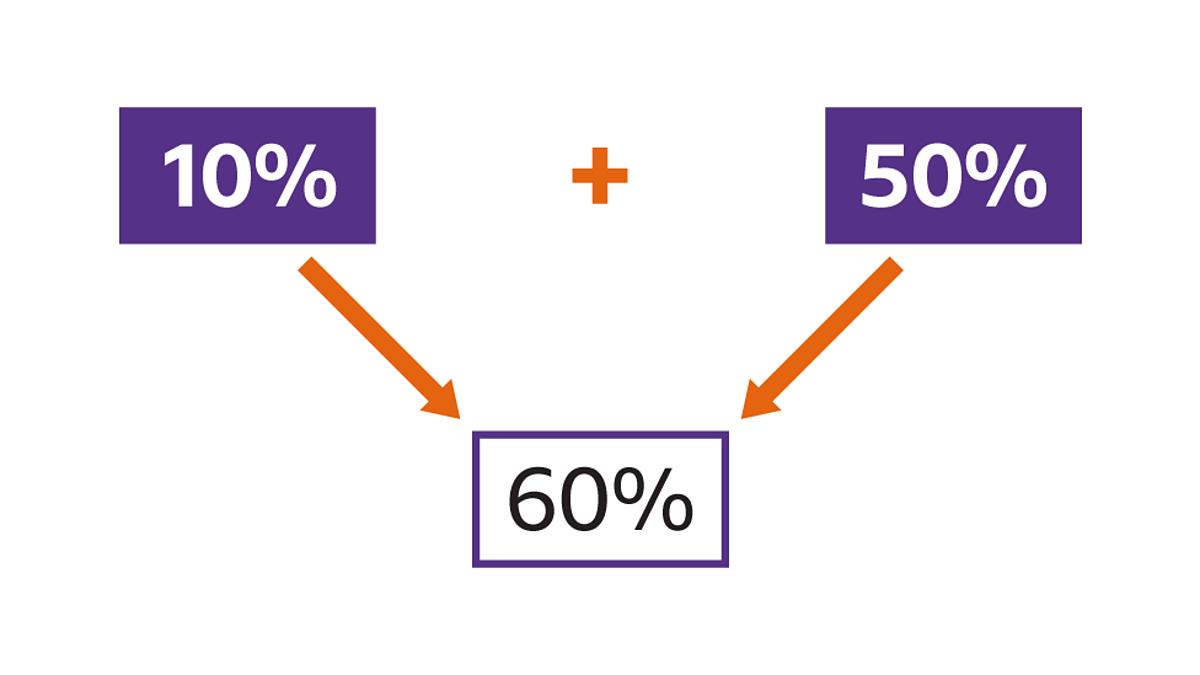
1. The Core Formulas: Calculating Percentages in a Financial Context
At its simplest level, a percentage represents a fraction of 100. In finance, this “fraction” often represents the relationship between your capital and your earnings, or your debt and your interest payments. To master financial literacy, one must first master three primary types of percentage calculations.
Finding the Percentage of a Total Amount
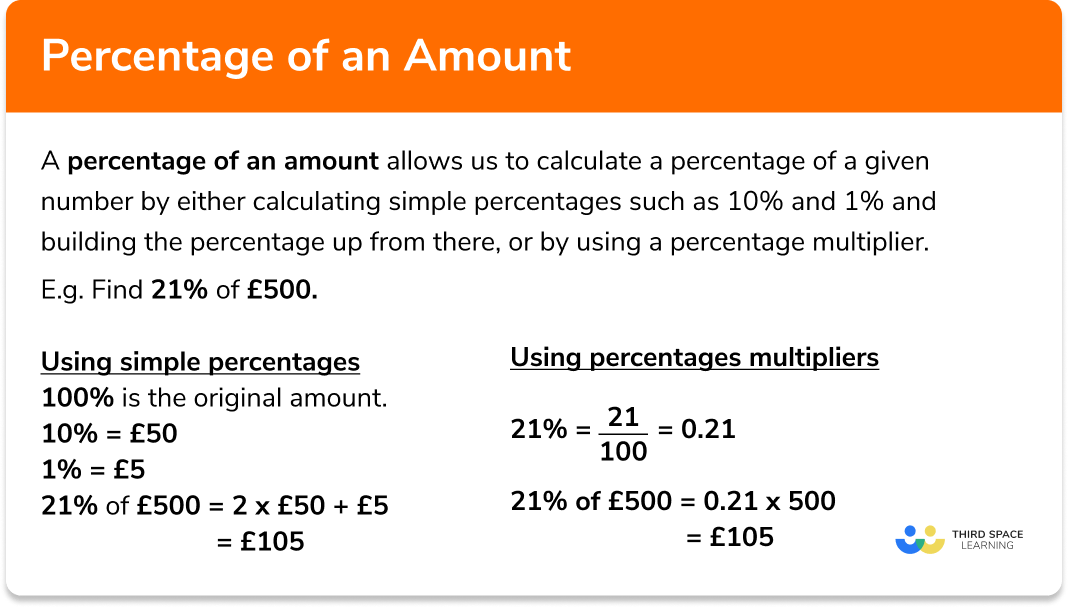
The most basic calculation is finding a specific percentage of a known value. This is used daily when calculating sales tax, tips, or investment allocations.
Formula: (Percentage / 100) × Total Value = Amount
For instance, if you decide to allocate 15% of your $5,000 monthly income to a retirement account, you would calculate: (15 / 100) × 5,000 = $750.
Calculating the Percentage Difference (Growth and Loss)
In investing, knowing the raw dollar gain is less important than knowing the percentage growth. This allows you to compare the performance of different assets regardless of their price.
Formula: [(New Value - Old Value) / Old Value] × 100 = Percentage Change
If you purchased a share of a tech company at $150 and it rose to $180, the calculation would be (30 / 150) × 100 = 20%. This 20% growth metric is the standard by which you can compare that stock’s performance against a benchmark like the S&P 500.
Finding the Percentage of a Subtotal (Reverse Calculation)
Sometimes in business finance, you know the final price and the percentage of tax or commission included, and you need to find the original value. This is common when auditing invoices or calculating net earnings after a platform fee (like those found on Etsy or Amazon).
Formula: Total Amount / (1 + (Percentage / 100)) = Original Value
2. Percentages in Personal Finance: Budgeting and Debt Management
Applying percentage-based thinking to your personal cash flow is the fastest way to achieve financial stability. Rather than tracking every cent, high-net-worth individuals often manage their wealth through “Ratio Analysis.”
The 50/30/20 Rule of Budgeting
One of the most effective ways to use percentages in money management is the 50/30/20 rule. This framework suggests that:
- 50% of income should go to Needs (housing, utilities, groceries).
- 30% of income should go to Wants (entertainment, dining out, hobbies).
- 20% of income should go to Savings and Debt Repayment.
By converting your budget into percentages, you create a scalable system. As your income increases, your lifestyle doesn’t necessarily have to “creep” upward; you simply adjust the dollar amounts while maintaining these healthy percentage ratios.
Understanding APR and Interest Percentages
When borrowing money—whether through a mortgage, car loan, or credit card—the most critical number is the Annual Percentage Rate (APR). Finding the percentage of interest you pay over time reveals the true cost of debt.
For example, a $10,000 credit card balance with a 24% APR doesn’t just cost $2,400 a year in interest due to daily compounding. By understanding how to calculate the monthly periodic rate (24% divided by 12 months = 2% per month), you can visualize how much of your monthly payment is going toward the principal versus the bank’s profit.
Tax Brackets and Effective Tax Rates
Many taxpayers are confused by the difference between their marginal tax bracket and their effective tax rate. If you are in the 22% tax bracket, you do not pay 22% on your entire income. Finding your effective tax rate percentage—calculated as (Total Tax Paid / Total Taxable Income) × 100—gives you a much clearer picture of your actual tax burden and helps in more accurate after-tax income projections.
3. Investing and Wealth Building: The Power of Yield and ROI
In the world of investing, percentages are used to measure efficiency. A $1,000 profit is impressive if you invested $2,000, but it is negligible if you invested $1,000,000.
Return on Investment (ROI)
ROI is the ultimate metric for any investor. It allows you to strip away the noise and see how hard your money is working for you. Whether you are flipping real estate or buying Bitcoin, the “how to find a percentage” logic remains the same: (Net Profit / Cost of Investment) × 100.
Professional investors use this to decide where to “park” their capital. If a rental property offers a 6% ROI while a high-yield savings account offers 5%, the investor must decide if the extra 1% is worth the added risk and effort of property management.
Dividend Yields and Passive Income
For income-focused investors, the “Dividend Yield” is a vital percentage. It represents how much a company pays out in dividends each year relative to its stock price.
Formula: (Annual Dividends per Share / Price per Share) × 100
Finding this percentage allows you to compare the income-generating potential of different stocks. A stock priced at $50 paying a $2 dividend has a 4% yield, which might be more attractive than a $100 stock paying a $3 dividend (3% yield).
The Rule of 72: A Shortcut for Percentage Growth
The Rule of 72 is a mental shortcut used by financial advisors to estimate how long it will take for an investment to double at a fixed annual percentage rate of return. You simply divide 72 by the annual interest rate.
- At a 6% return, your money doubles in 12 years (72 / 6).
- At a 10% return, your money doubles in 7.2 years (72 / 10).
Understanding this percentage-based rule is essential for long-term retirement planning and appreciating the impact of even small increases in investment performance.
4. Business Finance: Profit Margins and Scaling
For entrepreneurs and small business owners, percentages are the difference between a thriving enterprise and bankruptcy. Calculating percentages in business goes beyond simple arithmetic; it involves protecting the bottom line.
Gross vs. Net Profit Margins
The “how” of finding a profit margin is often where new business owners stumble.
- Gross Profit Margin:
[(Revenue - Cost of Goods Sold) / Revenue] × 100. This shows the efficiency of your production or service delivery. - Net Profit Margin:
(Net Income / Revenue) × 100. This is the “real” percentage—what is left after taxes, rent, payroll, and all other expenses.
A business can have a high gross margin (80%) but a negative net margin if its overhead is too high. Monitoring these percentages monthly allows a business owner to identify where they are losing money before it becomes a crisis.
Customer Acquisition Cost (CAC) as a Percentage of LTV
In modern business, we look at the percentage relationship between what it costs to get a customer (CAC) and that customer’s Lifetime Value (LTV). If your CAC is 50% of your LTV, your business model might be unsustainable once you factor in fulfillment costs. Ideally, businesses look for an LTV that is 300% (or 3x) the CAC.
Markup vs. Margin
One of the most common financial mistakes is confusing markup with margin. If you buy an item for $80 and sell it for $100, your markup is 25% ($20 is 25% of $80). However, your profit margin is only 20% ($20 is 20% of the $100 selling price). Knowing how to find the correct percentage here ensures that you don’t underprice your products and inadvertently thin your profits.
5. Modern Financial Tools for Percentage Calculation
While knowing the manual formulas is crucial for conceptual understanding, modern financial tools can automate these calculations, reducing human error and allowing for complex modeling.
Leveraging Spreadsheets (Excel and Google Sheets)
For anyone serious about their money, spreadsheets are the ultimate tool. You don’t need to do the math yourself; you just need to know the syntax.
- To find percentage change in Excel:
=(New_Value - Old_Value) / Old_Value, then format the cell as a percentage. - To find the “What-If” scenarios (e.g., “What if my interest rate increases by 0.5%?”), you can use the Goal Seek function to see how percentage changes impact your total debt or investment goals.
Fintech Apps and Investment Dashboards
Most modern banking and brokerage apps (like Robinhood, Fidelity, or Mint) automatically calculate percentages for you. However, the savvy user looks deeper at the “Expense Ratio” percentage on Mutual Funds and ETFs. Even a 1% fee might seem small, but over 30 years, that 1% “drain” can reduce your total portfolio value by 25% or more due to lost compounding.

Conclusion: Percentage Mastery as a Wealth-Building Tool
Learning how to find a percentage is more than a classroom exercise; it is a foundational pillar of financial independence. By viewing your money through the lens of percentages, you gain the ability to compare apples to oranges—comparing a high-yield bond to a rental property, or a credit card debt to a 401k contribution.
When you master these calculations, you stop looking at money as a static pile of cash and start seeing it as a dynamic engine. Whether you are optimizing your personal budget, calculating the ROI of a new investment, or protecting your business’s net profit margins, the ability to calculate and interpret percentages is the key to turning financial data into financial power.
aViewFromTheCave is a participant in the Amazon Services LLC Associates Program, an affiliate advertising program designed to provide a means for sites to earn advertising fees by advertising and linking to Amazon.com. Amazon, the Amazon logo, AmazonSupply, and the AmazonSupply logo are trademarks of Amazon.com, Inc. or its affiliates. As an Amazon Associate we earn affiliate commissions from qualifying purchases.