
Understanding your yearly income is a cornerstone of sound personal finance. It’s not merely a number for your tax returns; it’s a vital metric that informs everything from daily budgeting and long-term savings strategies to major financial decisions like buying a home or planning for retirement. Without an accurate picture of what you earn annually, navigating your financial landscape becomes akin to sailing without a compass. This guide will demystify the process, breaking down how to calculate your yearly income comprehensively, regardless of your employment type or diverse income streams, all within the context of robust personal finance management.
Understanding the Fundamentals: Gross vs. Net Income
Before diving into calculations, it’s crucial to grasp the distinction between gross and net income. These two terms are often used interchangeably, but they represent fundamentally different figures, each serving a unique purpose in your financial planning.
Defining Gross Income
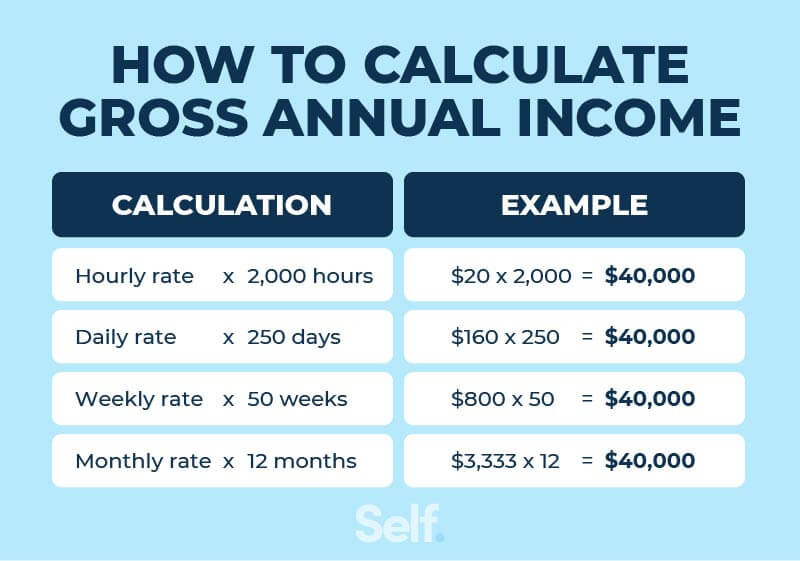
Your gross income is the total amount of money you earn before any deductions or taxes are taken out. For most employed individuals, this is your salary or hourly wage multiplied by the total hours or pay periods in a year, plus any bonuses, commissions, or tips. For self-employed individuals, it’s the total revenue generated from all business activities before business expenses. Essentially, it’s the raw, unadjusted sum of all your earnings from all sources over a 12-month period. Gross income is particularly relevant for loan applications, as lenders often use this figure to assess your borrowing capacity.
Defining Net Income (Take-Home Pay)
Net income, often referred to as “take-home pay,” is the amount of money you actually receive after all mandatory and voluntary deductions have been subtracted from your gross income. This is the figure that lands in your bank account and is what you have available to spend, save, and invest. For most people, understanding their net income is more critical for daily budgeting and short-term financial management, as it reflects the true disposable income at their command.
Key Deductions and Taxes Affecting Net Income
The gap between your gross and net income can be substantial, primarily due to various deductions and taxes. These typically include:
- Federal Income Tax: The amount owed to the national government based on your income level.
- State Income Tax: Applicable in most, but not all, U.S. states.
- Local Income Tax: Certain cities or counties may impose their own income taxes.
- Social Security Tax (FICA): A federal tax that funds Social Security benefits.
- Medicare Tax (FICA): A federal tax that funds Medicare.
- Health Insurance Premiums: Your contribution to employer-sponsored health plans.
- Retirement Contributions: Deductions for 401(k), 403(b), or other employer-sponsored retirement plans.
- Other Voluntary Deductions: Such as life insurance, disability insurance, union dues, or charitable contributions.
For self-employed individuals, the calculation is slightly different. While they don’t have these deductions withheld directly from each payment, they are responsible for paying self-employment taxes (which cover Social Security and Medicare), estimated federal and state income taxes quarterly, and managing their own health and retirement savings.
Calculating Income for Different Employment Types
The method for calculating your yearly income varies significantly depending on how you earn your money. It’s essential to tailor your approach to accurately capture all relevant earnings.
Salaried Employees: The Straightforward Approach
If you are a salaried employee, calculating your gross yearly income is generally the simplest. Your annual salary is often explicitly stated in your employment contract or offer letter.
- Example: If your annual salary is $60,000, your gross yearly income is $60,000.
To find your net yearly income, you would look at your pay stubs. Summing up the “Net Pay” from all your pay stubs (e.g., 24 bi-weekly stubs or 26 bi-weekly stubs) over a 12-month period provides an accurate figure. Remember to account for any bonuses received throughout the year.
Hourly Employees: Tracking Hours and Overtime
For hourly employees, the calculation requires a bit more tracking, especially if your hours fluctuate or you earn overtime.
- Basic Calculation: (Hourly Wage × Regular Hours Worked Per Week) × 52 Weeks.
- Including Overtime: If you consistently work overtime, calculate the average number of overtime hours per week and multiply it by your overtime rate (typically 1.5 times your regular hourly wage), then add this to your regular earnings.
- Example: $20/hour × 40 hours/week = $800/week. $800/week × 52 weeks = $41,600 gross yearly income. If you average 5 hours of overtime at $30/hour, that’s an additional $150/week, totaling $7,800 annually. Your gross would then be $41,600 + $7,800 = $49,400.
Regularly reviewing your pay stubs is crucial for verifying these calculations and identifying any discrepancies.
Freelancers and Self-Employed Individuals: Projecting and Tracking Revenue
Calculating yearly income for freelancers and the self-employed is more dynamic and often involves projecting earnings while meticulously tracking actual revenue and expenses.
- Revenue Tracking: Keep detailed records of all invoices issued, payments received, and project completion dates. Use accounting software or spreadsheets to log every transaction.
- Expense Deduction: While gross income is total revenue, understanding your “adjusted gross income” (AGI) after business expenses is critical for tax purposes. For personal finance, your “net business income” (revenue minus business expenses) is closer to a salaried person’s gross income before personal deductions.
- Projection: Based on your current client roster, project pipeline, and historical earnings, estimate your likely revenue for the coming year. Always err on the side of caution when projecting.
- Example: If you bill $5,000 per month on average, your projected gross revenue is $60,000. If your average monthly business expenses are $1,000, your net business income is $48,000. This $48,000 is the figure from which you’d pay self-employment taxes and personal income taxes.
Commission-Based Income: Variability and Averages
For individuals relying on commissions, yearly income can fluctuate significantly.
- Average Method: Review your past 12-24 months of commission statements to calculate your average monthly or quarterly earnings. Multiply this average by 12 or 4, respectively, to get a reasonable estimate of your yearly income.
- Base Salary + Commission: If you have a base salary plus commission, add your fixed base salary to your projected or averaged commission earnings.
- Seasonal Fluctuations: Account for any seasonal highs or lows in your industry when projecting. Some months might be much higher or lower than average.
Given the variability, it’s wise to maintain a larger emergency fund when your income is largely commission-based.
Accounting for Other Income Sources
Your primary job might not be your only source of income. Many individuals diversify their earnings through investments, side hustles, or rental properties. Incorporating these into your total yearly income is essential for a complete financial picture.
Investment Income (Dividends, Interest, Capital Gains)
Money earned from investments contributes to your overall income.
- Dividends: Payments from companies to shareholders, typically reported on Form 1099-DIV.
- Interest: Earnings from savings accounts, CDs, bonds, or loans you’ve made, reported on Form 1099-INT.
- Capital Gains: Profits from selling an asset (like stocks, real estate, or collectibles) for more than you paid for it. These are typically reported on Form 1099-B.
Keep meticulous records of all investment statements and tax forms to accurately sum these amounts.

Rental Income
If you own and rent out property, the income generated is a significant part of your yearly earnings.
- Gross Rental Income: Total rent received before expenses.
- Net Rental Income: Gross rental income minus deductible expenses like mortgage interest, property taxes, insurance, repairs, and depreciation. For personal income calculation, use the net figure, as this is what truly contributes to your disposable income after property upkeep.
Side Hustles and Gig Economy Earnings
In today’s economy, many people supplement their primary income with various side hustles, from ridesharing and food delivery to freelance writing or selling crafts online.
- Track Everything: Just like with self-employment, meticulously record all income generated and any associated expenses for each side hustle. Many platforms (Uber, DoorDash, Etsy) provide year-end summaries.
- Aggregated Total: Sum up all net earnings from these activities. Remember that income from side hustles is taxable, so factor that into your overall financial planning.
Benefits and Allowances
Certain benefits and allowances can also count towards your yearly income, depending on their nature and taxability.
- Social Security Benefits: For retirees or those receiving disability benefits.
- Alimony: Payments received from a former spouse (for divorce decrees finalized before 2019).
- Pension Payments: Regular payments received after retirement from an employer-sponsored plan.
- Unemployment Benefits: Payments received during periods of unemployment.
Consult official statements or tax documents (like Form 1099-G for government payments) to accurately include these figures.
Why Accurate Income Calculation Matters
Knowing your yearly income with precision extends far beyond just satisfying tax obligations. It’s a fundamental pillar of sound financial health and decision-making.
Budgeting and Financial Planning
Your yearly income is the baseline for creating an effective budget. It dictates how much you can allocate to living expenses, savings, debt repayment, and discretionary spending. Without a clear income figure, your budget will be based on assumptions, leading to potential overspending or missed savings opportunities. Accurate calculation empowers you to set realistic financial goals, whether it’s saving for a down payment, paying off student loans, or building an emergency fund.
Loan and Credit Applications
Lenders, whether for mortgages, car loans, or personal loans, rely heavily on your reported yearly income to assess your ability to repay debt. A clear, verifiable income figure strengthens your application, potentially leading to better interest rates and higher approval chances. Misrepresenting or inaccurately calculating your income can lead to denied applications or, worse, taking on debt you can’t comfortably manage.
Tax Planning and Compliance
Accurate yearly income calculation is paramount for tax planning and ensuring compliance with tax laws. It helps you estimate your tax liability, avoid underpayment penalties, and identify potential deductions or credits. For self-employed individuals, it’s crucial for setting aside enough for estimated quarterly taxes. Understanding your income also allows you to plan for future tax years, especially if significant income changes are anticipated.
Setting Financial Goals
Whether your goal is to save X amount for retirement, buy a house in five years, or become debt-free, all financial goals are tied to your income. A precise understanding of your earning power allows you to set achievable targets and create a clear roadmap for reaching them. It helps you evaluate if your current income supports your aspirations and, if not, motivates you to explore ways to increase your earnings or adjust your spending.
Leveraging Tools and Resources for Calculation
While manual calculations are possible, various tools and resources can simplify and enhance the accuracy of determining your yearly income.
Spreadsheets and Manual Tracking
For those comfortable with basic data entry, a spreadsheet (like Microsoft Excel or Google Sheets) is a powerful, customizable tool.
- Setup: Create columns for Date, Income Source, Gross Amount, Deductions, Net Amount.
- Regular Entry: Input income as it’s received.
- Formulas: Use SUM functions to total columns for monthly, quarterly, and yearly figures.
This method gives you complete control and a detailed record of every income stream.
Payroll Statements and Tax Documents
Your pay stubs and year-end tax documents (W-2 for employees, 1099-NEC/1099-MISC for freelancers, 1099-INT/DIV/B for investments, K-1 for partnerships) are invaluable.
- W-2 Form: Provides your gross wages, tips, other compensation, and withheld taxes for the year. This is your primary document for employed income.
- 1099 Forms: Summarize various types of income not from an employer, such as nonemployee compensation, interest, dividends, and proceeds from broker transactions.
- Pay Stubs: Each pay stub details your gross pay, deductions, and net pay for that specific period. Summing the gross pay from all stubs can verify your W-2.
Keep these documents organized throughout the year for easy access when calculating your annual income or preparing taxes.
Online Calculators and Financial Software
Numerous online tools and software applications can assist with income tracking and calculation.
- Online Gross/Net Pay Calculators: Many websites offer calculators where you input your salary/hourly rate, deductions, and tax information to estimate your net pay per period or yearly income.
- Budgeting Apps: Apps like Mint, YNAB (You Need A Budget), or Personal Capital allow you to link your bank accounts and automatically categorize income and expenses, providing a real-time view of your financial situation.
- Accounting Software: For freelancers and small business owners, software like QuickBooks, Xero, or FreshBooks can track invoices, expenses, and automatically generate income reports.

Professional Financial Advice
For complex income structures, such as those involving multiple businesses, significant investments, or intricate tax situations, consulting a financial advisor or an accountant (CPA) is highly recommended.
- Expert Guidance: Professionals can help you accurately calculate your income, understand tax implications, identify deductions, and optimize your financial strategy.
- Peace of Mind: Knowing your income calculations are handled correctly by an expert can provide significant peace of mind, especially during tax season.
Calculating your yearly income is more than just a numerical exercise; it’s a foundational step towards achieving financial literacy and control. By understanding the nuances between gross and net, meticulously tracking all income sources, and leveraging available tools, you empower yourself to make informed financial decisions, plan for the future, and ultimately, build a more secure financial life. Embrace this crucial practice, and watch as your financial clarity grows.
aViewFromTheCave is a participant in the Amazon Services LLC Associates Program, an affiliate advertising program designed to provide a means for sites to earn advertising fees by advertising and linking to Amazon.com. Amazon, the Amazon logo, AmazonSupply, and the AmazonSupply logo are trademarks of Amazon.com, Inc. or its affiliates. As an Amazon Associate we earn affiliate commissions from qualifying purchases.