
Navigating the complexities of child support can be one of the most challenging aspects for parents undergoing separation or divorce. Beyond the emotional toll, determining a fair and appropriate financial arrangement for the children’s well-being requires a clear understanding of legal guidelines, financial considerations, and individual circumstances. Child support is a legal obligation placed on one parent (the non-custodial or obligor parent) to provide financial assistance to the other parent (the custodial or obligee parent) for the upbringing and care of their children. Its primary purpose is to ensure that children continue to receive financial support from both parents, maintaining, as much as possible, the standard of living they would have enjoyed had their parents remained together.
The calculation of child support is rarely a simple arithmetic problem. It involves a intricate blend of federal and state laws, financial disclosures, and often, judicial discretion. While the overarching goal across all jurisdictions is to prioritize the child’s best interests, the specific methodologies and factors considered can vary significantly from one state to another. This article aims to demystify the process, providing a comprehensive guide to understanding the foundations, step-by-step calculations, common challenges, and available resources for determining child support obligations. By shedding light on this crucial financial aspect of co-parenting, we hope to empower parents with the knowledge needed to approach this responsibility with clarity and confidence.
Understanding the Foundations of Child Support
Before delving into the numerical aspects, it’s crucial to grasp the fundamental principles and key elements that underpin child support calculations. These foundational concepts provide the framework within which specific financial figures are applied.
What is Child Support and Why is it Necessary?
At its core, child support is a legal mandate reflecting the ongoing parental responsibility to financially contribute to their children’s needs, irrespective of the parents’ marital status or living arrangements. This financial support covers a broad spectrum of expenses essential for a child’s development and well-being, including but not limited to food, shelter, clothing, education, healthcare, and extracurricular activities. The necessity of child support stems from the recognition that children should not suffer undue financial hardship as a result of their parents’ separation. It aims to ensure that both parents continue to contribute equitably to their children’s upbringing, striving for consistency in their quality of life and opportunities. It’s a fundamental right of the child, not a payment to the other parent.
Key Factors Influencing Child Support Calculations
While specific formulas vary, several universal factors form the bedrock of almost every child support calculation. Understanding these is the first step toward estimating potential obligations.
-
Parental Income: This is arguably the most significant factor. Most calculations begin by assessing the gross (and sometimes net) income of both parents. This includes wages, salaries, bonuses, commissions, self-employment income, disability benefits, unemployment benefits, and sometimes even imputed income for an underemployed or voluntarily unemployed parent.
-
Number of Children: The more children requiring support, the higher the overall support obligation tends to be.
-
Custody and Parenting Time Arrangements: The amount of time each parent spends with the children significantly impacts calculations. States often distinguish between sole custody, shared/joint custody, and split custody arrangements, with varying adjustments made based on the number of overnights each parent has.
-
Children’s Specific Needs: Any extraordinary medical expenses, special educational needs, or ongoing therapeutic costs for a child can lead to deviations from standard guidelines.
-
Existing Support Orders: Prior child support or spousal support obligations from previous relationships can also influence a parent’s available income for current child support calculations.
-
Childcare Costs: Expenses related to work-related childcare are frequently factored into the calculation.
-
Health Insurance Premiums: The cost of health insurance for the children is typically included.
State-Specific Guidelines and Models
It is critical to remember that child support laws are primarily state-specific. While the factors mentioned above are common, how they are weighed and combined differs according to each state’s chosen model. There are three primary models used across the United States:
-
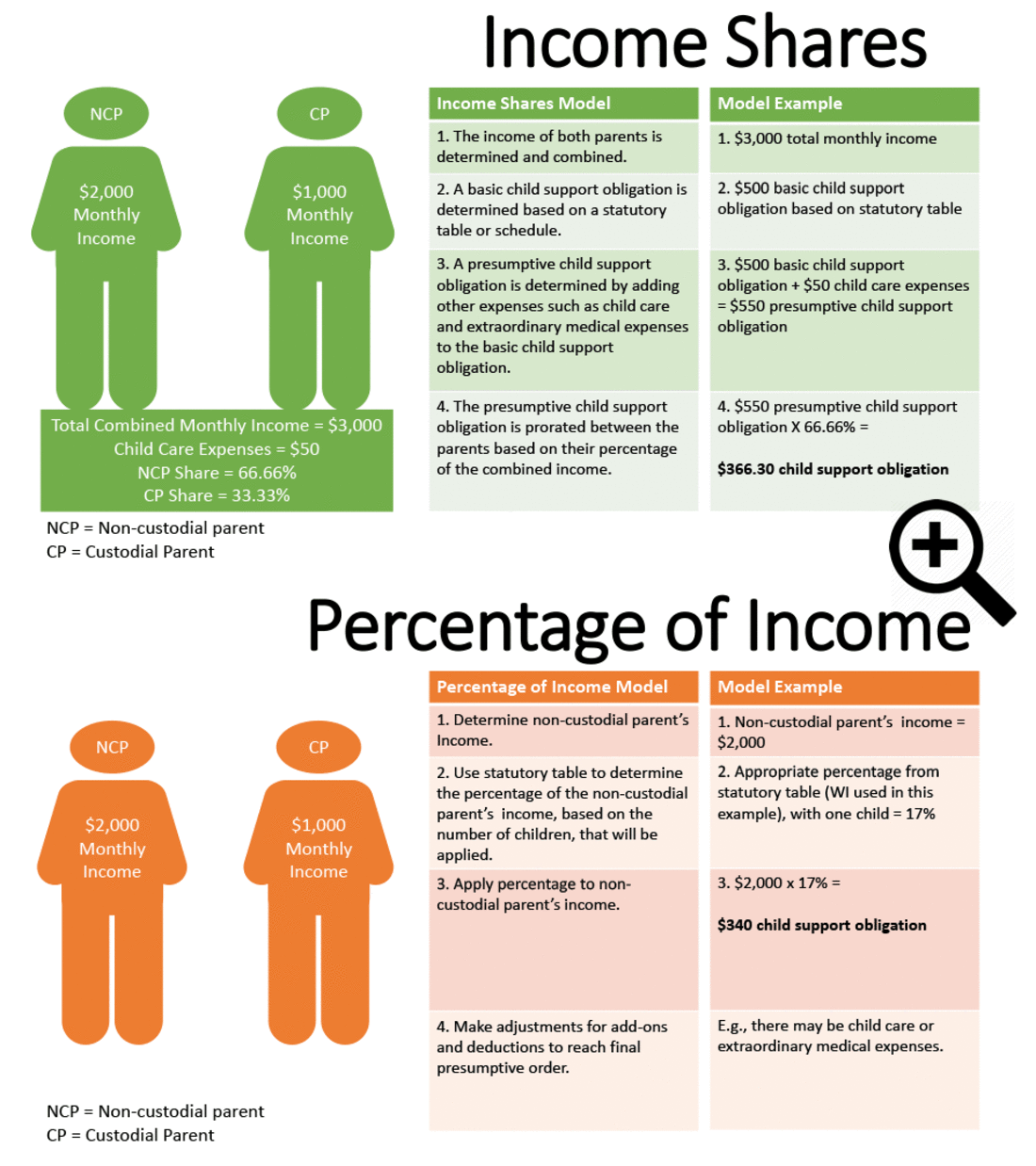
Income Shares Model: This is the most prevalent model, used in a majority of states. It’s based on the premise that children should receive the same proportion of parental income they would have received if their parents lived together. The parents’ combined adjusted gross income is determined, and a basic support obligation is calculated from an economic table. This obligation is then divided between the parents proportional to their respective incomes.
-
Percentage of Obligor’s Income Model: Used in a smaller number of states (e.g., Texas, Wisconsin), this model calculates support based solely on a percentage of the non-custodial parent’s income. The percentage often varies based on the number of children needing support. Some states use a “flat” percentage, while others use a “varying” percentage based on income levels.
-
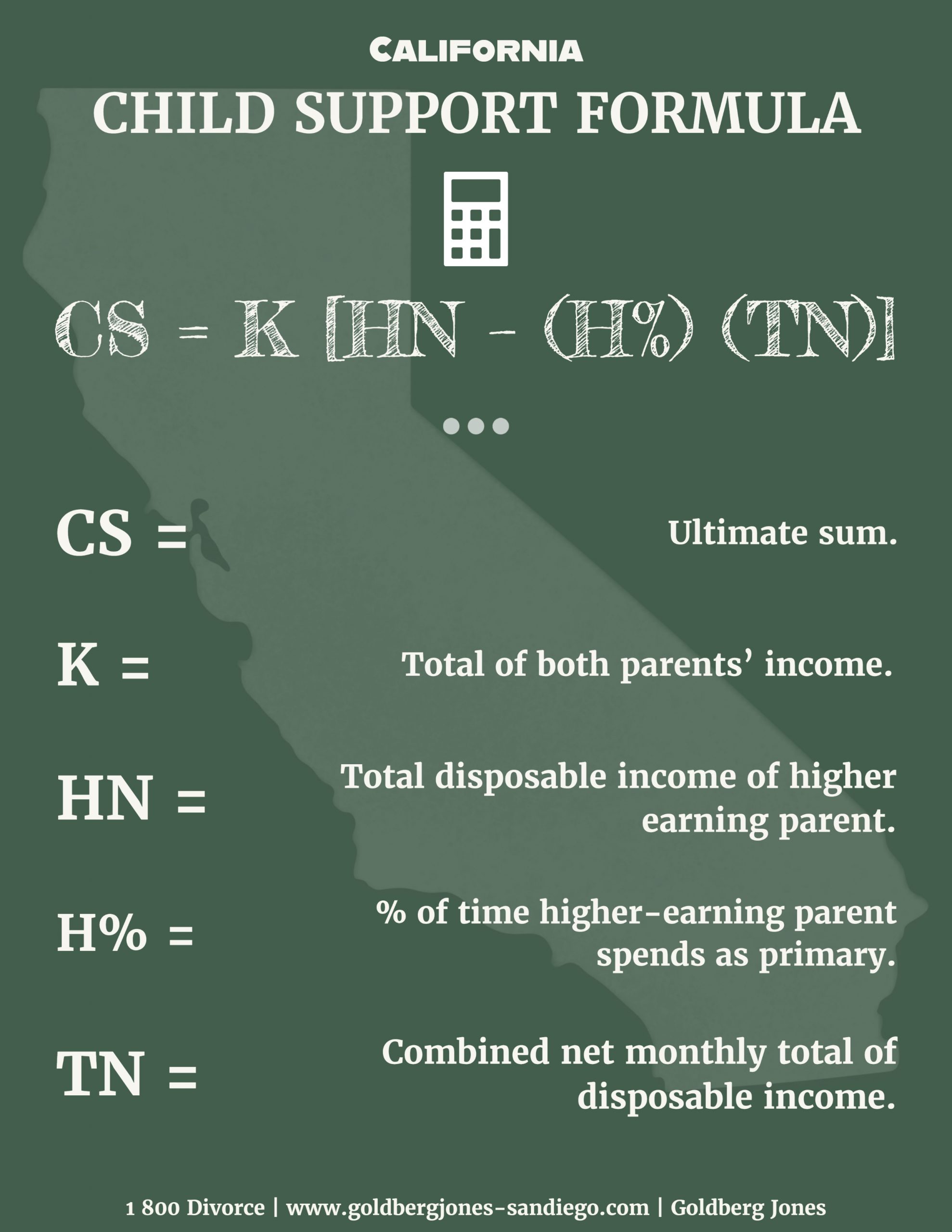
Melson Formula: A more complex variation of the Income Shares model, used in a few states like Delaware and Hawaii. It aims to ensure each parent’s basic needs are met before calculating child support, then ensures the children’s basic needs are met, and finally, allocates any remaining income to additional support for the children.
Understanding which model your state employs is foundational to accurately estimating child support.
The Step-by-Step Process of Calculating Child Support
While the exact mechanics will vary by state, the general process of calculating child support follows a sequence of logical steps. This section outlines these steps, providing insight into what is typically considered at each stage.
Step 1: Determining Parental Income
The initial and often most contentious step involves accurately determining each parent’s income. This is not just about looking at a paycheck; it requires a comprehensive assessment of all income sources.
-
Gross vs. Net Income: Most states begin with gross income (income before taxes and other deductions). However, some states use net income (income after certain allowable deductions like taxes, Social Security, and Medicare). It’s crucial to know which your state uses.
-
What Counts as Income: This typically includes wages, salaries, commissions, bonuses, self-employment income (minus ordinary and necessary business expenses), retirement benefits, severance pay, unemployment benefits, disability benefits, workers’ compensation, and sometimes even gifts or inheritances depending on consistency and nature.
-
What May Not Count: Public assistance programs (like SNAP or TANF) generally are not included.
-
Imputation of Income: If a parent is voluntarily unemployed or underemployed (working below their earning capacity), courts may “impute” income to them. This means the court will assign an income based on their past earnings, education, skills, and current job market conditions, to prevent parents from avoiding their support obligations.
Step 2: Accounting for Allowable Deductions and Adjustments
Once gross or net income is established, states typically allow for certain deductions or adjustments before arriving at an “adjusted gross income” or “countable income.” These deductions reduce the income available for child support calculations. Common adjustments include:
-
Mandatory Income Withholding: Federal, state, and local income taxes, Social Security, and Medicare contributions are often deducted, especially if the calculation starts with gross income.
-
Health Insurance Premiums: Amounts paid by a parent for the children’s health insurance are frequently deducted.
-
Prior Support Obligations: Legally mandated payments for child support or spousal support from previous relationships are typically deducted.
-
Mandatory Union Dues or Retirement Contributions: Some states allow deductions for these if they are a condition of employment.
-
Significant Medical Expenses: In some cases, high, recurring medical expenses for a parent or other dependents may be considered.
Step 3: Factoring in Custody and Parenting Time
The physical custody arrangement and the amount of time each parent spends with the children play a pivotal role, especially in states using the Income Shares model.
-
Sole Custody: Where one parent has the children for the majority of the time, the non-custodial parent typically pays support to the custodial parent.
-
Shared or Joint Custody: When parents share parenting time more equally (often defined by a minimum number of overnights, e.g., 35% or 128 overnights per year for one parent), adjustments are usually made. The basic support obligation might be calculated, but then reduced to reflect the additional direct expenses incurred by the non-custodial parent during their substantial parenting time. Some states use a “cross-credit” method where the obligation of each parent to the other is calculated, and the difference is paid by the higher-earning parent.
-
Split Custody: In situations where one child lives primarily with one parent and another child lives primarily with the other parent, the support obligation may be calculated for each child individually, and the difference paid by the parent with the higher net obligation.
Step 4: Addressing Additional Child-Related Expenses
Beyond the basic support amount, specific child-related expenses are often added to the total obligation or are divided proportionally between the parents. These typically include:
-
Childcare Costs: Work-related childcare expenses are almost universally added and allocated between parents, often in proportion to their incomes.
-
Health Insurance: The cost of maintaining health insurance for the children is factored in, and usually divided.
-
Unreimbursed Medical Expenses: Deductibles, co-pays, and other medical expenses not covered by insurance are typically divided between parents based on their income percentages.
-
Educational Expenses: Tuition for private schools, tutoring, or special educational needs may be included, especially if these were part of the children’s lives before separation or if the court deems them necessary.
-
Extracurricular Activities: Costs for sports, music lessons, or other enrichment activities can be included, often by mutual agreement or court order.
Step 5: Applying Your State’s Formula
Once all incomes are determined, adjusted, and expenses accounted for, the final step is to plug these figures into your state’s specific child support formula.
-
Income Shares: The combined adjusted parental income is used to find a basic support obligation from a state-provided table. This amount is then prorated between the parents based on their respective contributions to the combined income. Additional expenses (childcare, medical insurance) are added and similarly prorated.
-
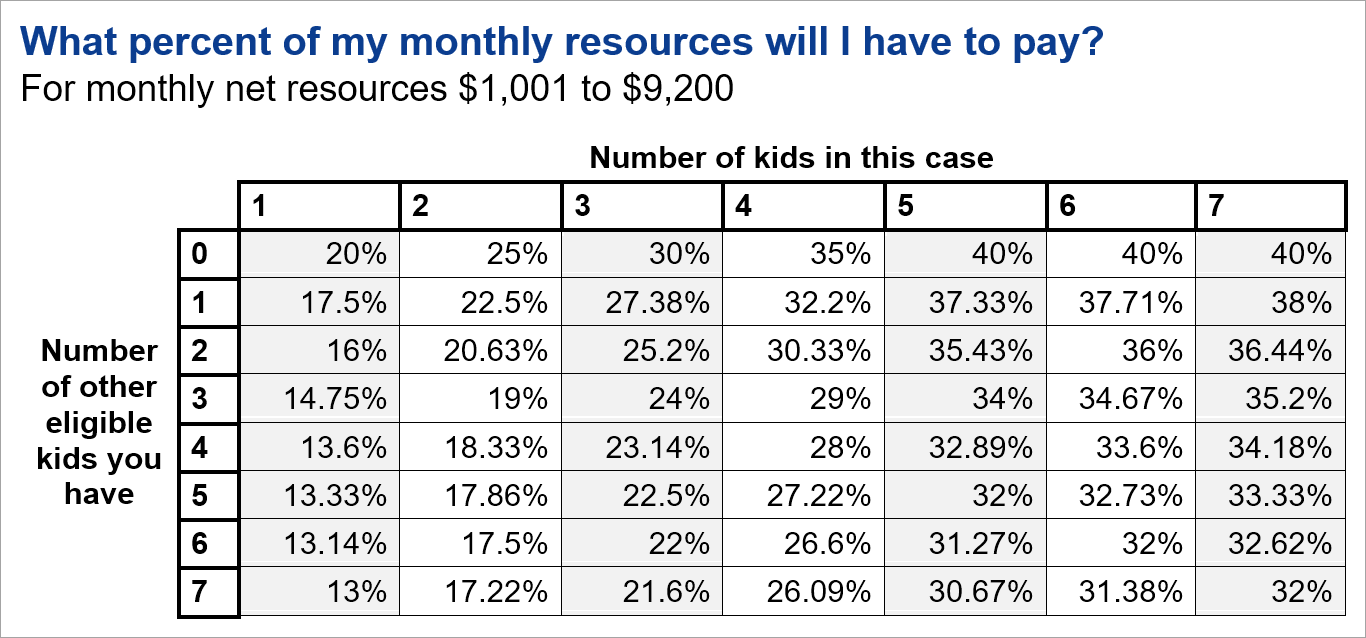
Percentage of Obligor’s Income: The non-custodial parent’s adjusted income is multiplied by a state-mandated percentage based on the number of children.
-
Melson Formula: This involves a multi-step calculation ensuring both parents and children meet basic needs before higher-level support is determined.
The result of applying the formula is the presumed child support obligation. While this amount is usually followed, courts do have the discretion to deviate from the guidelines if they find the calculated amount to be unjust or inappropriate given specific circumstances, always with the child’s best interests as the guiding principle.
Common Challenges and Nuances in Child Support Calculations
While the step-by-step process provides a clear roadmap, real-world scenarios often present complexities that challenge standard calculations. Understanding these nuances is crucial for both parents and legal professionals.
Self-Employment and Variable Income
One of the most frequent hurdles in child support calculations arises when a parent is self-employed, works on commission, or has highly variable income. For salaried employees with regular paychecks, income determination is relatively straightforward. However, for entrepreneurs, freelancers, or those in commission-based roles, accurately assessing income can be difficult. Courts must scrutinize business expenses to ensure they are legitimate and not merely a means to artificially lower disposable income. They may look at tax returns over several years, profit and loss statements, and bank statements to determine an average or projected income. Similarly, parents with fluctuating seasonal income might have their support obligations calculated based on an annual average or adjusted quarterly. The goal is to capture a true and consistent picture of earning capacity.
High-Income Earners and Deviation from Guidelines
Most states have caps or maximum income levels for their child support guidelines. When parents’ combined income far exceeds these caps, the standard formulas may not apply directly. In such “high-income” cases, courts often have more discretion. The support amount may be calculated up to the cap, with any additional support determined based on the children’s reasonable needs and the lifestyle they would have experienced if their parents had remained together. This isn’t about ensuring an extravagant lifestyle but maintaining consistency and fairness in proportion to the parents’ elevated earning capacity. Courts may look at expenses for private schooling, specialized extracurricular activities, or luxurious housing that directly benefit the children.
Special Needs Children and Extraordinary Expenses
Children with special needs often incur significant additional expenses that standard child support guidelines may not fully capture. These can include ongoing medical treatments, therapies, specialized educational programs, adaptive equipment, or enhanced supervision. In such cases, parents typically present evidence of these extraordinary expenses to the court, which can then order a deviation from the standard guidelines to ensure these critical needs are met. This often involves detailed financial documentation and expert testimony regarding the child’s condition and required care. The court’s focus remains squarely on ensuring the child’s welfare and access to necessary resources.
Modifying Existing Child Support Orders
Life circumstances are rarely static, and what was a fair child support order five years ago may not be appropriate today. Child support orders are not set in stone and can be modified if there is a “substantial change in circumstances.” Common reasons for modification include:
-
Significant Change in Income: A substantial increase or decrease in either parent’s income (e.g., job loss, promotion, disability, or a new job with significantly different pay).
-
Change in Custody or Parenting Time: A shift in the number of overnights or the primary residence of the child.
-
Change in Child’s Needs: New medical conditions, special educational needs, or a child aging out of daycare can impact expenses.
-
Incarceration: A parent’s incarceration can impact their ability to pay, though obligations often continue to accrue.
-
Emancipation of a Child: When a child reaches the age of majority or other state-defined emancipation criteria, support for that child typically ends.
The process for modification usually requires filing a petition with the court and demonstrating the substantial change. It is not automatic and typically requires judicial review.
Tools and Resources for Child Support Estimation
Given the complexities, understanding where to turn for assistance and verification is vital. Several tools and resources can help parents navigate child support calculations, from initial estimates to legal finalization.
State-Specific Online Calculators
Almost every state’s judicial system or child support enforcement agency provides an online child support calculator. These tools are invaluable for parents seeking an initial estimate of potential support obligations. By inputting incomes, number of children, and basic custody information, these calculators can provide a rough figure based on the state’s specific guidelines.
-
Convenience: They offer a quick and accessible way to gain preliminary insight.
-
Limitations: It’s crucial to understand these are estimates only. They often cannot account for all specific deductions, extraordinary expenses, or unique circumstances that a court might consider. They also don’t replace legal advice. It’s common for them to require precise legal definitions of “income” or “deductions” that laypersons might misinterpret.
Always use these calculators as a starting point, not as a definitive final amount.
Legal Counsel and Mediation
For accurate calculations and legally binding agreements, consulting with legal professionals is often indispensable.
-
Family Law Attorneys: An experienced family law attorney specializing in child support can provide tailored advice, accurately interpret state guidelines, help gather necessary financial documentation, negotiate with the other parent’s counsel, and represent you in court. They can identify potential deviations from guidelines, address complex income situations (like self-employment), and ensure your rights and the child’s best interests are protected.
-
Mediation: For parents who wish to avoid litigation, mediation offers a constructive alternative. A neutral third-party mediator can help both parents discuss financial issues, exchange information, and collaboratively reach a mutually agreeable child support arrangement that adheres to state guidelines. Mediation can be less adversarial, more cost-effective, and can foster better co-parenting relationships in the long run. Any agreement reached in mediation still needs to be approved by the court to become a legally binding order.
Financial Planning and Record Keeping
Regardless of the calculation method or legal avenue pursued, diligent financial planning and meticulous record keeping are paramount.
-
Documentation: Maintain comprehensive records of all income sources (pay stubs, tax returns, business ledgers), allowable deductions, child-related expenses (receipts for childcare, medical bills, educational costs), and all child support payments made or received. This documentation is vital for accurate calculations, for proving compliance with an existing order, or for supporting a request for modification.
-
Budgeting: Understanding your own household budget and the costs associated with raising your children is crucial. This helps in negotiating fair support amounts and in managing your finances once an order is in place.
-
Long-Term Financial Stability: Child support is a long-term commitment. Both parents should consider its impact on their financial planning, including savings, retirement, and future educational expenses for the children.
In conclusion, calculating child support is a multi-faceted process influenced by legal statutes, financial realities, and individual family dynamics. While the core objective remains the financial well-being of the children, the path to achieving this requires careful attention to detail, an understanding of state-specific guidelines, and often, professional guidance. By equipping yourself with knowledge and utilizing available resources, you can navigate this essential aspect of co-parenting effectively and ensure a stable financial future for your children.
aViewFromTheCave is a participant in the Amazon Services LLC Associates Program, an affiliate advertising program designed to provide a means for sites to earn advertising fees by advertising and linking to Amazon.com. Amazon, the Amazon logo, AmazonSupply, and the AmazonSupply logo are trademarks of Amazon.com, Inc. or its affiliates. As an Amazon Associate we earn affiliate commissions from qualifying purchases.