
Purchasing a vehicle is often the second-largest financial commitment a person makes, surpassed only by the purchase of a home. While most consumers focus heavily on the “sticker price” or the monthly payment amount offered by a dealership, the true cost of ownership is hidden within the mechanics of interest. Understanding how to calculate car loan interest per month is not merely a mathematical exercise; it is a vital financial skill that empowers you to negotiate better terms, choose the right loan duration, and potentially save thousands of dollars over the life of the loan.
Most modern auto loans utilize a simple interest calculation method based on a declining balance. This means that as you pay down the principal, the amount of interest you owe each month decreases. By pulling back the curtain on these calculations, you can gain a clear view of where every dollar of your hard-earned money is going.
The Core Components of Your Car Loan
Before diving into the specific formulas, it is essential to understand the variables that dictate how much interest you will pay. In the world of personal finance, these variables interact in a specific hierarchy to determine your monthly obligation.
The Principal Balance
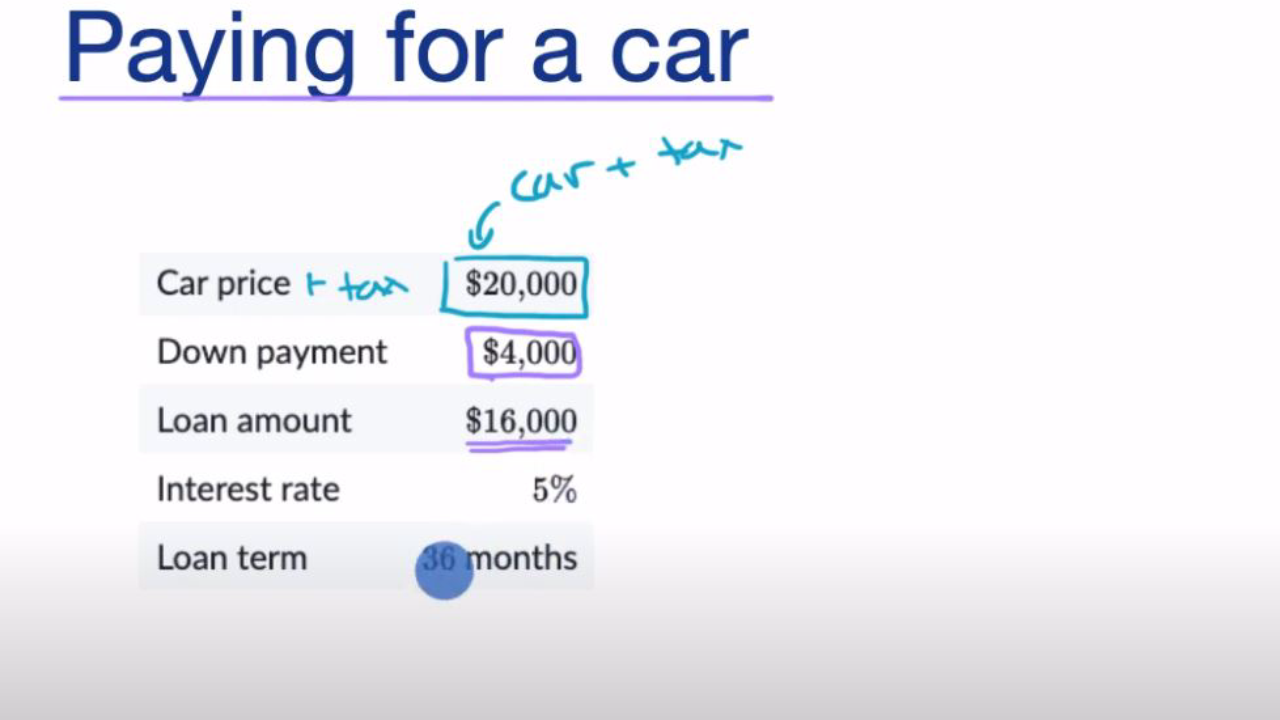
The principal is the actual amount of money you are borrowing to purchase the vehicle. This is not necessarily the price of the car. It is the purchase price minus your down payment and the value of any trade-in, plus any taxes, registration fees, or “add-ons” like extended warranties or gap insurance that you choose to finance. The interest you pay is a direct percentage of this remaining principal balance.
Annual Percentage Rate (APR)
The APR is the annual cost of the loan, expressed as a percentage. It is important to distinguish between the “base interest rate” and the APR. While the interest rate covers the cost of borrowing the principal, the APR includes the interest rate plus any lender fees or origination costs. For the purpose of monthly calculations, we use the APR to get the most accurate picture of your costs.
The Loan Term
The term is the length of time you have to repay the loan, typically expressed in months (e.g., 36, 48, 60, or 72 months). While longer terms result in lower monthly payments, they significantly increase the total interest paid over the life of the loan because the principal is being paid down more slowly.
The Step-by-Step Calculation Process
Calculating your monthly interest manually allows you to see the “snapshot” of your loan at any given moment. Because most car loans are simple interest loans, the interest is calculated based on the balance on the day your payment is due.
Step 1: Determine Your Monthly Interest Rate
Lenders quote interest as an annual figure (APR), but because you make payments monthly, you must convert that annual rate into a monthly decimal. To do this, divide the APR by 12 (for the twelve months in a year) and then divide by 100 to convert the percentage into a decimal.
Formula: (APR / 12) / 100 = Monthly Interest Rate
For example, if your APR is 6%, your calculation would be:
(6 / 12) / 100 = 0.005.
Step 2: Calculate the Interest Charge for the Month
Once you have the monthly interest rate, you multiply it by the remaining principal balance of your loan. This will tell you exactly how much of your next payment is going toward interest rather than the vehicle itself.
Formula: Remaining Principal x Monthly Interest Rate = Monthly Interest
Using our 0.005 rate on a loan balance of $30,000:
$30,000 x 0.005 = $150.00 in interest for that month.
Step 3: Calculate the Principal Component
If you know your total monthly payment (which you can find on your loan agreement or via a standard amortization formula), you can subtract the interest you just calculated to see how much you are actually reducing your debt.
Formula: Total Monthly Payment – Monthly Interest = Principal Reduction
If your total payment is $580, and the interest is $150, then $430 of your payment goes toward the principal. In the following month, your interest will be calculated on the new, lower balance of $29,570 ($30,000 – $430).
Understanding the Amortization Schedule
While the manual calculation gives you a snapshot, an amortization schedule provides the full movie. Amortization is the process of spreading out a loan into a series of fixed installments. In the early stages of a car loan, a larger portion of your monthly payment is directed toward interest. As the principal balance drops, the interest portion shrinks, and a larger share of your payment is applied to the principal.
The Front-Loading of Interest
This is a critical concept for car buyers. Because the interest is calculated based on the current balance, you pay the most interest in Month 1 and the least interest in the final month. This is why “upside-down” or “negative equity” situations occur frequently in the first two years of a loan—the interest costs are high, and the vehicle’s depreciation is rapid, often outpacing the principal reduction.
The Math Behind a Fixed Payment
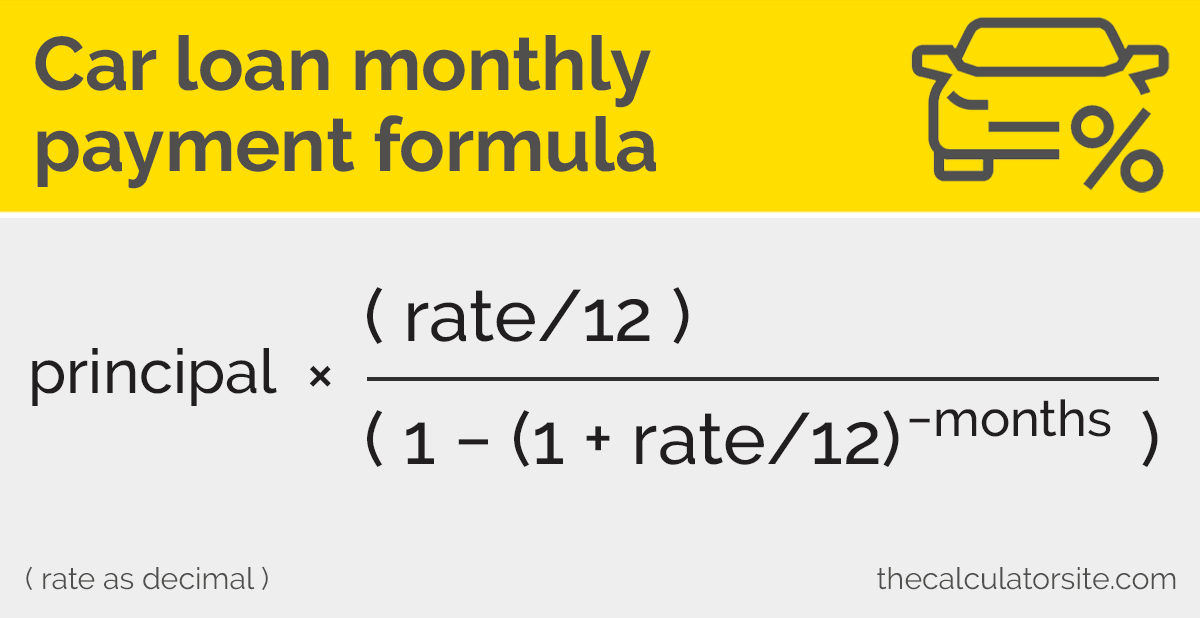
Lenders use a more complex formula to ensure your payment remains the same every month while the ratio of interest to principal shifts. The formula for the total monthly payment (P) is:
P = L [ c(1 + c)^n ] / [ (1 + c)^n – 1 ]
Where:
-
L = Loan amount (Principal)
-
c = Monthly interest rate (APR / 12 / 100)
-
n = Total number of months (Term)
By understanding this structure, you can see why making even small additional payments toward your principal early in the loan term can have a massive impact on the total interest paid. Every dollar of principal removed today is a dollar that can no longer accrue interest for the remainder of the loan’s life.
Factors That Impact Your Monthly Interest Costs
Knowing how to calculate the numbers is one part of the equation; knowing how to influence those numbers is where true financial management happens. Several variables can drastically alter your monthly interest burden.
Credit Score and Risk Tiers
Your credit score is the primary lever lenders use to set your APR. A borrower with a “Super Prime” score (780+) might secure a 4% APR, while a “Subprime” borrower (580-610) might face 15% or higher. On a $30,000 loan over 60 months, the difference between 4% and 15% is not just a few dollars—it is a difference of over $9,500 in total interest and nearly $160 per month.
The Impact of the Down Payment
A down payment serves two purposes. First, it immediately reduces the principal (L) in our calculation, lowering the monthly interest charge. Second, it lowers the “Loan-to-Value” (LTV) ratio. Lenders view a lower LTV as a lower risk, which can often lead to a reduction in the APR offered, creating a double-win for the borrower’s monthly budget.
Loan Duration and Total Cost
There is often an inverse relationship between monthly payment and total interest. To make expensive cars “affordable,” dealers often suggest 72-month or 84-month terms. While this lowers the monthly payment, it extends the window in which interest can accrue. A 72-month loan at 6% interest will cost significantly more in total interest than a 48-month loan at the same rate, even though the monthly payment for the 48-month loan is higher.
Strategies to Minimize Monthly Interest Expenses
Once you understand the mechanics of car loan interest, you can apply several strategies to reduce your financial burden and build equity in your vehicle faster.
The “Rounding Up” Strategy
Since interest is calculated based on the remaining principal, any extra money sent to the lender specifically designated for “principal only” reduces the base for the next month’s interest calculation. Even rounding a $432 payment up to $450 or $500 can shave months off a loan and save hundreds in interest charges.
Bi-Weekly Payments
Instead of making one monthly payment, you can make half of your payment every two weeks. Because there are 52 weeks in a year, this results in 26 half-payments, or 13 full monthly payments per year. This extra payment, combined with the more frequent reduction of the principal balance, can significantly lower the total interest paid over the life of the loan.
Refinancing
If your credit score has improved since you first took out the loan, or if market interest rates have dropped, refinancing can be a powerful tool. By securing a lower APR, you can recalculate your monthly interest based on the new, lower rate. Even a 1% or 2% reduction in APR can lead to meaningful monthly savings, provided the fees for refinancing do not outweigh the interest benefits.
Strategic Timing of the Buyout
For those with the liquidity, paying off a car loan early is one of the most effective “guaranteed returns” on investment. If your loan has an APR of 7%, paying it off early is functionally equivalent to finding an investment that pays a guaranteed 7% return, tax-free. However, always check your loan agreement for “prepayment penalties,” though these are becoming increasingly rare in the modern auto finance market.

Conclusion
Mastering the calculation of car loan interest per month shifts the power dynamic from the lender to the borrower. When you can see exactly how the APR, principal, and term interact, you are no longer a passive participant in your financial life. You become an active manager of your debt, capable of identifying the true cost of a vehicle and making informed decisions that protect your long-term wealth. Whether you are currently shopping for a new car or looking to optimize an existing loan, the math remains your most reliable tool for financial clarity.
aViewFromTheCave is a participant in the Amazon Services LLC Associates Program, an affiliate advertising program designed to provide a means for sites to earn advertising fees by advertising and linking to Amazon.com. Amazon, the Amazon logo, AmazonSupply, and the AmazonSupply logo are trademarks of Amazon.com, Inc. or its affiliates. As an Amazon Associate we earn affiliate commissions from qualifying purchases.