
For most individuals, the purchase of a home is the most significant financial commitment of their lifetime. Central to this transaction is the mortgage interest rate—a percentage that dictates not only the monthly payment but the total cost of the dwelling over the life of the loan. Understanding what the average interest rate on a house loan is, how it is determined, and why it fluctuates is essential for any savvy investor or first-time homebuyer looking to navigate the complex landscape of personal finance.
While “average” is a frequently cited figure in news cycles, it is rarely a single, static number. Instead, it is a moving target influenced by global economic shifts, central bank policies, and the individual financial profile of the borrower. To truly grasp the cost of borrowing, one must look beneath the surface of daily headlines and explore the mechanics of the mortgage market.

The Economic Pillars of Mortgage Rates
Mortgage rates do not exist in a vacuum. They are the product of a delicate balance between institutional monetary policy and the broader appetite of the secondary bond market. While many consumers believe the Federal Reserve sets mortgage rates directly, the reality is more nuanced.
The Influence of the Federal Reserve
The Federal Reserve, the central bank of the United States, manages the federal funds rate—the interest rate at which commercial banks borrow and lend to each other overnight. While this is not the rate consumers pay on a mortgage, it acts as a baseline. When the Fed raises rates to combat inflation, the cost of capital increases across the board. Banks, in turn, raise the rates they charge consumers for everything from credit cards to home loans to maintain their profit margins. Conversely, when the Fed lowers rates to stimulate economic growth, mortgage rates typically trend downward.
The 10-Year Treasury Yield Correlation
Professional investors and financial analysts often look to the 10-year Treasury note yield as the most accurate predictor of mortgage rates. Because mortgages are frequently packaged into Mortgage-Backed Securities (MBS) and sold to investors, they must compete with other low-risk investments like government bonds. If the yield on the 10-year Treasury rises, mortgage rates must rise alongside it to remain attractive to investors. Typically, there is a spread of about 1.5 to 3 percentage points between the 10-year Treasury yield and the average 30-year fixed mortgage rate.
Inflation and Market Sentiment
Inflation is the natural enemy of fixed-income investments. Since a mortgage pays back a fixed amount over decades, the purchasing power of those future payments is eroded if inflation is high. Consequently, when inflation expectations rise, lenders demand higher interest rates to compensate for the loss of value over time. Market sentiment regarding the health of the economy also plays a role; in times of economic uncertainty, investors often flock to “safe haven” assets, which can drive down yields and, by extension, mortgage rates.
Individual Factors That Dictate Your Specific Rate
While the national average provides a benchmark, the rate an individual borrower receives is highly personalized. Lenders use a process known as risk-based pricing to determine the likelihood of a borrower defaulting on their debt.
Credit Score and Financial Integrity
A borrower’s credit score is perhaps the single most influential factor in determining their specific interest rate. Lenders view a high credit score (typically 740 or above) as evidence of fiscal responsibility, which translates to lower perceived risk. A borrower with a top-tier credit score might qualify for the advertised “prime” rate, while someone with a score in the 600s might see a rate that is one or two percentage points higher. Over a 30-year period, this discrepancy can result in tens of thousands of dollars in additional interest payments.
The Loan-to-Value (LTV) Ratio
The LTV ratio represents the amount of the loan compared to the appraised value of the home. Effectively, this is determined by the size of the down payment. A 20% down payment results in an 80% LTV, which is the industry standard for avoiding Private Mortgage Insurance (PMI) and securing more favorable rates. A lower down payment increases the lender’s risk; if the market dips and the borrower defaults, the lender may not be able to recoup the full loan amount through a sale. To mitigate this risk, lenders charge higher rates or require additional insurance premiums for low-down-payment loans.
Debt-to-Income (DTI) Ratio
Lenders analyze a borrower’s monthly gross income against their existing debt obligations. A lower DTI suggests that the borrower has sufficient cash flow to manage a new mortgage payment comfortably. If a borrower is already heavily leveraged with student loans, car payments, or credit card debt, the lender may view them as a higher risk and adjust the interest rate upward to compensate for the potential of a missed payment during financial hardship.
Comparing Different Loan Products and Terms
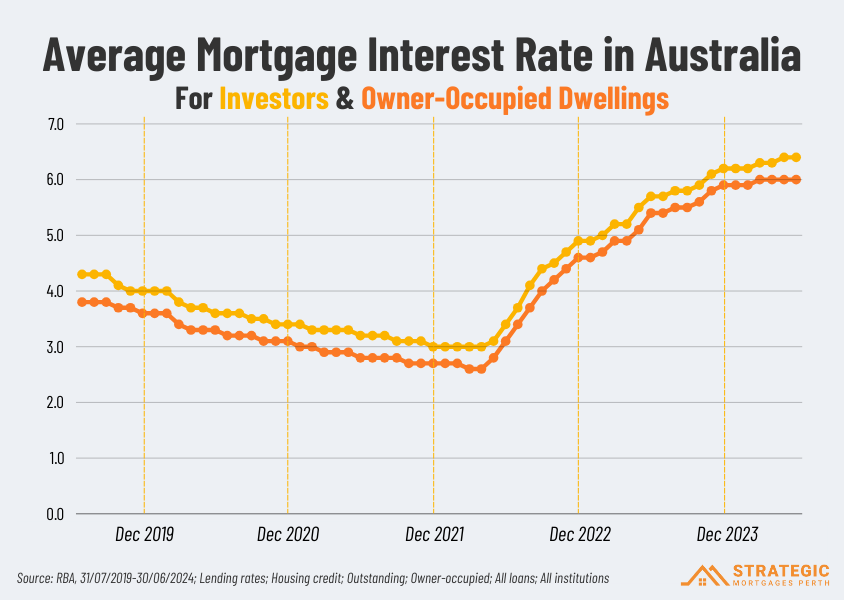
The “average” rate is also heavily dependent on the type of loan product chosen. Different structures offer varying degrees of stability and cost.
30-Year vs. 15-Year Fixed-Rate Mortgages
The 30-year fixed-rate mortgage is the gold standard for American homeowners because of its predictability and lower monthly payments. However, because the lender is committing to a fixed rate for three decades, they charge a premium for that long-term risk. In contrast, 15-year fixed-rate mortgages typically offer significantly lower interest rates. Because the loan is paid off in half the time, the lender’s exposure to interest rate volatility is reduced, and the borrower builds equity much faster, though at the cost of a much higher monthly payment.
Adjustable-Rate Mortgages (ARMs)
Adjustable-rate mortgages offer an initial period of fixed interest—usually 5, 7, or 10 years—after which the rate fluctuates based on market indices. ARMs often start with a lower “teaser” rate compared to fixed-rate products, making them attractive to buyers who plan to sell or refinance before the adjustment period begins. However, they carry the risk of significantly higher payments in the future if market rates rise.
Government-Backed Loans (FHA and VA)
For many, the path to homeownership involves government-insured loans. FHA loans, backed by the Federal Housing Administration, are designed for borrowers with lower credit scores or smaller down payments. While their base interest rates are often competitive with conventional loans, they carry mandatory mortgage insurance premiums that increase the overall cost of borrowing. VA loans, available to veterans and active-duty service members, often provide the lowest interest rates available because they are backed by the Department of Veterans Affairs and typically require no down payment.
Historical Context and Current Market Dynamics
To understand where interest rates are today, one must look at where they have been. Mortgage rates are cyclical, reflecting the broader ebbs and flows of the global economy.
The Highs and Lows of History
The current generation of homebuyers may view rates of 6% or 7% as historically high, largely because they are comparing them to the unprecedented lows of the 2010s and early 2020s, where rates dipped below 3%. However, a broader historical view reveals a different story. In the early 1980s, as the Fed fought rampant inflation, mortgage rates peaked at over 18%. Throughout the 1990s and early 2000s, rates typically fluctuated between 6% and 8%. Viewed through this lens, current averages are often closer to the long-term historical norm than the “emergency” rates seen during the pandemic era.
The Post-Pandemic Shift
The global pandemic triggered a series of events that drastically altered the mortgage landscape. Initial shutdowns led to massive stimulus and record-low rates to prevent an economic collapse. This was followed by a period of high inflation driven by supply chain disruptions and increased demand. In response, central banks globally shifted toward aggressive tightening. This rapid ascent in rates cooled a red-hot housing market but also created a “lock-in effect,” where current homeowners with 3% rates are reluctant to sell and take on a new mortgage at 7%, leading to restricted inventory and sustained high home prices.
Strategic Approaches to Securing a Lower Rate
While many market factors are outside of a borrower’s control, there are several strategic moves that can be made to secure a rate below the national average.
Buying Down the Rate with Points
Borrowers have the option to pay “discount points” at closing. One point typically costs 1% of the total loan amount and reduces the interest rate by approximately 0.25%. This is essentially “prepaying” interest. For a homeowner who intends to stay in their house for a long duration, the upfront cost of points can result in substantial savings over the life of the loan. However, if the borrower expects to move or refinance within a few years, the break-even point may not be reached, making points a poor investment.
The Importance of Comparison Shopping
One of the most common mistakes in personal finance is failing to shop around for a mortgage. Even a difference of 0.25% on an interest rate can save a borrower thousands of dollars. Different lenders—ranging from large national banks and credit unions to online mortgage brokers—have different overhead costs and risk tolerances. By obtaining multiple Loan Estimates, borrowers can leverage one lender’s offer against another to negotiate lower fees or a more competitive interest rate.

Improving Your Financial Profile Before Applying
Because interest rates are so closely tied to credit scores and DTI ratios, taking six months to a year to “polish” one’s finances can pay massive dividends. Paying down high-interest credit card debt serves two purposes: it lowers the DTI ratio and boosts the credit score by reducing credit utilization. Avoiding new large purchases, such as a new car, during the mortgage application process is also critical, as new debt can trigger a re-evaluation of the offered interest rate or even a denial of the loan.
In the final analysis, the average interest rate on a house loan is a reflection of the current cost of money in a global economy. While the numbers on the screen will continue to fluctuate, the principles of mortgage finance remain constant. By understanding the interplay between market forces and personal financial health, borrowers can position themselves to secure the best possible terms, ensuring that their home remains an appreciative asset rather than a financial burden.
aViewFromTheCave is a participant in the Amazon Services LLC Associates Program, an affiliate advertising program designed to provide a means for sites to earn advertising fees by advertising and linking to Amazon.com. Amazon, the Amazon logo, AmazonSupply, and the AmazonSupply logo are trademarks of Amazon.com, Inc. or its affiliates. As an Amazon Associate we earn affiliate commissions from qualifying purchases.