
In the world of personal finance and investing, few mathematical concepts are as ubiquitous or as vital as the percentage. Whether you are evaluating the performance of a stock portfolio, calculating the interest on a high-yield savings account, or determining the impact of inflation on your purchasing power, percentages are the primary language used to communicate value, growth, and risk.
Understanding how to calculate a percentage of something is more than a basic arithmetic skill; it is a fundamental pillar of financial literacy. When you master these calculations, you move from being a passive observer of your bank statements to an active strategist capable of optimizing every dollar. This guide explores the essential methods for calculating percentages within the “Money” niche, providing you with the tools to navigate personal finance, investing, and business metrics with confidence.
1. The Fundamentals: Understanding Percentages in a Financial Context
Before diving into complex investment ratios, one must master the core mechanics. In financial terms, a percentage represents a portion of a total amount, expressed as a fraction of 100. This standardization allows us to compare different financial products—like two different loans or two different stocks—on an even playing field.
The Basic Formula: Part Over Whole
The most fundamental way to calculate a percentage of something is the “part over whole” method. To find what percentage $X$ is of $Y$, you divide the part ($X$) by the total ($Y$) and then multiply by 100.
Formula: $(Part / Whole) times 100 = Percentage$
For example, if you set a goal to save $500 this month and you have currently saved $150, you can find your progress by dividing 150 by 500 (0.3) and multiplying by 100 to get 30%. In personal finance, this formula is the basis for tracking debt repayment, savings goals, and budget allocations.
Converting Decimals to Percentages
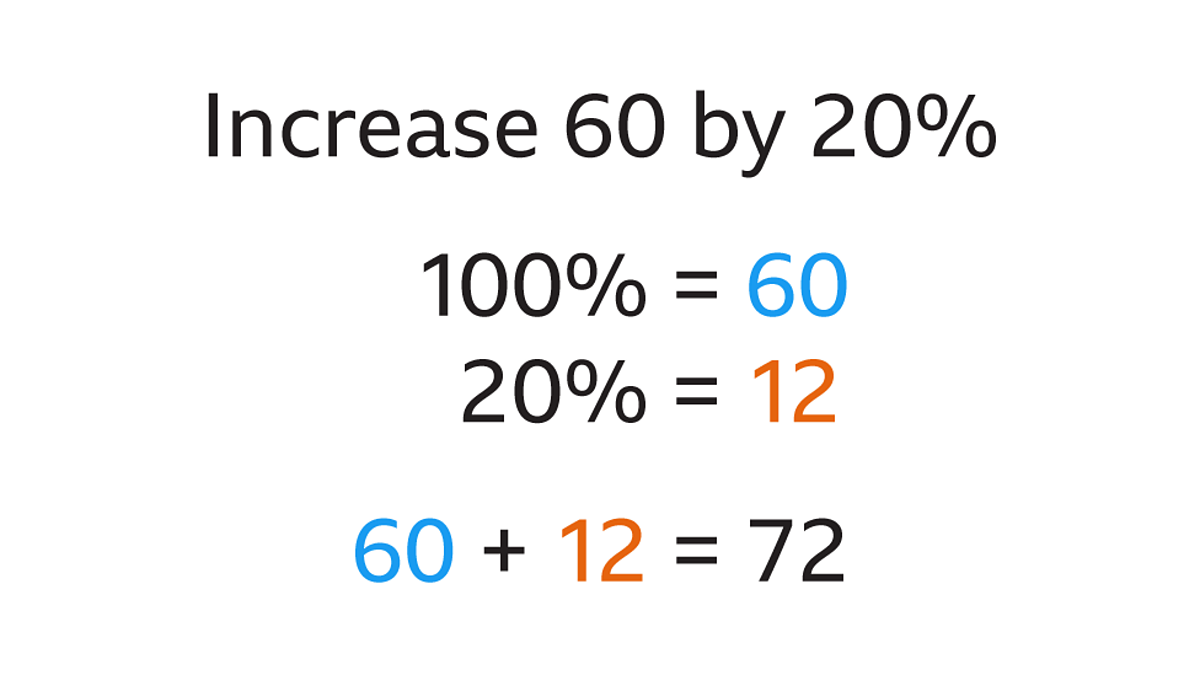
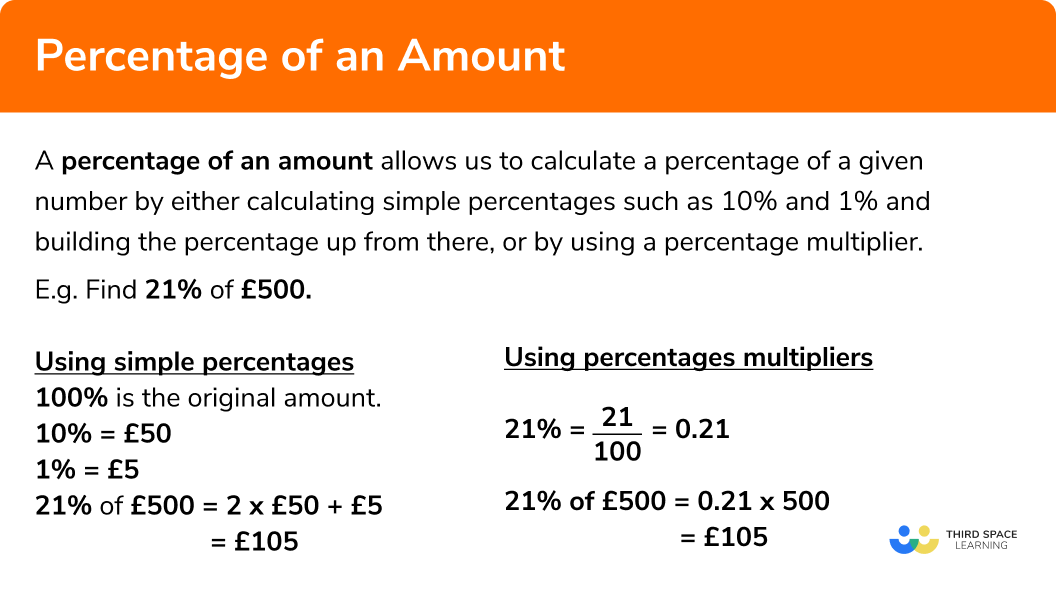
In financial software and spreadsheets, percentages are often handled as decimals. Understanding the relationship between these two is crucial for accuracy. To convert a decimal to a percentage, you move the decimal point two places to the right. Conversely, to find a specific percentage of a number, you convert the percentage to a decimal (move the point two places to the left) and multiply it by the total.
Example: To find 15% of a $200 investment dividend, convert 15% to 0.15.
$0.15 times 200 = $30$.
This simple conversion is the engine behind calculating sales tax, tips, and interest charges.
2. Practical Applications in Personal Finance
Mastering percentage calculations allows you to audit your daily spending and long-term financial health. In this niche, percentages help you understand the true cost of borrowing and the efficiency of your saving habits.
Calculating Discounts and Sales Tax
When shopping, understanding the final price of an item before you reach the register is an essential budgeting skill. If an item is 25% off, you are essentially paying 75% of the original price.
To calculate a 25% discount on a $80 item:
- Calculate the discount: $80 times 0.25 = $20$.
- Subtract from the original: $80 – 20 = $60$.
Alternatively, you can multiply the original price by the “remaining” percentage: $80 times 0.75 = $60$. Adding sales tax follows the same logic in reverse: if the tax is 8%, multiply the price by 1.08 to find the total cost.
Budgeting with the 50/30/20 Rule
One of the most popular personal finance frameworks is the 50/30/20 rule. This strategy dictates that 50% of your after-tax income should go to needs, 30% to wants, and 20% to savings and debt repayment. To implement this, you must be able to calculate these percentages of your net monthly income.
If your take-home pay is $4,500:
- Needs (50%): $4,500 times 0.50 = $2,250$
- Wants (30%): $4,500 times 0.30 = $1,350$
- Savings/Debt (20%): $4,500 times 0.20 = $900$
Understanding Credit Card Interest (APR)
Perhaps the most critical percentage in personal finance is the Annual Percentage Rate (APR) on debt. However, credit cards often calculate interest daily. To see the daily impact, you divide the APR by 365. If you have a $2,000 balance on a card with a 24% APR, your daily interest rate is approximately 0.0657%. Understanding how these small daily percentages compound is often the “ah-ha” moment that leads individuals to prioritize high-interest debt repayment.
3. Percentages in Investing and Wealth Building
In the realm of investing, percentages are the yardstick of success. They allow investors to strip away the “noise” of dollar amounts to see the underlying performance of their capital.
Calculating Return on Investment (ROI)
ROI is the ultimate metric for any investor. It tells you how much profit or loss you have made relative to the amount of money you invested.
Formula: $[(Current Value – Original Value) / Original Value] times 100$
If you bought a stock for $1,000 and it is now worth $1,250, your ROI is:
$(1,250 – 1,000) / 1,000 = 0.25$, or 25%.
Without converting this to a percentage, it is difficult to compare the performance of this stock against a real estate investment or a savings account.
The Power of Compound Interest
Compound interest is often called the eighth wonder of the world in finance. It is the process where the value of an investment grows by a certain percentage, and then that new, larger total grows by that same percentage again in the next period.
To calculate the future value of an investment with compound interest, the formula is: $A = P(1 + r/n)^{nt}$
Where:
- $P$ = Principal amount
- $r$ = Annual interest rate (as a decimal)
- $n$ = Number of times interest compounds per year
- $t$ = Number of years
Understanding that a 7% annual return doubles your money every 10 years (based on the Rule of 72) is a percentage-based insight that transforms how people approach retirement planning.
Dividend Yields and Portfolio Allocation
For income-focused investors, the “Dividend Yield” is a vital percentage. It is calculated by dividing the annual dividend payment by the current stock price. If a stock costs $100 and pays $4 in dividends annually, the yield is 4%.
Furthermore, asset allocation—deciding what percentage of your portfolio should be in stocks vs. bonds—is the primary driver of risk management. A “60/40” portfolio (60% stocks, 40% bonds) requires constant rebalancing, which involves calculating the current percentage weight of each asset class and selling or buying to return to the target percentage.
4. Business Finance: Percentages for Entrepreneurs
For business owners and side-hustlers, percentages are the indicators of health and sustainability. They tell you if your pricing is correct and if your growth is accelerating.
Gross vs. Net Profit Margins
A business might generate millions in revenue, but if its margins are thin, it remains at risk.
- Gross Profit Margin: $[(Revenue – Cost of Goods Sold) / Revenue] times 100$. This shows how efficiently a company produces its products.
- Net Profit Margin: $(Net Income / Revenue) times 100$. This shows how much of every dollar earned actually turns into profit after all expenses, taxes, and interest.
A business with a 20% net profit margin is generally considered much healthier than one with a 5% margin, regardless of total revenue.
Year-over-Year (YoY) Growth Rates
To measure the success of a side hustle or a corporation, we look at the percentage increase in revenue or users over a specific period.
Formula: $[(New Value – Old Value) / Old Value] times 100$.
If your online store made $10,000 in 2022 and $15,000 in 2023, your YoY growth rate is 50%. This percentage is what investors and lenders look for to determine the “velocity” of a business.
Customer Acquisition Cost (CAC) Ratios
In modern business, particularly online income streams, we calculate the CAC as a percentage of the Lifetime Value (LTV) of a customer. If it costs you $20 to acquire a customer who will spend $100 over their lifetime, your CAC is 20% of your LTV. Keeping this percentage low is the key to scaling a profitable venture.
5. Advanced Tips for Fast Mental Calculations
In many financial situations—like a board meeting or a quick negotiation—you won’t have a calculator. Mastering a few percentage “hacks” can make you appear much more financially savvy.
The 10% and 1% Rule
The easiest way to calculate percentages mentally is to find 10% or 1% first.
- To find 10% of any number, move the decimal one place to the left ($450.00 becomes $45.00).
- To find 1% of any number, move the decimal two places to the left ($450.00 becomes $4.50).
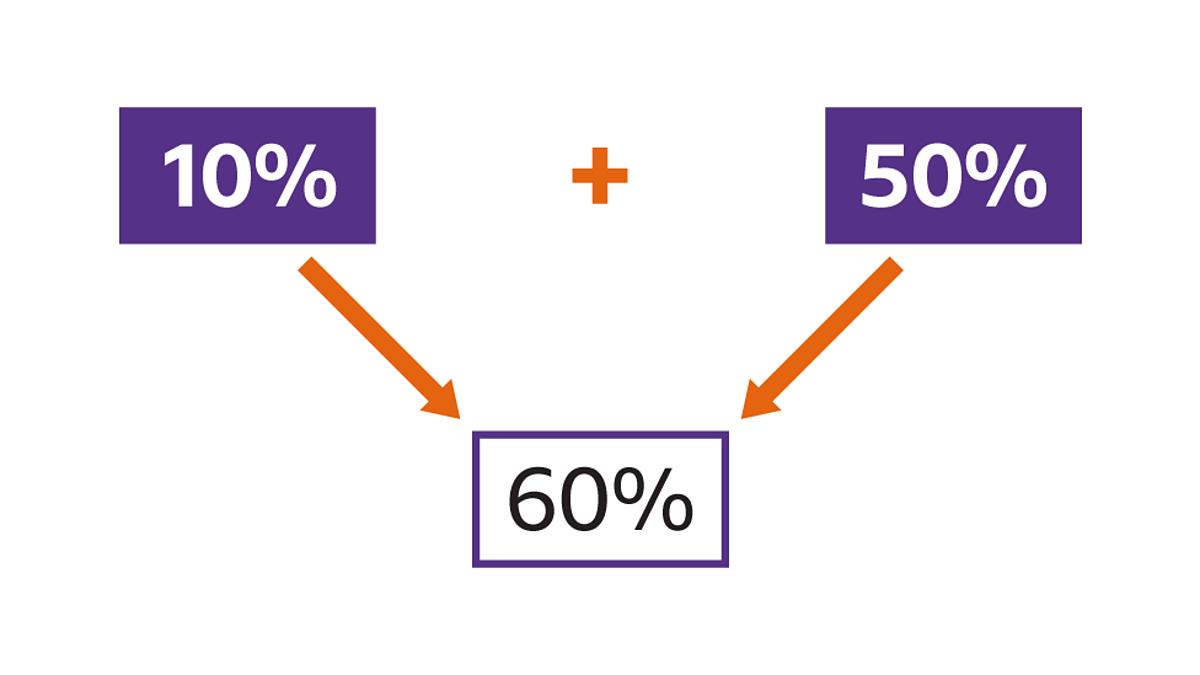
Once you have these “building blocks,” you can find almost any percentage. Want to find 15%? Find 10%, halve it to get 5%, and add them together.
The Commutative Property of Percentages
This is a “magic” trick of math that is incredibly useful in finance: $x%$ of $y$ is always equal to $y%$ of $x$.
If you need to calculate 16% of 50 in your head, it might seem difficult. However, using this rule, you can calculate 50% of 16 instead. The answer is instantly clear: 8. Whether you are calculating a small fee on a large investment or a large tax on a small purchase, this reversal can simplify the math significantly.
Conclusion
Calculating a percentage of something is the foundational skill upon which all financial success is built. From the simple act of calculating a discount at a store to the complex analysis of net profit margins and compound interest, percentages allow us to quantify our progress and make informed decisions. By mastering these formulas and understanding their applications in personal finance, investing, and business, you gain a significant advantage in the pursuit of financial independence. Math is the language of money, and percentages are its most important vocabulary.
aViewFromTheCave is a participant in the Amazon Services LLC Associates Program, an affiliate advertising program designed to provide a means for sites to earn advertising fees by advertising and linking to Amazon.com. Amazon, the Amazon logo, AmazonSupply, and the AmazonSupply logo are trademarks of Amazon.com, Inc. or its affiliates. As an Amazon Associate we earn affiliate commissions from qualifying purchases.