
In the intricate world of finance, where numbers tell stories of growth, decline, opportunity, and risk, understanding how to interpret change is paramount. Whether you’re a seasoned investor tracking portfolio performance, a business owner analyzing quarterly sales, or an individual managing personal budgets, the ability to quantify growth is a non-negotiable skill. At the heart of this quantification lies the concept of a percent increase – a simple yet powerful metric that reveals not just how much something has grown, but by what proportion it has grown relative to its starting point.
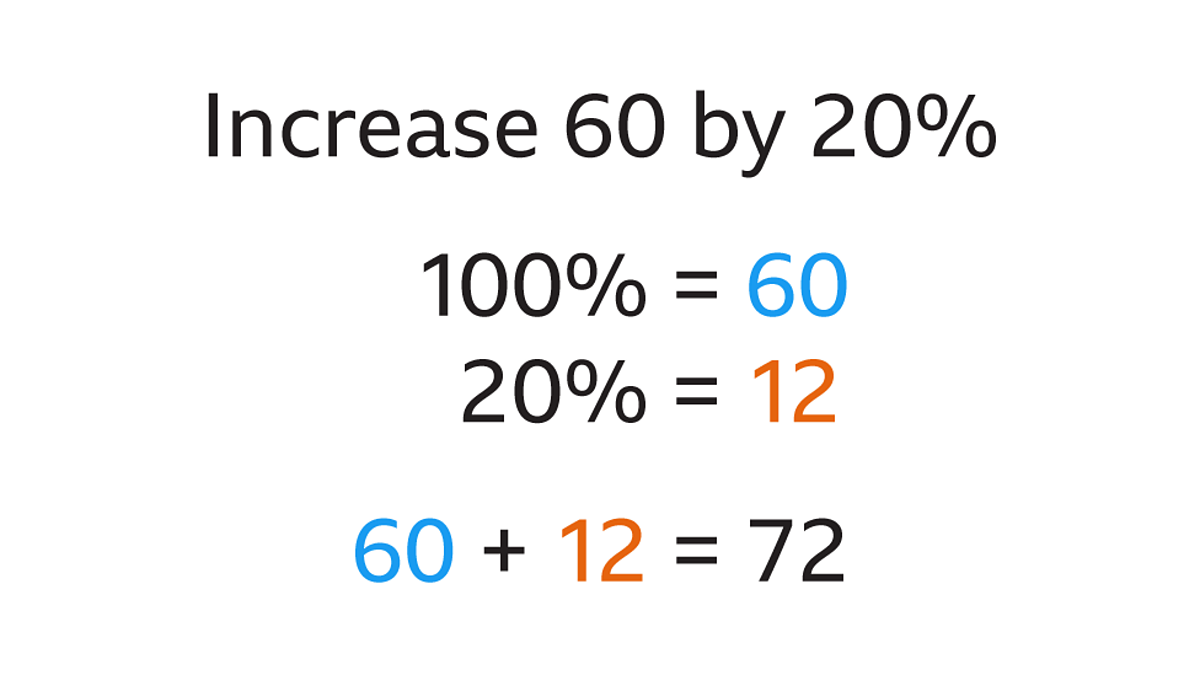
This guide delves into the mechanics of calculating a percent increase, illustrating its profound relevance across personal finance, investing, and business operations. Mastering this calculation empowers you to make more informed decisions, negotiate effectively, and gain a clearer perspective on your financial trajectory. It transforms raw numbers into actionable insights, providing context and meaning to changes over time.
Understanding the Core Concept of Percent Increase
Before diving into the mechanics, it’s crucial to grasp what a percent increase truly represents and why it holds such weight in financial analysis. It’s more than just a mathematical operation; it’s a lens through which we evaluate progress, efficiency, and economic shifts.
What is a Percent Increase?
A percent increase quantifies the proportional change between an initial value and a final value, specifically when the final value is greater than the initial value. Expressed as a percentage, it tells you how much something has grown in relation to its original size. For instance, if your savings account grew from $100 to $110, the absolute increase is $10. However, the percent increase tells you that your savings grew by 10%, offering a standardized way to compare growth irrespective of the initial amount.
It’s a relative measure, which is its primary strength. An increase of $1,000 might seem significant, but if it’s an increase on an initial $10,000,000, it’s negligible. If it’s an increase on an initial $500, it’s monumental. The percent increase provides this crucial context, allowing for meaningful comparisons across different scales and timeframes.
Why Does it Matter in Finance?
The utility of percent increase spans virtually every facet of financial life.
- Personal Finance: You can track the growth of your investments, the increase in your income, or the rise in your monthly expenses (e.g., utility bills, grocery costs). This helps in budgeting, financial planning, and identifying areas for adjustment. Negotiating a salary raise often involves discussing percentage increases.
- Investing: It’s the standard metric for evaluating the performance of stocks, bonds, mutual funds, and entire portfolios. Investors use it to understand their return on investment (ROI), compare different investment vehicles, and assess risk-adjusted returns. A stock that rises by 25% tells you more about its performance than simply knowing it gained $5 per share.
- Business Finance: Businesses use percent increase to analyze revenue growth, cost increases, profit margin expansion, market share changes, and employee productivity gains. It’s essential for setting targets, evaluating departmental performance, and making strategic decisions about pricing, expansion, and cost control.
- Economic Analysis: Economists and policymakers rely on percent increases to measure inflation (Consumer Price Index increase), GDP growth, employment rate changes, and interest rate adjustments. These figures inform monetary policy and provide insights into the overall health of the economy.
The Basic Formula Explained
The calculation of a percent increase hinges on three core components: the initial value, the final value, and the difference between them.
The fundamental formula is:
$$ text{Percent Increase} = frac{text{Final Value} – text{Initial Value}}{text{Initial Value}} times 100% $$
Let’s break down each part:
- Final Value: The larger, newer amount after the increase has occurred.
- Initial Value: The smaller, original amount before the increase.
- Final Value – Initial Value: This subtraction yields the absolute increase or the difference, representing the raw numerical growth.
- Divided by Initial Value: This step normalizes the absolute increase by relating it back to the original size. It tells you what fraction of the initial value the increase represents.
- Multiplied by 100%: This final step converts the decimal fraction into a more easily understandable percentage.
Understanding this formula is the gateway to unlocking deeper financial insights and making more data-driven choices.
Step-by-Step Guide to Calculating Percent Increase
Calculating a percent increase is a straightforward process when broken down into logical steps. Let’s walk through it with a practical example that resonates with financial applications.
Suppose you invested $5,000 in a mutual fund, and after one year, its value grew to $5,750. You want to calculate the percent increase in your investment.
Step 1: Determine Your Initial and Final Values
The first crucial step is to clearly identify which number is your starting point and which is your ending point. Misidentifying these can lead to incorrect calculations.
- Initial Value (Original Amount): The value at the beginning of the period you’re analyzing. In our example, this is your initial investment.
- Initial Value = $5,000
- Final Value (New Amount): The value at the end of the period after the change has occurred. This is the value of your investment after one year.
- Final Value = $5,750
Step 2: Calculate the Absolute Increase (Difference)
Next, find out the raw numerical amount by which the value has increased. This is done by subtracting the initial value from the final value.
- Absolute Increase = Final Value – Initial Value
- Absolute Increase = $5,750 – $5,000
- Absolute Increase = $750
This $750 represents the actual profit you made on your investment in dollar terms.
Step 3: Divide the Increase by the Initial Value
This is where you determine the proportion of the increase relative to the original amount. You divide the absolute increase (from Step 2) by the initial value (from Step 1).
- Proportion = Absolute Increase / Initial Value
- Proportion = $750 / $5,000
- Proportion = 0.15
The result, 0.15, is a decimal representing the fraction of the initial investment that the increase constitutes.
Step 4: Convert the Result to a Percentage
The final step is to express this decimal as a percentage. To do this, simply multiply the result from Step 3 by 100.
- Percent Increase = Proportion × 100%
- Percent Increase = 0.15 × 100%
- Percent Increase = 15%
So, your investment in the mutual fund experienced a 15% increase over the year.
Practical Example Walkthrough: Analyzing a Small Business’s Revenue Growth
Let’s consider a small business that wants to evaluate its revenue growth.
In Q1, the business generated $80,000 in revenue.
In Q2, the business generated $92,000 in revenue.
- Initial Value: $80,000
- Final Value: $92,000
- Absolute Increase: $92,000 – $80,000 = $12,000
- Divide by Initial Value: $12,000 / $80,000 = 0.15
- Convert to Percentage: 0.15 × 100% = 15%
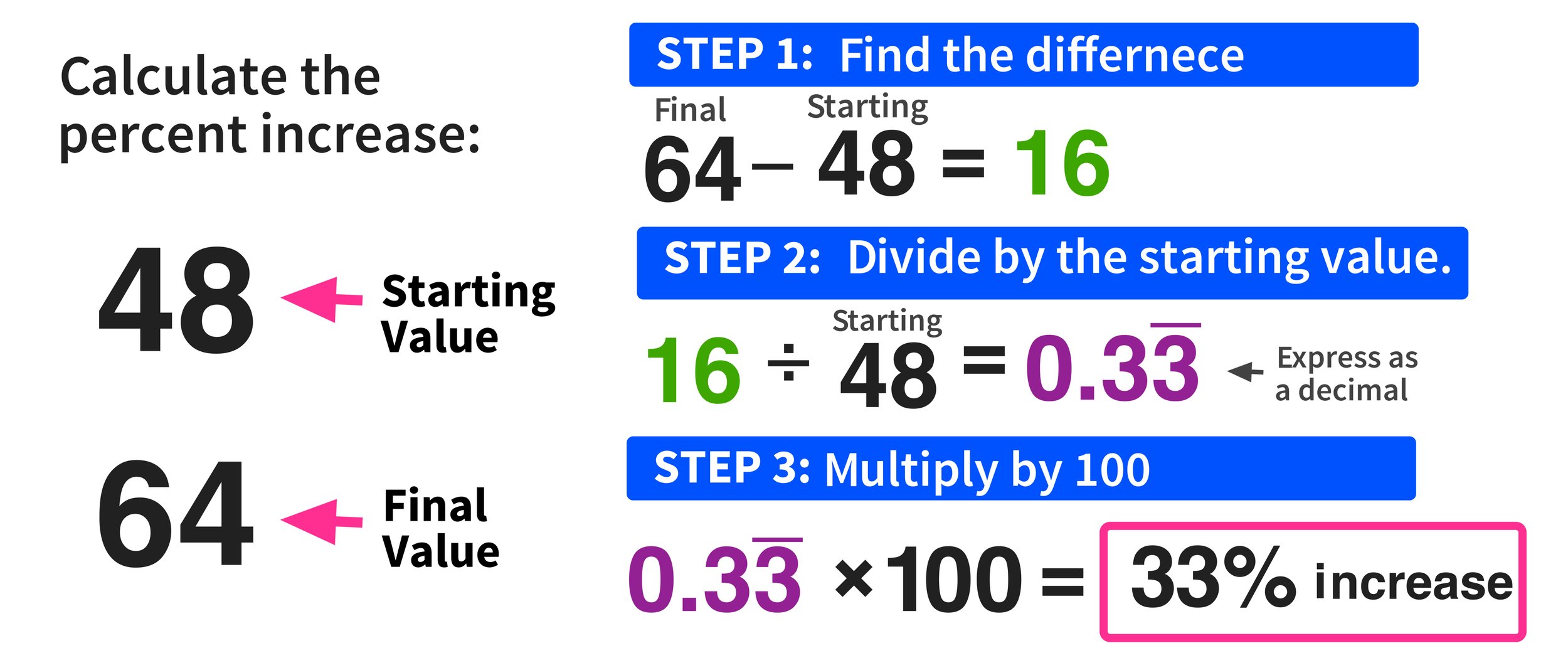
The business experienced a 15% revenue increase from Q1 to Q2. This figure is more informative than just knowing they made an extra $12,000, especially when comparing performance to other periods or industry benchmarks.
Real-World Applications Across Financial Domains
The ability to calculate a percent increase is not merely an academic exercise; it’s a practical skill with profound implications across various financial landscapes. From managing personal wealth to steering corporate strategy, this metric provides clarity and actionable intelligence.
Personal Finance: Tracking Expenses, Income, and Savings Growth
For individuals, understanding percent increase is fundamental to effective personal financial management.
- Income Growth: When negotiating a salary raise, knowing your current income and the proposed increase allows you to quickly calculate the percentage bump. A 5% raise on a $60,000 salary ($3,000) feels different from a 5% raise on a $100,000 salary ($5,000), but the percentage provides a standardized way to compare compensation growth across different roles or periods.
- Expense Management: Are your utility bills creeping up? Did your grocery expenses jump significantly last month? Calculating the percent increase in these categories can highlight areas where you need to adjust your budget or find cost-saving alternatives. For example, if your electricity bill rose from $120 to $144, that’s a 20% increase, which might prompt you to investigate energy efficiency.
- Savings and Debt: Monitoring the growth of your emergency fund or the reduction of your debt load (percent decrease, the inverse) helps you stay motivated and on track with your financial goals. If your savings account balance increased from $8,000 to $9,200 over six months, you’ve achieved a 15% growth.
Investing: Measuring Portfolio Returns and Asset Performance
In the investment world, percent increase (often referred to as “return” or “gain”) is the lingua franca for evaluating performance.
- Stock Performance: If you buy a stock at $50 per share and it later sells for $65, that’s a 30% increase ($15/$50 * 100%). This helps you compare its performance against other stocks, market indices, or your target returns.
- Mutual Fund/ETF Growth: These pooled investment vehicles report their returns as percentages, making it easy for investors to compare different funds’ historical performance over various timeframes (e.g., 1-year, 5-year, 10-year returns). A fund showing a 12% annual increase consistently might be more attractive than one with volatile, albeit sometimes higher, returns.
- Real Estate Appreciation: The value of a property bought for $300,000 that is now appraised at $390,000 represents a 30% increase, indicating significant capital appreciation.
- Portfolio Growth: Consolidating all your investments, you can track the overall percent increase of your entire portfolio year-over-year, which is a key metric for wealth accumulation.
Business Finance: Analyzing Revenue, Costs, and Profitability
For businesses, percent increase is an indispensable tool for strategic planning, operational analysis, and reporting.
- Revenue Growth: A company’s top-line growth is often reported as a percent increase. If Q1 sales were $500,000 and Q2 sales were $575,000, that’s a 15% increase, vital for evaluating marketing strategies and sales effectiveness.
- Cost Analysis: Monitoring the percent increase in operating costs (e.g., raw material prices, labor costs, utilities) helps businesses identify inefficiencies, negotiate better terms with suppliers, or adjust pricing strategies. A 10% increase in the cost of goods sold might severely impact profit margins if not managed proactively.
- Profitability: Calculating the percent increase in net profit allows businesses to assess their overall financial health and the effectiveness of their cost management and revenue generation efforts. An increase in net profit might look good in absolute terms, but the percentage increase provides context relative to the initial profit level.
- Market Share: If a company’s market share grew from 10% to 12%, this isn’t a 2% increase in market share; it’s a (12-10)/10 * 100% = 20% increase in their market share. This distinction is crucial.
Economic Analysis: Understanding Inflation and Market Trends
At a macroeconomic level, percent increase is used to measure broad economic indicators.
- Inflation Rate: The Consumer Price Index (CPI) measures the average change over time in the prices paid by urban consumers for a market basket of consumer goods and services. Its percent increase month-over-month or year-over-year is the inflation rate, which impacts purchasing power and interest rates.
- GDP Growth: The Gross Domestic Product (GDP) measures the total economic output of a country. Its percent increase indicates economic expansion or contraction, guiding national policy and investment decisions.
- Interest Rate Changes: Central banks often communicate changes to benchmark interest rates in percentage points (e.g., a 0.25% increase), which directly influences borrowing costs and investment returns across the economy.
Common Pitfalls and Advanced Considerations
While calculating a percent increase is relatively simple, there are nuances and potential pitfalls that financial professionals and savvy individuals must be aware of to ensure accuracy and avoid misinterpretation.
The Importance of a Correct Base (Initial Value)
The most common mistake in calculating percent increase is using the wrong initial value. The formula explicitly requires the original or starting value as the denominator. Using the final value, or an average, will yield an incorrect result.
Example:
If a company’s revenue increased by $10,000.
- Initial Revenue: $100,000
- Final Revenue: $110,000
- Correct Percent Increase: ($110,000 – $100,000) / $100,000 = 0.10 or 10%
- Incorrect Calculation (using final value as base): ($110,000 – $100,000) / $110,000 = 0.0909 or 9.09%
The difference is significant, and only the former accurately reflects the growth relative to its starting point. Always double-check your initial value.
Differentiating Percent Increase from Percentage Point Increase
This distinction is critical, especially when discussing changes in percentages themselves (like interest rates, market share, or survey results).
- Percent Increase: Refers to the proportional change of a value, as we’ve discussed. (e.g., A stock goes from $100 to $110, a 10% increase).
- Percentage Point Increase: Refers to the absolute numerical difference between two percentages.
Example:
If an interest rate increases from 4% to 5%.
- Percentage Point Increase: 5% – 4% = 1 percentage point.
- Percent Increase: ((5 – 4) / 4) * 100% = (1 / 4) * 100% = 25%.
This is a massive difference! Stating that an interest rate rose by “1 percent” (implying a percent increase) when it rose from 4% to 5% is highly misleading, as it actually rose by 25% of its original value, but only 1 percentage point. Understanding this helps avoid confusion in financial discussions, particularly concerning inflation, interest rates, and market shares.
Handling Negative Values or Declines (Percent Decrease)
While this article focuses on percent increase, it’s important to briefly touch upon its inverse: percent decrease. The formula is very similar, but the initial value will be greater than the final value.
Formula for Percent Decrease:
$$ text{Percent Decrease} = frac{text{Initial Value} – text{Final Value}}{text{Initial Value}} times 100% $$
Example: If an investment dropped from $10,000 to $8,000.
- Percent Decrease = ($10,000 – $8,000) / $10,000 × 100% = $2,000 / $10,000 × 100% = 0.20 × 100% = 20% decrease.
Some calculators or software might produce a negative percentage when calculating a “percent change” if there’s a decrease. The magnitude of the negative number indicates the percentage of decrease. It’s crucial to understand the direction of change.
Compounding Effects and Annualized Growth Rates
For investments over multiple periods, a simple percent increase calculation might not tell the full story due to compounding. Compounding means that earnings from previous periods are reinvested and start earning their own returns, leading to exponential growth.
- Compound Annual Growth Rate (CAGR): For multi-year growth, CAGR is often used to smooth out volatility and provide a more representative annual growth rate. This involves using the initial value, final value, and the number of periods (years).
- CAGR = (($text{Final Value}$ / $text{Initial Value}$)$^frac{1}{text{Number of Years}}$ – 1) × 100%
While beyond a simple percent increase, understanding CAGR’s existence is crucial for investors tracking long-term portfolio performance, as it gives a more accurate picture of average annual growth than simply averaging yearly percent increases.

Conclusion: Empowering Your Financial Decisions with Percent Increase
The ability to accurately calculate and interpret a percent increase is far more than a basic mathematical skill; it is a cornerstone of financial literacy. It transforms raw data into meaningful intelligence, offering a proportional perspective on change that absolute figures alone cannot provide. From managing your household budget and evaluating salary offers to making informed investment decisions and analyzing business performance, this fundamental concept underpins robust financial acumen.
By diligently applying the step-by-step methodology outlined, you equip yourself with a powerful analytical tool. Recognizing the initial and final values, understanding the distinction between a percent increase and a percentage point increase, and being aware of compounding effects will elevate your financial understanding. In a world increasingly driven by data, mastering the percent increase allows you to confidently navigate economic shifts, critically assess financial reports, and ultimately, make more strategic and profitable decisions for your personal wealth and business ventures. Embrace this skill, and unlock a clearer, more insightful view of your financial landscape.
aViewFromTheCave is a participant in the Amazon Services LLC Associates Program, an affiliate advertising program designed to provide a means for sites to earn advertising fees by advertising and linking to Amazon.com. Amazon, the Amazon logo, AmazonSupply, and the AmazonSupply logo are trademarks of Amazon.com, Inc. or its affiliates. As an Amazon Associate we earn affiliate commissions from qualifying purchases.