
The landscape of modern finance is undergoing a radical transformation, moving away from traditional, slow-moving systems toward digitized, high-frequency settlement layers. At the heart of this evolution is XRP, a digital asset designed specifically to facilitate lightning-fast cross-border payments. For the modern investor, understanding how to buy XRP is more than a simple transactional process; it is an entry point into a specialized sector of the financial markets that bridges the gap between legacy banking and decentralized finance.
This guide provides a comprehensive roadmap for acquiring XRP, focusing on the financial strategies, security measures, and market considerations essential for any disciplined investor looking to diversify their portfolio with digital assets.

Understanding XRP in the Global Financial Ecosystem
Before executing a purchase, a sophisticated investor must understand the underlying value proposition of the asset. XRP is not merely a “cryptocurrency” in the generic sense; it is a liquidity tool. Unlike Bitcoin, which is often viewed as “digital gold” or a store of value, XRP was engineered by Ripple Labs to solve a specific friction point in global business finance: the inefficiency of the correspondent banking system.
The Role of XRP in Cross-Border Liquidity
In the traditional financial world, sending money across borders requires a complex web of intermediary banks, often taking three to five business days and incurring significant fees. This is primarily due to the need for pre-funded “nostro/vostro” accounts. XRP acts as a “bridge currency,” allowing financial institutions to swap one fiat currency for XRP and then into another fiat currency in a matter of seconds.
From an investment perspective, the demand for XRP is theoretically linked to its utility. As more financial institutions adopt the RippleNet protocol to move value, the liquidity requirements for XRP may increase. For the personal finance enthusiast, this represents a unique “utility-play” investment, where the asset’s value is derived from its practical application in a multi-trillion dollar global payment industry.
Institutional Adoption vs. Retail Speculation
When deciding to buy XRP, it is vital to distinguish between institutional adoption and retail market sentiment. XRP has one of the highest levels of institutional engagement in the digital asset space. However, the retail market—individual investors—often drives the short-term price volatility. A sound financial strategy involves looking past the daily “noise” of social media trends and evaluating the long-term partnerships Ripple secures with global banks and payment providers. Understanding this balance helps investors manage their expectations regarding price appreciation and volatility.
Step-by-Step Guide to Acquiring XRP
Acquiring XRP is a straightforward process, but it requires diligence to ensure that your capital is handled through secure and regulated channels. In the realm of personal finance, the goal is to minimize fees while maximizing the security of the transaction.
Selecting a Reputable Cryptocurrency Exchange
The first step in buying XRP is choosing a platform, commonly referred to as a cryptocurrency exchange. These platforms act as the marketplace where you trade your local fiat currency (such as USD, EUR, or GBP) for XRP. When selecting an exchange, prioritize the following financial criteria:
- Regulatory Compliance: Ensure the exchange is licensed to operate in your jurisdiction. Regulated exchanges are subject to audits and must follow strict anti-money laundering (AML) and know-your-customer (KYC) protocols, which protect your investment from fraudulent activity.
- Fee Structures: Different exchanges have different ways of charging users. Some charge a flat percentage per trade, while others use a “maker-taker” model. For larger investments, seeking an exchange with low trading fees and minimal withdrawal costs is essential for maintaining your net ROI.
- Liquidity: High liquidity ensures that you can buy or sell XRP at the current market price without significant “slippage”—the difference between the expected price and the actual price of the trade.
Major global exchanges like Kraken, Coinbase, and Uphold are popular choices for XRP investors due to their robust security and ease of use.
Funding Your Account and Executing the Trade

Once you have selected an exchange and verified your identity, the next step is funding your account. Most investors choose between a bank transfer (ACH or SEPA) or a credit/debit card. While card purchases are instant, they often carry significantly higher fees. For those focused on long-term wealth building, a bank transfer is usually the most cost-effective method.
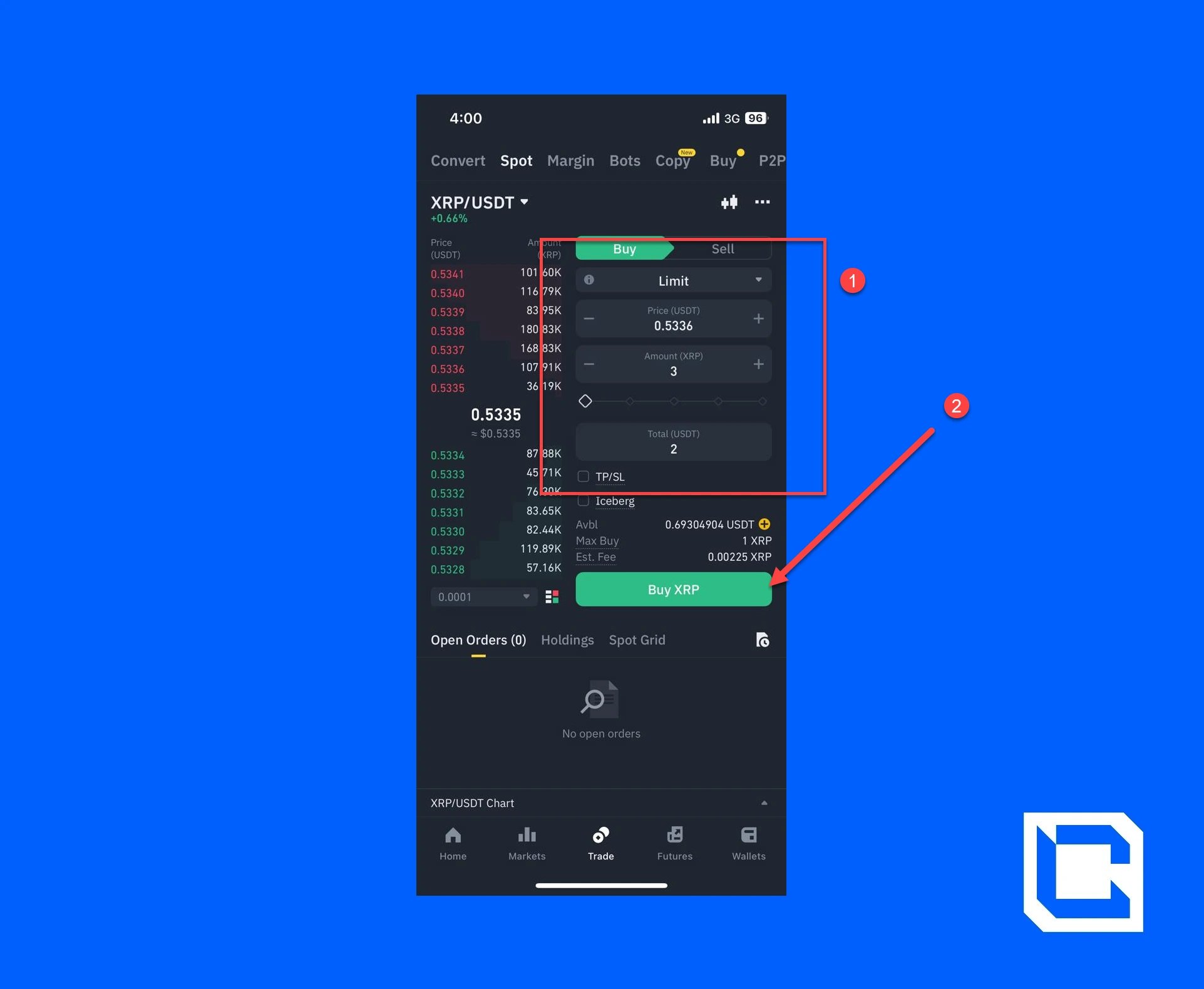
When your funds arrive, you will place an order. There are two primary types of orders to consider:
- Market Order: You buy XRP immediately at the current market price. This is best for those who want to enter the market quickly.
- Limit Order: You set a specific price at which you are willing to buy. The trade only executes if the market hits that price. This is a more strategic approach, allowing investors to enter positions during market dips.
Security and Custody: Protecting Your Financial Interest
In the world of digital finance, you are your own bank. Once you have purchased XRP, the responsibility for its safety rests entirely on your shoulders. Professional investors rarely leave significant amounts of capital on an exchange longer than necessary, as exchanges can be targets for cyber-attacks.
Hot Wallets vs. Cold Storage Solutions
Understanding the difference between hot and cold storage is fundamental to financial security.
- Hot Wallets: These are software-based wallets connected to the internet. They are convenient for frequent trading but are more vulnerable to hacking.
- Cold Storage (Hardware Wallets): These are physical devices that store your XRP “offline.” Because they are not connected to the internet, they are virtually immune to remote hacking. For anyone holding a significant amount of XRP as part of their long-term investment portfolio, a hardware wallet (such as those made by Ledger or Trezor) is an essential purchase. It ensures that your private keys—the “passwords” to your digital wealth—never leave the physical device.
Essential Security Protocols for Investors
Beyond choosing the right wallet, practicing good “cyber-hygiene” is a critical component of personal finance in the digital age. This includes:
- Two-Factor Authentication (2FA): Always use app-based 2FA (like Google Authenticator or a physical Yubikey) rather than SMS-based 2FA, which is susceptible to SIM-swapping attacks.
- Seed Phrase Management: When you set up a wallet, you will receive a 12-to-24-word recovery phrase. This phrase is the only way to recover your funds if you lose your device. It should be written down on paper and stored in a fireproof safe—never saved in a cloud-based note or a screenshot.
- Whitelisting Addresses: Many exchanges allow you to “whitelist” withdrawal addresses. This ensures that even if your account is compromised, funds can only be sent to your pre-approved personal wallets.
Strategic Considerations for XRP Investors
Investing in XRP should not be a move made in isolation. It must be part of a broader, coherent financial plan. Because the digital asset market is highly volatile, it requires a disciplined mindset and a clear exit or growth strategy.
Diversification and Risk Management
A cardinal rule of personal finance is never to invest more than you can afford to lose, especially in high-growth, high-risk assets like XRP. While the potential for significant upside exists, XRP—like all digital assets—is subject to extreme price swings.
A balanced portfolio might allocate a small percentage (e.g., 1% to 5%) to digital assets while keeping the majority of wealth in more traditional vehicles like index funds, real estate, or bonds. This “barbell strategy” allows you to capture the explosive growth potential of the tech-finance sector without jeopardizing your overall financial stability.
Monitoring Regulatory Developments and Market Trends
The price and viability of XRP are uniquely tied to the regulatory environment. For several years, Ripple Labs was involved in a high-profile legal battle with the U.S. Securities and Exchange Commission (SEC) over whether XRP should be classified as a security.
For an investor, staying informed about these legal proceedings is vital. Regulatory clarity often leads to increased institutional adoption, which can act as a catalyst for price movement. Keeping an eye on the “Money” section of major news outlets and following official statements from financial regulators will provide you with the insight needed to adjust your position as the legal landscape shifts.
In conclusion, buying XRP is a multi-step process that involves market research, strategic purchasing, and rigorous security. By viewing XRP through the lens of a financial tool rather than just a speculative coin, you can position yourself to benefit from the ongoing digitization of the global financial system. Whether you are looking for a short-term trade or a long-term hold, the key to success lies in professional-grade preparation and a commitment to protecting your digital capital.
aViewFromTheCave is a participant in the Amazon Services LLC Associates Program, an affiliate advertising program designed to provide a means for sites to earn advertising fees by advertising and linking to Amazon.com. Amazon, the Amazon logo, AmazonSupply, and the AmazonSupply logo are trademarks of Amazon.com, Inc. or its affiliates. As an Amazon Associate we earn affiliate commissions from qualifying purchases.