
Understanding your routing number is a fundamental step in navigating the world of personal and business finance. While it might seem like a small detail, this nine-digit code is crucial for a variety of financial transactions, from direct deposits to electronic payments. This guide will demystify the routing number, explain its purpose, and provide clear, actionable steps for locating it.
Understanding the Routing Number: More Than Just Digits
The routing number, also known as the ABA (American Bankers Association) transit number, is a unique identifier assigned to financial institutions in the United States. Its primary function is to facilitate the routing of funds between banks. When you initiate a transaction, such as sending money or receiving a direct deposit, the routing number tells the financial system where your bank is located and how to process the transfer accurately.

The Anatomy of a Routing Number
A routing number is composed of nine digits, which, while appearing arbitrary, are structured to convey specific information. The first four digits typically represent the Federal Reserve Bank district in which the bank is located. The middle four digits identify the specific financial institution within that district. The final digit is a check digit, a calculated number used to verify the accuracy of the entire routing number. This intricate system ensures that funds are directed to the correct institution, minimizing errors in electronic fund transfers.
Why You Need Your Routing Number
Your routing number is indispensable for a range of common financial activities. Here are some of the most frequent scenarios where you’ll need to know it:
- Direct Deposit: To have your paycheck, government benefits, or other regular payments deposited directly into your bank account, you’ll need to provide your routing number and account number to the payer. This is often the fastest and most secure way to receive funds.
- Electronic Bill Payments: When you set up online bill payments through your bank’s website or a third-party service, you’ll typically need your routing number to authorize the transfer of funds from your account.
- Wire Transfers: Both domestic and international wire transfers require a routing number to identify the receiving bank. This is a common method for transferring large sums of money or for urgent transactions.
- Automated Clearing House (ACH) Payments: ACH is a network used for electronic fund transfers, including direct deposits, direct debits, and online bill payments. Your routing number is essential for authorizing these transactions.
- Opening New Bank Accounts: Sometimes, when opening new accounts or applying for certain financial products, you might be asked for your routing number.
- Setting Up Peer-to-Peer Payment Apps: While many apps use your email or phone number, some may require bank account details, including the routing number, for initial setup or for faster transfers.
Locating Your Routing Number: Practical Steps
Finding your routing number is generally a straightforward process. Most banks make this information readily accessible through several convenient channels.
On Your Physical Checks
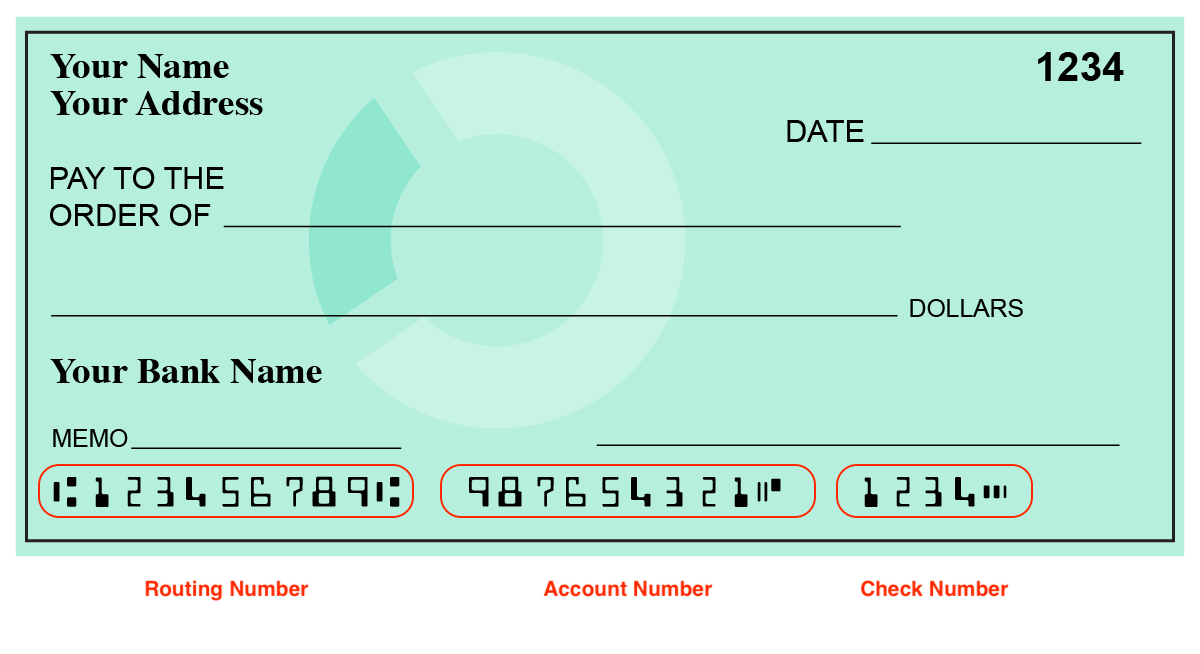
For many, the most familiar place to find the routing number is on a physical check. It’s typically located in the bottom-left corner of the check, appearing as the first set of nine digits before your account number. The MICR (Magnetic Ink Character Recognition) line at the bottom of your check contains your routing number, followed by your account number, and then the check number.
- Example: On a check, you’ll often see a sequence like:
[Routing Number] [Account Number] [Check Number]. The routing number will be the first nine digits in this sequence.
It’s important to note that the routing number printed on your checks is usually for the bank that printed them, which is typically your primary checking account. If you have multiple accounts at different institutions or have switched banks, ensure you are using the routing number associated with the specific account you are conducting the transaction for.
Through Your Bank’s Online Portal or Mobile App
In today’s digital age, accessing your routing number online is perhaps the most common and convenient method. Most banks provide this information within their secure online banking platforms or mobile applications.
-
Online Banking:
- Log In: Access your bank’s website and log in to your account with your username and password.
- Navigate to Account Details: Look for sections labeled “Account Information,” “Account Summary,” “Settings,” or “Profile.”
- Locate Routing Number: Within your account details, you should find your routing number clearly displayed. It might be listed alongside your account number, or in a dedicated section for account specifics.
- Download Account and Routing Number PDF: Many banks offer a downloadable PDF document that contains your account and routing number, which you can save or print for your records. This is especially useful for sharing with employers or other parties requiring this information.
-
Mobile Banking App:
- Open the App: Launch your bank’s mobile application on your smartphone or tablet.
- Log In: Authenticate your identity using your credentials or biometric login (fingerprint or facial recognition).
- Access Account Information: Tap on the specific account for which you need the routing number.
- Find Routing Number: Similar to the online portal, look for an “Account Details,” “Info,” or “Settings” option within the app. Your routing number should be visible there.
Using your bank’s digital platforms is an efficient way to access your routing number anytime, anywhere, without needing to have physical checks on hand.
Contacting Your Bank Directly
If you’re unable to find your routing number through the methods above, or if you prefer speaking with a representative, contacting your bank directly is a reliable option.
- Phone Support:
- Find the Customer Service Number: This number is usually available on your bank’s website, on the back of your debit or credit card, or on your bank statements.
- Call and Authenticate: You’ll likely need to provide personal information to verify your identity, such as your full name, date of birth, account number, or answers to security questions.
- Request Routing Number: Once authenticated, clearly state that you need your routing number. The representative will be able to provide it to you.

- In-Person Visit:
- Visit a Local Branch: If your bank has physical branches, you can visit one.
- Speak to a Teller or Banker: Inform a bank employee that you need to find your routing number.
- Provide Identification: You will need to present a valid photo ID to confirm your identity before they can disclose account information.
Important Note on Security: When contacting your bank, always ensure you are using official contact channels. Be wary of unsolicited calls or emails asking for your routing number and other sensitive financial information, as these could be phishing attempts.
Checking Your Bank Statements
Your bank statements, whether paper or electronic, can also be a source of your routing number. While not always as prominent as on checks, it’s often printed on the statement.
- Paper Statements: Review the top or bottom sections of your monthly statement. The routing number is frequently printed here, often near your account number.
- Electronic Statements: Log in to your online banking portal to access your electronic statements. Download a recent statement as a PDF and scan through it. The routing number is usually in the header or footer of the document.
Routing Number Variations: What You Need to Know
It’s crucial to understand that financial institutions may have different routing numbers for different purposes or types of transactions.
Different Routing Numbers for Different Purposes
Some banks use separate routing numbers for:
- Checking Accounts vs. Savings Accounts: While less common, some institutions might have distinct routing numbers for different account types.
- Direct Deposit vs. ACH Payments: Certain banks may designate a specific routing number for direct deposits to streamline that process.
- Wire Transfers: Wire transfers often have a unique routing number that differs from the one used for standard ACH transactions. This is because wire transfers typically go through different clearing systems.
- Online Banking vs. Physical Branch: In rare cases, the routing number associated with a specific branch might differ.
When in doubt, always confirm with your bank which routing number to use for the specific transaction you are conducting. Providing the wrong routing number can lead to delays, failed transactions, or funds being sent to the incorrect institution.
International Transactions and SWIFT Codes
While the routing number is specific to the United States, international money transfers utilize a different system. For international transactions, you will typically need the SWIFT (Society for Worldwide Interbank Financial Telecommunication) code, also known as a BIC (Bank Identifier Code).
- SWIFT/BIC Codes: These are unique identifiers for banks worldwide and are used to facilitate international money transfers. They consist of 8 or 11 alphanumeric characters.
- How to Find: You can usually find your SWIFT code on your bank’s website, by contacting customer service, or by consulting the service you are using for the international transfer.
It is essential to distinguish between a routing number and a SWIFT code, as they serve different purposes and are used in different geographical contexts.
Ensuring Accuracy and Security
The accuracy of your routing number is paramount, as errors can lead to significant financial complications. Similarly, safeguarding this information is crucial to prevent fraud.
Common Errors and How to Avoid Them
- Typographical Errors: The most common mistake is simply mistyping a digit. Always double-check the number you enter.
- Using the Wrong Routing Number: As mentioned, banks can have multiple routing numbers. Ensure you have the correct one for the specific transaction. For example, using a routing number meant for wire transfers when setting up a direct deposit could cause issues.
- Confusing Routing Number with Account Number: These are two distinct pieces of information. The routing number identifies your bank, while the account number identifies your specific account within that bank.
To avoid errors:
- Copy and Paste: When entering your routing number online, use the copy-and-paste function from a trusted source (like your bank’s official website or a verified PDF document) whenever possible.
- Read Aloud: If you’re writing it down or relaying it verbally, read each digit clearly.
- Confirm with the Recipient: Before finalizing a transaction, especially a significant one, it’s a good practice to confirm the routing number with the person or company you are sending money to or receiving it from.
Protecting Your Routing Number
Your routing number, in conjunction with your account number, provides access to your bank account. Therefore, it should be treated with the same level of security as your passwords or Social Security number.
- Never Share Unsolicited: Do not provide your routing number in response to unsolicited emails, text messages, or phone calls. Legitimate institutions will not ask for this information in such a manner.
- Use Secure Connections: When accessing your bank’s online portal or app, ensure you are on a secure, private network. Avoid public Wi-Fi for sensitive financial transactions.
- Monitor Your Accounts Regularly: Keep an eye on your bank statements and transaction history for any unusual activity. Report any discrepancies to your bank immediately.
- Shred Sensitive Documents: If you have old checks or bank statements that contain your routing and account numbers, shred them before disposing of them.
By understanding the purpose of your routing number, knowing where to find it, and practicing good security habits, you can confidently manage your financial transactions and ensure your money is always in the right place.
aViewFromTheCave is a participant in the Amazon Services LLC Associates Program, an affiliate advertising program designed to provide a means for sites to earn advertising fees by advertising and linking to Amazon.com. Amazon, the Amazon logo, AmazonSupply, and the AmazonSupply logo are trademarks of Amazon.com, Inc. or its affiliates. As an Amazon Associate we earn affiliate commissions from qualifying purchases.