
In an increasingly digitized world, understanding the mechanisms of modern finance is paramount. Bitcoin, as the pioneer of cryptocurrencies, has transitioned from a niche technical curiosity to a significant investment asset class, capturing the attention of retail and institutional investors alike. Coinbase, a leading cryptocurrency exchange, has emerged as one of the most accessible and widely adopted platforms for individuals looking to venture into the world of digital assets. This article serves as a comprehensive guide for those aiming to integrate Bitcoin into their financial portfolio through Coinbase, emphasizing prudent financial practices and an insightful approach to this evolving investment landscape.
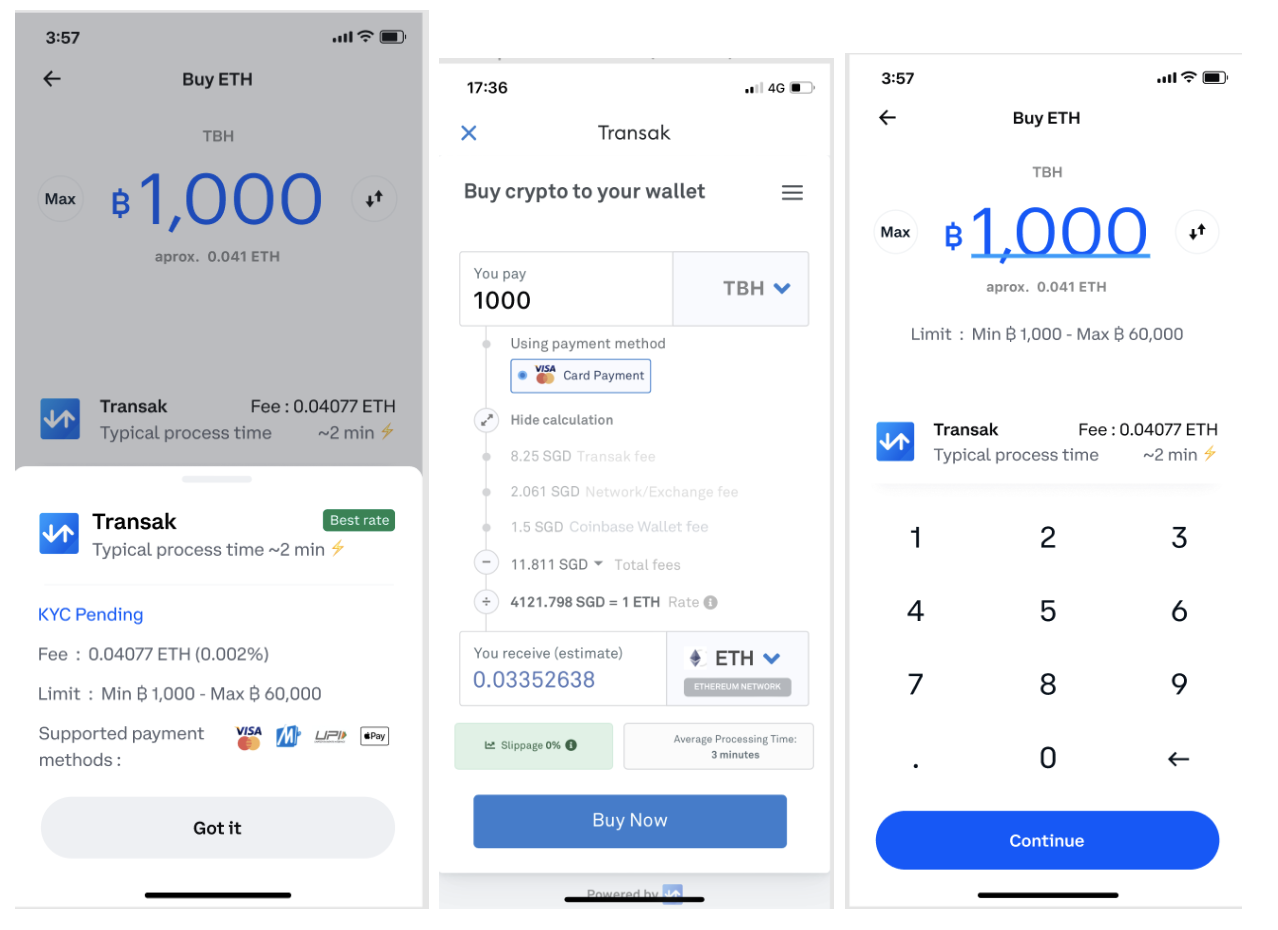
Understanding Bitcoin and Coinbase in Your Financial Strategy
Before diving into the transactional specifics, it’s crucial to contextualize Bitcoin within a broader financial strategy and understand why Coinbase has become a go-to platform for many. This foundational understanding is key to making informed investment decisions rather than merely executing a purchase.
Bitcoin’s Role in a Diversified Portfolio
Bitcoin, often dubbed “digital gold,” has garnered significant attention for its potential as a store of value and a hedge against inflation. Its decentralized nature, finite supply cap (21 million coins), and global accessibility present unique characteristics distinct from traditional assets like stocks, bonds, or real estate. However, its notorious price volatility demands a careful approach. For investors considering Bitcoin, it’s essential to view it as an alternative asset class that can contribute to portfolio diversification, provided it aligns with one’s risk tolerance and long-term financial objectives.
A diversified portfolio aims to mitigate risk by spreading investments across various asset classes with differing risk-return profiles. Bitcoin, with its high beta and sensitivity to macroeconomic factors, can introduce an element of higher risk and potentially higher reward. Financial advisors often recommend allocating only a small percentage (e.g., 1-5%) of a total investment portfolio to highly speculative assets like cryptocurrencies. This approach ensures that while one can participate in the potential upside, any significant downturn in the crypto market does not jeopardize one’s overall financial stability. Understanding Bitcoin’s correlation (or lack thereof) with traditional markets is an ongoing area of study, but its historical performance suggests it can act as a powerful diversifier in certain market conditions, albeit with considerable short-term price swings.
Why Coinbase for Your First Crypto Investment?
Coinbase stands out as a prime entry point for new investors due to its blend of user-friendliness, robust security measures, and regulatory compliance in many jurisdictions. For individuals accustomed to traditional banking and brokerage platforms, Coinbase offers a familiar interface that demystifies the often-complex world of cryptocurrency.
From a financial perspective, Coinbase provides several advantages:
- Accessibility: Its intuitive design simplifies the process of buying, selling, and holding cryptocurrencies, making it less daunting for those unfamiliar with blockchain technology.
- Liquidity: As one of the largest exchanges by trading volume, Coinbase offers deep liquidity, ensuring that investors can buy or sell Bitcoin with minimal slippage, even for larger orders.
- Regulatory Adherence: Coinbase has made significant efforts to comply with financial regulations in various countries, including Know Your Customer (KYC) and Anti-Money Laundering (AML) policies. This adherence provides a layer of trust and legitimacy, which is crucial for financial assets.
- Insurance: For U.S. customers, Coinbase holds USD balances in either custodial bank accounts insured by the FDIC (up to $250,000 per customer) or in money market funds. While cryptocurrency holdings themselves are not FDIC or SIPC insured, Coinbase maintains private insurance policies for a portion of its digital asset holdings against certain types of theft. This adds a crucial layer of financial security for customer assets stored on the platform.
- Transparency: The platform offers clear breakdowns of transaction fees and pricing, allowing investors to understand the financial implications of their trades.
Choosing Coinbase for your initial foray into crypto investing is a strategic financial decision, prioritizing ease of use, security, and regulatory comfort over potentially lower fees found on more advanced trading platforms like Coinbase Pro (which many users transition to as their proficiency grows).
Setting Up Your Coinbase Account: The Gateway to Crypto Investing
The first practical step to buying Bitcoin on Coinbase involves setting up and securing your account. This process is analogous to opening a traditional brokerage or bank account, with a strong emphasis on identity verification and digital security.
Registration and Identity Verification (KYC)
To comply with global financial regulations, particularly KYC (Know Your Customer) and AML (Anti-Money Laundering) laws, Coinbase requires users to verify their identity. This isn’t merely a formality; it’s a critical financial safeguard designed to prevent fraud, illicit financial activities, and to protect legitimate investors.
The registration process typically involves:
- Email and Password Creation: Setting up your initial login credentials.
- Phone Number Verification: A standard security step to link your account to a personal device.
- Personal Information: Providing your legal name, date of birth, and address. This information is cross-referenced with official databases.
- Identity Document Upload: Submitting clear images of a government-issued ID (e.g., driver’s license, passport). Some regions may also require proof of address.
- Facial Verification: Often, a live selfie or video verification is required to confirm that the person opening the account matches the ID provided.
The duration of this verification process can vary from minutes to several days, depending on the clarity of the submitted documents and the volume of applications. It’s imperative to complete this step accurately and patiently, as it directly impacts your ability to fund your account and execute trades. From a financial compliance standpoint, this rigorous verification is what allows Coinbase to operate legally in regulated markets, offering a degree of investor protection not always present in less regulated crypto exchanges.
Securing Your Investment: Two-Factor Authentication (2FA)
Once your account is registered and verified, enabling Two-Factor Authentication (2FA) is an absolutely non-negotiable step for safeguarding your financial assets. 2FA adds an extra layer of security beyond just your password, significantly reducing the risk of unauthorized access to your account. Even if a malicious actor obtains your password, they would still need access to your second authentication factor to log in.
Coinbase typically offers several 2FA options:
- SMS Verification: A code is sent to your registered mobile number. While convenient, this method is less secure than app-based 2FA due to risks like SIM-swapping attacks.
- Authenticator Apps (e.g., Google Authenticator, Authy): This is the most recommended method. These apps generate time-sensitive codes on your smartphone, independent of cellular networks, making them much harder to compromise.
- Security Keys (e.g., YubiKey): For the highest level of security, hardware security keys provide cryptographic authentication and are virtually immune to phishing.
For any financial account holding significant value, an authenticator app or a security key should be the preferred 2FA method. Implementing robust 2FA protocols is a fundamental aspect of digital asset management and a critical component of personal financial security in the crypto space. Neglecting this step leaves your investments vulnerable.
Funding Your Account and Executing Your First Bitcoin Purchase
With your Coinbase account established and secured, the next phase involves linking a payment method and proceeding with your first Bitcoin purchase. This section details the financial logistics of converting traditional currency (fiat) into cryptocurrency.
Linking a Payment Method: Bridging Fiat and Crypto
To buy Bitcoin, you need to fund your Coinbase account with fiat currency. Coinbase supports various payment methods, each with its own advantages, limitations, fees, and processing times. Understanding these financial parameters is key to an efficient transaction.
Common payment methods include:
- Bank Account (ACH Transfer – U.S.): This is often the most cost-effective method for larger deposits as it typically incurs lower fees. However, ACH transfers can take several business days to clear, meaning your funds may not be immediately available for trading, or you might have a “spendable balance” while the deposit is pending.
- Debit Card: Offers instant purchases, which is convenient for time-sensitive transactions. The downside is that debit card purchases generally come with higher transaction fees compared to bank transfers.
- Wire Transfer: For very large deposits, wire transfers can be used. They usually clear faster than ACH but may involve higher fees from your bank.
- PayPal (select regions): Allows instant purchases in some countries, but often with higher fees similar to debit cards.
When linking a payment method, Coinbase will perform verification steps, such as small test deposits (micro-deposits) to your bank account, which you’ll need to confirm. This ensures that you are the legitimate owner of the financial account. Carefully consider the fees and speed associated with each method, weighing convenience against cost-efficiency for your specific financial goals. For first-time investors making smaller purchases, a debit card might be acceptable despite higher fees for its immediacy. For recurring or larger investments, a bank transfer is generally more financially prudent.
Navigating the Purchase Process: From Order to Ownership
Once your account is funded, buying Bitcoin on Coinbase is a straightforward process designed for simplicity:
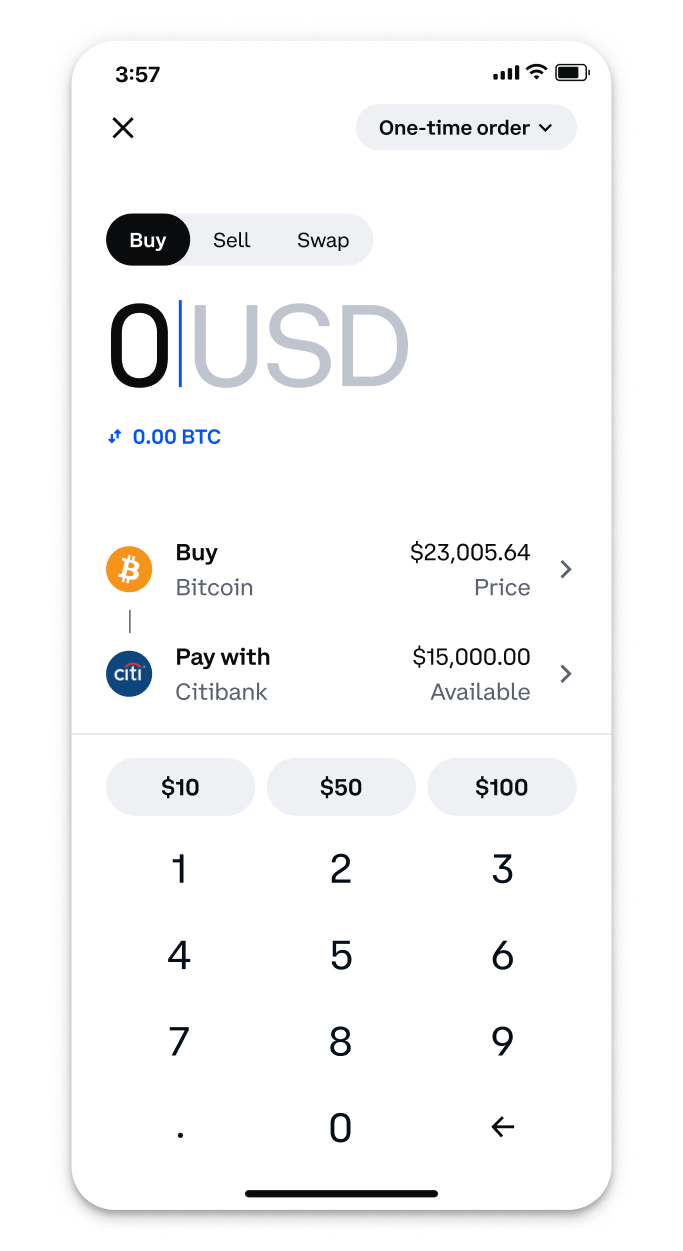
- Navigate to the Buy/Sell Section: From your Coinbase dashboard, locate the “Buy/Sell” button.
- Select Bitcoin: Choose Bitcoin (BTC) from the list of available cryptocurrencies.
- Enter Amount: Specify the amount of fiat currency you wish to spend (e.g., $100) or the amount of Bitcoin you wish to buy (e.g., 0.001 BTC). Coinbase will automatically display the equivalent value.
- Select Payment Method: Choose the linked payment method you wish to use.
- Review Order: Before confirming, Coinbase will present a clear breakdown of your order, including the amount of Bitcoin you will receive, the price per Bitcoin, and all associated fees. This “preview buy” step is critical for understanding the exact financial commitment.
- Confirm Purchase: If everything looks correct, confirm the transaction.
Upon confirmation, the Bitcoin will be added to your Coinbase wallet almost instantly for debit card purchases, or once your bank transfer clears. It’s important to remember that the price displayed in the preview is locked for a short period (usually a few seconds) due to Bitcoin’s real-time price fluctuations. If you delay confirmation, the price might refresh. Executing a “market order” (buying at the current market price) is the standard for basic Coinbase users. More advanced users on Coinbase Pro can utilize “limit orders” to buy at a specific target price, which can be a more sophisticated financial strategy.
Understanding Fees and Spreads
Fees are an unavoidable aspect of financial transactions, and cryptocurrency exchanges are no exception. Coinbase’s fee structure is transparent but can be perceived as higher than some competitors, especially for its basic service. Understanding these costs is vital for calculating your true investment value.
Coinbase typically charges fees in two main ways:
- Flat Fee or Percentage Fee: For smaller transactions, a flat fee might apply. For larger transactions, a percentage of the transaction value is charged. These fees vary based on the payment method and the transaction size. For example, debit card purchases usually incur a higher percentage fee (e.g., 3.99%) compared to bank transfers (e.g., 1.49%).
- Spread: In addition to transaction fees, Coinbase incorporates a “spread” into the price of cryptocurrencies it offers. The spread is the difference between the bid (buy) price and the ask (sell) price. When you buy Bitcoin on Coinbase, you are buying at a slightly higher price than the actual market price, and when you sell, you sell at a slightly lower price. This spread (typically around 0.50% but variable based on market conditions) is how Coinbase also generates revenue, similar to how traditional currency exchange services operate.
Always review the “preview buy” screen carefully to see the total amount you are paying, including all fees and the effective price per Bitcoin. Being aware of these costs helps you evaluate the profitability of your investments and make more informed financial decisions, especially when considering the impact of frequent trading. For those looking to minimize fees for larger or more frequent trades, transitioning to Coinbase Pro, which offers a “maker-taker” fee model based on trading volume, is a financially astute move.
Managing Your Bitcoin Investment and Long-Term Considerations
Acquiring Bitcoin is just the first step; effective management of your digital assets and understanding their broader financial implications are crucial for long-term success. This section delves into post-purchase considerations from a financial management perspective.
Monitoring Your Portfolio and Performance
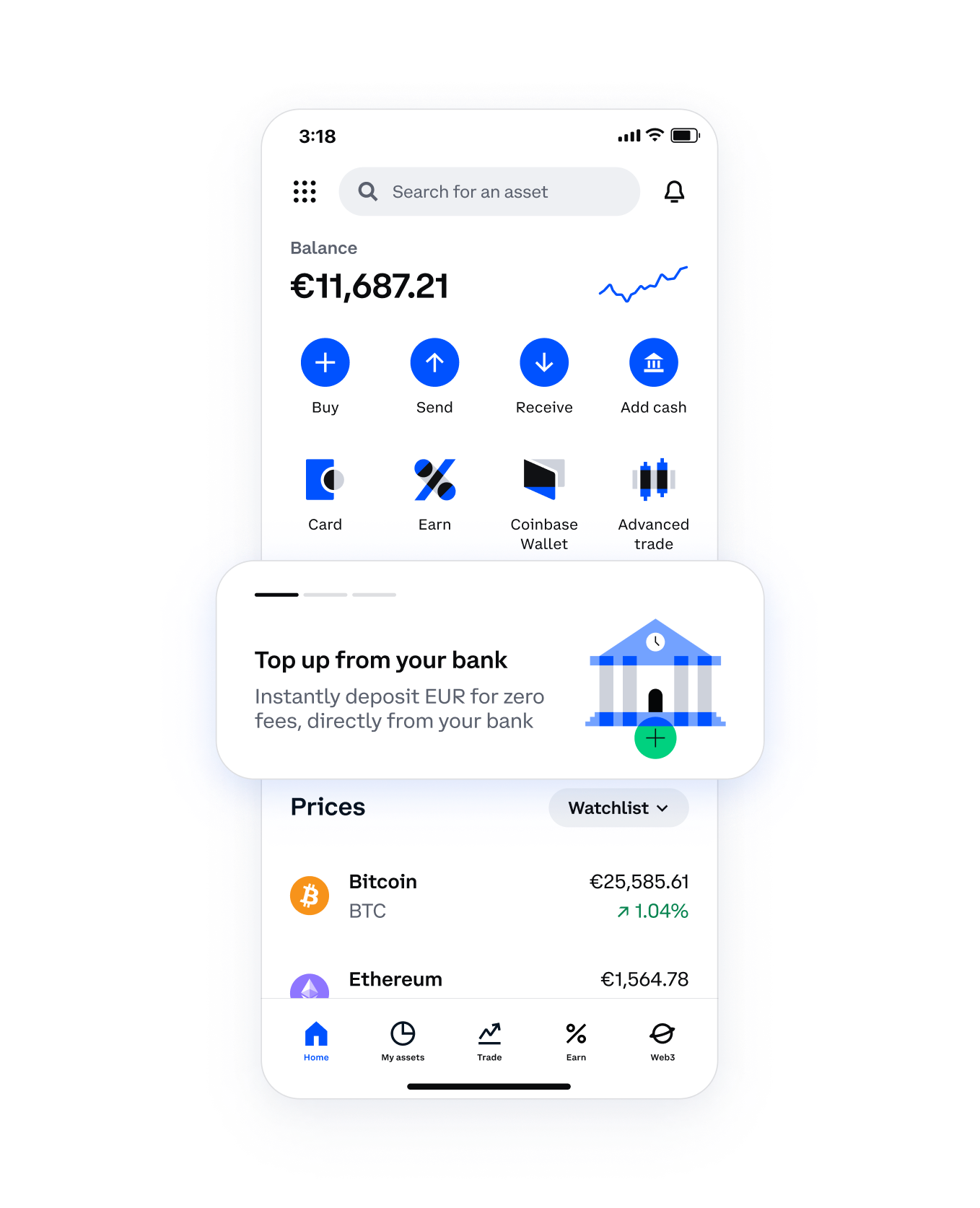
Once you own Bitcoin, actively monitoring its performance is essential, just as you would with any stock or mutual fund. Coinbase provides a user-friendly dashboard that allows you to:
- View your current holdings: See the total value of your Bitcoin and other cryptocurrencies.
- Track price movements: Access real-time and historical price charts for Bitcoin.
- Analyze portfolio performance: Monitor your gains and losses over various timeframes.
- Set price alerts: Receive notifications when Bitcoin reaches a certain price, aiding in timely decision-making for potential future buying or selling.
Regularly reviewing your portfolio helps you stay informed about your investment’s health and allows you to reassess your financial strategy based on market conditions and your personal goals. However, it’s crucial to avoid emotional reactions to short-term volatility. Instead, focus on your initial investment thesis and long-term objectives.
Taxation and Regulatory Compliance
A critical, often overlooked, aspect of cryptocurrency investing is its tax implications. In many jurisdictions, including the United States, cryptocurrencies are treated as property for tax purposes, not currency. This means that capital gains or losses from selling Bitcoin, trading it for other cryptocurrencies, or using it to purchase goods and services are subject to taxation.
Key considerations include:
- Capital Gains Tax: If you sell Bitcoin for more than you bought it for, you realize a capital gain. Short-term capital gains (assets held for less than a year) are typically taxed at your ordinary income rate, while long-term capital gains (assets held for over a year) often receive preferential tax rates.
- Record-Keeping: Meticulous record-keeping is vital. You’ll need to track the date of purchase, purchase price (cost basis), date of sale, and sale price for every transaction. Coinbase provides transaction history and tax reports (like Form 1099-B for U.S. users exceeding certain trading thresholds), which can assist in tax preparation. However, it is ultimately the investor’s responsibility to report all taxable events.
- Professional Advice: Given the complexity and evolving nature of crypto tax laws, consulting a tax professional or a financial advisor specializing in digital assets is highly recommended. Failing to properly report crypto transactions can lead to significant financial penalties.
Understanding and adhering to tax obligations is a fundamental responsibility of any investor and forms a cornerstone of sound financial management in the crypto space.
Secure Storage Options: Balancing Accessibility and Safety
While Coinbase is a secure platform, understanding the nuances of digital asset storage is essential for prudent financial management. When you buy Bitcoin on Coinbase, it is held in a “custodial wallet” managed by Coinbase. This means Coinbase is responsible for the private keys that control your Bitcoin.
While convenient, relying solely on an exchange for storage carries inherent risks, famously encapsulated by the crypto mantra “not your keys, not your crypto.” Coinbase employs industry-leading security measures, including offline storage for a significant portion of assets (cold storage) and comprehensive cybersecurity protocols. However, no online system is entirely impenetrable.
For larger holdings or long-term investments, some investors opt for non-custodial storage solutions:
- Hardware Wallets (Cold Storage): Devices like Ledger or Trezor store your private keys offline, making them highly secure against online threats. This is generally considered the safest method for storing significant amounts of cryptocurrency.
- Software Wallets (Hot Wallets): These are applications on your computer or smartphone, offering more control than an exchange wallet but still connected to the internet, making them less secure than hardware wallets.
The decision of where to store your Bitcoin involves a trade-off between convenience/accessibility and security. For beginners or those with smaller amounts, leaving Bitcoin on Coinbase is generally acceptable due to its strong security infrastructure and insurance policies. As your holdings grow, or if you plan to hold for many years, exploring non-custodial solutions becomes a more financially responsible step to further mitigate risk and assert full ownership of your digital assets.
Advanced Strategies and Prudent Financial Practices
As you become more comfortable with Bitcoin investing, consider incorporating more advanced financial strategies and always prioritize prudent practices.
Dollar-Cost Averaging (DCA) for Crypto Investing
Dollar-Cost Averaging (DCA) is a powerful investment strategy particularly well-suited for volatile assets like Bitcoin. Instead of attempting to “time the market” by making a single large purchase, DCA involves investing a fixed amount of money at regular intervals (e.g., weekly, monthly), regardless of the asset’s price.
The benefits of DCA are purely financial:
- Reduces Risk from Volatility: By spreading out your purchases, you average out your purchase price over time. You buy more Bitcoin when prices are low and less when prices are high, smoothing out the impact of short-term price swings.
- Removes Emotional Bias: DCA encourages disciplined investing and removes the psychological pressure of trying to predict market movements, which is notoriously difficult even for seasoned professionals.
- Simplifies Investment Decisions: It provides a clear, automated path to consistent investment, making it easier for busy individuals to participate in the market.
Coinbase offers recurring buy features, allowing you to easily set up automated DCA plans. This strategy is highly recommended for long-term investors looking to build their Bitcoin position gradually and reduce the stress associated with market fluctuations.
Risk Management and Diversification
Revisiting risk management and diversification is crucial, especially as your crypto portfolio potentially grows. Bitcoin, while revolutionary, is still a relatively new and high-risk asset.
- Only Invest What You Can Afford to Lose: This age-old financial adage is particularly relevant for cryptocurrency. The potential for high returns comes with an equally high potential for significant losses. Your crypto investments should never jeopardize your emergency fund, retirement savings, or other critical financial goals.
- Balance Your Portfolio: While Bitcoin can be a valuable addition, it should ideally be part of a broader, diversified portfolio that includes more stable assets. Don’t put all your financial eggs in one volatile basket.
- Stay Informed: The cryptocurrency market is dynamic. Continuously educate yourself on market trends, regulatory changes, and technological developments. Financial knowledge is your best defense against poor investment decisions.
Engaging with Bitcoin on Coinbase offers an accessible entry point into the world of digital finance. By approaching it with a professional, insightful, and engaging mindset, focusing on financial prudence, understanding the associated risks, and committing to continuous learning, you can integrate Bitcoin thoughtfully into your overall financial strategy. Remember, successful investing in any asset class, especially one as dynamic as cryptocurrency, is a marathon, not a sprint, demanding discipline, patience, and a well-informed perspective.
aViewFromTheCave is a participant in the Amazon Services LLC Associates Program, an affiliate advertising program designed to provide a means for sites to earn advertising fees by advertising and linking to Amazon.com. Amazon, the Amazon logo, AmazonSupply, and the AmazonSupply logo are trademarks of Amazon.com, Inc. or its affiliates. As an Amazon Associate we earn affiliate commissions from qualifying purchases.