
In the modern digital economy, the ability to accept payments online is no longer a luxury reserved for e-commerce giants; it is the fundamental pulse of any scalable business. Whether you are launching a side hustle, managing a growing SME, or overseeing the fiscal health of a large corporation, the architecture of your payment processing system directly dictates your cash flow, your overhead costs, and your ultimate profitability.
Accepting payments online is not merely a technical necessity—it is a strategic financial decision. Choosing the wrong provider or failing to understand the fee structures can result in “revenue leakage,” where small percentages of every sale are chipped away by inefficient processes and hidden costs. This guide explores the financial landscape of online payments, focusing on how to build a robust system that prioritizes financial health and long-term business growth.
Understanding the Financial Infrastructure of Online Payments
Before a single dollar reaches your business bank account, it must travel through a complex financial ecosystem. Understanding this infrastructure is crucial for any business owner looking to optimize their margins. The primary choice most businesses face is between a dedicated merchant account and a Payment Service Provider (PSP).
Merchant Accounts vs. Payment Service Providers (PSPs)
A merchant account is a specialized bank account that allows businesses to accept credit and debit card payments. This is a traditional financial arrangement where the bank (the acquirer) assumes the risk of your transactions. Merchant accounts often offer lower transaction fees for high-volume businesses but involve more rigorous underwriting processes and monthly maintenance fees.
On the other hand, Payment Service Providers (PSPs) like Stripe, PayPal, or Square allow you to begin accepting payments almost instantly under their umbrella merchant account. From a business finance perspective, PSPs are ideal for startups and small businesses because they offer “pay-as-you-go” pricing with no monthly fees. However, as your transaction volume grows, the flat-rate fees of a PSP can become significantly more expensive than the customized rates of a dedicated merchant account.
The Hidden Costs: Transaction Fees and Subscription Models
When calculating the ROI of your online payment system, you must look beyond the headline percentage rate. Most processors charge a combination of a percentage (e.g., 2.9%) and a flat fee per transaction (e.g., $0.30). While this seems straightforward, several hidden financial variables can impact your bottom line:
- Interchange-Plus Pricing: This is the most transparent pricing model. It passes the actual cost of the card network (Visa/Mastercard) directly to you, plus a small markup. For high-volume businesses, this is usually the most cost-effective route.
- Tiered Pricing: Some processors group transactions into “qualified,” “mid-qualified,” and “non-qualified.” This can be financially deceptive, as many transactions end up in the higher-priced tiers.
- Chargeback Fees: If a customer disputes a charge, the processor often charges a fee ranging from $15 to $50. In a business with thin margins, a high chargeback rate can quickly turn a profitable month into a loss.
Optimizing Your Cash Flow Through Diverse Payment Methods
Cash flow is the lifeblood of any enterprise. The methods you choose to accept payments online will determine how quickly you can reinvest your capital. Providing diverse payment options is not just about customer convenience; it is a financial strategy to increase conversion rates and decrease the “days sales outstanding” (DSO).
Credit Cards and Digital Wallets
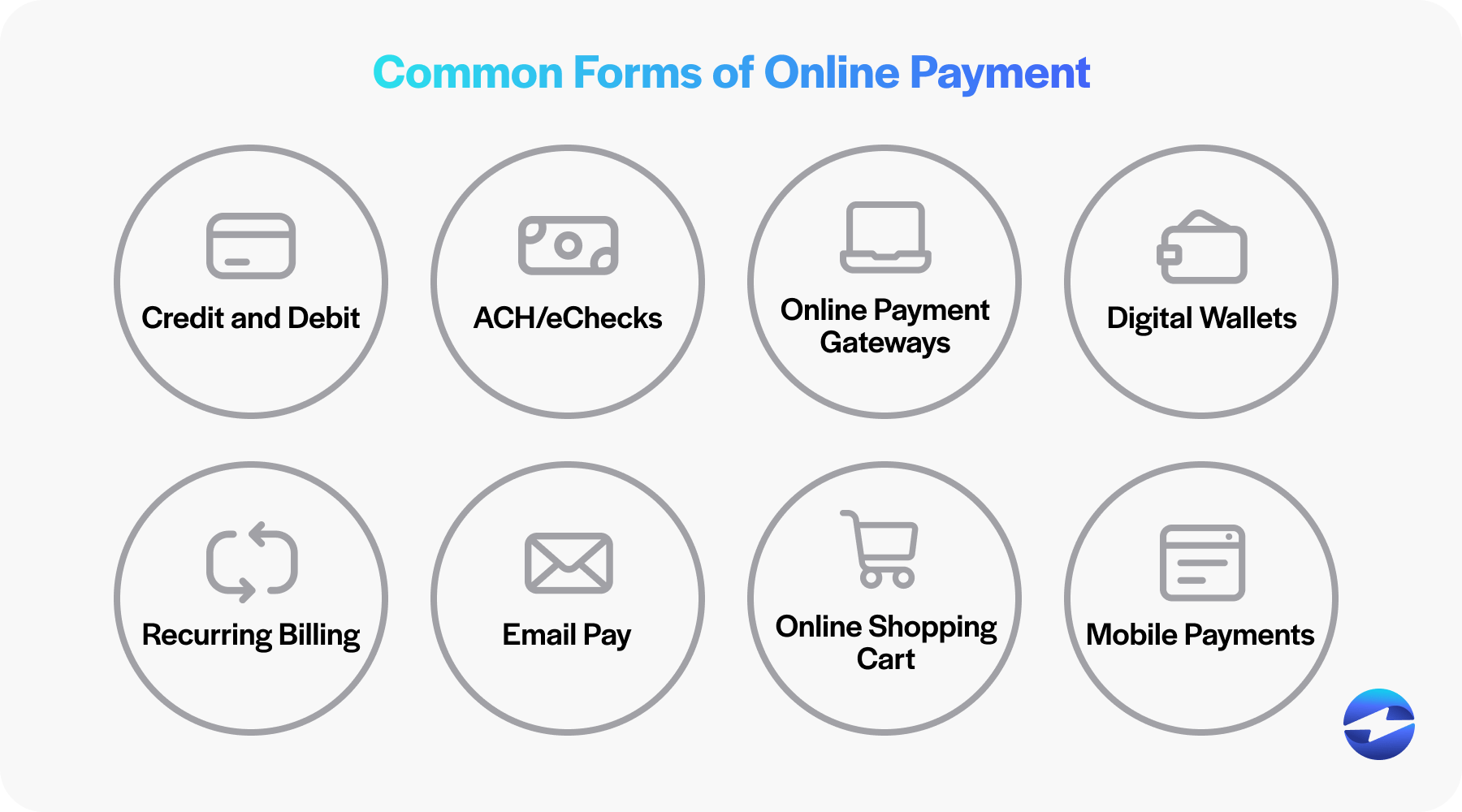
Credit and debit cards remain the standard for online transactions. However, the rise of digital wallets—such as Apple Pay, Google Pay, and Link—has revolutionized transaction speed. From a financial management standpoint, digital wallets offer higher security through tokenization, which reduces the risk of fraud-related losses. Furthermore, the friction-less nature of one-touch payments significantly reduces cart abandonment, ensuring that your marketing spend translates into actual revenue.
Bank Transfers and Direct Debits for Recurring Income
For B2B companies or subscription-based models, relying solely on credit cards can be financially risky. Cards expire, get lost, or reach their credit limits, leading to “involuntary churn”—where a customer stops paying simply because their card failed.
Integrating bank-to-bank transfers (such as ACH in the US, SEPA in Europe, or BACS in the UK) is a superior financial strategy for recurring revenue. These methods typically have significantly lower transaction fees than credit cards and a much lower failure rate. While the settlement time—the time it takes for funds to appear in your account—may be longer (3–5 days), the stability and cost-savings often outweigh the delay in liquidity.
Managing Risk and Financial Security
Accepting payments online exposes a business to various financial risks, ranging from data breaches to sophisticated fraud. A robust financial strategy must include a layer of “revenue protection” to ensure that the money you earn stays in your pocket.
Chargeback Mitigation and Revenue Protection
A chargeback occurs when a customer contests a transaction through their bank rather than the merchant. For the business, this is a double loss: you lose the retail value of the product, the cost of shipping, and you are hit with a penalty fee.
To protect your business finance, you should implement clear refund policies and use tools that provide “Chargeback Protection.” Some payment gateways offer a service where they assume the financial liability of fraudulent chargebacks in exchange for a slightly higher transaction fee. For businesses selling high-ticket items, this “insurance” is often a wise financial investment to prevent sudden, large-scale losses.
Fraud Detection as a Financial Safeguard
Modern payment gateways utilize AI-driven fraud detection that analyzes hundreds of data points—such as IP address, shipping-to-billing match, and historical buying patterns—to flag high-risk transactions. From a financial oversight perspective, setting your “risk appetite” is key. If your fraud filters are too strict, you lose legitimate revenue; if they are too loose, you suffer from fraud losses. Finding the “sweet spot” ensures maximum net revenue after all losses and fees are accounted for.
Scaling Your Business with Global Payment Systems
If your goal is to grow your online income beyond domestic borders, your payment strategy must account for the complexities of international finance. Accepting global payments requires a deep understanding of currency conversion, cross-border fees, and localized tax compliance.
Multi-Currency Support and Exchange Rate Optimization
When a customer sees a price in their local currency, they are much more likely to complete the purchase. However, converting that currency back into your base currency involves “Foreign Exchange” (FX) risk. Most payment processors charge a conversion fee (often 1–2% above the mid-market rate).
Strategically, businesses can minimize these costs by using “Multi-Currency Accounts.” Instead of converting every sale immediately, you can hold funds in various currencies (e.g., USD, EUR, GBP) and convert them only when the exchange rates are favorable or use those funds to pay international suppliers directly. This prevents losing money twice on currency conversion and preserves your profit margins.
Integrating Payments into Your Financial Reporting
The final stage of accepting payments online is reconciliation—the process of ensuring that your sales records match the deposits in your bank account. Inefficient reconciliation is a hidden labor cost that can drain your resources.
To maintain professional financial standards, your payment gateway should integrate seamlessly with accounting software like QuickBooks, Xero, or NetSuite. Automated reconciliation allows for real-time financial reporting, giving you a clear picture of your net income, tax liabilities, and operational expenses. This level of financial visibility is essential for making data-driven decisions about where to invest your capital for future growth.

Conclusion: The Bottom Line on Online Payments
Accepting payments online is far more than a “check-out” button on a website. It is a sophisticated financial operation that requires constant monitoring and optimization. By selecting the right infrastructure—whether a PSP or a merchant account—understanding the nuances of transaction fees, and implementing rigorous fraud protection, you can safeguard your business’s financial health.
Ultimately, the goal is to create a frictionless experience for the customer while maintaining the highest possible margins for the business. When your payment system is optimized for cost, speed, and security, it ceases to be an expense and becomes a powerful engine for generating online income and sustainable business growth. In the world of business finance, every basis point saved in transaction fees and every fraud attempt blocked is a direct contribution to your bottom line.
aViewFromTheCave is a participant in the Amazon Services LLC Associates Program, an affiliate advertising program designed to provide a means for sites to earn advertising fees by advertising and linking to Amazon.com. Amazon, the Amazon logo, AmazonSupply, and the AmazonSupply logo are trademarks of Amazon.com, Inc. or its affiliates. As an Amazon Associate we earn affiliate commissions from qualifying purchases.