
Predicting the future value of any asset, particularly in the volatile cryptocurrency market, is an endeavor fraught with speculation and uncertainty. Yet, for an asset like XRP, which has a distinct utility and a history marked by significant regulatory challenges, the question of its long-term potential in 2030 is exceptionally compelling. XRP, the digital asset native to the Ripple payment protocol, aims to facilitate fast, low-cost cross-border transactions, positioning itself as an alternative to traditional banking infrastructure. Its journey has been anything but smooth, dominated by a protracted legal battle with the U.S. Securities and Exchange Commission (SEC). Understanding XRP’s potential worth in 2030 requires a deep dive into its fundamentals, the evolving regulatory landscape, broader market dynamics, and a comprehensive analysis of various influencing factors. This article will explore these dimensions to provide an insightful, albeit speculative, perspective on XRP’s potential future valuation.
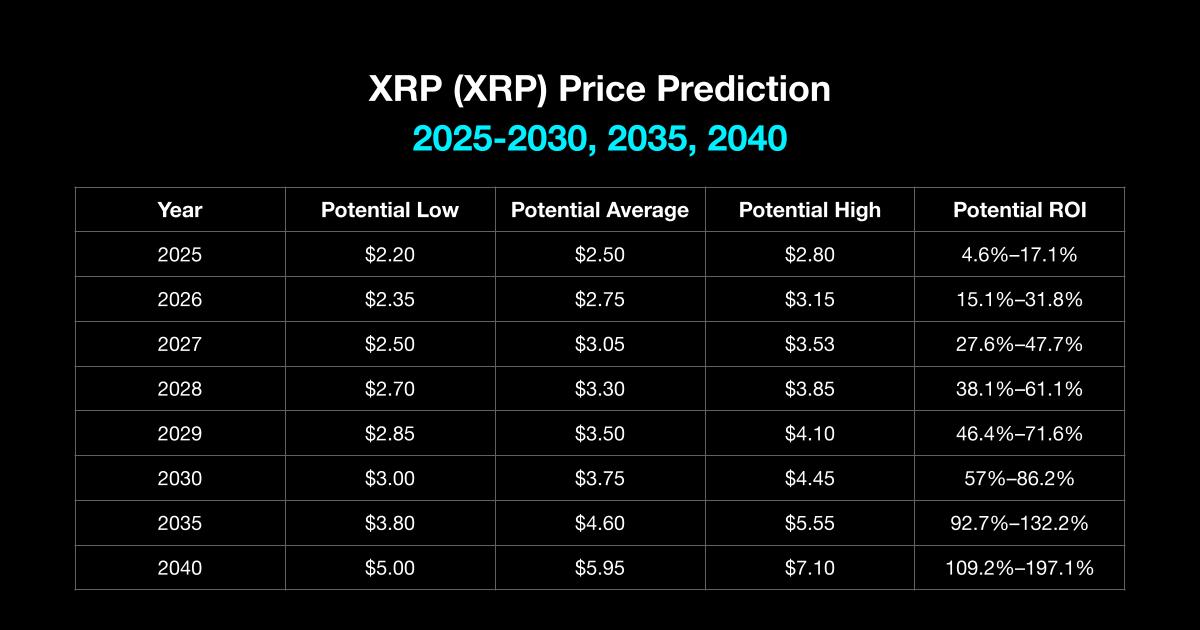
Understanding XRP’s Core Utility and Market Position
XRP’s primary value proposition lies in its ability to enable rapid and inexpensive international payments. Unlike many cryptocurrencies that focus on decentralized applications or store-of-value propositions, XRP is designed specifically to serve financial institutions as a bridge currency for cross-border settlements.
RippleNet and Cross-Border Payments
RippleNet, the network developed by Ripple Labs, leverages XRP to offer a more efficient alternative to conventional systems like SWIFT. Financial institutions can use XRP for on-demand liquidity, bypassing slow and costly foreign exchange conversions. By acting as a bridge asset, XRP facilitates instantaneous transactions between different fiat currencies, dramatically reducing settlement times and operational costs for banks, payment providers, and corporations. This utility is a fundamental driver of XRP’s demand, as it solves a real-world problem within the global financial system. The more financial institutions adopt RippleNet’s On-Demand Liquidity (ODL) service, the greater the potential utility and demand for XRP.
Competition and Market Adoption
Despite its unique utility, XRP operates in a highly competitive landscape. It faces competition not only from other cryptocurrencies that aim to improve payment efficiency (e.g., Stellar Lumens) but also from established financial technologies and central bank digital currencies (CBDCs) currently under development by various nations. Ripple’s success hinges on its ability to forge and maintain partnerships with financial institutions worldwide, demonstrating a clear advantage over existing and emerging payment solutions. The degree of its integration into mainstream financial operations will be a critical determinant of its market position and, consequently, its value. Mass adoption by major players would significantly bolster its price, while limited integration could cap its growth potential.
Regulatory Landscape and its Impact
The regulatory environment is arguably the most significant factor influencing XRP’s trajectory. The ongoing legal dispute with the SEC, which alleges that XRP is an unregistered security, has cast a long shadow over its market performance and adoption, particularly in the United States. A favorable resolution—such as a ruling that XRP is not a security—could unlock significant growth potential by removing legal ambiguities, fostering institutional confidence, and allowing U.S.-based exchanges to relist and offer XRP more freely. Conversely, an unfavorable outcome could severely restrict its utility and market access, especially within the U.S. The global regulatory patchwork, with different jurisdictions taking varying stances on cryptocurrencies, also plays a crucial role in shaping XRP’s market opportunities and challenges.
Key Factors Influencing XRP’s Future Valuation
Projecting XRP’s worth in 2030 requires considering a confluence of factors, ranging from its intrinsic utility to broader macroeconomic trends.
Resolution of Regulatory Issues
The outcome of the SEC lawsuit is paramount. A clear regulatory status, especially one that clarifies XRP is not a security, would likely trigger a significant positive market reaction. It would open doors for wider institutional adoption, inclusion in more diversified investment portfolios, and expanded liquidity. The removal of this legal overhang would allow Ripple to fully pursue its business objectives without constant legal uncertainty, potentially leading to increased partnerships and broader utility for XRP. Conversely, continued regulatory ambiguity or an unfavorable ruling could severely impede its growth, especially in key markets like the U.S.
Broader Cryptocurrency Market Trends
XRP’s price movement is not entirely independent of the broader crypto market. As an altcoin, it is often influenced by the performance of market leaders like Bitcoin (BTC) and Ethereum (ETH). A robust bull market in the overall crypto space, driven by increased institutional investment, clearer global regulations, or widespread adoption, would likely lift XRP’s value alongside other assets. Conversely, a prolonged bear market or significant market-wide FUD (Fear, Uncertainty, Doubt) could suppress its price regardless of its individual merits. Therefore, understanding the general sentiment and direction of the crypto economy is vital.
Technological Advancements and Partnerships
Ripple’s continuous innovation and ability to forge new strategic partnerships will be crucial. This includes enhancing RippleNet’s capabilities, developing new use cases for XRP beyond cross-border payments (e.g., tokenization, CBDC infrastructure), and integrating with emerging Web3 technologies. New partnerships with major financial institutions, payment processors, or even governments could significantly increase XRP’s utility and demand. The network effect generated by these alliances, coupled with technological superiority, would be a strong catalyst for price appreciation.
Macroeconomic Conditions
Global economic conditions will undoubtedly play a role in XRP’s valuation by 2030. Factors such as global inflation rates, interest rate policies by central banks, geopolitical stability, and the overall health of traditional financial markets can influence investor appetite for risk assets like cryptocurrencies. In a scenario of high inflation and declining confidence in traditional fiat currencies, assets like XRP could see increased investment as a hedge or alternative store of value. Conversely, economic downturns or tightening monetary policies could lead to reduced liquidity and a flight to safer assets, impacting XRP’s price negatively.
Diverse Prediction Models and Expert Outlooks
Forecasting a specific price for XRP in 2030 is challenging due to the multitude of variables. Instead, it’s more constructive to consider various analytical approaches and expert opinions to construct a range of possibilities.
Algorithmic Price Predictions
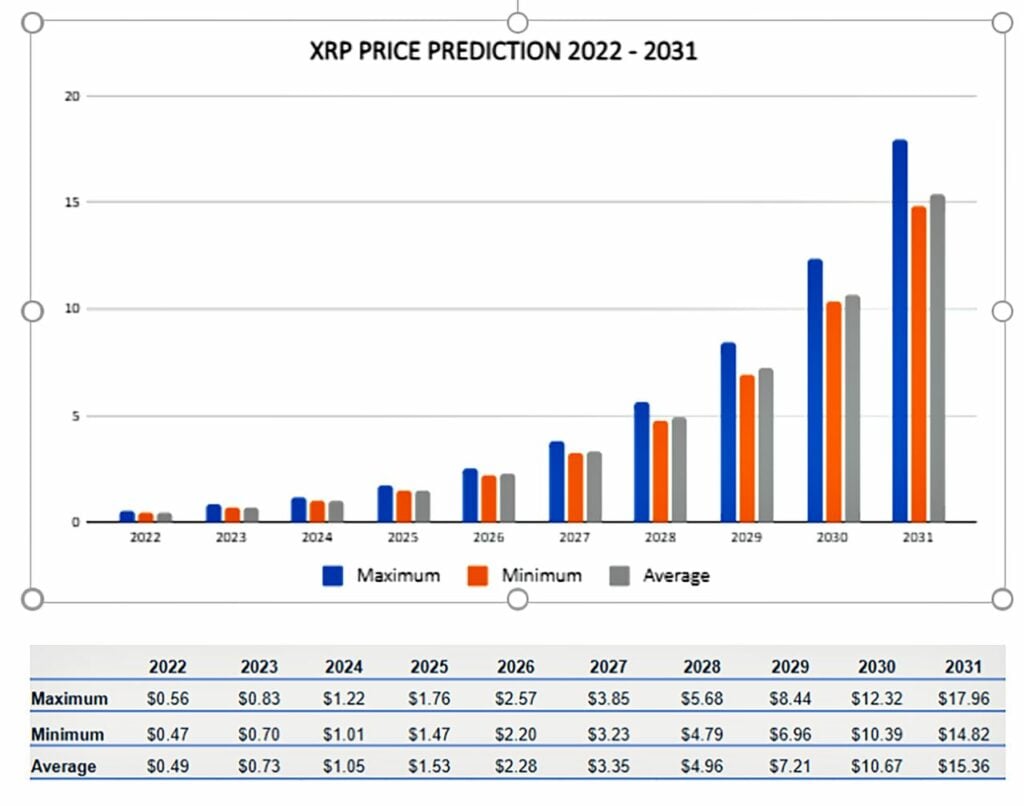
Many online platforms and AI models attempt to predict future crypto prices based on historical data, technical indicators, and market sentiment analysis. These models often project a wide range for XRP, from a modest increase to significant multi-dollar figures. For example, some may predict XRP reaching between $3 and $10 by 2030 under moderately bullish conditions, while more aggressive models could project $20-$50 if it gains widespread institutional adoption and regulatory clarity. It’s crucial to approach these algorithmic predictions with caution, as they are based on past performance and often struggle to account for unpredictable future events like regulatory shifts or significant technological breakthroughs. They are best used as one data point among many, not as definitive forecasts.
Analyst and Investor Sentiments
The crypto community holds diverse views on XRP’s future. Bullish investors often point to its enterprise-focused utility, Ripple’s strong balance sheet, and the potential for a favorable SEC outcome as reasons for significant growth. They envision XRP becoming a cornerstone of global finance. Bearish sentiments often highlight the lingering regulatory uncertainty, competition from other payment solutions and CBDCs, and the centralization concerns associated with Ripple’s control over a large portion of XRP’s supply. Moderate investors often take a “wait and see” approach, acknowledging XRP’s potential but remaining cautious until key uncertainties are resolved. These sentiments collectively shape market dynamics and can influence short-to-medium term price movements, but for 2030, the fundamental drivers will likely prevail.
Historical Performance and Volatility
XRP has demonstrated significant volatility throughout its history, experiencing massive price surges during bull runs and steep corrections during bear markets. Its all-time high of over $3 in early 2018 showcases its potential for explosive growth, while its subsequent retracement and stagnation underscore the risks involved. Analyzing its past performance reveals its sensitivity to market sentiment, news events (especially related to the SEC lawsuit), and broader crypto trends. Understanding this historical volatility helps in appreciating the risk-reward profile of investing in XRP for the long term. A return to previous highs, let alone exceeding them, would require sustained positive momentum across all the factors discussed.
Potential Scenarios for XRP in 2030
Rather than a single price target, it’s more realistic to outline potential scenarios for XRP in 2030, each contingent on different outcomes of the influencing factors.
The Bullish Case: XRP as a Global Settlement Layer
In the most optimistic scenario, XRP could achieve substantial growth. This would involve a definitive victory for Ripple in the SEC lawsuit, establishing clear regulatory status for XRP in the U.S. and potentially setting a precedent globally. Coupled with this, RippleNet sees widespread adoption by major financial institutions and governments for cross-border payments, and XRP becomes the preferred digital asset for on-demand liquidity globally. New use cases for XRP emerge and gain traction, perhaps involving decentralized finance (DeFi) or tokenization on the XRP Ledger. The overall crypto market experiences sustained growth and maturity, driven by increased institutional investment and favorable global regulations. In this scenario, XRP could potentially reach values well into the double digits, possibly ranging from $10 to $50, as its utility and demand skyrocket.
The Bearish Case: Lingering Uncertainty and Stifled Growth
The pessimistic outlook sees XRP struggling to gain significant traction. This scenario would involve an unfavorable outcome in the SEC lawsuit, classifying XRP as a security, leading to continued regulatory hurdles and limited access in key markets. Ripple might face increased competition from rapidly developing CBDCs or other private payment solutions that manage to gain market share. Institutional adoption remains lukewarm, and new use cases fail to materialize or gain significant traction. The broader crypto market might enter a prolonged bear phase, impacting altcoins disproportionately. In this challenging environment, XRP’s growth could be severely stifled, possibly remaining in the sub-$1 to low single-digit range, perhaps between $0.50 and $2, primarily driven by speculative trading rather than fundamental utility.
The Moderate Growth Case: Gradual Adoption and Controlled Expansion
A more probable scenario positions XRP for moderate, steady growth. This involves a mixed or somewhat favorable resolution of the SEC lawsuit, providing some clarity but perhaps not a full exoneration. Ripple continues to secure partnerships, but adoption is gradual rather than explosive, expanding steadily across various regions outside the U.S. XRP maintains its niche in cross-border payments but doesn’t completely dominate the market due to competition from traditional systems and emerging digital currencies. The crypto market experiences cycles of growth and consolidation, and XRP benefits from general market uptrends while facing periods of stagnation. In this balanced scenario, XRP could realistically trade in the $3 to $8 range by 2030, reflecting its established utility and growing, but not revolutionary, market presence.
Strategic Considerations for Potential Investors
Given the inherent uncertainties, especially in long-term crypto predictions, a strategic approach is crucial for anyone considering XRP as an investment.
Diversification and Risk Management
Investing solely in a single cryptocurrency, particularly one with significant regulatory overhangs like XRP, carries elevated risk. A diversified investment portfolio, including a mix of different asset classes and various cryptocurrencies, can help mitigate potential losses. Investors should only allocate capital they are prepared to lose, as cryptocurrency markets are notoriously volatile. Employing a risk management strategy, such as setting stop-loss orders or gradually accumulating assets through dollar-cost averaging, can also be beneficial.
Long-Term vs. Short-Term Perspective
XRP’s potential in 2030 is a long-term play, betting on the resolution of current challenges and the realization of its utility over several years. Short-term price movements are often driven by news, speculation, and overall market sentiment, making them difficult to predict. Investors considering XRP for 2030 should adopt a long-term perspective, focusing on fundamental developments, technological advancements, and institutional adoption rather than daily price fluctuations. Patience will be a key virtue.
Due Diligence and Continuous Research
The cryptocurrency landscape evolves rapidly. What is true today might be different tomorrow. Therefore, continuous research and due diligence are imperative. Investors should stay informed about Ripple’s developments, the progress of the SEC lawsuit, global regulatory changes, new partnerships, and broader macroeconomic trends. Relying on outdated information or unsubstantiated claims can lead to poor investment decisions. Consulting with a qualified financial advisor before making any investment decisions is always recommended, as this article is for informational purposes only and does not constitute financial advice.
Conclusion
Predicting XRP’s precise value in 2030 is an exercise in informed speculation. Its future worth hinges on a complex interplay of its core utility in cross-border payments, the resolution of its regulatory challenges, the broader trajectory of the cryptocurrency market, and Ripple’s ability to innovate and expand its partnerships. While the bullish case suggests a significant appreciation, driven by widespread institutional adoption and regulatory clarity, the bearish scenario warns of limited growth under persistent uncertainty. The most probable outcome lies somewhere in the middle, with XRP carving out a significant niche in global finance but facing ongoing competition. For investors, understanding these nuanced possibilities and adopting a cautious, well-researched, and diversified approach will be key to navigating the opportunities and risks that XRP presents over the next decade.
aViewFromTheCave is a participant in the Amazon Services LLC Associates Program, an affiliate advertising program designed to provide a means for sites to earn advertising fees by advertising and linking to Amazon.com. Amazon, the Amazon logo, AmazonSupply, and the AmazonSupply logo are trademarks of Amazon.com, Inc. or its affiliates. As an Amazon Associate we earn affiliate commissions from qualifying purchases.