
The prospect of a new tax year often brings a mix of apprehension and curiosity for many individuals and businesses. As we look towards 2025, a clear understanding of potential tax obligations is not just good practice—it’s essential for effective financial planning. Estimating your tax liability in advance allows you to make informed decisions about your income, investments, and spending, helping you avoid unexpected tax bills or, even better, uncover opportunities for savings.
The U.S. tax system is a complex and dynamic landscape, subject to legislative changes, inflation adjustments, and personal financial shifts. While the core principles remain consistent, the specifics can evolve year-to-year. This guide aims to demystify your potential 2025 tax burden, providing an insightful and professional overview of the factors that will determine how much you might owe, and offering strategies to prepare proactively. By understanding the key elements at play, you can approach tax season with confidence and control, rather than last-minute stress.
Navigating the 2025 Tax Landscape: What to Expect
Understanding your tax liability for 2025 requires more than just a quick calculation; it necessitates an awareness of the broader economic and legislative environment. Tax laws, though often stable in their fundamentals, are subject to significant adjustments that can materially impact your wallet.
Why Early Estimation Matters
Proactive tax planning is a cornerstone of sound personal finance. Estimating your 2025 tax liability early in the year offers several distinct advantages. Firstly, it prevents the unwelcome surprise of a large tax bill come April 2026. Knowing roughly what you’ll owe allows you to adjust your withholding or make estimated tax payments throughout the year, spreading the burden and avoiding potential underpayment penalties.
Secondly, early estimation empowers strategic financial decisions. If you anticipate a higher tax burden, you might explore opportunities to increase contributions to tax-advantaged retirement accounts, accelerate certain deductions, or defer income. Conversely, if you foresee a lower liability, you might reallocate funds towards investments or other financial goals. It provides a runway for adjustments, turning potential liabilities into manageable components of your overall financial strategy. It’s about being an active participant in your financial future, rather than a passive recipient of tax outcomes.
The Dynamic Nature of Tax Laws
The tax code is not static; it’s a living document shaped by legislative priorities, economic conditions, and the need to address societal changes. For 2025, taxpayers should be mindful of several potential shifts. Inflation is a constant factor that leads to annual adjustments in tax brackets, standard deductions, and various credit limitations. These adjustments, typically announced in the fall of the preceding year, can subtly alter your effective tax rate and the value of your deductions.
Beyond inflation, legislative action—or inaction—can have profound effects. The Tax Cuts and Jobs Act (TCJA) of 2017 introduced significant changes, many of which are slated to “sunset” (expire) at the end of 2025. This means that without new legislation, a number of provisions could revert to their pre-TCJA forms in 2026, which might influence taxpayer behavior in 2025. These potential shifts make understanding current law and staying informed about proposed changes particularly crucial for tax planning in the coming year. Taxpayers need to be prepared for the possibility of a different tax environment.
Key Determinants of Your 2025 Tax Bill
Your total tax obligation is a highly individualized figure, shaped by a confluence of factors unique to your financial situation. Understanding these variables is the first step toward accurately estimating what you’ll owe.
Understanding Income Types and Sources
At the heart of your tax bill is your income. However, not all income is treated equally. The U.S. tax system differentiates between various types of income, each potentially subject to different rules and rates.
- Earned Income: This includes wages, salaries, tips, and self-employment income. For most individuals, this forms the largest component of their taxable income.
- Investment Income: This encompasses dividends, interest, and capital gains from the sale of assets like stocks, bonds, or real estate. Long-term capital gains and qualified dividends typically enjoy preferential tax rates compared to ordinary income.
- Other Income: This can include rental income, royalty income, pension and annuity income, and even certain types of unemployment benefits or Social Security benefits, which may be partially taxable depending on your overall income level.
Accurately categorizing and summing all your income sources is fundamental to calculating your gross income, which then serves as the starting point for determining your adjusted gross income (AGI) and, subsequently, your taxable income.
Filing Status and Dependents
Your filing status is a critical factor that dictates which tax brackets apply to you, the amount of your standard deduction, and eligibility for certain credits. The primary filing statuses are:
- Single: For unmarried individuals.
- Married Filing Jointly: For married couples who choose to file one joint return.
- Married Filing Separately: For married couples who choose to file individual returns.
- Head of Household: For unmarried individuals who pay more than half the cost of keeping up a home for a qualifying person.
- Qualifying Widow(er) with Dependent Child: For individuals whose spouse died in one of the two previous tax years and who have a dependent child.
Each status comes with different tax thresholds and deduction amounts. Changes in your marital status or living situation during 2025 will significantly impact your tax liability. Similarly, claiming dependents can unlock valuable tax benefits, such as the Child Tax Credit or the Credit for Other Dependents, which directly reduce your tax bill. Understanding who qualifies as a dependent and which credits you might be eligible for is vital.
Deductions vs. Credits: A Crucial Distinction
While often confused, deductions and credits play very different roles in reducing your tax burden.
- Deductions reduce your taxable income. For instance, if you have a taxable income of $70,000 and qualify for $10,000 in deductions, your taxable income becomes $60,000. The tax savings depend on your marginal tax bracket. You can typically choose between the standard deduction (a fixed amount based on your filing status, often adjusted for inflation) or itemizing deductions (such as state and local taxes, mortgage interest, charitable contributions, and medical expenses exceeding a certain AGI threshold). For 2025, inflation adjustments to the standard deduction will be important to monitor.
- Credits, on the other hand, directly reduce your tax liability dollar-for-dollar. A $1,000 tax credit means your tax bill is reduced by $1,000. Some credits are non-refundable (can reduce your tax liability to zero, but no more), while others are refundable (can result in a refund even if you owe no tax). Examples include the Child Tax Credit, Earned Income Tax Credit, and education credits. Credits are generally more valuable than deductions because they provide a direct reduction in the amount of tax you owe.
The Role of Tax Brackets and Rates
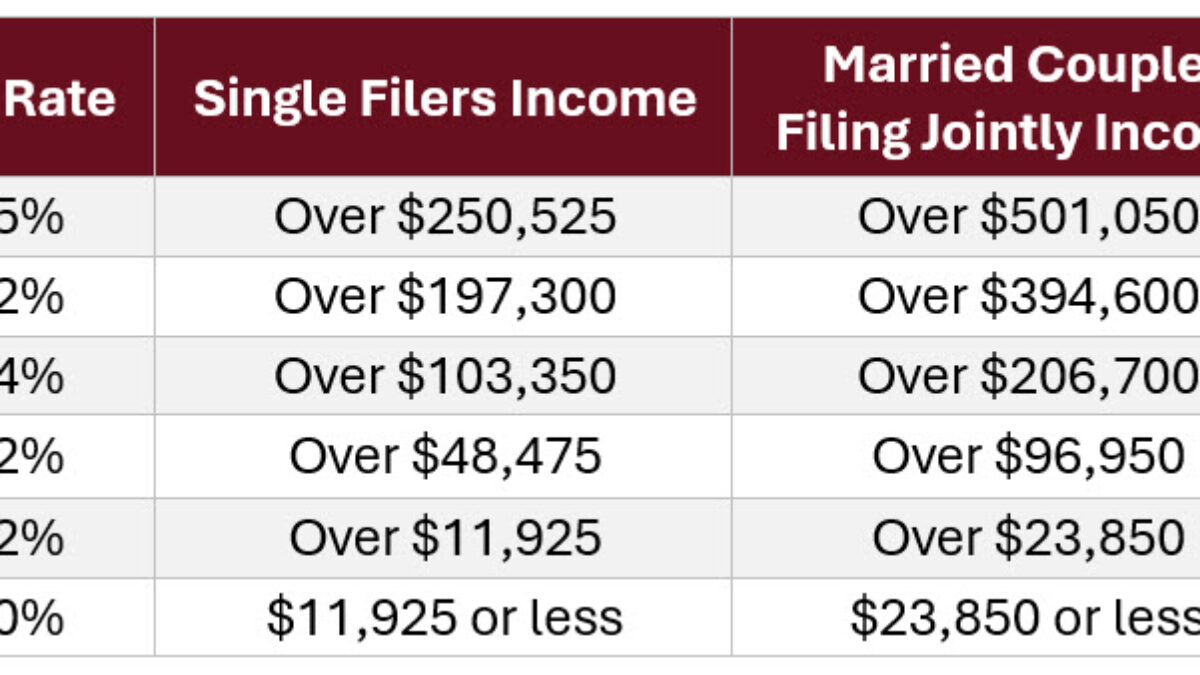
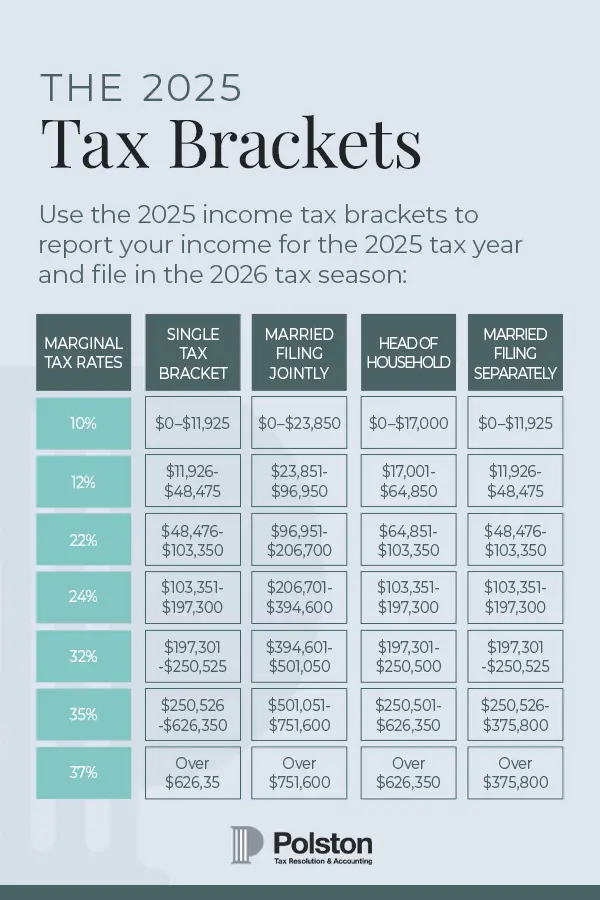
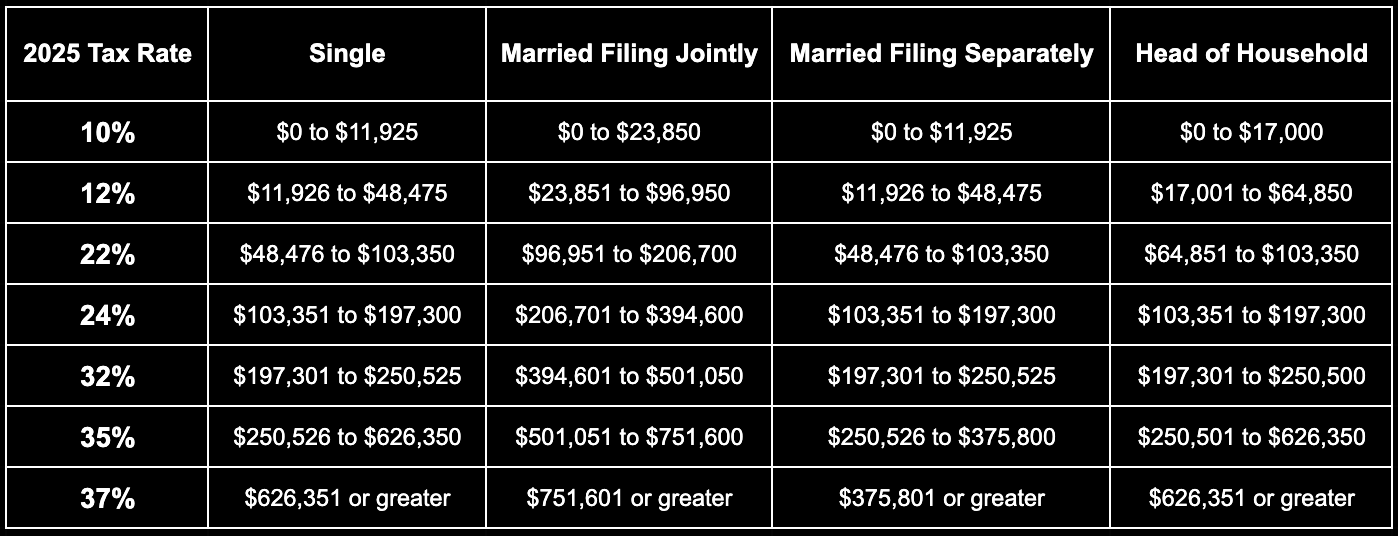
The U.S. utilizes a progressive tax system, meaning different portions of your income are taxed at different rates. As your income increases, higher portions are taxed at higher marginal rates. For 2025, the seven marginal tax brackets (10%, 12%, 22%, 24%, 32%, 35%, and 37%) are expected to remain, though the income thresholds for each bracket will almost certainly be adjusted for inflation. It’s important to remember that your “tax bracket” refers to the rate applied to your last dollar of taxable income, not your entire income. Your effective tax rate—the actual percentage of your total income paid in taxes—is typically much lower than your top marginal rate. Understanding these brackets and how your income falls within them is crucial for forecasting your tax liability.
Potential Tax Law Changes and Their Impact
While the core structure of the U.S. tax code generally remains consistent, specific provisions and thresholds are subject to annual adjustments and potential legislative overhauls. For 2025, several key areas deserve close attention.
Inflation Adjustments and Standard Deductions
Each year, the IRS adjusts dozens of tax provisions for inflation, including the standard deduction amounts, tax bracket thresholds, and limitations on various credits and deductions. These adjustments are typically announced in late fall of the preceding year. For 2025, we can anticipate further increases to the standard deduction, which could make it more advantageous for many taxpayers to take the standard deduction rather than itemizing. Similarly, the income thresholds for the various tax brackets will be nudged upwards, meaning you can earn a bit more before moving into a higher marginal tax bracket. These seemingly small adjustments can collectively have a noticeable impact on your overall tax liability, potentially lowering it for many individuals or, at the very least, preventing “bracket creep” where inflation pushes taxpayers into higher brackets without a real increase in purchasing power.
Sunset Provisions and Their Implications
One of the most significant aspects to monitor for 2025 relates to the “sunset” provisions of the Tax Cuts and Jobs Act (TCJA) of 2017. Many of the TCJA’s individual income tax provisions are scheduled to expire at the end of 2025, meaning they would revert to pre-TCJA law in 2026 unless Congress acts.
Key provisions set to expire include:
- Individual Income Tax Rates: The current lower rates could revert to higher pre-TCJA levels.
- Standard Deduction Amounts: The significantly increased standard deduction amounts would revert to lower levels, though still adjusted for inflation. This could mean more people find it beneficial to itemize again.
- Qualified Business Income (QBI) Deduction: The 20% deduction for pass-through entities is set to expire.
- State and Local Tax (SALT) Deduction Cap: The $10,000 cap on the SALT deduction would disappear, potentially benefiting high-income taxpayers in high-tax states.
- Child Tax Credit: The enhanced Child Tax Credit (worth up to $2,000 per child, with $1,600 refundable) would revert to $1,000 per child, with limited refundability.
- Estate and Gift Tax Exemption: The historically high exemption amount would be cut roughly in half.
While these changes wouldn’t directly impact your 2025 tax return unless Congress makes retroactive changes, the uncertainty surrounding them can influence financial planning decisions in 2025. For example, some taxpayers might accelerate income or deductions into 2025 if they anticipate less favorable tax rules in 2026. Conversely, Congress might extend some or all of these provisions, or introduce entirely new tax legislation. Staying abreast of legislative developments will be crucial.
State and Local Tax Considerations
Beyond federal taxes, your total tax burden is also heavily influenced by state and local taxes. These can include state income taxes, local income taxes, property taxes, and sales taxes. State tax laws often mirror federal provisions but can also diverge significantly. For 2025, individual states may enact their own legislative changes impacting income tax rates, deductions, and credits. For instance, some states might introduce new tax breaks, while others might raise rates to address budget shortfalls.
If you’ve recently moved across state lines, work remotely for an out-of-state employer, or own property in multiple states, understanding the nuances of multi-state taxation is particularly important. The interplay between federal and state tax deductions, such as the SALT deduction cap (if extended), also plays a role in your overall tax strategy. Always consider your state and local tax obligations in conjunction with your federal liabilities to get a complete picture of your tax burden.
Proactive Strategies to Optimize Your 2025 Taxes
Estimating your tax liability is valuable, but actively managing it is where the real financial gains are made. Several proactive strategies can help you reduce what you owe and maximize your financial well-being in 2025.
Optimizing Your Withholding
For most wage earners, federal income tax is withheld from each paycheck. If too much is withheld, you’ll receive a refund, which is essentially an interest-free loan to the government. If too little is withheld, you could face a large tax bill or even penalties for underpayment.
Reviewing and adjusting your Form W-4 with your employer is a simple yet powerful way to optimize your withholding. Use the IRS Tax Withholding Estimator tool online to input your financial details and determine the ideal withholding amount. This allows you to have more of your money throughout the year, rather than waiting for a refund, or ensures you’re paying enough to avoid a year-end surprise. For self-employed individuals, making accurate estimated tax payments quarterly is the equivalent of optimizing withholding.
Maximizing Tax-Advantaged Savings (401k, IRA, HSA)
One of the most effective ways to reduce your taxable income is by contributing to tax-advantaged retirement and health savings accounts.
- 401(k)s and 403(b)s: Contributions to these employer-sponsored retirement plans are typically made with pre-tax dollars, reducing your current taxable income. The IRS usually announces the contribution limits for the upcoming year in late fall. Maxing out these contributions not only boosts your retirement savings but also provides an immediate tax deduction.
- Traditional IRAs: Contributions to a Traditional IRA may also be tax-deductible, depending on your income and whether you’re covered by a workplace retirement plan. Even if not deductible, earnings grow tax-deferred.
- Health Savings Accounts (HSAs): If you have a high-deductible health plan, an HSA offers a triple tax advantage: contributions are tax-deductible (or pre-tax if through payroll), earnings grow tax-free, and qualified withdrawals for medical expenses are tax-free. HSAs are often referred to as “super IRAs” due to their immense tax benefits.
Leveraging these accounts effectively can significantly lower your adjusted gross income, which in turn can impact eligibility for other tax credits and deductions.
Leveraging Deductions and Tax Credits
Beyond the standard deduction, explore opportunities to itemize if your total itemized deductions exceed the standard deduction amount for your filing status. Common itemized deductions include:
- State and Local Taxes (SALT): Up to $10,000 (if the cap is extended).
- Mortgage Interest: On up to $750,000 of qualified mortgage debt.
- Charitable Contributions: Cash contributions may be deductible up to 60% of AGI, with higher limits for certain public charities.
- Medical Expenses: Expenses exceeding 7.5% of your AGI.
Additionally, carefully identify all tax credits you may qualify for. Common credits include the Child Tax Credit, Earned Income Tax Credit, American Opportunity Tax Credit (for education), Lifetime Learning Credit (for education), and credits for energy-efficient home improvements. Remember, a dollar in tax credit is often more valuable than a dollar in deduction because it directly reduces your tax bill.
Year-End Tax Planning Moves
As 2025 draws to a close, specific strategies can help fine-tune your tax outcome:
- Tax Loss Harvesting: If you have investments, selling losing investments can generate capital losses to offset capital gains and potentially up to $3,000 of ordinary income.
- Bunching Deductions: If you anticipate being on the cusp of itemizing, you might “bunch” certain deductible expenses (like charitable contributions or medical expenses) into one year to exceed the standard deduction threshold.
- Roth Conversions: Consider a Roth conversion if you anticipate being in a lower tax bracket in 2025 than in future years, as you pay tax on the converted amount now, and future qualified withdrawals are tax-free.
- Charitable Giving Strategies: Beyond cash contributions, consider donating appreciated securities to avoid capital gains tax, or establishing a Donor-Advised Fund.
Tools and Resources for Effective Tax Planning
Navigating the complexities of tax planning doesn’t have to be a solo endeavor. A variety of tools and professional resources are available to help you accurately estimate your 2025 tax liability and optimize your financial strategy.
Utilizing Tax Software and Calculators
For many taxpayers, modern tax software provides an intuitive and efficient way to prepare returns and estimate future liabilities. Programs like TurboTax, H&R Block, and TaxAct offer built-in calculators and scenario planners that allow you to project your taxes based on different income and deduction assumptions. Many also offer free tax calculators on their websites that can give you a quick estimate of your liability based on your expected 2025 income, filing status, and key deductions. The IRS website itself also provides a helpful Tax Withholding Estimator that can guide you in adjusting your W-4 to achieve your desired tax outcome (e.g., a smaller refund or no balance due). These tools are invaluable for DIY tax planners, offering a guided approach to understanding your financial picture.
When to Consult a Tax Professional
While software and online calculators are powerful, certain situations warrant the expertise of a qualified tax professional—such as a Certified Public Accountant (CPA) or an Enrolled Agent (EA). If your financial situation is complex, involving:
- Self-employment or significant freelance income: Professionals can help navigate estimated taxes, business deductions, and self-employment tax.
- Investment income from various sources: Especially if it includes complex transactions, like stock options or real estate.
- Major life changes: Such as marriage, divorce, birth of a child, or significant inheritance, which profoundly impact your tax situation.
- Multi-state income or residency.
- Foreign income or assets.
- Anticipating major legislative changes: A professional can provide tailored advice on how sunsetting provisions or new laws might specifically affect you.
A tax professional can offer personalized advice, identify overlooked deductions and credits, help with strategic planning (e.g., retirement contributions, Roth conversions), and ensure compliance with all applicable tax laws, ultimately saving you money and stress.
Maintaining Meticulous Records
Regardless of whether you use software or a professional, maintaining excellent records is paramount. Throughout 2025, diligently track all income sources, expenses, charitable contributions, medical bills, and any other financial transactions that could impact your taxes. Keep digital or physical copies of pay stubs, W-2s, 1099s, bank statements, investment statements, receipts for deductible expenses, and any correspondence from the IRS. Organized records not only simplify tax preparation but also serve as crucial documentation in case of an IRS audit. A systematic approach to record-keeping year-round will significantly streamline your tax planning efforts and ensure accuracy.
Estimating how much you will owe in taxes for 2025 is more than just a numerical exercise; it’s a critical component of comprehensive financial planning. By understanding the foundational elements of your income, deductions, and credits, staying informed about potential tax law changes, and proactively employing smart financial strategies, you can take control of your tax obligations. Whether you leverage advanced tax software or seek the guidance of a seasoned professional, the effort you put into planning now will pay dividends in peace of mind and financial security come tax season. Embrace the opportunity to approach 2025 with a clear, strategic vision for your taxes.
aViewFromTheCave is a participant in the Amazon Services LLC Associates Program, an affiliate advertising program designed to provide a means for sites to earn advertising fees by advertising and linking to Amazon.com. Amazon, the Amazon logo, AmazonSupply, and the AmazonSupply logo are trademarks of Amazon.com, Inc. or its affiliates. As an Amazon Associate we earn affiliate commissions from qualifying purchases.