
For millions of Americans, Social Security represents a foundational pillar of their retirement strategy, a crucial safety net that provides a reliable income stream in their later years. Understanding how this vital program works and, more specifically, how much you can expect to receive, is paramount for effective financial planning. It’s not just a matter for those nearing retirement; even young professionals benefit from grasping the intricacies of Social Security, as decisions made today can significantly impact future benefits. This article will demystify the process, explain the factors that determine your payout, and equip you with the knowledge to make informed decisions about your financial future.
Understanding the Fundamentals of Social Security Benefits
Before diving into specific numbers, it’s essential to grasp the core mechanics of Social Security. This isn’t a savings account you’ve personally funded and can simply withdraw from; it’s a social insurance program. Your contributions, made through payroll taxes, fund the benefits of current retirees and beneficiaries, with the expectation that future generations will do the same for you.
What is Social Security and How Does it Work?
Social Security is a federal program established in 1935, designed to provide economic security for Americans. It primarily offers retirement benefits, but also provides disability benefits, survivor benefits, and Supplemental Security Income (SSI) for low-income individuals. Funding for Social Security comes primarily from dedicated payroll taxes, known as Federal Insurance Contributions Act (FICA) taxes, which are withheld from your wages. Employers and employees each contribute 6.2% of earnings up to an annual maximum, plus 1.45% each for Medicare. These taxes flow into two trust funds: the Old-Age and Survivors Insurance (OASI) Trust Fund and the Disability Insurance (DI) Trust Fund.
Key Factors Influencing Your Benefit Amount
Your Social Security benefit isn’t a one-size-fits-all figure. Several critical factors come into play, each contributing to the calculation of your personalized benefit amount.
- Earnings History: This is arguably the most significant factor. The Social Security Administration (SSA) calculates your benefit based on your highest 35 years of earnings, adjusted for inflation. The higher your average indexed monthly earnings (AIME) over these 35 years, the higher your potential benefit.
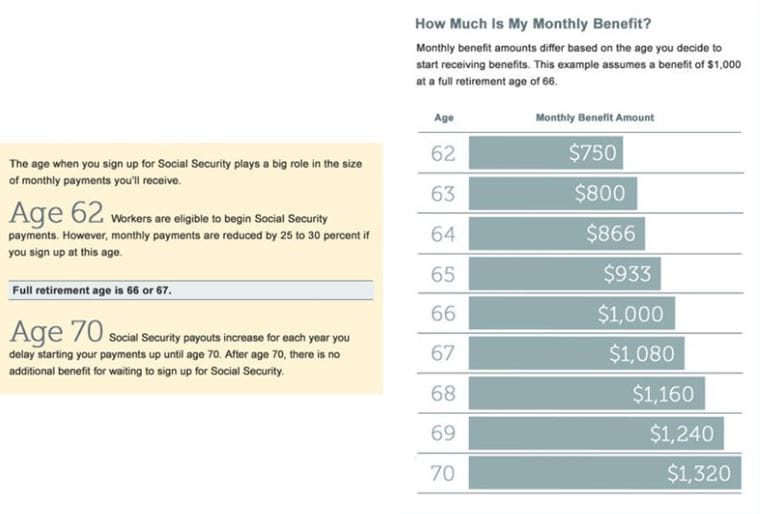
- Age You Claim Benefits: The age at which you choose to start collecting benefits has a profound impact. While you can claim as early as age 62, doing so results in a permanent reduction of your monthly payout. Conversely, delaying beyond your Full Retirement Age (FRA) can significantly increase your monthly check.
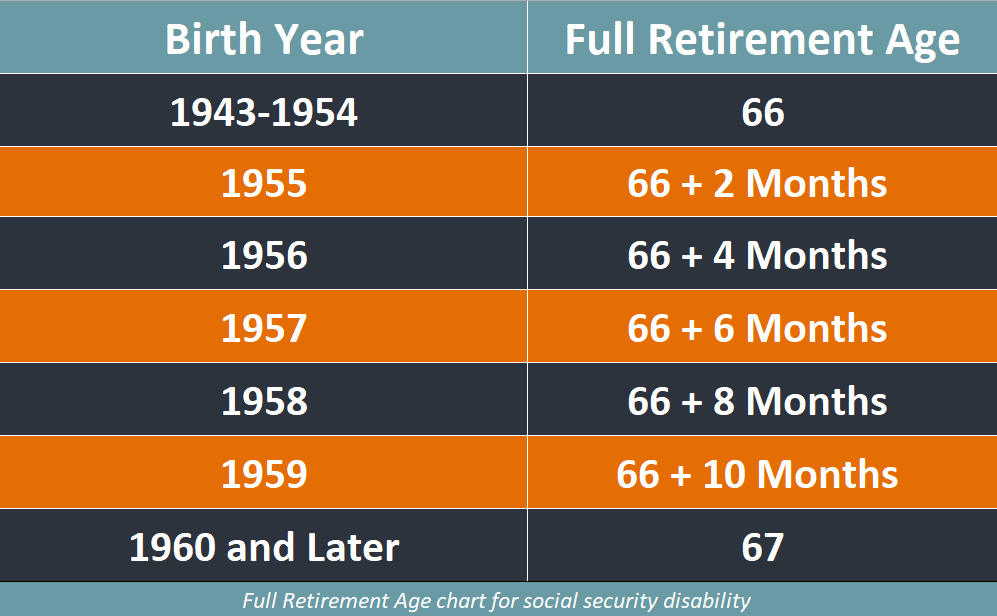
- Full Retirement Age (FRA): This is the age at which you are entitled to 100% of your primary insurance amount (PIA). Your FRA depends on your birth year. For those born in 1943 through 1954, it’s age 66. It gradually increases for subsequent birth years, reaching age 67 for anyone born in 1960 or later.
- Cost-of-Living Adjustments (COLAs): Social Security benefits are typically adjusted annually based on the Consumer Price Index for Urban Wage Earners and Clerical Workers (CPI-W) to help maintain their purchasing power against inflation.
The Importance of Your Earnings Record
The accuracy of your earnings record is paramount. The SSA maintains a record of all your reported earnings throughout your working life. If there are any discrepancies or missing years, it could negatively impact your future benefits. It’s crucial to regularly review your Social Security Statement to ensure that all your earnings are correctly reported. Errors can be corrected, but it’s much easier to do so sooner rather than later, especially if you have pay stubs or W-2 forms to prove your earnings.
Calculating Your Estimated Social Security Benefit
Understanding the factors is one thing; figuring out your specific number is another. While the SSA uses complex formulas, you don’t need to be a mathematician to get a reliable estimate.
The Primary Insurance Amount (PIA) Formula Explained
Your monthly Social Security benefit is based on your Primary Insurance Amount (PIA). The PIA is the benefit you would receive if you started collecting at your Full Retirement Age. The calculation involves a multi-step process:
- Indexing Earnings: Your past earnings are adjusted (indexed) to reflect the general increase in wages over time. This ensures that your earlier earnings are valued in terms of current purchasing power.
- Average Indexed Monthly Earnings (AIME): The SSA takes your 35 highest indexed earning years, sums them up, and divides by 420 (the number of months in 35 years) to arrive at your AIME. If you have fewer than 35 years of earnings, zero earnings years will be factored in, lowering your AIME.
- PIA Calculation: The AIME is then run through a progressive benefit formula that applies different percentages to different segments (or “bend points”) of your AIME. These bend points are adjusted annually. This progressive formula means that lower-income earners receive a higher percentage of their average earnings back in benefits compared to high-income earners. For example, in 2024, the formula is 90% of the first $1,174 of AIME, plus 32% of AIME between $1,174 and $7,078, plus 15% of AIME over $7,078.
Accessing Your Social Security Statement
The easiest and most reliable way to get an estimate of your future benefits is by reviewing your official Social Security Statement. The SSA now encourages everyone to create a “my Social Security” account online at www.ssa.gov/myaccount. Through this secure portal, you can:
- View your complete earnings record to ensure accuracy.
- See estimates of your future retirement benefits at various claiming ages (62, Full Retirement Age, and 70).
- Check your disability and survivor benefit estimates.
- Manage your benefits if you are already collecting.
This statement provides a personalized roadmap, allowing you to see projected benefits based on your actual earnings history.
Online Calculators and Planning Tools
Beyond your personal statement, the SSA website offers various online calculators to help you plan:
- Retirement Estimator: Provides quick, personalized estimates based on your actual earnings record.
- Benefit Calculators: Allow you to input different scenarios, such as varying future earnings or claiming ages, to see how they impact your benefits.
- Life Expectancy Calculator: Helps you consider how long you might need to collect benefits.
These tools are invaluable for scenario planning and understanding the financial implications of different claiming strategies. Many reputable financial planning websites also offer their own Social Security calculators, often with more advanced features, though they typically require you to input your earnings history manually or rely on estimates.
Navigating the Decision of When to Claim Benefits
The single most impactful decision you’ll make regarding your Social Security benefits, after accumulating sufficient work credits, is when to start collecting them. This choice can mean thousands of dollars difference over your lifetime.
Full Retirement Age (FRA) and Its Implications
As mentioned, your Full Retirement Age (FRA) is when you are eligible for 100% of your calculated PIA. For most people currently working, this will be between age 66 and 67. Claiming at your FRA ensures you receive the full benefit amount you’ve earned. It serves as a benchmark for understanding the adjustments applied to early or delayed claiming. It’s critical to know your specific FRA, as even a few months can affect your benefit percentage.
Claiming Early: Advantages and Disadvantages
You can start receiving Social Security retirement benefits as early as age 62. However, claiming early comes with a significant and permanent reduction in your monthly benefit.
- Advantages of Claiming Early:
- Immediate Income: Provides income sooner, which can be crucial if you face unexpected job loss, health issues, or simply desire an earlier retirement.
- Health Concerns: If you have a serious health condition and a shortened life expectancy, claiming early might mean you collect more total benefits over your lifetime.
- Investment Opportunity: Some argue that taking benefits early allows them to invest the money, potentially earning a higher return than the delayed credits offer. This strategy carries inherent investment risks, however.
- Disadvantages of Claiming Early:
- Permanent Reduction: Your monthly benefit will be reduced by approximately 5/9 of 1% for each month before your FRA, up to 36 months. If you claim more than 36 months early, it’s reduced by 5/12 of 1% per month. This reduction can be as much as 30% if you claim at age 62 with an FRA of 67.
- Lower Survivor Benefits: If you pass away, your spouse’s survivor benefit will also be based on your reduced amount.
- Impact on Lifetime Income: For individuals with average or longer-than-average life expectancies, the cumulative effect of a reduced monthly benefit often results in collecting less overall over their lifetime compared to delaying.
Delaying Benefits: Maximizing Your Monthly Payout
You can delay claiming Social Security benefits beyond your Full Retirement Age, up to age 70.
- Advantages of Delaying:
- Significant Increase in Monthly Benefit: For each month you delay past your FRA, your benefit increases by a certain percentage, known as Delayed Retirement Credits (DRCs). These credits accrue at a rate of 8% per year (or 2/3 of 1% per month) for those born in 1943 or later. This means delaying from age 67 to 70 can result in a 24% permanent increase in your monthly benefit.
- Higher Survivor Benefits: A higher benefit for you translates to a higher potential survivor benefit for your spouse if you predecease them.
- Inflation Protection: These increased benefits are also subject to annual Cost-of-Living Adjustments (COLAs), meaning your larger check will continue to grow with inflation.
- Disadvantages of Delaying:
- No Income During Delay: You forgo income during the period you delay, which might necessitate drawing down other retirement savings more quickly.
- Shorter Life Expectancy: If you have a shorter-than-average life expectancy, you might collect less in total benefits.
The decision to delay is often considered a form of longevity insurance, protecting against the risk of outliving other retirement assets.
Special Considerations and Maximizing Your Social Security
Social Security is more complex than just your personal retirement benefit. There are various provisions that can impact your financial outlook.
Spousal and Survivor Benefits
Social Security isn’t just for primary workers. If you are married, divorced, or widowed, you may be eligible for benefits based on your spouse’s or ex-spouse’s work record.
- Spousal Benefits: If your spouse is collecting retirement benefits, you might be eligible for a spousal benefit up to 50% of their PIA, provided it’s higher than your own benefit. You must be at least 62, or any age if caring for a child under 16 or disabled.
- Survivor Benefits: If your spouse or ex-spouse dies, you may be eligible for survivor benefits, which can be up to 100% of their benefit amount. The rules vary based on your age, marital status, and whether you are caring for children.
These benefits are crucial for couples planning their retirement and can significantly enhance a household’s financial security. Strategic claiming can often involve one spouse delaying benefits while the other claims a spousal benefit.
Taxation of Social Security Benefits
While Social Security benefits are a source of income, they might not be entirely tax-free. If your “combined income” (your adjusted gross income + non-taxable interest + half of your Social Security benefits) exceeds certain thresholds, a portion of your benefits may be subject to federal income tax.
- For individuals, thresholds are $25,000 to $34,000 (up to 50% taxable) and above $34,000 (up to 85% taxable).
- For married couples filing jointly, thresholds are $32,000 to $44,000 (up to 50% taxable) and above $44,000 (up to 85% taxable).
Some states also tax Social Security benefits, though many do not. Understanding these tax implications is vital for overall retirement income planning.
Working While Receiving Benefits
If you claim Social Security benefits before your Full Retirement Age and continue to work, your benefits may be temporarily reduced if your earnings exceed a certain annual limit.
- Before FRA: If you are under FRA, the SSA will deduct $1 from your benefits for every $2 you earn above the annual limit (e.g., $22,320 in 2024).
- In the Year You Reach FRA: In the year you reach FRA, the deduction rate is $1 for every $3 earned above a higher limit (e.g., $59,520 in 2024), but only counting earnings before the month you reach FRA.
- At or After FRA: Once you reach your FRA, there are no limits on your earnings, and your benefits will not be reduced, no matter how much you earn.
Any benefits withheld due to the earnings limit are not lost forever; your benefit will be recalculated at your FRA to account for the withheld amounts, resulting in a slightly higher monthly payment for the rest of your life.
Integrating Social Security into Your Overall Retirement Plan
Social Security should be viewed as one component of a diversified retirement income strategy, not the sole source. It’s a reliable income floor, but rarely sufficient to maintain your pre-retirement lifestyle. Therefore, it’s crucial to integrate your estimated Social Security benefits with other income sources like 401(k)s, IRAs, pensions, and personal savings. A holistic approach allows you to model various scenarios, such as how delaying Social Security might impact your IRA withdrawals, or how a higher Social Security check could reduce your need for an aggressive investment portfolio.
Proactive Steps to Ensure a Secure Retirement
Understanding “how much will I collect from Social Security” is the first step. The next is to take proactive measures to optimize this critical income stream and secure your broader financial future.
Diversifying Retirement Savings Beyond Social Security
Relying solely on Social Security for retirement is a risky proposition for most. While it provides a foundation, its purchasing power relative to desired lifestyles often falls short. It’s essential to actively save and invest through employer-sponsored plans (like 401(k)s or 403(b)s), individual retirement accounts (IRAs), and taxable brokerage accounts. Diversification of your income sources reduces dependence on any single program and provides greater flexibility and resilience in retirement.
Seeking Professional Financial Advice
The complexities of Social Security, especially when combined with other retirement assets, tax implications, and personal circumstances, often warrant professional guidance. A qualified financial advisor can help you:
- Analyze your specific earnings history and projected benefits.
- Model various claiming strategies to determine the optimal age for you and your spouse.
- Integrate your Social Security benefits into a comprehensive retirement plan, considering investments, taxes, and healthcare costs.
- Stay informed about potential legislative changes to Social Security that could impact your future.
An advisor’s expertise can prove invaluable in maximizing your lifetime benefits and achieving financial peace of mind.

Staying Informed About Policy Changes
Social Security is a dynamic program, subject to ongoing political discussion and potential legislative adjustments. While radical overhauls are difficult to pass, incremental changes to aspects like full retirement age, benefit formulas, or taxation rules can occur. Staying informed by periodically checking the SSA website, reputable financial news sources, and consulting with your financial advisor ensures you’re prepared for any changes that might affect your benefits or retirement planning strategies.
In conclusion, the question of “how much will I collect from Social Security” is multifaceted, influenced by your earnings, claiming age, and personal circumstances. By diligently reviewing your Social Security Statement, understanding the various claiming options, and strategically integrating this benefit into your broader financial plan, you can significantly enhance your financial security in retirement. Social Security is a powerful tool; armed with knowledge, you can wield it effectively.
aViewFromTheCave is a participant in the Amazon Services LLC Associates Program, an affiliate advertising program designed to provide a means for sites to earn advertising fees by advertising and linking to Amazon.com. Amazon, the Amazon logo, AmazonSupply, and the AmazonSupply logo are trademarks of Amazon.com, Inc. or its affiliates. As an Amazon Associate we earn affiliate commissions from qualifying purchases.