
Cruising has long been marketed as one of the most cost-effective ways to see the world. The allure of an “all-inclusive” price tag—covering your lodging, transportation between destinations, and around-the-clock dining—makes it a compelling option for those looking to maximize their travel budget. However, for the financially savvy traveler, the sticker price is rarely the final cost.
Understanding the true financial commitment of a seven-day voyage requires a deep dive into the nuances of cruise line pricing structures, hidden fees, and discretionary spending. Whether you are a frugal adventurer or looking for a high-end luxury experience, calculating the cost of a one-week cruise involves balancing the base fare against a multitude of variables. In this guide, we will break down the financial architecture of a cruise vacation to help you budget with precision.
Understanding the Core Ticket Price: Base Fares and Cabin Tiers
The most significant portion of your expense will be the base cruise fare. This is the price you see advertised on websites and in promotional emails. However, this price is highly volatile and depends on three primary factors: the cruise line’s market position, the time of year, and the cabin category you select.
Budget, Mid-Range, and Luxury Lines
From a personal finance perspective, choosing a cruise line is similar to choosing a hotel tier. Budget-friendly lines like Carnival or MSC often offer seven-day sailings for as low as $500 to $800 per person. These lines focus on high-volume, lower-margin business models, often recouping their costs through onboard spending.
Mid-range lines such as Royal Caribbean, Norwegian, and Celebrity typically fall in the $900 to $1,800 range. These lines offer a balance of amenities and slightly more inclusive features. At the top of the spectrum, luxury lines like Silversea or Regent Seven Seas can cost anywhere from $4,000 to $10,000 per person for a week. While the upfront cost is higher, these are often truly all-inclusive, covering excursions, premium spirits, and even airfare, which can simplify your financial planning.
Interior vs. Balcony: The Price Gap
The specific cabin you choose acts as the “real estate” component of your budget. An interior room—one with no windows—is almost always the most affordable entry point. For a standard week-long Caribbean cruise, an interior room might cost $700, while a balcony cabin on the same ship could jump to $1,200 or more.
If your goal is purely “destination-per-dollar,” the interior cabin is the superior financial choice. However, many travelers view the balcony as a value-add that prevents “cabin fever,” potentially saving money that might otherwise be spent in bars or public lounges to escape a cramped room.
The “Hidden” Costs: Taxes, Gratuities, and Port Fees
One of the most common mistakes in travel budgeting is assuming the advertised price is the final price. In the cruise industry, the “out-of-door” price includes several mandatory additions that can increase the total cost by 20% to 30%.
Mandatory Gratuities and Service Charges
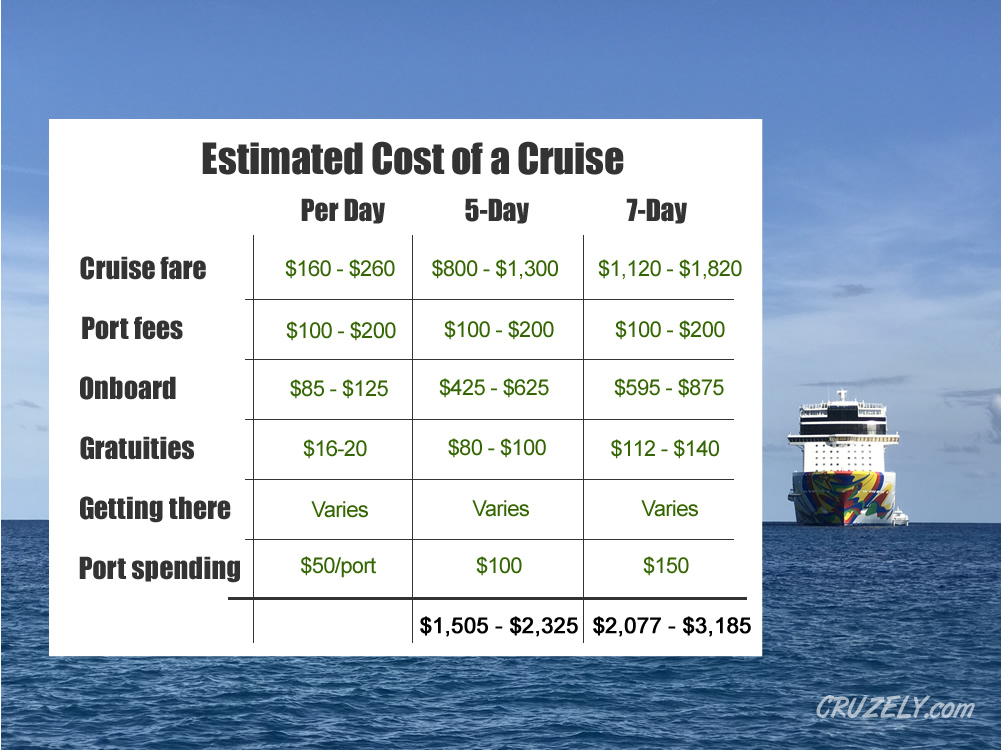
Almost every major cruise line adds a daily service charge or gratuity to your onboard account. This is a per-person, per-day fee that goes toward the housekeeping and dining staff. Currently, these fees range from $16 to $20 per person per day. For a couple on a 7-day cruise, this adds roughly $224 to $280 to the final bill. While some lines allow you to prepay these at the time of booking—which is a recommended strategy for accurate budgeting—they are rarely included in the initial “lead-in” price you see online.
Port Fees and Government Taxes
Unlike airlines, where taxes are usually integrated into the price from the start, cruise lines often list port fees and taxes separately. These fees are determined by the specific ports on your itinerary. A Caribbean route might have $150 in taxes, whereas an Alaskan or Mediterranean route with higher port costs could reach $300 or more. Because these are government-mandated, they are non-negotiable and must be paid at the time of booking.
Discretionary Spending: Onboard Expenses and Land Excursions
This category is where most travelers see their budgets spiral. Cruise ships are designed as floating ecosystems of commerce. Once you are onboard, the temptation to spend on “extras” is constant.
Beverage Packages: Are They Worth the Investment?
The financial viability of a beverage package is a classic math problem. A standard alcohol package usually costs between $60 and $100 per person, per day. On a 7-day cruise, this can add $700 to your individual bill.
To break even, you typically need to consume 6 to 9 alcoholic beverages per day. If you are a light drinker, paying “a la carte” is almost always more cost-effective. However, for those who value the “insurance” of a fixed cost and don’t want to worry about a fluctuating bill at the end of the week, the package offers psychological value and financial predictability.
Shore Excursions and Independent Tours
While the ship provides the transport, what you do on land is rarely free. Shore excursions booked directly through the cruise line are convenient but come with a significant markup. A guided snorkeling trip might cost $120 through the ship, while a local operator at the pier might offer the same experience for $60.
For the budget-conscious, researching independent tours or simply walking through the port cities is the best way to keep costs down. A realistic budget for a week of excursions is $300 to $500 per person if you plan to participate in organized activities at every stop.
Specialty Dining and Extra Amenities
While the main dining room and buffet are included, most modern ships feature “Specialty Dining” restaurants—steakhouses, sushi bars, or French bistros—that charge a cover fee ranging from $35 to $70 per person. Additionally, services like onboard Wi-Fi (often $20/day), spa treatments, and gambling in the casino can quickly double the cost of your trip if not strictly monitored.
Planning and Strategy: Budgeting for Your Voyage
To get the most value out of your money, your booking strategy is just as important as your spending habits onboard.
Off-Peak vs. Peak Season Pricing
The principles of supply and demand are heavily applied in cruise pricing. Sailing during “shoulder seasons”—such as the Caribbean in September (hurricane season) or the Mediterranean in late October—can result in savings of 40% or more compared to peak summer or holiday weeks. If you have a flexible schedule, the financial benefits of off-peak travel are immense.
Last-Minute Deals vs. Early Bird Booking
There are two primary schools of thought for saving money on a cruise. The “Early Bird” approach involves booking 12 to 18 months in advance to secure the lowest base rate and the best cabin selection. Most lines offer a price protection guarantee, where they will match a lower price if it drops before your final payment date.
Alternatively, “Last-Minute” booking (within 60 to 90 days of sailing) can result in deep discounts as the cruise line tries to fill empty cabins. However, this is a risky financial move if you have to book expensive last-minute airfare, which can easily offset any savings made on the cruise fare itself.

Summary: What is the Total Bottom Line?
When all factors are considered, a 1-week cruise rarely costs just the advertised fare. For a standard, mid-range cruise, a realistic financial breakdown for one person might look like this:
- Base Fare (Balcony): $1,100
- Taxes and Port Fees: $200
- Mandatory Gratuities: $120
- Beverages (A la carte or basic package): $300
- Shore Excursions (2-3 stops): $250
- Total: $1,970
In conclusion, while you can certainly cruise for under $1,000 if you choose an interior cabin, drink water, and stay on the ship during port days, a typical comfortable experience will cost closer to $2,000 per person. By understanding these financial levers—from the initial cabin selection to the daily gratuities—you can approach your vacation not just as a traveler, but as a savvy financial manager, ensuring that your week at sea provides a high return on investment for your hard-earned money.
aViewFromTheCave is a participant in the Amazon Services LLC Associates Program, an affiliate advertising program designed to provide a means for sites to earn advertising fees by advertising and linking to Amazon.com. Amazon, the Amazon logo, AmazonSupply, and the AmazonSupply logo are trademarks of Amazon.com, Inc. or its affiliates. As an Amazon Associate we earn affiliate commissions from qualifying purchases.