
In the modern era of seamless interaction, the physical key—a jagged piece of metal used for centuries to secure our most valuable assets—is rapidly becoming an artifact of the past. In its place, the “key fob” has emerged as the primary interface between humans and the secured environments they inhabit, from automobiles to high-security office complexes. Though we use them daily, the technology housed within these small plastic shells is a sophisticated blend of radio frequency engineering, digital encryption, and hardware design.
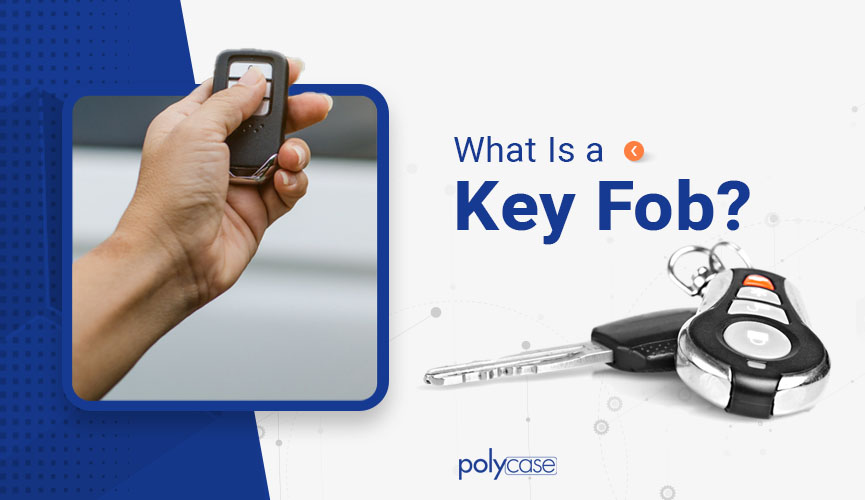
A key fob is essentially a compact, handheld remote control device that provides access to a physical object or a digital system. While the term was originally used to describe an ornamental attachment to a keychain, it now refers to the electronic hardware itself. This article explores the technical foundations of key fobs, their evolution within the gadget ecosystem, the security protocols that keep them safe, and the future of hardware-based authentication.
Understanding the Mechanism: How Key Fobs Work
At its core, a key fob is a hardware token. Unlike a password, which is something you know, a key fob is something you have. This distinction is vital in the realm of multi-factor authentication and physical security. To understand how a key fob communicates with a locking mechanism, one must look at the invisible bridge of radio waves.
RFID and NFC Technology
Most modern key fobs operate using Radio Frequency Identification (RFID) or Near Field Communication (NFC). RFID systems consist of a transponder (the fob) and a reader (the car or door). When the fob is brought within range of the reader, an electromagnetic signal is exchanged.
There are two main types of RFID fobs:
- Passive Fobs: These do not have an internal power source. They remain “dormant” until they enter the electromagnetic field of a reader. The reader’s signal provides just enough power to wake up the chip in the fob, which then broadcasts its unique identification code. These are common in office building access badges.
- Active Fobs: These contain a small battery (usually a CR2032 or similar lithium coin cell). Because they have their own power source, they can transmit signals over longer distances—allowing you to unlock a car from across a parking lot or start an engine remotely.
The Role of the Internal Controller
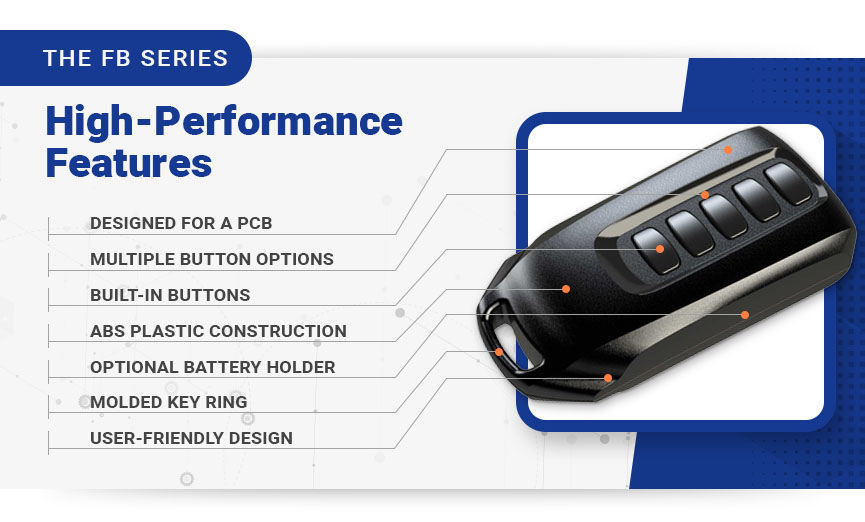
Inside the plastic casing of a key fob sits a small printed circuit board (PCB). This board houses a microchip, a copper coil (which acts as an antenna), and a battery. When you press a button, the microchip executes a specific command code. This code is converted into a radio signal and broadcast via the antenna. The sophistication of this microchip determines how “smart” the fob is—ranging from simple ID broadcasting to complex cryptographic calculations used to prevent hacking.
The Evolution of Key Fobs in the Digital Age
The journey of the key fob is a testament to the rapid advancement of consumer electronics. What began as a luxury convenience has transformed into an essential component of the Internet of Things (IoT) landscape.
From Simple Proximity Tags to Smart Entry Systems
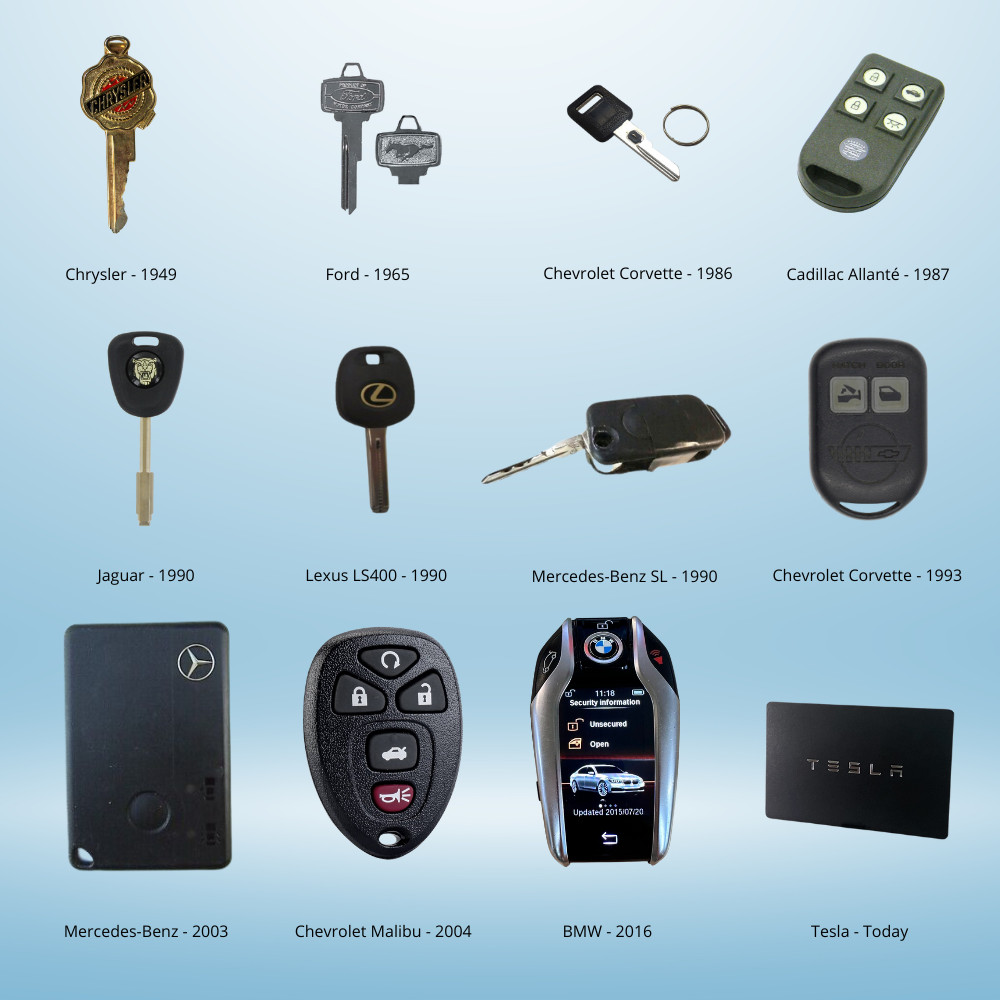
The first widespread use of electronic fobs appeared in the 1980s, primarily in high-end automotive brands like Renault. These early versions used infrared (IR) technology, requiring the user to point the fob directly at the vehicle, much like a television remote.
The transition to Radio Frequency (RF) changed everything. It removed the “line of sight” requirement, allowing users to operate locks through pockets, bags, and walls. In the 1990s and 2000s, the “Remote Keyless Entry” (RKE) system became standard. This evolved into the “Passive Entry Passive Start” (PEPS) systems we see today. With PEPS, the user never has to touch the fob; the vehicle senses the fob’s proximity and automatically unlocks the doors when the handle is touched, enabling “push-to-start” functionality.
Industrial and Residential Integration
Beyond the automotive industry, key fobs have revolutionized commercial security. The traditional “master key” system in office buildings was a logistical nightmare; if a master key was lost, every lock in the building had to be changed.
Digital fobs solved this through software-defined access. If an employee loses a fob, a system administrator can simply deactivate that specific hardware ID in the server. This shift from physical hardware dependence to software-managed permissions represents one of the most significant upgrades in security management in the last fifty years.
Digital Security and the Vulnerabilities of Wireless Access
As key fobs became more prevalent, they also became targets for sophisticated digital attacks. Because the communication happens over the air, it is technically possible for an interceptor to “listen” to the signal. To combat this, engineers developed advanced digital security protocols.
Encryption and Rolling Codes
In early keyless systems, fobs sent a “fixed code.” This was highly insecure because a thief could use a “code grabber” to record the signal and play it back later to unlock the car.
Modern tech-driven fobs utilize Rolling Codes (also known as Hopping Codes). Every time you press the button, the fob and the receiver use a synchronized pseudorandom number generator to create a new, unique code. Once a code is used, it becomes invalid. Even if a hacker captures the signal, that specific code will never work again. This requires a high degree of synchronization between the fob’s internal clock and the vehicle’s computer.
Understanding Relay Attacks and Signal Jamming
Despite rolling codes, tech-savvy thieves have found a workaround known as the Relay Attack. This is particularly common with “always-on” proximity fobs.
In a relay attack, one thief stands near the victim’s house with a high-gain antenna to pick up the low-frequency signal emitted by the fob sitting on the kitchen counter. That signal is “relayed” to a second thief standing next to the car. The car “thinks” the fob is right next to it and opens the door.
To mitigate this, new hardware designs include accelerometers that put the fob into “sleep mode” if it hasn’t moved for several minutes. Digital security experts also recommend “Faraday bags,” which are small pouches lined with conductive material that block all outgoing radio signals when the fob is not in use.
Maintenance, Programming, and the Future of Access Control
As key fobs become more like miniature computers, maintaining and programming them has become a specialized technical task. We are also seeing a transition where physical fobs are being challenged by software-based alternatives.
How to Sync and Program Modern Fobs
Programming a key fob is no longer a matter of simple mechanical duplication. It involves “pairing” the hardware to a specific encrypted module.
- On-Board Programming: Some older or simpler systems allow users to perform a sequence of actions (like turning the ignition five times and pressing a button) to sync a new fob.
- Specialized OBD-II Programming: Most modern vehicles require a technician to plug a computer into the On-Board Diagnostics (OBD-II) port to “introduce” the new fob’s unique digital signature to the car’s ECU (Engine Control Unit).
This layer of complexity ensures that unauthorized duplicates cannot be made easily, but it also highlights the “right to repair” debate in the tech world, as proprietary software often locks users into expensive dealership services.
The Transition to Smartphones: Is Physical Hardware Disappearing?
The most significant trend in the “What is a key fob?” discussion is the move toward Phone as a Key (PaaK) technology. Companies like Tesla and BMW are leading the charge by utilizing Bluetooth Low Energy (BLE) and Ultra-Wideband (UWB) technology to turn a smartphone into a virtual fob.
UWB is particularly revolutionary because it provides “spatial awareness.” Unlike standard Bluetooth, which only knows that a device is “somewhere nearby,” UWB can measure the distance between the phone and the car with centimeter-level accuracy. This effectively kills the relay attack, as the car will know the signal is being “stretched” from a distance.
However, the physical key fob is unlikely to vanish entirely. It serves as a vital fail-safe for when a phone battery dies or when a vehicle needs to be handed over to a valet or a service technician. The fob of the future may become more minimalist, perhaps moving toward wearable technology like rings or smartwatches, but the underlying principle of a dedicated hardware security token remains the gold standard for secure, low-friction access.
Conclusion
The key fob is a masterpiece of invisible convenience. It represents the successful convergence of hardware miniaturization and digital security. From the simple RFID chips in office badges to the complex, encrypted transponders in modern luxury vehicles, these gadgets have redefined our relationship with security.
While vulnerabilities like relay attacks remind us that no wireless system is perfect, the continuous evolution of rolling codes and the introduction of Ultra-Wideband technology ensure that the key fob remains a formidable barrier against unauthorized access. As we move toward a world where our smartphones and wearables take over these roles, the legacy of the key fob—as the device that taught us to trust digital authentication over mechanical tumblers—will remain a pivotal chapter in the history of technology.
aViewFromTheCave is a participant in the Amazon Services LLC Associates Program, an affiliate advertising program designed to provide a means for sites to earn advertising fees by advertising and linking to Amazon.com. Amazon, the Amazon logo, AmazonSupply, and the AmazonSupply logo are trademarks of Amazon.com, Inc. or its affiliates. As an Amazon Associate we earn affiliate commissions from qualifying purchases.