
In the modern digital economy, subscription services have become an ubiquitous part of our daily lives, transforming how we access entertainment, goods, and essential utilities. Among these, Amazon Prime stands out as a colossal entity, offering a vast ecosystem of benefits that extend far beyond simple shipping. For many, the question isn’t just “what is Prime?” but rather “how much is Prime per month?” and, critically, “is it truly worth the investment?”
Understanding the financial outlay for Amazon Prime is the first step in a broader personal finance evaluation. This isn’t merely about seeing a price tag; it’s about dissecting the value proposition, comparing it against alternative spending, and determining its place within your household budget. This article will delve into the various pricing structures of Amazon Prime, unpack its diverse financial benefits, and offer a framework for conducting your own cost-benefit analysis to ensure your money is working as hard as you are.
Deconstructing the Amazon Prime Membership Cost
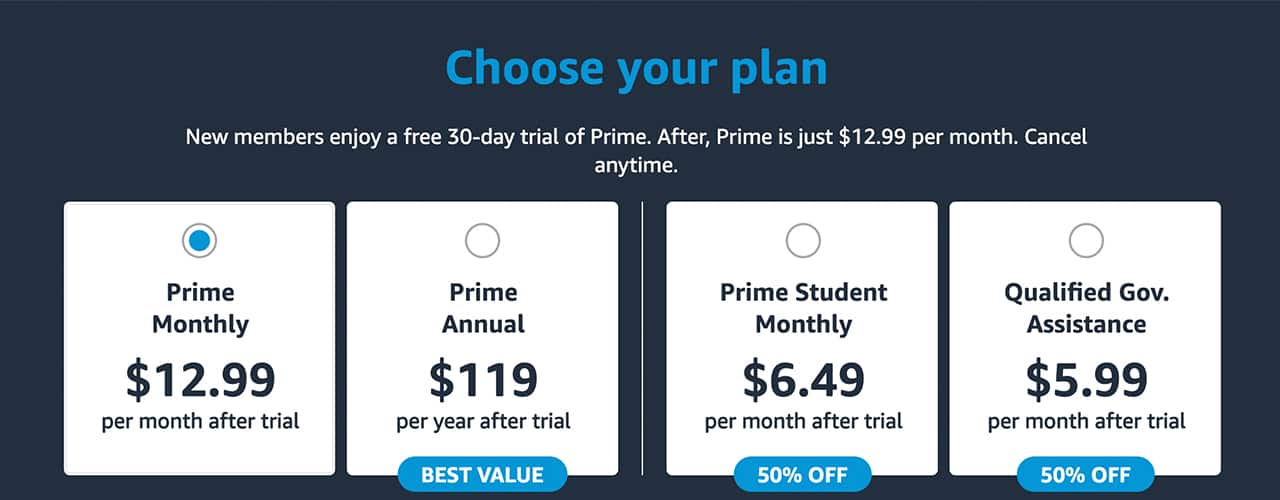
The “per month” aspect of the question often belies the nuance in Amazon’s pricing strategy for Prime. While a monthly option exists, it’s crucial for consumers to understand all available plans, as the choice can significantly impact the annual financial commitment.
Standard Monthly vs. Annual Plans: The Savings Equation
Amazon Prime offers two primary payment structures for its standard membership:
- Monthly Membership: This option provides flexibility, allowing subscribers to cancel at any time without a long-term commitment. As of recent updates, the typical cost for a standard monthly Prime membership is $14.99. This convenience, however, comes at a premium when viewed on an annual basis.
- Annual Membership: For those committed to Prime, the annual plan presents a clear financial advantage. Priced typically at $139 per year, this upfront payment effectively reduces the monthly cost to approximately $11.58. This represents a saving of roughly $3.41 per month, or over $40 per year, compared to maintaining a month-to-month subscription. From a personal finance perspective, committing to the annual plan is almost always the more economically sound choice if you anticipate using the service for the full year. It’s a classic example of bulk purchasing reducing unit cost.
Student and Qualifying Government Assistance Discounts: Accessible Prime
Amazon recognizes the varying financial capacities of different demographics and offers discounted Prime memberships to make the service more accessible. These programs are not merely acts of goodwill; they are strategic moves to expand market reach and cultivate long-term customer loyalty by embedding the Amazon ecosystem early in users’ lives.
- Prime Student: Eligible college students can access Prime benefits at a significantly reduced rate. Typically, this membership costs around $7.49 per month or $69 per year. This half-price offer is often accompanied by a generous free trial period, making it an incredibly attractive proposition for students who can leverage free shipping for textbooks, study supplies, and personal items, alongside streaming and other benefits. Eligibility usually requires a valid .edu email address.
- Prime Access (Qualifying Government Assistance): Individuals receiving certain government benefits, such as SNAP EBT or Medicaid, can also qualify for a discounted Prime membership, usually priced around $6.99 per month. This initiative addresses financial inclusion, ensuring that households on limited incomes can still access the convenience and savings offered by Prime, particularly valuable for those with mobility challenges or limited access to traditional retail.
These discounted tiers underscore the importance of checking eligibility. Failing to do so could mean unnecessarily overpaying for a service that you could access for significantly less, a critical misstep in responsible personal finance management.
Prime Video Only Option: Tailored Entertainment
For consumers whose primary interest in Prime lies solely in its streaming content library, Amazon offers a standalone “Prime Video” subscription. This option is typically priced at $8.99 per month. While it provides access to Amazon’s extensive catalog of movies, TV shows, and original programming, it explicitly excludes all other Prime benefits, such as free shipping, Amazon Music Prime, Prime Reading, and exclusive deals. This is a crucial distinction for budgeting. If you’re only signing up for Prime for the video content and rarely shop on Amazon, this tailored option could save you several dollars a month compared to a full Prime membership, allowing you to allocate those funds elsewhere.
Taxation and Regional Variations: The Final Tally
It’s also important to remember that the quoted prices for Amazon Prime memberships are often before taxes. Sales tax, if applicable in your state or region, will be added to the final charge, slightly increasing the true monthly or annual cost. Furthermore, while this article focuses on the U.S. market, Amazon Prime pricing varies significantly across different countries, reflecting local economic conditions, service offerings, and competitive landscapes. Always verify the current pricing in your specific region.
Beyond the Price Tag: Unpacking Prime’s Core Financial Value
Understanding the monthly or annual fee is just one side of the coin. The true financial evaluation of Amazon Prime lies in assessing the value of its extensive suite of services and how they translate into tangible savings and benefits for your personal budget. Prime is not a singular product; it’s a bundle designed to embed Amazon into various facets of your financial and daily life.
The Ubiquitous Free Two-Day Shipping: Saving Time and Money
For many, expedited shipping is the cornerstone of their Prime membership. The financial implications are profound:
- Elimination of Shipping Fees: For frequent Amazon shoppers, the cumulative savings on shipping fees can quickly offset the membership cost. If standard shipping on non-Prime orders costs $5-$10 per item, just a few orders a month can easily surpass the monthly Prime fee.
- Time as Money: The convenience of fast, reliable delivery saves time, which is a valuable, non-renewable resource. Avoiding trips to physical stores, especially for specific items, frees up time for other income-generating activities or personal pursuits. For those with busy schedules, the ability to receive essentials quickly without leaving home is a significant indirect financial benefit.
- Reduced Impulse Buys: While counter-intuitive, guaranteed fast shipping can sometimes reduce the urgency that leads to impulse buys in physical stores when a needed item isn’t immediately available. You know you can get it quickly online.
Prime Video: A Streaming Powerhouse
Prime Video offers a substantial library of movies, TV shows, and award-winning original content.
- Entertainment Cost Savings: When compared to standalone streaming services, Prime Video’s inclusion with Prime represents a significant saving. Many popular streaming services cost between $7 to $15 per month. If Prime Video effectively replaces one or more of these for your household, its financial value is substantial.
- No Additional Cost for Originals: Access to Amazon Originals and a rotating selection of licensed content is included, meaning no extra rental or purchase fees for much of the premium content.
Amazon Music Prime & Prime Reading: Hidden Gems
Beyond shipping and video, Prime bundles in several other digital services that, if purchased separately, would add to your monthly expenditures.
- Amazon Music Prime: This service offers access to millions of songs and thousands of stations and playlists, ad-free. While not as extensive as Amazon Music Unlimited or Spotify Premium, it often suffices for casual listeners, negating the need for a separate music streaming subscription which can cost $10-$15 per month.
- Prime Reading: Access to a rotating selection of thousands of books, magazines, and comics for free. For avid readers, this can significantly reduce spending on e-books or library fines, especially when combined with features like Amazon First Reads, which offers a free pre-release book each month.
- Amazon Photos: Unlimited full-resolution photo storage, a valuable feature for families and individuals looking to secure their digital memories without paying for separate cloud storage solutions (which can range from $5 to $10+ per month for comparable storage).
Exclusive Deals & Early Access: Strategic Savings
Prime membership also unlocks financial advantages through exclusive shopping opportunities:
- Prime Day: Amazon’s annual sales event, exclusively for Prime members, offers deep discounts across a vast range of products. Strategic shopping during Prime Day can lead to significant savings on big-ticket items, electronics, and household essentials, potentially recouping a substantial portion of the annual membership fee.
- Lightning Deals & Early Access: Prime members often get 30-minute early access to Lightning Deals, increasing their chances of snagging popular items before they sell out. This gives a competitive edge in securing coveted products at discounted prices.
- Whole Foods Market Discounts: Prime members receive exclusive savings and 5% back on select purchases at Whole Foods Market, providing tangible savings on groceries for those who shop there regularly.
Is Prime Worth It? A Financial Cost-Benefit Analysis
The ultimate question for any financial outlay is its value proposition. Is Amazon Prime a sensible investment for your money? A thorough cost-benefit analysis requires a personalized approach, factoring in your spending habits, media consumption, and lifestyle.
Quantifying Shipping Savings: Track Your Habits
The most direct financial benefit for many is shipping.
- Calculate Your Non-Prime Shipping Costs: Look back at your Amazon purchase history (if you shop without Prime) and estimate how much you would have spent on shipping for typical orders.
- Estimate Your Prime-Eligible Orders: If you don’t shop much now, imagine how many purchases you would make if shipping were free and fast. Consider items you buy elsewhere due to shipping costs.
- Breakpoint Analysis: Determine how many orders per year (or month) you need to place where the shipping savings alone cover the Prime membership fee. For an annual fee of $139 and an average shipping cost of $7 per order, you’d need to place about 20 Prime-eligible orders per year for shipping savings to break even.
Comparing Prime Video to Competitors: Consolidate Your Streaming Budget
Analyze your current streaming subscriptions.
- Overlap Analysis: Do you subscribe to other services that largely duplicate content available on Prime Video? Could Prime Video replace one or more of these, leading to a net saving?
- Content Preference: If Prime Video’s library significantly aligns with your household’s entertainment preferences, its inclusion holds greater value. If you rarely use it, its perceived financial benefit diminishes.
The Convenience Factor: Time as Money
While harder to quantify precisely, convenience has a real economic value.
- Reduced Errands: How much time (and associated costs like fuel, parking) do you save by ordering online?
- Emergency Purchases: The ability to get an urgent item quickly (e.g., a broken appliance part, specific baby item) can prevent larger disruptions or costs.
- Accessibility: For individuals with limited mobility, living in remote areas, or those with very tight schedules, the value of home delivery extends beyond mere monetary savings.
Scenarios Where Prime Makes Financial Sense
- Frequent Shoppers: If you place more than 2-3 Amazon orders per month, especially for varied items, the shipping savings alone likely make Prime worthwhile.
- Families with Young Children: The convenience of fast delivery for essentials like diapers, formula, and toys, combined with access to family-friendly streaming content, offers immense value.
- Students & Budget-Conscious Individuals: The discounted Prime Student/Access memberships, coupled with savings on textbooks, supplies, and entertainment, are often a no-brainer.
- Reliance on Whole Foods: Regular shoppers at Whole Foods Market can see direct grocery savings that contribute to offsetting the Prime cost.
Scenarios Where Alternatives Might Be Better
- Infrequent Amazon Shoppers: If you rarely buy from Amazon, the core shipping benefit is lost.
- Loyalty to Other Retailers: If you have free shipping from other online stores (e.g., Target RedCard, Walmart+), or prefer local shopping, Prime’s shipping benefit may be redundant.
- Specific Streaming Preferences: If Prime Video doesn’t offer content you desire and you already pay for other streaming services you use more frequently, the full Prime membership might be an overspend. In this case, the Prime Video only option might be more suitable.
- Strict Minimalist Budgeters: For those meticulously cutting every recurring expense, evaluating each Prime benefit against its exact usage is crucial.
Maximizing Your Prime Investment: Financial Strategies
Once you’ve decided to invest in Amazon Prime, the next step is to ensure you’re getting the absolute maximum return on your money. This isn’t just about paying the fee; it’s about actively leveraging every benefit to enhance your financial well-being.
Sharing Prime Benefits: The Household Advantage
Amazon allows Prime members to share their benefits with another adult in their household at no additional cost. This is a significant financial perk for couples, partners, or even roommates.
- Double the Savings: Two individuals can take advantage of free shipping, Prime Video, and other benefits from a single membership, effectively halving the individual “cost” of Prime.
- Centralized Budgeting: It can simplify household budgeting by having one subscription cover the needs of two adults, streamlining financial management.
- Utilize Amazon Photos: Both individuals can use the unlimited photo storage, consolidating family photos in one secure location.
Ensure you set up an Amazon Household through your account settings to enable this sharing. It’s a simple step that yields considerable financial efficiency.
Utilizing All Included Services: Don’t Leave Money on the Table
Many Prime members primarily use free shipping and Prime Video, overlooking a wealth of other included services.
- Explore Prime Reading and Amazon Music Prime: Even if you have other streaming services, check if Prime’s offerings can occasionally substitute, reducing your reliance on paid alternatives or simply offering variety without extra cost.
- Amazon Photos for Backup: If you’re paying for cloud storage for photos elsewhere, migrate them to Amazon Photos to save those monthly fees.
- Twitch Prime/Prime Gaming: If you or a family member are into gaming, leverage the free games, in-game content, and a free channel subscription on Twitch, which can represent real monetary value.
- Exclusive Deals: Make it a habit to check the “Prime Exclusives” section on Amazon and look for the Prime badge on products for additional savings.
By actively engaging with all the bundled services, you dilute the perceived cost of the core membership, making your investment work harder.
Tracking Your Usage and Savings: Data-Driven Decisions
Don’t just assume Prime is valuable; prove it with data.
- Shipping Savings Tracker: Keep a simple spreadsheet or note of the estimated shipping costs you would have paid if you didn’t have Prime.
- Subscription Replacement Value: Note down any subscriptions (e.g., another streaming service, cloud storage, music app) you no longer need because Prime covers them.
- Prime Day/Exclusive Deal Savings: Tally the savings from purchases made during Prime Day or through Prime-exclusive discounts.
This ongoing tracking provides a clear, quantitative understanding of your return on investment, moving beyond anecdotal evidence to concrete financial metrics.
Periodic Re-evaluation of Membership: Stay Agile
Your financial situation and consumption habits aren’t static. It’s wise to re-evaluate your Prime membership annually, especially before the renewal date.
- Assess Usage: Have your shopping habits changed? Are you using fewer Prime benefits than before?
- Review Alternatives: Have new, more cost-effective alternatives emerged for shipping or streaming? (e.g., Walmart+).
- Consider Downgrading: If your video consumption drops, could the Prime Video-only option be more suitable? If you barely shop, could canceling Prime entirely and just paying for shipping on the rare occasions you need it be more economical?
Being proactive in re-evaluating your subscriptions ensures that your money continues to be allocated to services that genuinely provide value, aligning with sound personal finance principles.

Conclusion
The question “how much is Prime per month?” opens a larger discussion about the true cost and value of this pervasive subscription service. While the direct monthly fee of $14.99 (or $11.58 if paid annually) seems straightforward, the financial impact of Amazon Prime is far more complex, encompassing a spectrum of direct savings, indirect benefits, and convenience factors.
For many, particularly frequent shoppers, students, or families who leverage its diverse benefits from free shipping to streaming and digital perks, Amazon Prime represents a compelling financial proposition. The cumulative savings on shipping, the elimination of other subscription costs (for video, music, photo storage), and access to exclusive deals can easily outweigh the annual membership fee, making it a net positive investment in their personal finance landscape.
However, Prime is not a universal solution. For those who shop infrequently on Amazon, have alternative shipping solutions, or find their entertainment needs met elsewhere, a full Prime membership might be an unnecessary expenditure. It’s crucial to conduct a personalized cost-benefit analysis, diligently tracking your usage and potential savings, and actively engaging with all the services Prime offers.
Ultimately, the decision to subscribe to Amazon Prime, and whether to choose a monthly or annual plan, should be a deliberate financial choice, rooted in a clear understanding of your habits, needs, and budget. By adopting a professional, insightful approach to this recurring expense, you can ensure that your money is spent wisely, maximizing value and supporting your overall financial goals.
aViewFromTheCave is a participant in the Amazon Services LLC Associates Program, an affiliate advertising program designed to provide a means for sites to earn advertising fees by advertising and linking to Amazon.com. Amazon, the Amazon logo, AmazonSupply, and the AmazonSupply logo are trademarks of Amazon.com, Inc. or its affiliates. As an Amazon Associate we earn affiliate commissions from qualifying purchases.