
In the landscape of the global economy, few entities command as much attention, scrutiny, and capital as Meta Platforms, Inc. For investors, financial analysts, and business enthusiasts, the question “How much is Meta worth?” is more than a simple inquiry into a stock price. It is a deep dive into the mechanics of digital monopoly, the efficiency of algorithmic advertising, and the high-stakes gamble on the future of human interaction. To understand Meta’s valuation, one must look beyond the ticker symbol (META) and examine the underlying financial engines that drive one of the world’s most valuable companies.

Understanding Meta’s Current Market Capitalization and Valuation Metrics
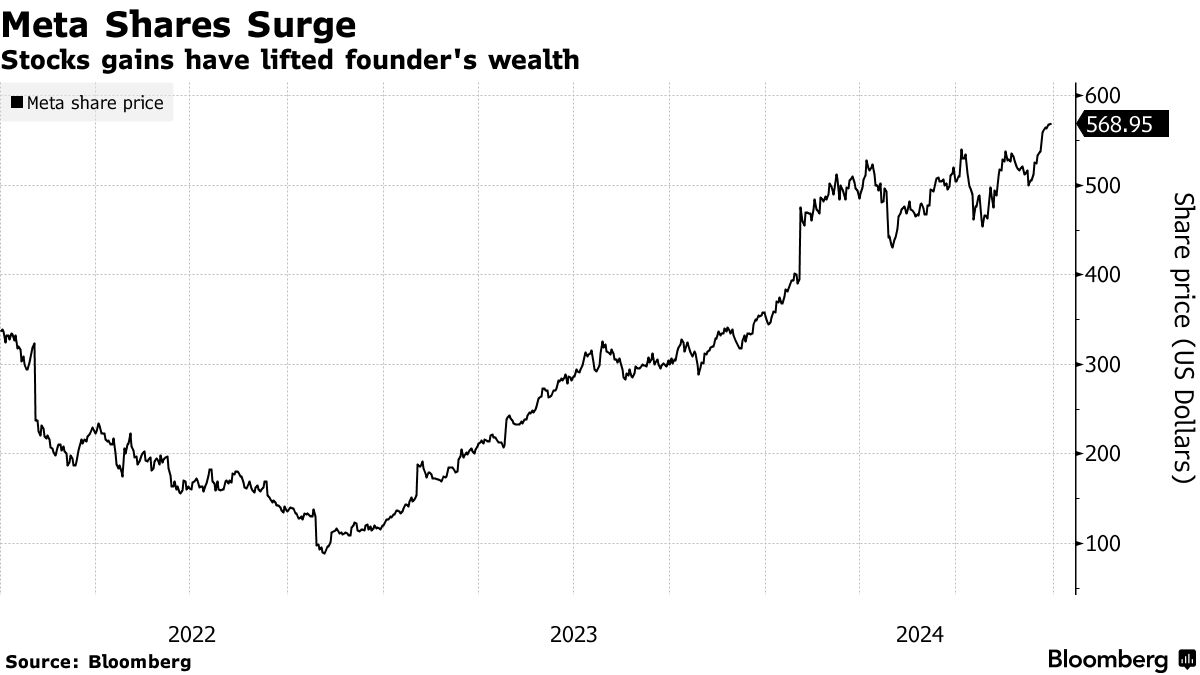
The most immediate answer to “how much is Meta worth” is found in its market capitalization. As of mid-2024, Meta has firmly re-established its position in the “Trillion Dollar Club,” a rarefied group of tech giants whose total market value exceeds $1 trillion. However, market cap is a moving target, reflecting the daily ebb and flow of investor sentiment. To gauge Meta’s true financial worth, we must look at the fundamental metrics that institutional investors use to price the stock.
The Significance of Market Cap in Big Tech
Market capitalization represents the total dollar market value of a company’s outstanding shares. For Meta, reaching the trillion-dollar milestone is not just a vanity metric; it signifies the company’s massive influence over global equity indexes like the S&P 500 and the Nasdaq-100. When Meta’s valuation fluctuates, it moves billions of dollars in retirement accounts and institutional funds. Its worth is a barometer for the health of the broader digital economy.
Price-to-Earnings (P/E) Ratio: Is Meta Undervalued?
From a value-investing perspective, the Price-to-Earnings (P/E) ratio is a critical indicator. Historically, Meta has often traded at a discount compared to its peers like Microsoft or Apple. This “valuation gap” usually stems from concerns regarding regulatory headwinds or the heavy spending in its Reality Labs division. When Meta’s P/E ratio is lower than the industry average, it often signals to investors that the market is underestimating the company’s core profitability, providing a potential “buy” signal for those looking for growth at a reasonable price.
Comparison with the “Magnificent Seven”
Meta is a core member of the “Magnificent Seven”—the group of high-performing tech stocks that include Apple, Microsoft, Alphabet, Amazon, Nvidia, and Tesla. When assessing what Meta is worth, analysts frequently compare its revenue growth and profit margins to these peers. Interestingly, Meta often boasts some of the highest net income margins in the group, sometimes exceeding 30%. This efficiency in converting revenue into profit is a primary driver of its premium valuation.
Revenue Streams: How Meta Generates Its Massive Wealth
A company is worth the sum of its future cash flows. To understand Meta’s worth, we must dissect how it generates revenue. Despite its foray into hardware and the “metaverse,” Meta remains, at its core, the most sophisticated advertising machine ever built.
The Advertising Juggernaut
Over 98% of Meta’s revenue is derived from digital advertising across its “Family of Apps”—Facebook, Instagram, Messenger, and WhatsApp. The worth of Meta is intrinsically tied to its ability to monetize the attention of over 3.9 billion monthly active users. In a world where data is the new oil, Meta’s ability to offer micro-targeted advertising to businesses of all sizes makes its “real estate” incredibly valuable. Even in economic downturns, advertisers flock to Meta because of the high Return on Ad Spend (ROAS) provided by its AI-driven ad platforms.
Diversification Efforts and Payment Services
While advertising is the king, Meta is aggressively seeking to diversify its income to protect its valuation. The integration of “Click-to-Message” ads and WhatsApp Business is a significant growth lever. By enabling commerce directly within its messaging apps, Meta is tapping into the “Social Commerce” market. This move transforms WhatsApp from a free utility into a massive revenue generator, potentially adding tens of billions to the company’s intrinsic value over the next decade.
Average Revenue Per User (ARPU) Trends
A key metric for Meta’s business finance is the Average Revenue Per User (ARPU). Analysts watch this figure closely to see how well Meta is “sweating its assets.” ARPU in North America is significantly higher than in the rest of the world, often exceeding $50 per user per quarter. As Meta successfully increases ARPU in developing markets and optimizes ad delivery through AI, its total valuation climbs. Every cent of increase in global ARPU translates into billions in additional annual revenue.

The Reality Labs Gamble: A Financial Drain or Future Goldmine?
Perhaps the most controversial aspect of Meta’s valuation is Reality Labs—the division responsible for Virtual Reality (VR), Augmented Reality (AR), and the Metaverse. This segment represents the “alpha” and “omega” of Meta’s long-term worth.
Analyzing the Multi-Billion Dollar Operating Losses
For several years, Reality Labs has operated at a massive loss, often exceeding $10 billion annually. From a short-term financial perspective, these losses act as a “drag” on Meta’s earnings per share (EPS). Some investors argue that if Mark Zuckerberg were to shutter this division, the company’s worth would immediately jump because the consolidated profits would skyrocket. However, the current valuation reflects a compromise between those who see this as “wasteful spending” and those who see it as “essential R&D.”
Long-term Capital Expenditure and ROI Expectations
Meta’s worth is heavily influenced by its Capital Expenditure (Capex). The company spends billions on data centers and custom silicon to power both its AI and its metaverse ambitions. The financial community views this as a high-stakes bet on “spatial computing.” If Meta successfully owns the next platform that replaces the smartphone, its current trillion-dollar valuation might eventually look cheap. Conversely, if the ROI (Return on Investment) on these billions remains elusive, it could lead to a permanent de-rating of the stock.
Investing in Meta: Stock Performance and Shareholder Value
The worth of Meta is not just about what the company earns, but how it treats its shareholders. In recent years, Meta has undergone a financial transformation, moving from a pure “growth at any cost” company to one focused on “efficiency” and shareholder returns.
The “Year of Efficiency” and Its Financial Impact
In 2023, CEO Mark Zuckerberg famously dubbed the period the “Year of Efficiency.” By thinning middle management and refocusing on core profitable projects, Meta significantly improved its operating margins. This pivot was a massive catalyst for the stock’s recovery. It proved to the financial markets that Meta could be disciplined with its capital, a realization that added hundreds of billions of dollars back to its market cap after a disastrous 2022.
The Impact of Dividends and Stock Buybacks
A landmark moment in Meta’s financial history occurred in early 2024 when the company announced its first-ever quarterly dividend. For a tech company that had historically plowed every cent back into growth, this was a signal of corporate maturity. Additionally, Meta’s massive share buyback programs (often totaling $50 billion or more) serve to reduce the number of shares outstanding, thereby increasing the value of each remaining share. These financial maneuvers are essential tools that bolster the stock price and solidify Meta’s worth in the eyes of institutional “income and growth” investors.
Risks to the Valuation: Regulatory and Competitive Pressures
No valuation analysis is complete without considering the downside. Meta’s worth faces constant threats from antitrust litigation, changes in privacy laws (like Apple’s App Tracking Transparency), and competition from platforms like TikTok. Each billion-dollar fine from the EU or new restrictive law in the US acts as a “risk premium” that lowers the P/E ratio. Investors must weigh the company’s incredible cash-flow generation against the legal and regulatory “tax” that comes with being a dominant global platform.
Conclusion: The Intrinsic Worth of a Digital Empire
In conclusion, determining “how much Meta is worth” requires a multi-faceted approach. On the surface, it is a $1.2 trillion+ entity defined by its stock price. Beneath that, it is a dominant advertising platform with unmatched margins and a user base that encompasses nearly half the planet.
For the investor, Meta’s worth is found in its resilience. It has survived platform shifts, scandals, and economic cycles, always emerging with higher revenues. While the “Metaverse” remains a speculative component of its value, the core business—Facebook and Instagram—remains a cash-flow machine that few companies in history can rival. Whether Meta is “worth it” as an investment depends on one’s belief in its ability to navigate the AI revolution and maintain its grip on global attention. As it stands, Meta remains one of the most formidable financial powerhouses in the modern world, a cornerstone of the digital economy with a valuation that reflects both its current dominance and its future ambitions.
aViewFromTheCave is a participant in the Amazon Services LLC Associates Program, an affiliate advertising program designed to provide a means for sites to earn advertising fees by advertising and linking to Amazon.com. Amazon, the Amazon logo, AmazonSupply, and the AmazonSupply logo are trademarks of Amazon.com, Inc. or its affiliates. As an Amazon Associate we earn affiliate commissions from qualifying purchases.