
The question “what did the stock market do today?” is perhaps the most frequently asked query in the world of finance. To the casual observer, the answer might seem simple: the numbers were either green or red. However, for the seasoned investor, the daily movement of the stock market is a complex narrative composed of geopolitical shifts, macroeconomic data releases, corporate earnings, and the collective psychology of millions of participants. Understanding the nuances of daily market behavior is essential for anyone looking to build long-term wealth or navigate the volatile waters of personal finance.
Deconstructing Daily Market Movements: The Role of Indices and Sectors
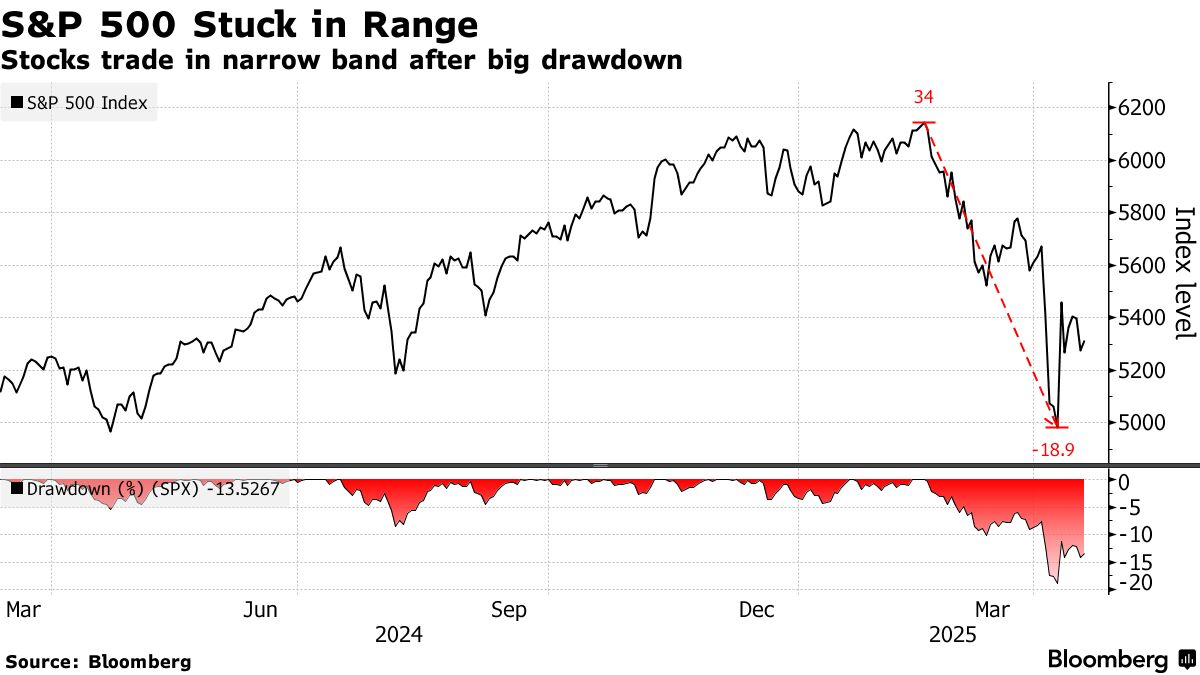
When we talk about “the market,” we are rarely talking about every single publicly traded company. Instead, we refer to major indices that act as a barometer for the overall economy. To understand what the market did today, one must first look at the “Big Three” indices and how they diverged or converged.
The Significance of Major Indices: S&P 500, Dow, and Nasdaq
The S&P 500 is often considered the most accurate representation of the U.S. economy, tracking 500 of the largest companies across various industries. If the S&P 500 is up, it generally indicates a healthy appetite for risk among institutional investors.
The Dow Jones Industrial Average (DJIA), conversely, tracks 30 “blue-chip” companies. Because it is price-weighted, its movements can sometimes be skewed by a single high-priced stock. Finally, the Nasdaq Composite is heavily weighted toward the technology sector. On days when the Nasdaq outperforms the Dow, it usually signifies that investors are betting on growth and innovation rather than stability and dividends. Analyzing the “spread” between these indices provides the first layer of insight into the day’s market sentiment.
Understanding Sector Performance and Rotations
Beneath the surface of the major indices lies the performance of specific sectors, such as Energy, Healthcare, Financials, and Technology. A day where the S&P 500 is flat might hide a massive “sector rotation.” This occurs when investors pull money out of one area—for example, high-growth Tech—and move it into “defensive” sectors like Utilities or Consumer Staples.
This movement often signals a shift in economic expectations. If the market “did” nothing on the surface but saw a 3% jump in Financials, it might suggest that investors are anticipating higher interest rates, which generally benefit banks. Tracking these internal movements is crucial for identifying where the “smart money” is flowing.
The Macroeconomic Catalysts Driving Today’s Trends
The stock market does not exist in a vacuum. Every tick up or down is a reaction to new information. To answer why the market moved today, one must look at the macroeconomic environment, specifically the actions of central banks and the release of key economic indicators.
Interest Rates and Federal Reserve Policy
In the current financial landscape, the Federal Reserve (the Fed) is the most influential force in the market. Investors hang on every word of the Fed Chair, looking for clues regarding interest rate hikes or cuts. Higher interest rates make borrowing more expensive for companies and increase the “discount rate” used to value future cash flows, which often leads to a market sell-off, particularly in the tech sector.
When the market reacts sharply today, it is often because of a “Fed pivot” or a “hawkish” stance in meeting minutes. Understanding the relationship between the federal funds rate and equity valuations is fundamental to interpreting daily market volatility.
Inflation Data and Corporate Earnings Reports
Inflation, measured through the Consumer Price Index (CPI) and Producer Price Index (PPI), is a primary driver of market direction. If inflation data comes in higher than expected, the market often drops on fears that the Fed will raise rates to cool the economy.
Additionally, we must consider “Earnings Season.” Four times a year, public companies report their quarterly financial results. If a heavyweight company like Apple or Microsoft misses its earnings targets or provides “weak guidance” for the future, it can drag down the entire index, regardless of the broader economic news. The market today is often a direct reflection of whether corporate America is meeting, exceeding, or falling short of Wall Street’s expectations.
Strategies for Navigating Daily Fluctuations
For the individual investor, seeing the market drop 2% in a single afternoon can be anxiety-inducing. However, successful wealth management requires a strategy that transcends daily noise. How you react to “what the market did today” depends entirely on your investment horizon and risk tolerance.
Long-term Investing vs. Day Trading
There is a profound difference between a day trader and a long-term investor. For a day trader, today’s market movement is everything; they profit from small fluctuations in price. For the long-term investor, however, daily volatility is often just “noise.”
History shows that the stock market has an upward bias over long periods. Those who try to “time the market” based on daily news often miss out on the best-performing days, which significantly hampers their total returns. Understanding that “time in the market” is superior to “timing the market” is a cornerstone of sound personal finance.
The Power of Dollar-Cost Averaging and Diversification
One of the best ways to handle market volatility is through Dollar-Cost Averaging (DCA). By investing a fixed amount of money at regular intervals, you automatically buy more shares when prices are low and fewer shares when prices are high. This removes the emotional burden of asking what the market did today.
Furthermore, diversification remains the only “free lunch” in finance. If your portfolio is strictly in tech stocks, a bad day for the Nasdaq could be devastating. By spreading investments across different asset classes—stocks, bonds, real estate, and commodities—you ensure that your financial future isn’t tied to the whims of a single sector or index movement.
Tools and Resources for Real-Time Market Analysis
In the digital age, information is democratized. Anyone with a smartphone can access the same data that professional hedge fund managers use. To truly understand what the market is doing in real-time, you need to know which tools to use and how to interpret the data they provide.
Top Financial Platforms for Live Tracking
Websites and apps like Bloomberg, CNBC, Yahoo Finance, and Seeking Alpha provide real-time quotes, breaking news, and expert analysis. However, it is important to distinguish between “news” and “opinion.” A headline might say the market is “crashing,” but a look at the actual percentage change might reveal a standard 1% correction.
For those interested in a deeper dive, platforms like TradingView or Morningstar offer advanced charting tools. These allow investors to see moving averages, which help determine if today’s move is a temporary blip or the start of a new trend.
Interpreting Technical Indicators and Market Breadth
Professional investors often look at “Market Breadth” to see if a rally is sustainable. If the S&P 500 is up, but only five large companies are rising while the other 495 are falling, the market is considered “thin” and potentially unstable.
Indicators like the Advance-Decline Line (A/D Line) or the Volatility Index (VIX)—often called the “fear gauge”—provide context. If the market is down and the VIX is spiking, it indicates a high level of panic. If the market is down but the VIX is stable, it may just be a routine “profit-taking” session. Learning to read these signals transforms a simple price update into a meaningful financial insight.
Conclusion: The Psychological Component of Investing
Ultimately, what the stock market did today is a reflection of human emotion: greed and fear. Prices move when the collective consensus of the future changes. While it is important to stay informed, it is equally important to maintain emotional discipline.
The most successful investors are those who can look at a red screen today and see an opportunity for tomorrow. By understanding the indices, the macroeconomic drivers, and the strategic tools available, you can move past the surface-level numbers and develop a sophisticated understanding of the financial world. Whether the market is up or down, the key to financial success lies in education, patience, and a well-defined investment philosophy.
aViewFromTheCave is a participant in the Amazon Services LLC Associates Program, an affiliate advertising program designed to provide a means for sites to earn advertising fees by advertising and linking to Amazon.com. Amazon, the Amazon logo, AmazonSupply, and the AmazonSupply logo are trademarks of Amazon.com, Inc. or its affiliates. As an Amazon Associate we earn affiliate commissions from qualifying purchases.