
Leasing a vehicle has traditionally been a popular path for those who want to drive a premium car without the long-term commitment of ownership. When it comes to Tesla, the financial equation is unique. Unlike traditional internal combustion engine (ICE) vehicles, Teslas maintain high residual values, yet they are subject to rapid technological shifts. For the financially savvy consumer, understanding the nuances of a Tesla lease is essential to determining whether the monthly outlay aligns with their personal wealth strategy.
In this guide, we will break down the costs associated with leasing the current Tesla lineup, explore the underlying financial mechanics of these agreements, and evaluate whether leasing or buying offers the best return on your capital.
Understanding the Economics of a Tesla Lease
To understand the price of a Tesla lease, one must look beyond the monthly payment advertised on the website. A lease is essentially a financial instrument where you pay for the projected depreciation of the vehicle over a set period, plus interest and fees.
Capitalized Cost and Down Payments
The “Capitalized Cost” (or Cap Cost) is the total price of the vehicle used to calculate the lease. For a Tesla, this includes the base price, chosen wheels, interior upgrades, and Full Self-Driving (FSD) capabilities if selected. Tesla typically requires a “Due at Signing” amount, which often includes a down payment (Capitalized Cost Reduction), the first month’s payment, and an acquisition fee.
From a financial planning perspective, putting a large amount of money down on a lease is often discouraged. If the car is totaled or stolen shortly after leaving the lot, that down payment is generally lost, as the insurance payout goes to the lessor (Tesla Finance). Understanding how to balance your “Due at Signing” costs against your monthly cash flow is the first step in mastering the Tesla lease.
Residual Value and Money Factor
The two most critical components of your lease cost are the residual value and the money factor. The residual value is what Tesla estimates the car will be worth at the end of the lease (e.g., after 36 months). Because Teslas tend to hold their value better than many luxury competitors, their residual values are often high, which theoretically lowers the monthly payment.
The “Money Factor” is the lease version of an interest rate. To find the equivalent APR, you multiply the money factor by 2,400. Tesla’s rates fluctuate based on the federal funds rate and market conditions. A high money factor can quickly turn a seemingly affordable car into an expensive monthly burden.
Model-by-Model Cost Comparison
The cost of a Tesla lease varies significantly depending on which “S3XY” model you choose. Below is a financial breakdown of the entry-level configurations as of the current market.
The Entry Point: Leasing a Model 3
The Model 3 remains the most cost-effective way to enter the Tesla ecosystem. For a Rear-Wheel Drive Model 3, monthly payments typically hover between $350 and $450, depending on the current promotional environment and the size of the down payment.
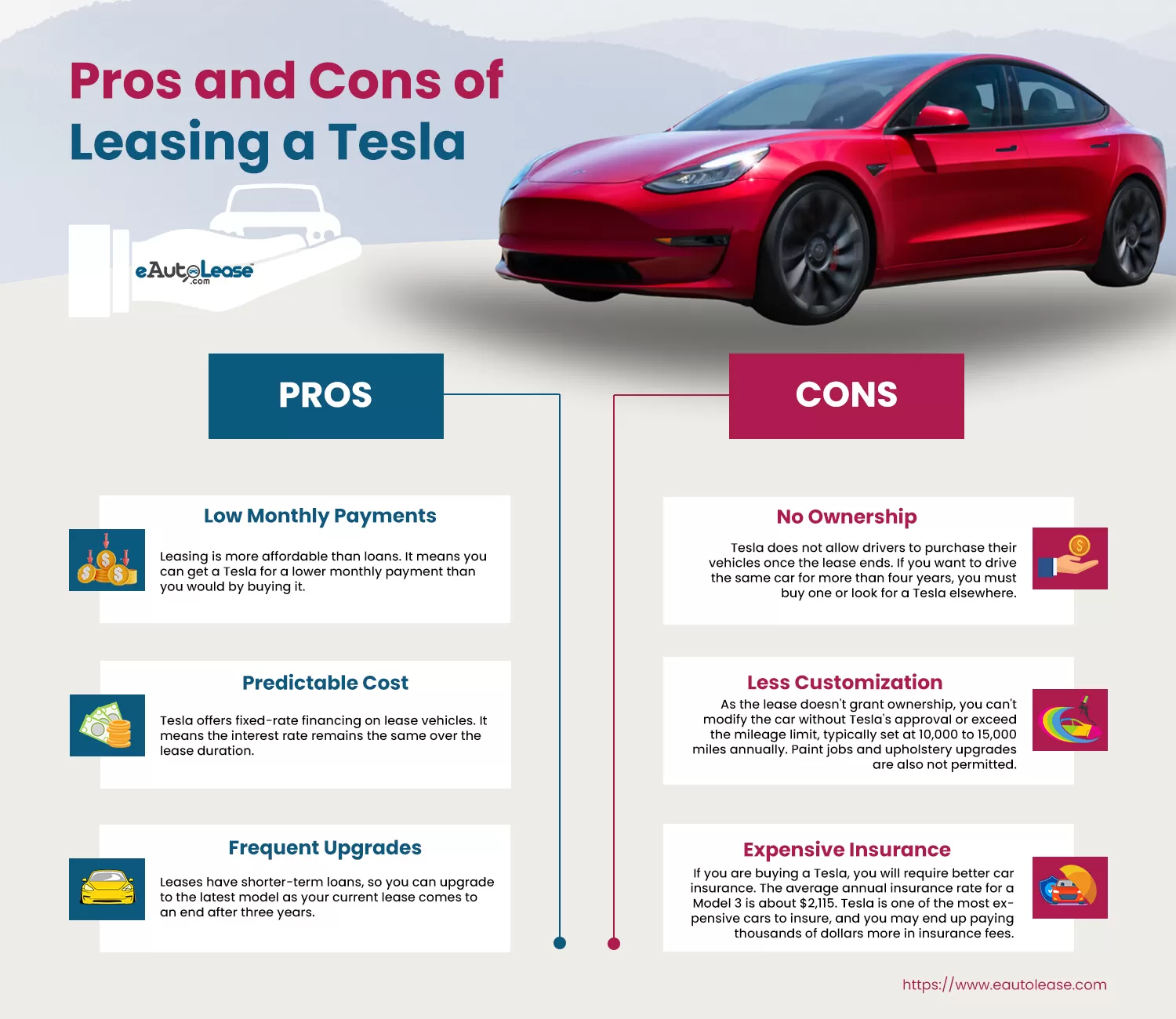
Financially, the Model 3 lease is attractive for professionals who want a predictable monthly expense. However, it is important to note that Tesla often does not allow lessees to purchase the Model 3 at the end of the lease term. This means you are strictly paying for the use of the asset and will have zero equity at the end of the 36 months.
The Popular Choice: The Model Y
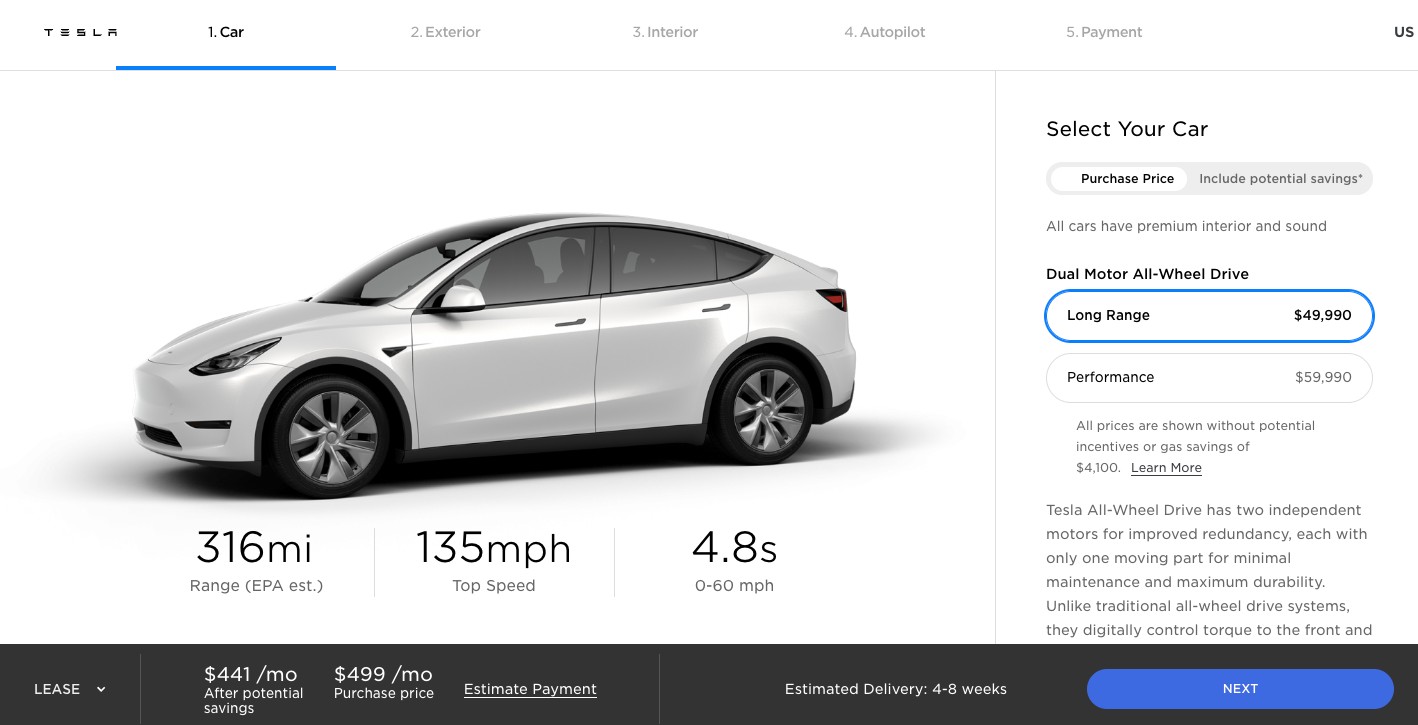
As the best-selling vehicle globally, the Model Y represents a significant portion of Tesla’s leasing volume. A Long Range All-Wheel Drive Model Y usually carries a monthly lease price between $450 and $600.
The Model Y often benefits from specific inventory discounts. Financial analysts suggest monitoring Tesla’s end-of-quarter pushes, where “Adjusted Cap Costs” may be lowered to move inventory, significantly reducing the monthly lease payment. For a family looking to manage a monthly budget, the Model Y lease provides a fixed cost for a high-value asset without the risk of fluctuating used-car market prices.
Premium Tiers: Model S and Model X Financials
For the Model S and Model X, the financial commitment increases substantially. Monthly payments for these flagship vehicles often exceed $1,000 to $1,500.
These leases are frequently utilized by business owners who can take advantage of Section 179 depreciation or other business expense deductions. The Model X, in particular, often qualifies for specific heavy-vehicle tax treatments in the United States due to its Gross Vehicle Weight Rating (GVWR), making the lease a sophisticated tax-planning tool for the self-employed or corporate executives.
Hidden Costs and Financial Incentives
The sticker price on a lease is rarely the final cost. To accurately budget for a Tesla, one must account for the ancillary fees and the potential for government-backed savings.
The Acquisition Fee and Disposition Fee
Tesla charges an acquisition fee (usually around $695) to process the lease. At the end of the term, if you do not lease another Tesla, you may be hit with a “Disposition Fee” (roughly $350) to cover the costs of cleaning and auctioning the vehicle.
Furthermore, Tesla is known for its strict “Excess Wear and Use” guidelines. Financially, it is wise to set aside a small “sinking fund” during your lease term to cover potential charges for tire wear or minor rim scuffs, which are common points of contention during lease returns.
Federal and State Tax Credits for Lessees
One of the most significant financial advantages of leasing a Tesla is the application of the $7,500 Federal EV Tax Credit. Under current IRS regulations, the “clean vehicle credit” for leased vehicles does not have the same stringent “Made in America” or income-cap requirements that apply to purchases.
In many cases, Tesla Finance captures this $7,500 credit and applies it directly to the lease as a Capitalized Cost Reduction. This effectively lowers the monthly payment by approximately $200 over a 36-month term. For high-income earners who would not qualify for the tax credit if they bought the car outright, leasing becomes the only way to capture this government incentive.
Lease vs. Buy: Which Makes More Financial Sense?
The decision to lease a Tesla versus financing or paying cash depends on your perspective on asset ownership and technological depreciation.
Cash Flow vs. Equity
When you lease, you are prioritizing cash flow. You enjoy a lower monthly payment than a standard 60-month loan and keep your liquidity for other investments. However, you are building no equity.
When you buy, you own the asset. After the loan is paid off, you have a vehicle with significant trade-in value. Given that Teslas are essentially “computers on wheels,” their value is tied heavily to software updates and battery health. If you plan to keep the car for more than six years, buying is almost always the superior financial move. If you prefer to upgrade every three years to access the latest hardware, leasing protects you from the volatility of the used EV market.
The Impact of Rapid Technological Obsolescence
In the world of finance, “obsolescence risk” is the danger that an asset will lose value because it is replaced by a newer, better version. Tesla frequently updates its hardware (such as Hardware 3 to Hardware 4 for FSD).
A lease acts as a hedge against this risk. If Tesla releases a revolutionary new battery technology in two years that makes current models less desirable, the lessee is unaffected. They simply hand the keys back to Tesla and move into the newer tech. The owner, conversely, must absorb the accelerated depreciation of their now-outdated vehicle.
Optimizing Your Tesla Lease Agreement
To ensure you are getting the most value out of your lease, you must tailor the agreement to your specific financial habits.
Choosing the Right Annual Mileage Limit
Tesla offers lease terms of 10,000, 12,000, or 15,000 miles per year. Choosing the wrong one is a costly mistake. If you under-utilize your miles, you have essentially overpaid for “car capacity” you didn’t use. If you go over, the per-mile penalty (often $0.25 per mile) can lead to a multi-thousand-dollar bill at the end of the term.
Before signing, review your last three years of driving records. If you are a high-mileage driver, the math often shifts in favor of purchasing, as leases become prohibitively expensive once you cross the 15,000-mile-per-year threshold.

Calculating the Total Cost of Ownership (TCO)
A professional financial analysis of a Tesla lease should always include the Total Cost of Ownership. This includes:
- Total of Lease Payments: (Monthly payment x term).
- Upfront Costs: (Down payment + fees).
- Insurance Premiums: (Tesla insurance or third-party; EVs are often more expensive to insure).
- Charging Costs: (Estimated vs. gasoline savings).
- Opportunity Cost: (What that down payment could have earned if invested in a diversified index fund).
By totaling these numbers, you can compare the lease not just to a car loan, but to other lifestyle expenses. For many, the predictable, all-in cost of a Tesla lease provides a level of financial clarity that ownership—with its out-of-warranty repair risks and fluctuating resale values—cannot match.
In conclusion, leasing a Tesla is a strategic financial decision. While it may not build equity, it offers a sophisticated way to manage cash flow, hedge against technological shifts, and take advantage of tax incentives that might otherwise be out of reach. By meticulously calculating the money factor, residual value, and TCO, you can ensure that your Tesla lease is a sound component of your broader financial portfolio.
aViewFromTheCave is a participant in the Amazon Services LLC Associates Program, an affiliate advertising program designed to provide a means for sites to earn advertising fees by advertising and linking to Amazon.com. Amazon, the Amazon logo, AmazonSupply, and the AmazonSupply logo are trademarks of Amazon.com, Inc. or its affiliates. As an Amazon Associate we earn affiliate commissions from qualifying purchases.