
In an era defined by convenience, the ability to have groceries and bulk goods delivered directly to our doorsteps has become not just a luxury, but often a necessity for busy households and businesses alike. Costco, renowned for its bulk savings and exclusive membership model, has expanded its reach beyond the warehouse aisles into the digital realm of delivery. However, the seemingly simple act of ordering online from a major retailer like Costco often comes with a multi-faceted cost structure that warrants careful financial scrutiny. Understanding the true economic implications of Costco delivery requires a deep dive into the various options, associated fees, and the strategic financial decisions consumers must make. This article will meticulously break down the costs, revealing the hidden layers of expenditure and offering insights into how to navigate Costco’s delivery services most economically.
Unpacking Costco’s Delivery Ecosystem: Options and Initial Costs
Costco’s approach to delivery is not monolithic; it offers several distinct services, each with its own pricing model and financial considerations. Recognizing these differences is the first step toward making informed budgeting decisions.
Same-Day Delivery via Instacart: The Convenience Premium
For perishable goods and immediate needs, Costco partners with Instacart, a third-party grocery delivery service. This is often the most popular, yet potentially the most financially intricate, delivery option.
- Costco Membership Requirement: Unlike some retailers where Instacart can be used independently, ordering Costco items via Instacart generally requires an active Costco membership. This foundational cost (typically $60 for a Gold Star or $120 for an Executive membership annually) must be factored into your overall budget if you’re not already a member.
- Instacart’s Role: Instacart shoppers pick and deliver your order. As a third-party service, Instacart levies its own set of fees on top of the product costs.
- Delivery Fees: Standard Instacart delivery fees typically range from $3.99 to $7.99 for non-express orders over a certain amount (e.g., $35). Orders under this threshold, or express orders, can incur higher fees. Instacart+ members (formerly Instacart Express) often get unlimited free deliveries on qualifying orders.
- Service Fees: This is where many consumers encounter unexpected costs. Instacart adds a “service fee,” which is a percentage of your order total (excluding taxes, tips, and other fees). This fee helps cover operational costs. For Instacart+ members, this service fee is often waived, highlighting a potential long-term saving if you order frequently.
- Item Price Markups: Crucially, prices for Costco items on Instacart are often higher than in-warehouse prices. Instacart and its retail partners have agreements where products are marked up to cover the platform’s costs and potentially share revenue. This markup can range from 10% to 20% or more, depending on the item and region, significantly impacting your total spend.
- Tipping Considerations: While not a mandatory fee, tipping your Instacart shopper is customary and expected. This typically ranges from 15-20% of your order total, adding another layer to the overall cost of convenience.
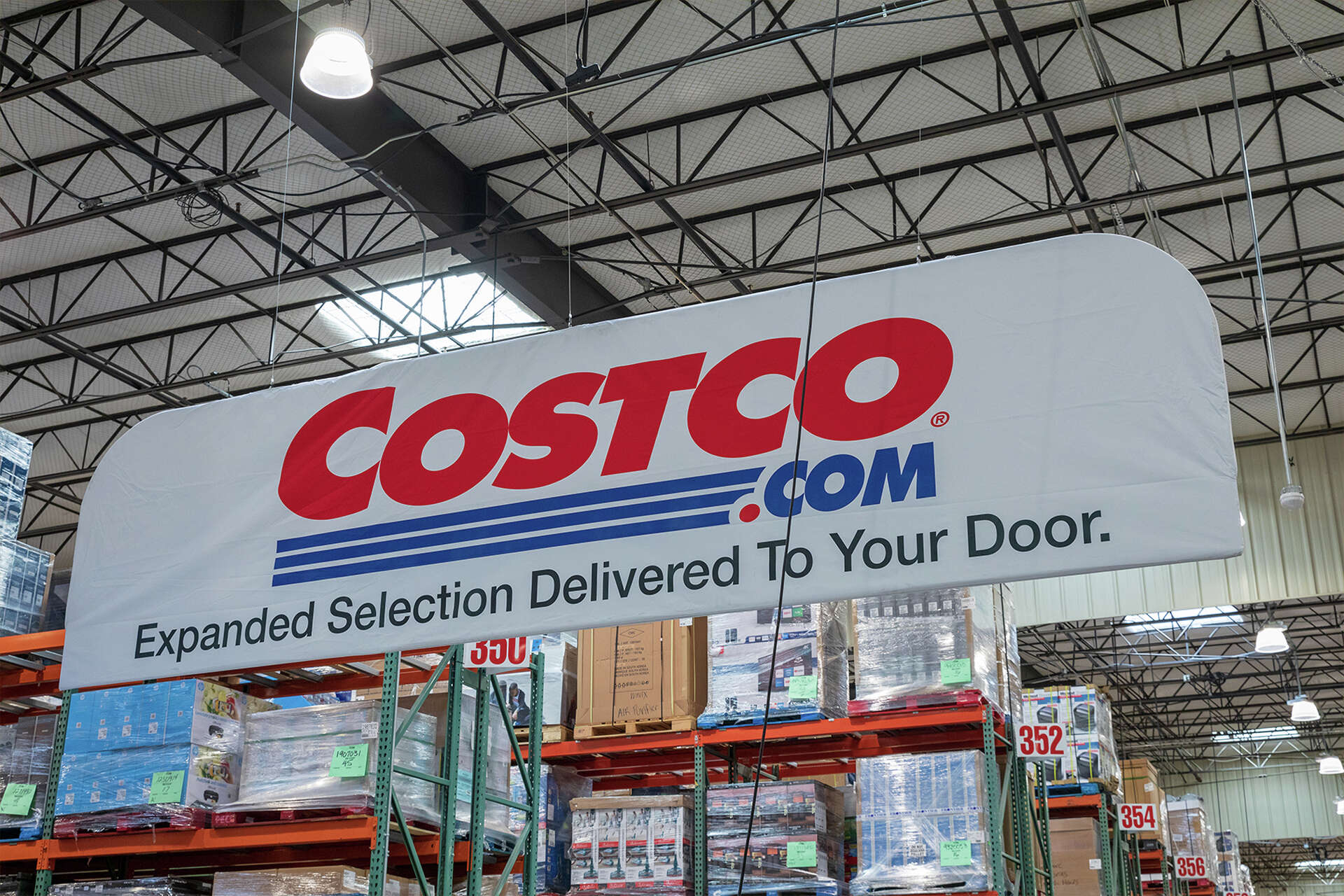
Two-Day Delivery for Non-Perishables: Direct from Costco.com
For bulk, non-perishable items, Costco offers a direct two-day delivery service through its own website, Costco.com. This option bypasses Instacart, leading to a different financial profile.
- Costco.com Fulfillment: Orders are fulfilled directly from Costco warehouses or distribution centers.
- Shipping Fees: Many items on Costco.com, especially those ordered in bulk, include shipping and handling in the displayed price. For other items, free shipping is often available for orders exceeding a certain dollar amount, or for specific promotions. Larger, heavier items might incur additional shipping surcharges.
- No Instacart Markups/Service Fees: A significant financial advantage here is the absence of Instacart’s item price markups and service fees. The prices you see on Costco.com are generally closer to, if not identical to, in-warehouse prices (excluding certain in-store-only deals).
- Focus on Bulk Savings: This service is ideal for stocking up on pantry staples, household goods, electronics, and other non-perishables where the core value proposition of Costco — bulk savings — can be realized without the added premium of same-day third-party delivery.
Costco Business Center Delivery: Catering to Commercial Needs
Costco Business Centers offer a specialized delivery service primarily for businesses, but also accessible to residential members in certain areas. This service focuses on bulk, business-oriented products.
- Target Audience: Geared towards restaurants, offices, convenience stores, and other businesses.
- Specific Delivery Zones and Minimums: Delivery is typically restricted to specific geographic zones, and often requires a minimum order value (e.g., $250).
- Delivery Fee Structure: Delivery fees can be flat-rate or tiered based on the order total or weight, designed to reflect the larger scale of these orders. For instance, a flat fee of $25-$50 for orders meeting the minimum is common.
- Value Proposition for Businesses: For businesses, the time saved, reduced labor, and avoidance of large vehicle transport costs often make the delivery fee a worthwhile operational expense, especially when ordering pallets of goods.
The True Cost of Convenience: Beyond the Delivery Fee
While the explicit fees are easy to spot, the real financial impact of Costco delivery extends into less obvious areas. Understanding these “hidden” costs is crucial for accurate budgeting.
Hidden Costs and Price Discrepancies: The Markup Mirage
The most significant “hidden” cost, particularly with Instacart same-day delivery, is the item price markup.
- Detailed Explanation of Instacart’s Item Markups: As mentioned, Instacart often charges a higher price for items than you’d find inside a Costco warehouse. This isn’t a secret, but it’s often not prominently displayed. A loaf of bread might be $3.99 in-store but $4.49 on Instacart; a case of water could be $4.99 in-store but $5.79 via Instacart. These small differences accumulate rapidly across a typical bulk order.
- Comparison of a Typical Basket Cost: A hypothetical $100 in-store grocery run could easily become a $115-$120 bill on Instacart just from markups, before adding delivery fees, service fees, and tips. For a larger $300 order, the markup alone could be $45-$60.
- Impact on Per-Unit Pricing: Costco’s appeal lies in its low per-unit cost on bulk items. Markups erode this advantage. A gallon of milk or a roll of paper towels suddenly becomes less of a bargain when its unit price is inflated through delivery.
Membership Synergies and Savings: Strategic Investment
Leveraging memberships can significantly alter your delivery cost landscape.
- Costco Gold Star vs. Executive Membership Benefits: An Executive Membership ($120 annually) offers a 2% annual reward on qualified Costco purchases (including most items bought on Costco.com, but not items purchased through Instacart). For high-spending households, this 2% can offset the membership fee and even yield net savings. Understanding this distinction is vital for financial planning.
- Instacart+ Membership: For $99 per year (or $9.99 per month), Instacart+ offers unlimited free deliveries on orders over $35 and waived service fees on qualifying orders.
- Calculating the Break-Even Point: To determine if Instacart+ is financially viable, calculate your annual delivery and service fees. If you typically pay $7.99 for delivery and a 5% service fee on an average $100 order ($5), that’s $12.99 per order. You’d break even on the $99 annual fee after roughly 8 orders per year. If you order more frequently than that, Instacart+ becomes a clear money-saver.
Tipping Protocols and Their Financial Impact: An Ethical Line Item
Tipping is a critical component of delivery costs, directly impacting the livelihood of the driver.
- Standard Tipping Guidelines: Industry standards suggest a tip of 15-20% of the subtotal (before markups and fees) for good service, or a minimum of $5 per order. For very large or heavy orders, higher tips are appropriate.
- How Tipping Adds to the Overall Cost: For a $200 Instacart order, a 15% tip adds $30 to your expense. Over a year, if you order twice a month, that’s $720 in tips alone, a substantial sum to budget for.
- Ethical Considerations vs. Budget Constraints: While it’s important to compensate drivers fairly, these costs must be consciously integrated into your household budget. Failing to account for tips means underestimating your true delivery expenses.

Strategic Spending: Maximizing Value and Minimizing Delivery Expenses
With a clear understanding of the costs, consumers can adopt strategic approaches to make Costco delivery financially smarter.
Optimizing Your Delivery Orders: Intelligent Shopping
- Consolidating Orders to Meet Free Delivery Thresholds: Plan your purchases to ensure you meet the minimums for free delivery on Instacart+ or Costco.com. Small, frequent orders that incur multiple delivery fees will quickly diminish any perceived savings.
- Prioritizing Items for Delivery vs. In-Store Pick-Up: Reserve delivery for heavy, bulky items (e.g., cases of water, pet food, cleaning supplies) or those that offer significant time savings. For lighter, smaller items where the markup heavily outweighs the convenience, consider an in-store trip if feasible.
- Utilizing Sales and Promotions: Keep an eye out for Costco’s “Instant Savings” coupons and Instacart’s specific promotions (e.g., “$10 off orders over $75”). Stacking these discounts can help mitigate markups and fees.
Leveraging Memberships for Financial Advantage: Calculated Choices
- When an Instacart+ Membership Makes Financial Sense: As calculated earlier, if you use Instacart for Costco delivery more than 8-10 times a year, the annual Instacart+ membership is likely to save you money compared to paying per-delivery fees and service charges.
- The Long-Term Savings Potential of a Costco Executive Membership: If your annual spending at Costco (in-warehouse or on Costco.com, excluding Instacart) exceeds $3,000, the 2% reward from an Executive Membership ($60 back) will cover the difference between a Gold Star and Executive membership. Beyond that, it generates net savings. Integrate this into your overall loyalty program strategy.
- Comparing Total Annual Spend Across Different Scenarios: Run the numbers. Compare your projected annual spend with no memberships, with only a Costco Gold Star, with Costco Executive + Instacart+, etc. This granular financial modeling helps identify the most cost-effective approach for your specific shopping habits.
The Time-Value Equation: Is Convenience Worth the Premium?
Ultimately, the decision to use delivery services often boils down to a personal financial calculation of time versus money.
- Quantifying the Value of Time Saved: Consider the monetary value of your time. If a trip to Costco takes 2 hours (travel, parking, shopping) and you value your time at $30/hour, that’s $60. If delivery costs an extra $20, you’ve saved $40 and gained two hours of productivity or leisure.
- Budgeting for the Convenience Fee as a Line Item: View the additional costs of delivery not as an unavoidable burden, but as a budgeted expense for a service that provides measurable convenience. Allocate a specific portion of your grocery budget for this “convenience premium.”
- Personal Financial Planning for Grocery Expenses: Integrate delivery costs into your overall household budget. Rather than seeing them as a sporadic expense, view them as a recurring part of your grocery spend, allowing for more accurate financial planning.
A Comparative Financial Analysis: Delivery vs. In-Store Shopping
A direct comparison is essential to illustrate when each shopping method offers the best financial outcome.
Direct Cost Comparison: Basket-to-Basket
- Scenario-Based Analysis:
- Small, Urgent Order (Perishables): Instacart delivery might be significantly more expensive due to flat fees and markups on a small basket. In-store is almost always cheaper.
- Large, Mixed Order (Perishables & Non-Perishables): Instacart+ can mitigate delivery/service fees, but markups on a large basket will still make it more expensive than in-store.
- Large, Non-Perishable Order (Costco.com): Often very competitive with in-store, especially with free shipping, due to the absence of Instacart markups.
- Illustrative Examples: A $150 in-store order might be $175-$190 via Instacart (including fees, markups, and tip), whereas a $150 order of non-perishables via Costco.com could be $150-$160 (including minimal shipping if applicable).
Indirect Costs and Benefits: Beyond the Receipt
- Fuel and Vehicle Depreciation: Driving to Costco incurs fuel costs, wear and tear on your vehicle, and parking time (which, while free at Costco, still has an opportunity cost). These are hidden costs of in-store shopping.
- Impulse Buys: Many shoppers report fewer impulse purchases when ordering online compared to navigating the temptation-laden aisles of Costco. This can lead to significant savings for disciplined online shoppers.
- Environmental Impact (Financial Perspective): Fewer individual car trips for shopping can indirectly save on personal fuel consumption and contribute to a smaller carbon footprint, which for some, holds intrinsic financial value.
Making the Financially Prudent Choice: Hybrid Strategies
- When Delivery is a Wise Investment: Delivery is financially prudent for heavy/bulky items, when time is at an absolute premium, for individuals with mobility challenges, or during periods of illness. If you consistently meet Instacart+ break-even points or enjoy free shipping on Costco.com, the added cost is often justified by the convenience.
- When In-Store Shopping Remains Superior for Cost Savings: For maximum savings, especially on perishable goods and smaller orders, physically visiting Costco is almost always the cheapest option. This allows you to avoid all delivery fees, service fees, markups, and tip obligations.
- Hybrid Strategies: Many financially savvy consumers employ a hybrid approach:
- Large, non-perishable stock-up orders via Costco.com to leverage direct pricing and free shipping.
- Frequent Instacart delivery for smaller, perishable fills if an Instacart+ membership makes it economical.
- Occasional in-store trips for browsing new items, high-value perishables, or when specific in-store deals are available.
Future Outlook: The Evolution of Costco Delivery Costs and Consumer Habits
The landscape of grocery delivery is dynamic, and Costco’s offerings are likely to continue evolving.
Anticipated Changes in Delivery Fee Structures: Industry Trends
- Potential for Costco to Internalize More Delivery Services: As consumer demand for delivery grows, Costco might invest further in its own logistics, potentially reducing reliance on third parties and offering more competitive pricing directly.
- Impact of Automation: Advancements in warehouse automation and last-mile delivery technology (e.g., drone or autonomous vehicle delivery) could eventually drive down operational costs, potentially leading to lower delivery fees for consumers.
- Subscription Model Expansion: More retailers are moving towards comprehensive subscription models. Costco might integrate delivery more fully into its Executive Membership or introduce new tiers that bundle more services.
Consumer Adaptation and Budgeting: The Ongoing Balance
- How Evolving Delivery Models Might Affect Household Budgets: As delivery options become more sophisticated and integrated, consumers will need to continuously reassess their budgeting strategies to account for new fee structures and value propositions.
- The Ongoing Balance Between Convenience and Cost: The fundamental tension between the desire for convenience and the imperative for cost savings will always exist. Savvy consumers will remain vigilant, regularly comparing options, leveraging memberships, and making informed decisions to ensure their Costco delivery habits align with their personal financial goals.
In conclusion, “how much is Costco delivery” is not a simple question with a single answer. It is a complex financial equation influenced by membership choices, delivery method, order size, and personal priorities. By dissecting each cost component and strategically leveraging the available options, consumers can transform what might seem like an added expense into a financially sound investment in convenience and efficiency.
aViewFromTheCave is a participant in the Amazon Services LLC Associates Program, an affiliate advertising program designed to provide a means for sites to earn advertising fees by advertising and linking to Amazon.com. Amazon, the Amazon logo, AmazonSupply, and the AmazonSupply logo are trademarks of Amazon.com, Inc. or its affiliates. As an Amazon Associate we earn affiliate commissions from qualifying purchases.