
The deadlift is often referred to as the “king of all exercises,” and for good reason. It is a foundational movement pattern—the hip hinge—that translates directly into real-world functionality, athletic performance, and long-term musculoskeletal health. While many beginners view the deadlift strictly as a “back exercise,” this perception severely undersells the movement’s complexity. In reality, the deadlift is a full-body powerhouse that recruits nearly every major muscle group from your calves to your trapezius. Understanding exactly which muscles are at play is the first step toward mastering the lift, optimizing your training, and ensuring longevity in the weight room.

The Posterior Chain: The Engine Room of the Deadlift
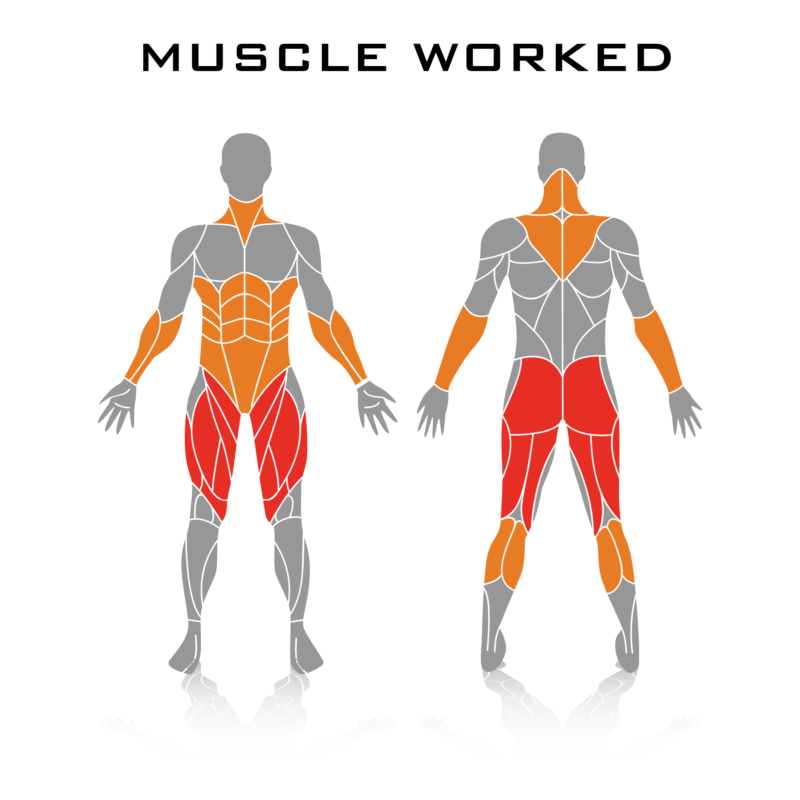
The primary focus of the deadlift is the posterior chain, a collective term for the muscles running along the back side of your body. These muscles are essential for posture, explosive movement, and spinal stability.
Gluteus Maximus and Medius
The glutes are the primary drivers of hip extension, which is the core mechanic of the deadlift. As you initiate the pull from the floor and move into the lockout phase, your glutes must exert immense force to bring your hips forward to a standing position. While the quadriceps assist in the initial break from the floor, the glutes are the dominant force once the bar passes the knees. Strengthening these muscles through heavy deadlifting is one of the most effective ways to improve athletic speed and power.
The Hamstring Complex
The hamstrings play a dual role in the deadlift: they act as stabilizers at the knee joint and as primary extensors at the hip joint. Unlike isolation exercises like leg curls, which work the hamstrings only through knee flexion, the deadlift challenges the hamstrings by lengthening them under load. This eccentric stress is a primary catalyst for muscle hypertrophy and strength gains. By maintaining proper tension in the hamstrings, you protect the knee joint and ensure that the load is shifted away from the lumbar spine.
Erector Spinae
The erector spinae group—the muscles running parallel to your spine—acts as the rigid internal support structure during a deadlift. These muscles do not necessarily perform the movement; rather, they perform a vital isometric contraction to keep your spine in a neutral, safe position. If these muscles fail, the spine rounds, increasing the risk of injury. Through repeated exposure to deadlifts, the erectors build incredible endurance and structural density, which is the best defense against chronic lower back pain.
The Upper Body Involvement: Stability and Grip
A common misconception is that the deadlift is purely a lower-body lift. However, the upper body plays a critical role in anchoring the weight and maintaining the integrity of the lift throughout the entire range of motion.
The Latissimus Dorsi
Many lifters fail to realize that the “lats” are crucial to a successful deadlift. By engaging your lats, you essentially “pull the slack” out of the bar and lock your shoulders into a secure position. This engagement keeps the bar close to your body—a fundamental principle of safe lifting—and prevents the weight from drifting forward. If the bar drifts away from your shins, the lever arm increases, putting exponentially more stress on your lower back. Your lats act as the anchor that keeps the center of mass as close to your spine as possible.
The Trapezius and Upper Back
The trapezius (traps) and the rhomboids are responsible for scapular stability. During the lockout phase of the deadlift, these muscles work to hold the shoulders back and down. Additionally, the traps undergo a significant isometric load throughout the set, as they must resist the downward pull of the barbell. This constant tension is why many deadlifters develop thick, well-defined upper back musculature without ever performing a dedicated shrug exercise.

Forearms and Grip Strength
The deadlift is the ultimate test of grip strength. Because the weight is held in the hands while the rest of the body exerts force, the muscles of the forearm—specifically the flexor digitorum profundus and the flexor carpi radialis—are recruited intensely. Whether you use a double-overhand grip, a hook grip, or a mixed grip, your forearms are working to prevent the bar from slipping. For many, grip strength becomes the limiting factor in the deadlift, which is why training this specific area is often necessary to break through plateaus.
Core Integration: The Internal Weight Belt
When coaches talk about “core strength” in the context of the deadlift, they aren’t just talking about a six-pack. They are referring to the entire abdominal wall, including the rectus abdominis, the internal and external obliques, and the deep-seated transversus abdominis.
Intra-Abdominal Pressure
The core functions as a biological weight belt. By performing the Valsalva maneuver—taking a deep breath and bracing the abdomen—you increase intra-abdominal pressure. This pressure pushes against the spine from the inside, providing stability that prevents the lumbar vertebrae from shifting under heavy loads.
Anti-Rotation and Stability
Beyond bracing, the core muscles must resist rotation and lateral flexion throughout the pull. If your core is weak, your body will compensate by twisting or leaning, which distributes load unevenly across the spine. A strong, braced core ensures that the force generated by your legs is transferred efficiently through your torso to the barbell. Without a rock-solid core, the power generated by your glutes and hamstrings is essentially “leaked,” leading to a stalled lift or, worse, a significant injury.
Muscles of the Anterior Chain: The Forgotten Contributors
While the posterior chain does the heavy lifting, the anterior chain—specifically the quadriceps—serves as the catalyst for the movement.
The Quadriceps
The initial phase of the deadlift, often called the “break,” relies heavily on the quadriceps. At the very start of the lift, your knee joint is in a flexed position. To break the inertia of the barbell and move it off the floor, your quads must contract to extend the knees. While the quads become less involved as the bar clears the knees and the hips take over, they are indispensable for getting the weight moving.
Why Muscle Balance Matters
Neglecting the anterior chain by focusing solely on posterior movements can lead to muscular imbalances. Integrating the deadlift alongside squat patterns ensures that the quadriceps and hamstrings develop in tandem. This balance is critical for knee health, as the hamstrings and quads act as a team to stabilize the joint during both static and dynamic movements.
Conclusion: The Total-Body Benefit
The deadlift is rarely matched in its ability to recruit muscle fibers across the entire body. From the grip-intensive work of the forearms to the stabilizing power of the traps and the explosive hip extension of the glutes, it is the ultimate expression of human strength. When performed with proper technique, the deadlift does not just work one muscle; it teaches the body how to function as a singular, cohesive unit.
By understanding these biomechanics, you move beyond seeing the deadlift as a simple “pulling” movement and start seeing it as a complex integration of structural support and power generation. Whether your goal is to build muscle, increase athletic performance, or simply improve your functional quality of life, the deadlift remains the most efficient, effective, and transformative exercise available in the gym. Treat the lift with respect, focus on the recruitment of these key muscle groups, and you will unlock a level of strength that affects every aspect of your physical health.
aViewFromTheCave is a participant in the Amazon Services LLC Associates Program, an affiliate advertising program designed to provide a means for sites to earn advertising fees by advertising and linking to Amazon.com. Amazon, the Amazon logo, AmazonSupply, and the AmazonSupply logo are trademarks of Amazon.com, Inc. or its affiliates. As an Amazon Associate we earn affiliate commissions from qualifying purchases.