
In the modern landscape of personal finance, the subscription model has become a dominant force in the average household budget. Among these, Amazon Prime stands as a titan. As of 2024, the standard annual cost of an Amazon Prime membership in the United States is $139. For many, this figure is a routine line item on a bank statement, but for the financially savvy, it represents a significant investment that requires a thorough cost-benefit analysis.
Understanding whether the $139 annual fee—or the $14.99 monthly alternative—is “worth it” involves more than just looking at the price tag. It requires a deep dive into consumer behavior, logistical savings, and the consolidation of digital services. In this guide, we will analyze the financial structures of Amazon Prime, evaluate the return on investment (ROI) for different types of consumers, and explore how to leverage the ecosystem to actually improve your bottom line.
1. The Cost Structure: Breaking Down the Membership Fees
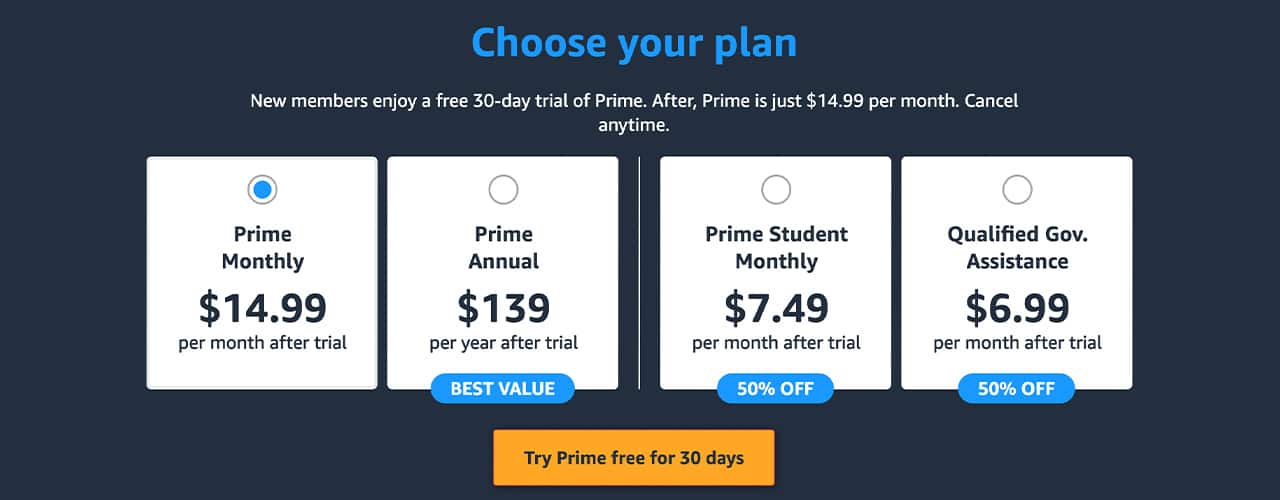
To manage your personal finances effectively, you must first understand the various pricing tiers Amazon offers. While the $139 annual fee is the headline figure, the actual cost of entry varies based on your financial status and payment preferences.
The Annual vs. Monthly Debate
The most common choice for consumers is between the $139 annual payment and the $14.99 monthly subscription. From a financial perspective, the annual plan is the clear winner for long-term users. At $14.99 per month, a member pays approximately $180 per year. By opting for the annual lump sum, you effectively save $41, which represents a nearly 23% “discount” on the service. If your cash flow allows for the upfront payment, the annual plan is a superior wealth-management move.
Discounted Tiers for Specific Demographics
Amazon offers significant subsidies for certain groups, which can drastically alter the ROI calculation:
- Prime Student: At $69 per year (or $7.49 per month), this is a 50% discount targeted at those in higher education. Given the academic need for books and supplies, this tier often pays for itself within the first few months.
- Prime Access: Designed for recipients of qualifying government assistance (such as SNAP or Medicaid), this tier costs $6.99 per month. For low-income households, the ability to access discounted groceries via Amazon Fresh and avoid the transportation costs of physical shopping can be a vital budgeting tool.
The Hidden Costs of Taxes and Inflation
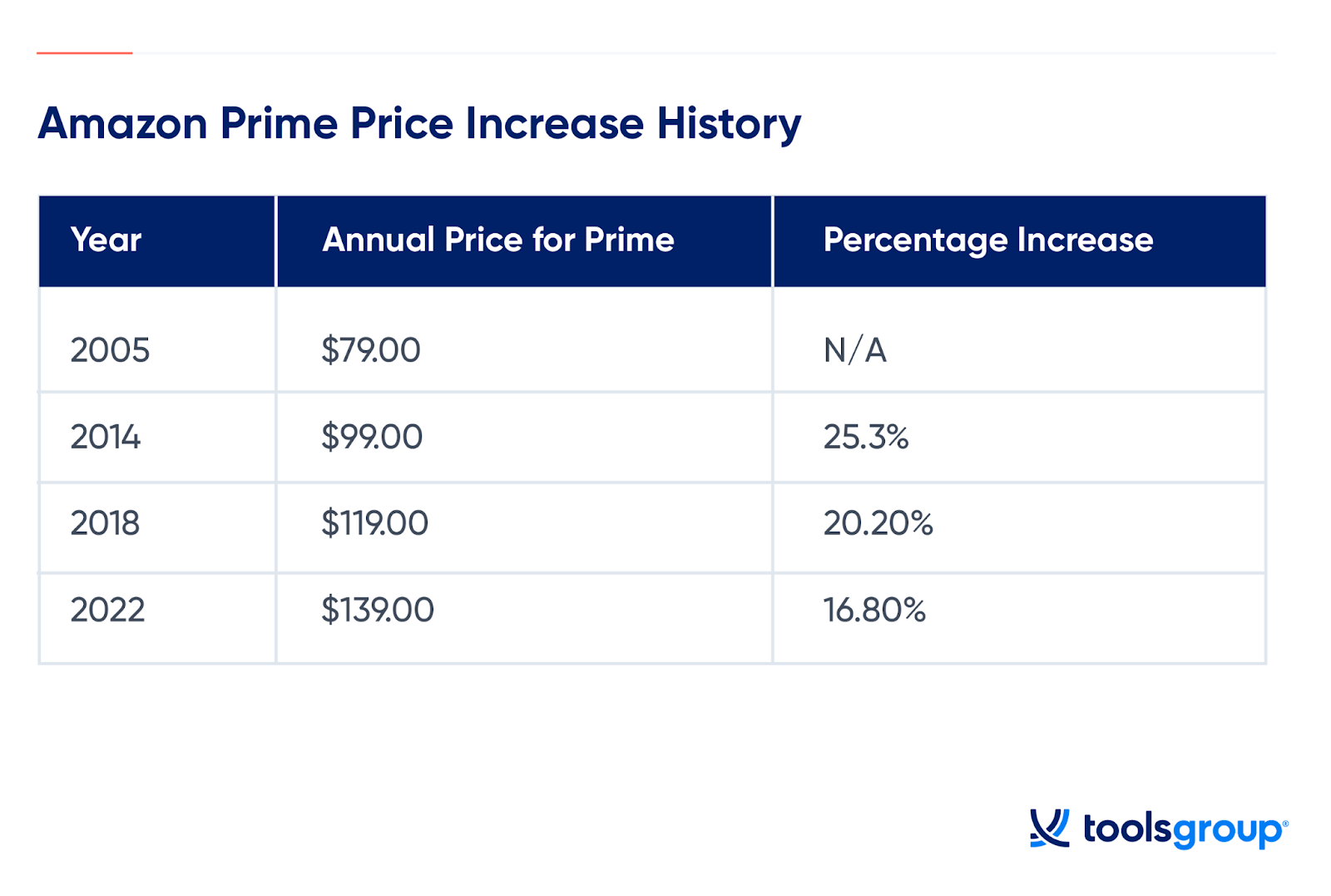
It is important to remember that the $139 price tag is often subject to state and local sales taxes, which can push the final cost closer to $150 in some jurisdictions. Furthermore, history shows that Amazon tends to raise the price of Prime every four to five years to account for rising logistics and content production costs. Factor these increments into your long-term financial planning.
2. Calculating the ROI: When Does the Membership Pay for Itself?
A core principle of personal finance is ensuring that every dollar spent generates more than a dollar in value. To determine the financial viability of Amazon Prime, you must calculate your “break-even point.”
Shipping Savings as a Primary Driver
The hallmark of Prime is “free” two-day, one-day, or same-day shipping. For non-members, shipping costs on Amazon typically range from $5 to $15 per order depending on speed and item size. If we use a conservative average of $8 per shipment, a member would need to place approximately 18 orders per year to cover the $139 membership fee through shipping savings alone. For frequent online shoppers, this break-even point is often reached within the first quarter of the year.
Digital Service Consolidation
Beyond logistics, Prime acts as an umbrella for several digital services that would otherwise require separate subscriptions:
- Prime Video: A standalone streaming service like Netflix or Max costs between $10 and $20 per month. If Prime Video replaces one of these services, it provides an annual value of roughly $120 to $240.
- Amazon Music Prime: While not as robust as the “Unlimited” version, it can replace a basic Spotify or Pandora subscription for casual listeners.
- Prime Reading and Photos: These provide value by replacing Kindle book purchases and cloud storage fees (like Google One or iCloud).
When you aggregate these services, a household that utilizes the full spectrum of Prime’s digital offerings can potentially save upwards of $400 per year in diverted subscription costs.
3. Advanced Financial Tools Within the Prime Ecosystem
For the strategic consumer, Amazon Prime is not just an expense; it is a platform for optimizing cash flow and earning rewards. By integrating specific financial tools, you can effectively negate the cost of the membership entirely.
The Amazon Prime Rewards Visa Signature Card
Perhaps the most powerful financial tool for Prime members is the co-branded credit card. This card offers 5% back on all Amazon.com and Whole Foods Market purchases. For a household that spends $3,000 a year on Amazon (roughly $250 a month on groceries, household essentials, and gifts), the 5% cash back yields $150. This cash back alone covers the $139 annual membership fee, making the entire suite of Prime benefits “free” from a net-cost perspective.
Subscribe & Save: Automated Budgeting
The “Subscribe & Save” program allows members to set up recurring deliveries for household staples (detergent, pet food, toiletries) in exchange for a discount of up to 15%. From a personal finance standpoint, this serves two purposes: it lowers the unit price of essential goods and helps with “zero-based budgeting” by making monthly expenses more predictable.
Prime Day and Exclusive Access
While often criticized as a driver of consumerism, Prime Day (and the subsequent “Big Smile” or “October” sales) offers legitimate opportunities for planned spending. By delaying the purchase of necessary high-ticket items—such as appliances, electronics, or furniture—until these sales events, members can realize savings that far exceed the annual membership cost. The key is “planned spending” rather than “impulse buying.”
4. The “Amazon Effect” on Personal Budgeting: Risks and Pitfalls
While the financial benefits are numerous, a professional analysis must also account for the psychological and behavioral risks associated with a Prime membership. The very convenience that makes Prime valuable can also be a detriment to a disciplined budget.
The Impulse Buy Trap
The “frictionless” nature of “Buy Now” buttons and one-click ordering is designed to bypass the cognitive “pause” that usually accompanies a financial transaction. Many Prime members find themselves ordering small, non-essential items simply because the shipping is free. Over a year, these $10 and $15 impulses can aggregate into thousands of dollars in “lifestyle creep” that undermines savings goals.
The Sunk Cost Fallacy
Once a consumer pays $139 upfront, they often feel a psychological pressure to “get their money’s worth.” This leads to a bias where the consumer prioritizes shopping on Amazon even when a local competitor or a different online retailer might offer a lower price. To maintain financial health, one must remain “platform-agnostic,” always checking third-party price trackers to ensure the “Prime price” is actually the best deal.
Subscription Fatigue and Underutilization
A significant percentage of Prime members use the shipping benefits but forget about the music, gaming, and reading perks. If you are only using Prime for shipping and you only order once a month, you are effectively paying a $11 premium per package. In this scenario, it is financially wiser to cancel the membership and simply hit the $35 minimum for free shipping on standard orders.
5. Strategic Alternatives: Comparing the Marketplace
To make an informed financial decision, one must look at the competitive landscape. Depending on your spending habits, other ecosystems might offer a better return on your capital.
Walmart+ vs. Amazon Prime
At $98 per year, Walmart+ is significantly cheaper than Amazon Prime. It offers similar free shipping benefits and includes a subscription to Paramount+. For households focused on grocery savings, Walmart’s lower base prices on many food items may provide a better overall financial outcome than Amazon’s 5% cash back.
The Warehouse Club Model
For large families, a Costco or Sam’s Club membership ($60–$120 per year) may offer better bulk pricing that outweighs the convenience of Amazon’s doorstep delivery. The “Money” savvy approach is to compare the “price per unit” across these platforms. Often, the most efficient financial strategy involves a hybrid approach: using a warehouse club for bulk staples and Amazon Prime for niche items and digital entertainment.

Final Assessment: Is the $139 Investment Justified?
From a personal finance perspective, Amazon Prime is rarely a “neutral” expense; it is either a high-yield tool or a wasteful leak in your budget.
If you are a frequent shopper who utilizes the 5% cash-back Visa, streams movies via Prime Video, and takes advantage of Subscribe & Save, the membership is one of the most cost-effective investments you can make in your lifestyle infrastructure. The consolidated value can easily exceed $500 annually against a $139 cost.
However, if your membership is a relic of “convenience” that leads to frequent impulse buys and underutilized digital services, the annual fee is a liability. The key to mastering your money in the age of Amazon is to treat the $139 not as a fee, but as a subscription to a financial ecosystem that requires active management to remain profitable. Audit your Amazon spending today: if the savings don’t outpace the $139 fee, your most profitable move might be to hit the “cancel” button.
aViewFromTheCave is a participant in the Amazon Services LLC Associates Program, an affiliate advertising program designed to provide a means for sites to earn advertising fees by advertising and linking to Amazon.com. Amazon, the Amazon logo, AmazonSupply, and the AmazonSupply logo are trademarks of Amazon.com, Inc. or its affiliates. As an Amazon Associate we earn affiliate commissions from qualifying purchases.