
Understanding the cost of car insurance is a crucial aspect of personal financial planning, and for many, Allstate is a prominent name that comes to mind. As one of the largest and most recognizable insurance providers in the United States, Allstate offers a wide array of coverage options. However, pinpointing an exact “average” cost is notoriously difficult, as car insurance premiums are highly personalized, fluctuating based on a multitude of factors unique to each driver, vehicle, and location. This article delves into the intricacies of Allstate’s car insurance pricing, exploring the variables that influence your premium, strategies for potentially lowering your costs, and how to navigate the process of obtaining an accurate quote.
Understanding the Pillars of Car Insurance Pricing
Before zeroing in on Allstate specifically, it’s essential to grasp the universal principles that govern car insurance costs across the industry. Premiums are not arbitrary; they are the result of sophisticated actuarial calculations designed to assess risk. Insurers aim to charge enough to cover potential claims and operational costs while remaining competitive.
Key Factors Influencing Premiums
Several demographic and behavioral data points significantly impact how an insurance company, including Allstate, calculates your premium. These factors collectively paint a picture of your likelihood to file a claim.
-
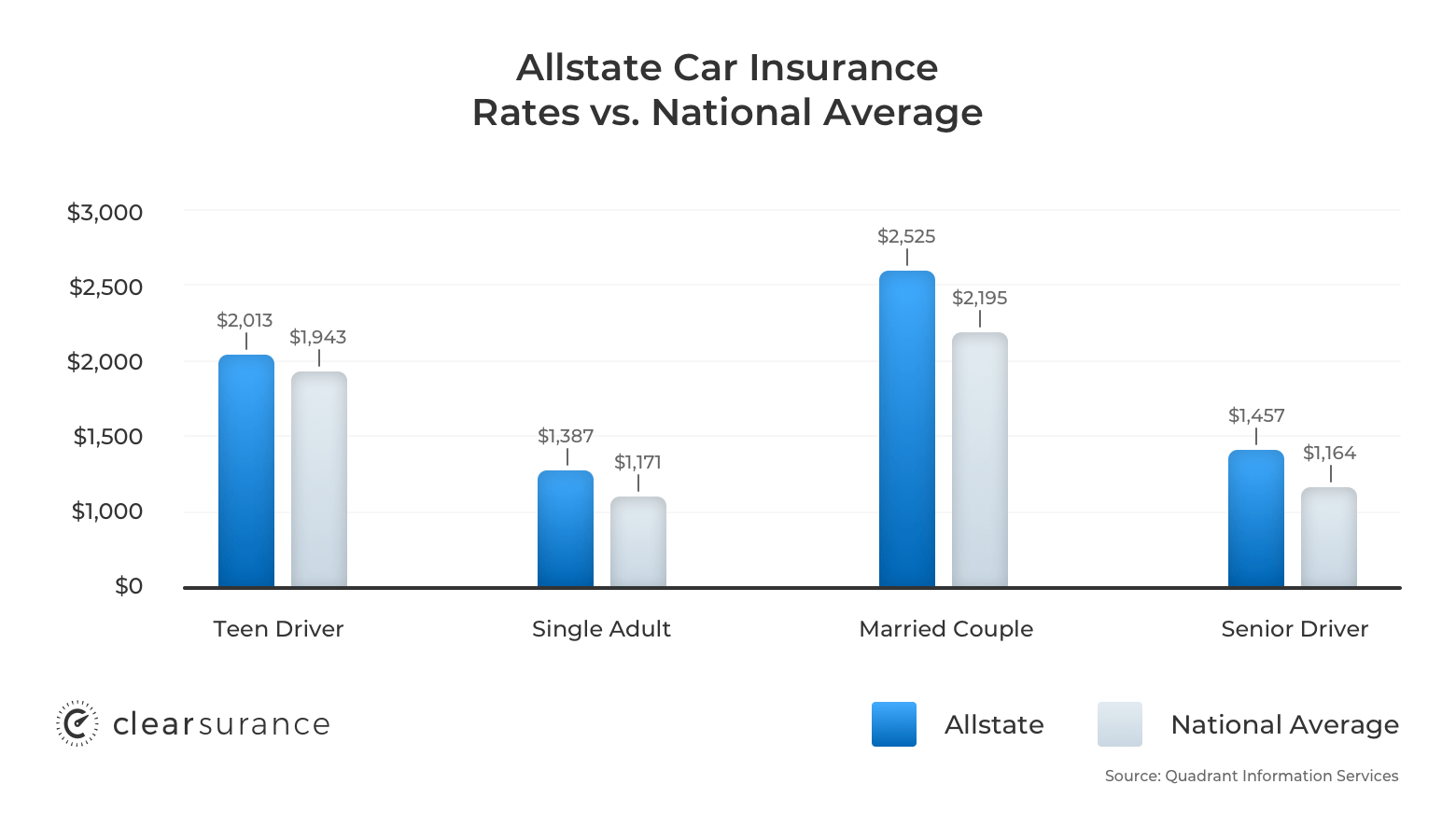
Driver’s Age and Experience: Young, inexperienced drivers (especially teenagers) typically face the highest premiums due to a statistically higher risk of accidents. As drivers gain experience and mature, rates generally decrease, assuming a clean driving record. Seniors may see rates creep up again as certain age-related risks emerge.
-
Driving Record: This is arguably the most significant determinant. A history of accidents, traffic violations (speeding tickets, DUIs), or past claims will almost certainly result in higher premiums. Conversely, a clean driving record often qualifies drivers for good driver discounts.
-
Vehicle Type: The make, model, year, and safety features of your car play a major role. More expensive cars to repair, vehicles with high theft rates, or high-performance sports cars typically cost more to insure. Vehicles with advanced safety features might qualify for discounts.
-
Location: Where you live and primarily park your car significantly influences your rate. Urban areas with higher traffic density, crime rates (especially car theft), and accident frequency often have higher premiums than rural or suburban areas. Even within a city, different ZIP codes can have varying rates.
-
Credit Score (in most states): Many insurers, including Allstate, use a credit-based insurance score as a predictive tool for claims likelihood. Statistical data suggests a correlation between higher credit scores and a lower probability of filing claims. While controversial, this practice is legal in most states.
-
Marital Status: Married individuals often receive lower rates, as statistics suggest they are less likely to be involved in accidents.
-
Annual Mileage: The more you drive, the higher your exposure to risk, and thus, potentially higher your premium.
The Role of Coverage Types and Limits
Beyond personal factors, the specific types and amounts of coverage you choose are direct drivers of your premium cost. Car insurance isn’t a single product but a bundle of different coverages.
-
Liability Coverage: This is the foundation and is legally required in almost every state. It covers damages (bodily injury and property damage) you cause to other people and their vehicles/property in an at-fault accident. Higher liability limits mean greater protection for you, but also a higher premium.
-
Collision Coverage: This pays for damages to your own vehicle resulting from a collision with another car or object, regardless of who is at fault. It’s optional if you own your car outright, but usually required by lenders if you have a loan or lease.
-
Comprehensive Coverage: This covers non-collision damage to your vehicle, such as theft, vandalism, fire, natural disasters, or hitting an animal. Also optional but often required by lenders.
-
Uninsured/Underinsured Motorist (UM/UIM): This protects you if you’re hit by a driver who has no insurance or insufficient insurance to cover your damages.
-
Medical Payments (MedPay) / Personal Injury Protection (PIP): These cover medical expenses for you and your passengers after an accident, regardless of fault. PIP is more extensive, covering lost wages and rehabilitation.
-
Add-ons: Allstate, like other insurers, offers various optional coverages like roadside assistance, rental car reimbursement, new car replacement, gap insurance, and custom parts and equipment coverage, all of which add to the overall cost.
The deductible you choose for collision and comprehensive coverage also impacts your premium. A higher deductible (the amount you pay out-of-pocket before insurance kicks in) typically results in a lower premium, as you’re taking on more of the initial risk.
Deconstructing Allstate’s Pricing Model
Allstate leverages these universal principles but also incorporates its own specific underwriting guidelines, discount structures, and technology to determine your final premium. Their strategy aims to attract a broad customer base while managing risk effectively.
Allstate’s Underwriting Process
Allstate’s underwriting department assesses all the data points mentioned above. They analyze your driving history, vehicle information, demographic details, and in most states, your credit-based insurance score. This sophisticated analysis helps them categorize you into a risk group and assign a base rate. They also consider the specific state regulations and minimum coverage requirements, ensuring compliance. Their process is designed to accurately predict the likelihood and potential cost of future claims, influencing how competitive their initial quote will be for you.
Available Discounts and Savings Opportunities
One of the most effective ways to lower your Allstate premium is to maximize the discounts for which you qualify. Allstate is known for offering a wide array of potential savings, which can significantly reduce your overall cost.
-
Multi-Policy Discount: Bundling your car insurance with other Allstate policies, such as homeowners, renters, condo, or life insurance, is often one of the most substantial discounts available.
-
Multi-Car Discount: Insuring more than one vehicle on the same policy with Allstate typically results in a discount for each vehicle.
-
Good Driver Discount: For drivers with a clean record (no accidents or violations for a specified period, often 3-5 years).
-
Safe Driving Club/Rewards: Allstate offers programs that reward safe driving habits.
-
New Car Discount: For insuring a brand-new vehicle.
-
Anti-Lock Brake & Anti-Theft Device Discounts: Cars equipped with these safety features may qualify for reduced rates.
-
Good Student Discount: High school or college students who maintain a certain GPA (e.g., B average or 3.0) can often qualify.
-
Passive Restraint Discount: For vehicles with factory-installed airbags and automatic seatbelts.
-
Payment Discounts: For paying your premium in full, setting up automatic payments, or choosing paperless billing.
-
Early Signing Discount: For purchasing your policy a certain number of days (e.g., 7-10 days) before your current policy expires.
-
Farm Bureau Member Discount: Members of certain organizations may be eligible for savings.
It’s crucial to ask about all available discounts when getting a quote, as some may not be automatically applied.
Allstate’s Snapshot®: Usage-Based Insurance
Allstate’s Snapshot® program is a prominent example of usage-based insurance (UBI), a technology-driven approach to personalize premiums further. Drivers can opt to use a mobile app or plug-in device that monitors driving habits such as:
-
Braking patterns: Hard braking events.
-
Speed: Driving at excessive speeds.
-
Time of day: Driving during high-risk hours (e.g., late-night).
-
Mileage: Total distance driven.
By participating in Snapshot®, safe drivers can earn significant discounts on their premiums. The premise is that drivers who demonstrate consistently safe habits pose less risk and should, therefore, pay less for their insurance. This program can be particularly beneficial for those who drive less frequently or maintain excellent driving practices. It’s important to note, however, that while Snapshot® can lead to savings, it can also potentially increase your rates if your driving habits are deemed high-risk.

The Allstate Quote Process: What to Expect
Obtaining an accurate quote from Allstate is the first step in understanding what you might pay. The process is straightforward, but thorough, ensuring all relevant factors are considered.
Gathering Necessary Information
To get a precise quote, you’ll need to provide comprehensive details. Be prepared to furnish information on:
-
Driver Information: Names, dates of birth, driver’s license numbers, and driving history (including any accidents or violations in the past 3-5 years) for all household members who will be on the policy.
-
Vehicle Information: Make, model, year, VIN (Vehicle Identification Number), current mileage, and primary use (e.g., commute, pleasure).
-
Current Insurance Information: Your current insurer and policy expiration date, which helps Allstate determine if you qualify for continuous coverage discounts.
-
Address: Your primary residence and garaging address for the vehicle.
-
Desired Coverage: The types of coverage (liability, collision, comprehensive, etc.) and the limits/deductibles you prefer. If you’re unsure, Allstate agents can help you understand your state’s minimum requirements and recommend appropriate coverage levels based on your financial situation.
Online vs. Agent Quotes
Allstate offers multiple convenient channels for obtaining a quote, each with its own advantages.
-
Online Quote: Allstate’s website provides a user-friendly platform where you can input your information and receive a preliminary quote relatively quickly. This is ideal for those who prefer to self-serve and compare options at their own pace. Online tools often allow for easy adjustment of coverage limits and deductibles to see how they impact the premium.
-
Local Allstate Agent: Working with a local agent offers a personalized experience. Agents can provide expert advice, explain complex coverage options, identify all potential discounts, and tailor a policy specifically to your needs. They can also assist with the claims process should an accident occur. This option is beneficial for those who prefer direct interaction and professional guidance.
-
Phone Quote: You can also call Allstate directly to speak with a representative who can guide you through the quoting process over the phone.
Regardless of the method, ensure you provide accurate information to receive the most realistic quote. Discrepancies could lead to policy adjustments or even cancellation later.
Interpreting Your Allstate Quote
When you receive your quote, it will break down the cost for each type of coverage and list any applied discounts. Take the time to review it carefully:
-
Verify Coverage Limits: Ensure the liability limits, collision, and comprehensive deductibles align with your expectations and financial comfort level.
-
Check for Discounts: Confirm that all applicable discounts have been included. If you believe you qualify for one that isn’t listed, inquire about it.
-
Understand Total Cost: Look at the total premium for the policy term (usually six or twelve months) and understand the payment schedule.
-
Compare Apples to Apples: If you’re comparing Allstate’s quote with other insurers, make sure you’re comparing identical coverage limits, deductibles, and endorsement options. A lower premium from another provider might signify less coverage.
Strategies for Potentially Lowering Your Allstate Premium
Beyond discounts, several proactive steps can help reduce your overall car insurance expenses with Allstate or any other insurer.
Adjusting Deductibles and Coverage Limits
-
Raise Your Deductibles: If you have a healthy emergency fund, consider increasing your collision and comprehensive deductibles. Moving from a $500 to a $1,000 deductible can significantly lower your premium, but ensure you can comfortably pay that higher amount out-of-pocket if a claim arises.
-
Review Coverage Levels: As your car ages or its value depreciates, you might consider dropping collision and/or comprehensive coverage if the annual premium for these coverages becomes a significant percentage of the car’s actual cash value. This is particularly relevant for older vehicles. Also, ensure your liability limits are adequate but not excessively high if you have limited assets.
Bundling Policies
As mentioned, bundling is one of the most impactful ways to save. If you have homeowners, renters, life, or other insurance needs, getting them all through Allstate can unlock substantial savings on your auto policy and often on the other policies as well. It also simplifies your insurance management, as you’re dealing with a single provider.
Improving Your Driving Record and Credit Score
These are long-term strategies but yield significant financial benefits.
-
Maintain a Clean Driving Record: Avoid accidents and traffic violations at all costs. Over time, a clean record will qualify you for the best rates and discounts. Consider taking a defensive driving course, which might also earn you a discount, in addition to making you a safer driver.
-
Improve Your Credit Score: If your credit score is impacting your rates, focus on improving it. Paying bills on time, reducing debt, and monitoring your credit report can lead to a better credit score, which may translate to lower insurance premiums (in states where credit is a factor).

The Bottom Line
“How much is Allstate car insurance?” has no single answer, but it’s clear that your premium will be a reflection of a comprehensive risk assessment, your chosen coverage, and the discounts you qualify for. Allstate, with its extensive network of agents, robust online tools, and innovative programs like Snapshot®, strives to offer competitive rates to a diverse customer base.
To find out what you would pay, the most effective approach is to gather your information and obtain a personalized quote directly from Allstate, either online, over the phone, or through a local agent. Compare that quote not just on price, but also on the value of the coverage, customer service reputation, and financial strength of the insurer. By understanding the contributing factors and actively seeking out savings opportunities, you can effectively manage your car insurance costs and secure the financial protection you need for the road ahead.
aViewFromTheCave is a participant in the Amazon Services LLC Associates Program, an affiliate advertising program designed to provide a means for sites to earn advertising fees by advertising and linking to Amazon.com. Amazon, the Amazon logo, AmazonSupply, and the AmazonSupply logo are trademarks of Amazon.com, Inc. or its affiliates. As an Amazon Associate we earn affiliate commissions from qualifying purchases.