
The question “how much is a share of Amazon stock?” is one of the most frequently posed by both seasoned investors and curious newcomers alike. It’s a seemingly simple query that, in reality, unlocks a complex world of financial markets, valuation dynamics, and investment strategies. While a precise, static answer is impossible due to the continuous fluctuations of the stock market, understanding how to find this information, what influences it, and what it means for potential investors is crucial. This article will delve into the multifaceted nature of Amazon’s stock price, offering insights into its history, valuation, and what potential investors should consider when eyeing one of the world’s most influential companies.

Understanding Amazon’s Stock Price: More Than Just a Number
The price of a single share of Amazon (AMZN) stock at any given moment is a snapshot, a dynamic figure constantly moving in response to a myriad of factors. It’s a reflection of supply and demand, investor sentiment, and the underlying perceived value of the company itself.
The Dynamic Nature of Stock Valuation
Unlike a fixed price tag on a product, a stock’s value is subject to constant change. Every second the market is open, bids and asks for AMZN shares are being processed, leading to a perpetual ebb and flow in its price. This dynamism is driven by millions of individual and institutional decisions, each contributing to the market’s collective assessment of Amazon’s present and future prospects. It’s this living, breathing characteristic that makes stock market investing both exciting and challenging. One moment, news of a robust earnings report might send the stock soaring; the next, a broader market downturn or a specific regulatory concern could cause it to dip.
Factors Influencing AMZN’s Daily Price
Several key factors play a pivotal role in shaping Amazon’s daily stock price movements:
- Company Earnings and Financial Reports: Quarterly and annual reports detailing revenue, profit margins, and future guidance are monumental. Strong performance or optimistic forecasts typically boost investor confidence, leading to higher demand and price appreciation. Conversely, missed expectations can trigger sell-offs.
- Economic Conditions: Broader economic indicators like GDP growth, inflation rates, interest rate changes by central banks, and consumer spending trends can significantly impact discretionary spending, which in turn affects Amazon’s e-commerce and cloud computing segments.
- Industry Trends and Competition: Developments within the e-commerce, cloud computing (AWS), digital advertising, and entertainment sectors directly influence Amazon’s market position. Intense competition or disruptive innovation from rivals can put pressure on its stock price.
- News and Market Sentiment: Major announcements (new products, acquisitions, leadership changes), geopolitical events, regulatory scrutiny, and even social media trends can sway investor sentiment, leading to rapid price changes.
- Analyst Ratings and Recommendations: Investment analysts frequently issue ratings (buy, sell, hold) and price targets. Upgrades or downgrades can influence institutional investors and individual traders.
- Broad Market Performance: Often, even a strong company like Amazon can see its stock decline if the overall market (e.g., NASDAQ, S&P 500) experiences a downturn, and vice-versa.
Accessing Real-Time Stock Information
To find the current price of a share of Amazon stock, you can easily use several reliable sources:
- Financial News Websites: Major outlets like Bloomberg, Reuters, The Wall Street Journal, Yahoo Finance, and Google Finance provide real-time or near real-time quotes.
- Brokerage Platforms: If you have an investment account, your broker’s platform will display the current price, often with advanced charting tools.
- Stock Market Apps: Many mobile applications offer quick access to live stock prices and market data.
When checking, look for the ticker symbol AMZN. Be aware that prices displayed might have a slight delay (typically 15-20 minutes) if you’re not using a premium real-time data service.
A Historical Perspective: Amazon’s Growth and Stock Performance
Amazon’s journey from an online bookseller to a global technology and logistics behemoth is reflected dramatically in its stock performance, offering a powerful lesson in long-term investing.
From IPO to Market Dominance: Key Milestones
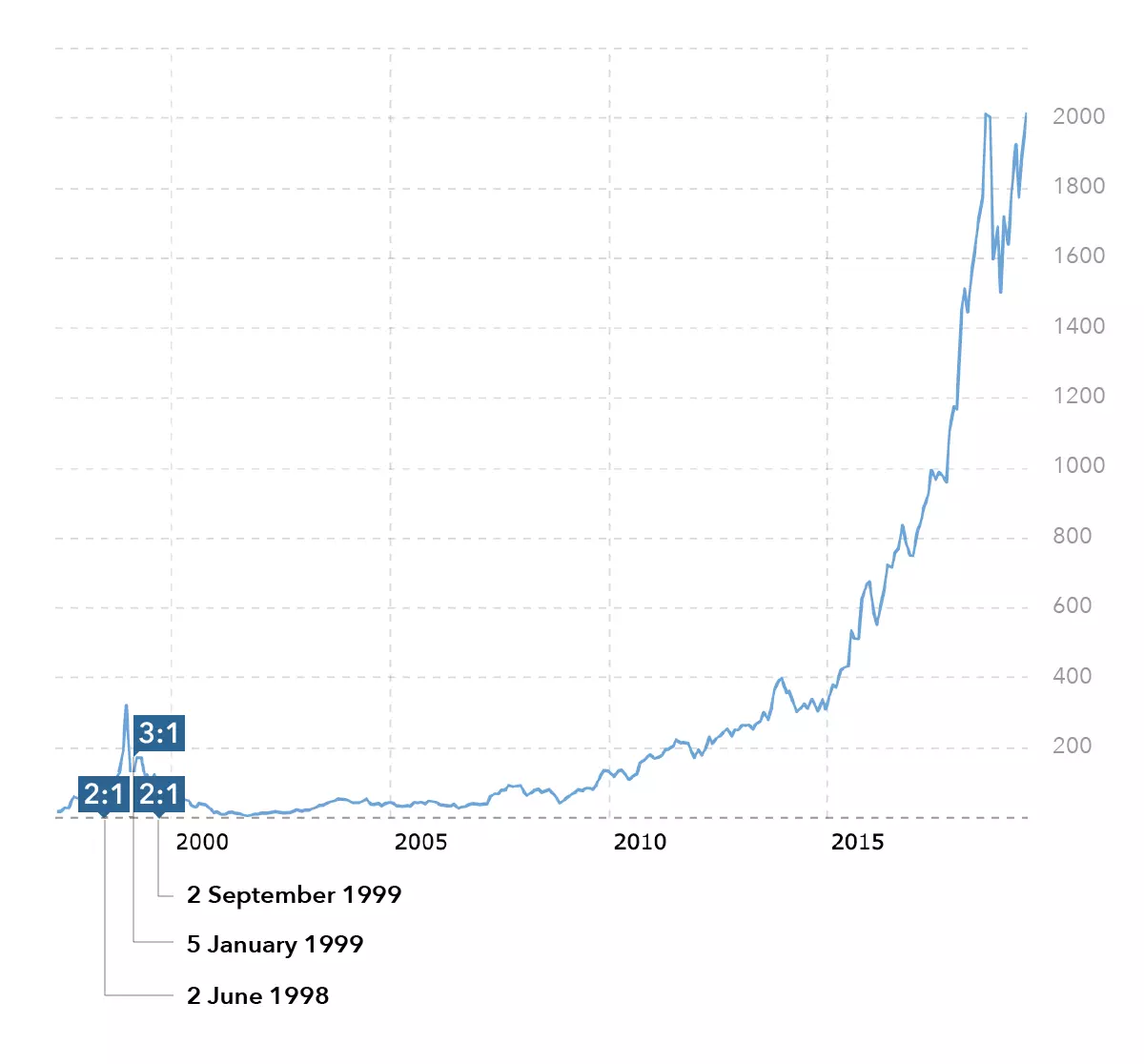
Amazon went public on May 15, 1997, at an initial public offering (IPO) price of $18.00 per share. Since then, it has undergone several stock splits, making the original adjusted IPO price much lower (around $1.50 per share on a split-adjusted basis). Early investors who held onto their shares have witnessed an astronomical return on investment.
Key milestones that fueled this growth include:
- Expansion beyond books: Into music, videos, electronics, and a vast array of consumer goods.
- Launch of Amazon Prime (2005): Revolutionizing e-commerce with fast shipping and exclusive content.
- Creation of Amazon Web Services (AWS) (2006): Emerging as the dominant cloud computing provider, a highly profitable segment.
- Introduction of Kindle (2007) and Echo/Alexa (2014): Pioneering new product categories and establishing a presence in consumer electronics.
- Acquisitions: Strategic purchases like Whole Foods Market (2017) expanding its physical retail footprint.
Each of these innovations and expansions added new revenue streams and strengthened Amazon’s competitive moat, consistently increasing its perceived value in the eyes of the market.
The Impact of Stock Splits on Accessibility
Amazon has executed four stock splits throughout its history, with the most recent being a 20-for-1 split in June 2022. A stock split divides existing shares into multiple new shares, reducing the price per share proportionally but not altering the total value of an investor’s holdings. For example, in a 20-for-1 split, if you owned one share at $2,000, you would then own 20 shares at $100 each.
The primary reason for stock splits is to make shares more accessible and attractive to a broader range of investors, particularly individual retail investors who might find a multi-thousand-dollar share price intimidating or unaffordable for smaller portfolios. While splits don’t fundamentally change the company’s valuation, they can increase liquidity and psychological appeal.
Analyzing Past Trends for Future Insights
While past performance is never a guarantee of future results, examining Amazon’s historical stock chart can offer valuable insights. It reveals periods of rapid growth, consolidation, and occasional corrections. Investors often look for trends in volatility, volume, and how the stock reacts to major news events. Understanding this historical context helps in forming a more informed opinion about the stock’s potential behavior going forward, though fundamental analysis of the business itself remains paramount.
Investing in Amazon: What Potential Investors Should Consider
Deciding whether to invest in Amazon involves careful consideration beyond just its current share price. It requires a deeper dive into its business, financial health, and how it fits into your personal investment strategy.
Fundamental Analysis: Business Model and Financial Health
Fundamental analysis involves evaluating a company’s intrinsic value by examining its financial statements and business model. For Amazon, this means:
- Diverse Revenue Streams: Understanding its key segments: E-commerce (online stores, third-party seller services, subscriptions), AWS (cloud computing), Advertising, and Other (physical stores, Amazon Pharmacy). AWS is particularly scrutinized for its high-profit margins.
- Profitability and Margins: Analyzing net income, operating income, and profit margins. Despite massive revenues, Amazon has sometimes prioritized growth and reinvestment over immediate high-profit margins, though this has shifted.
- Cash Flow: Strong free cash flow is vital for funding growth, acquisitions, and managing debt.
- Debt Levels: Assessing its balance sheet for manageable debt, especially in relation to its assets and earnings.
- Management and Competitive Advantage: Evaluating the leadership team’s vision, innovation capabilities, and Amazon’s significant competitive moats (e.g., logistics network, brand loyalty, AWS dominance).
Technical Analysis: Charting and Market Sentiment
Technical analysis focuses on historical price and volume data to predict future price movements. While some investors rely solely on fundamentals, others use technical indicators to time their entries and exits. This might involve:
- Charting Patterns: Identifying patterns like head and shoulders, double tops/bottoms, or triangles that might signal reversals or continuations.
- Support and Resistance Levels: Areas where the stock price has historically found difficulty breaking above (resistance) or falling below (support).
- Moving Averages: Using indicators like 50-day or 200-day moving averages to identify trends and potential buy/sell signals.
- Volume: High trading volume accompanying price movements can indicate stronger conviction behind those moves.
Diversification and Risk Management in Your Portfolio
Investing in a single stock, even one as robust as Amazon, carries inherent risks. A core principle of sound investing is diversification – spreading your investments across various assets, industries, and geographies to mitigate risk. While Amazon might be a significant holding, it should ideally be part of a broader, well-balanced portfolio that aligns with your risk tolerance and financial goals. Never invest more than you can afford to lose, and consider Amazon as one component of your overall financial strategy, not the entirety of it.
The Mechanics of Buying Amazon Stock
Once you’ve decided to invest, the process of actually buying shares is relatively straightforward, thanks to modern online brokerage platforms.
Choosing a Brokerage Account
The first step is to open an investment account with a reputable brokerage firm. Many online brokers cater to individual investors, offering low or zero-commission trading. When choosing, consider factors like:
- Fees and Commissions: Look for platforms with low or no trading fees.
- Account Minimums: Some brokers have minimum deposit requirements, though many are now $0.
- Available Investments: Ensure they offer access to U.S. stocks and ETFs.
- Research Tools and Education: Good brokers provide resources to help you make informed decisions.
- Customer Service: Reliable support is invaluable, especially for new investors.
Popular choices include Charles Schwab, Fidelity, Vanguard, E*TRADE, and newer fintech platforms like Robinhood or M1 Finance.
Placing a Buy Order: Market vs. Limit Orders
Once your account is funded, you can place an order to buy AMZN shares:
- Market Order: This instructs your broker to buy shares immediately at the best available current price. While it guarantees execution, the exact price might fluctuate slightly from what you saw moments before, especially in volatile markets.
- Limit Order: This allows you to specify the maximum price you’re willing to pay per share. Your order will only be executed if the stock’s price falls to or below your specified limit. This gives you more control over the entry price but doesn’t guarantee your order will be filled if the stock never reaches your limit.
For long-term investors, a market order is often acceptable for highly liquid stocks like Amazon, but a limit order can be prudent if you’re trying to hit a specific price point.
Fractional Shares: Making Investing More Accessible
Many brokerage firms now offer fractional share investing. This innovation allows you to buy a portion of a share rather than a whole share. For instance, instead of buying one full share of Amazon at, say, $150, you could invest $50 and own 0.33 of a share. This significantly lowers the barrier to entry for expensive stocks like Amazon, allowing investors with smaller capital to build diversified portfolios. It’s an excellent option for dollar-cost averaging, where you invest a fixed amount regularly, regardless of the share price.
Beyond the Share Price: The Broader Investment Landscape
Understanding the share price is just the beginning. A holistic view of investing in Amazon involves grasping its role within the broader financial ecosystem and considering long-term implications.
Dividends vs. Growth Stocks: Amazon’s Approach
Amazon is considered a “growth stock.” Growth companies typically reinvest most, if not all, of their earnings back into the business to fuel further expansion, innovation, and market share capture. As a result, Amazon has historically not paid dividends to its shareholders. Investors in growth stocks like Amazon primarily seek returns through capital appreciation – the increase in the stock’s price over time. In contrast, “value stocks” or “income stocks” often pay regular dividends, providing a steady stream of income to shareholders. When considering AMZN, be aware that your returns will be solely tied to the stock’s performance in the market.
Taxation on Stock Investments
Understanding the tax implications of stock investments is crucial. When you sell shares of Amazon for a profit, you’ll generally incur capital gains tax.
- Short-Term Capital Gains: If you hold the shares for one year or less, the profit is taxed at your ordinary income tax rate, which can be higher.
- Long-Term Capital Gains: If you hold the shares for more than one year, the profit is taxed at a more favorable long-term capital gains rate.
Different rules apply to losses, and specific tax situations can vary based on your jurisdiction and individual circumstances. Consulting with a tax advisor is always recommended.
Long-Term vs. Short-Term Investment Strategies
Amazon’s stock has historically rewarded long-term investors. A “buy and hold” strategy, where you purchase shares with the intention of holding them for several years (or even decades), has allowed many to benefit from the company’s compounding growth. Short-term trading, which involves buying and selling stocks frequently to capitalize on small price movements, is much riskier and often less successful for individual investors. Given Amazon’s established position and continued innovation, many financial advisors advocate for a long-term perspective when considering an investment in AMZN.

Conclusion
The question “how much is a share of Amazon stock?” provides a gateway into the intricate world of financial markets. While the exact figure is a fleeting snapshot, understanding the dynamic forces that shape it, Amazon’s impressive history of growth, and the practical steps involved in investing are essential for anyone considering a stake in this global powerhouse. Investing in Amazon, like any investment, requires diligence, a clear understanding of your financial goals, and a commitment to a well-diversified, long-term strategy. By doing your homework and adopting a thoughtful approach, you can navigate the exciting opportunities that the stock market, and companies like Amazon, present.
aViewFromTheCave is a participant in the Amazon Services LLC Associates Program, an affiliate advertising program designed to provide a means for sites to earn advertising fees by advertising and linking to Amazon.com. Amazon, the Amazon logo, AmazonSupply, and the AmazonSupply logo are trademarks of Amazon.com, Inc. or its affiliates. As an Amazon Associate we earn affiliate commissions from qualifying purchases.