
For many individual investors, the world of cryptocurrency often feels like a high-stakes arena reserved for the wealthy or the technologically elite. When the price of a single Bitcoin is quoted in the tens of thousands of dollars, the average person may feel priced out before they even begin. However, the foundational genius of Bitcoin lies in its divisibility. You do not need to buy a whole Bitcoin any more than you need to buy a whole bar of gold to own the asset. The question “how much is 100 dollars in Bitcoins” is the starting point for millions of retail investors looking to enter the digital asset space.

In the context of personal finance and modern wealth building, a $100 investment represents a low-risk gateway into an asset class that has historically outperformed traditional markets over the long term. To understand what that $100 gets you, one must look past the “whole coin” bias and understand the mechanics of Satoshi-level accounting, the impact of market volatility, and the strategic importance of micro-investing.
Understanding the Value of $100 in the Bitcoin Ecosystem
The value of $100 in Bitcoin is a moving target, shifting by the minute as the global market seeks equilibrium. Unlike a fiat currency stored in a savings account, where $100 remains $100 (minus the erosion of inflation), $100 in Bitcoin is a claim on a specific percentage of the total 21 million coins that will ever exist.
The Concept of Satoshis (Sats)
To accurately answer how much Bitcoin $100 buys, we must introduce the “Satoshi.” Named after Bitcoin’s pseudonymous creator, Satoshi Nakamoto, a Satoshi (or “Sat”) is the smallest unit of Bitcoin. One Bitcoin is divisible down to eight decimal places, meaning every Bitcoin consists of 100,000,000 Satoshis.
When you invest $100, you are likely purchasing hundreds of thousands of Satoshis. For example, if Bitcoin is trading at $50,000, your $100 would purchase 0.002 BTC, which is equivalent to 200,000 Satoshis. As the price of Bitcoin increases, the number of Satoshis your $100 can buy decreases. In the personal finance community, “stacking sats” has become a popular mantra, emphasizing the accumulation of these small units over time rather than focusing on the daunting price of a full coin.
Why Volatility Defines Your $100 Investment
Bitcoin is famous—or perhaps infamous—for its price volatility. This volatility is a double-edged sword for the $100 investor. On one hand, a sudden 10% market correction means your $100 buys 10% more Bitcoin than it did the day before. On the other hand, high volatility means that the purchasing power of that $100 can shift significantly during the time it takes to sign up for an exchange and execute a trade.
From a strategic investment standpoint, volatility is the price an investor pays for the potential of outsized returns. While a $100 investment in a traditional S&P 500 index fund might grow by 7-10% in a year, Bitcoin has historically seen moves of that magnitude in a single week. Understanding that your $100 is buying a volatile “share” of a limited supply is crucial for maintaining the emotional discipline required for crypto investing.
The Mechanics of Buying $100 Worth of Bitcoin
Once you decide to allocate $100 to Bitcoin, the practical application involves navigating exchanges, understanding fee structures, and managing the “spread.” For a small-scale investor, these technicalities can significantly impact the final amount of Bitcoin that actually lands in your digital wallet.
Choosing the Right Exchange
The platform you choose to facilitate your $100 purchase will dictate your user experience and your cost basis. Major exchanges like Coinbase, Kraken, and Binance offer “Simple Buy” options where you can enter $100 and click buy. However, these convenient features often come with higher fees.
For the budget-conscious investor, using the “Advanced” or “Pro” trading interfaces on these same platforms can lower costs. These interfaces allow you to set “limit orders,” where you specify the exact price you are willing to pay. While it may seem intimidating to look at order books and candlestick charts, the savings in fees can mean the difference between starting with $96 worth of Bitcoin or $99.50 worth of Bitcoin.
Fees and Their Impact on Small Investments
Fees are the silent killer of small-scale investments. If an exchange charges a flat fee of $2.99 for a $100 purchase, you are effectively starting your investment with a 3% loss. In the world of personal finance, a 3% “load” is considered very high.
There are three types of costs to monitor:
-
Transaction Fees: The fee charged by the exchange to process your order.
-
The Spread: The difference between the buy price and the sell price. Some “fee-free” apps bake their profit into a wider spread, meaning you pay a higher price per Bitcoin than the current market average.
-
Network Fees (Withdrawal Fees): If you intend to move your $100 of Bitcoin to a private wallet for security, you must pay a network fee to the Bitcoin miners. During times of high network congestion, this fee could be $5, $10, or even more, which can represent a significant portion of a $100 investment.
Strategic Approaches to a $100 Bitcoin Portfolio
Investing $100 into Bitcoin shouldn’t be a random act of speculation. To maximize the utility of this capital, investors should apply proven financial strategies that mitigate risk and capitalize on the unique properties of digital assets.
Dollar-Cost Averaging (DCA)
One of the most effective ways to handle $100 is not to spend it all at once. Dollar-Cost Averaging involves breaking that $100 into smaller increments—perhaps $25 every week for a month. By doing this, you hedge against the risk of buying a “local top.”
If the price drops after your first $25 purchase, your next $25 will buy more Satoshis, lowering your average cost basis. DCA turns volatility into an advantage, ensuring that you don’t need to perfectly time the market to see long-term gains. Many modern financial apps now allow you to automate this process, making it a “set and forget” strategy for building wealth.
Long-term Holding vs. Speculation
A $100 investment is an ideal “learning capital” amount. It is enough to feel the stakes of the market but not so much that a decline would jeopardize your financial stability. The most successful Bitcoin investors generally fall into the “HODL” category—an acronym for “Hold On for Dear Life.”
In the money niche, time in the market is almost always superior to timing the market. Treating your $100 Bitcoin purchase as a 5-to-10-year investment allows the deflationary nature of Bitcoin to work in your favor. As the global supply of fiat currency increases, the fixed supply of Bitcoin (21 million) makes each Satoshi more scarce. This is the “digital gold” thesis that many personal finance experts use to justify a small allocation to crypto.
Risks and Security for the Entry-Level Investor
Even with a relatively small sum like $100, security should be a primary concern. The digital nature of Bitcoin means that if you lose access to your coins, they are gone forever. There is no “forgot password” button for the blockchain.
Wallet Security: Hot vs. Cold Storage
When you buy $100 of Bitcoin on an exchange, the exchange holds the “private keys” on your behalf. This is known as custodial storage. For $100, many investors find this acceptable due to the ease of use. However, as your investment grows, you may want to move your funds to a private wallet.
-
Hot Wallets: These are apps on your phone or computer. They are convenient but connected to the internet, which poses a slight security risk.
-
Cold Storage (Hardware Wallets): These are physical devices that keep your keys offline. While a hardware wallet might cost $60-$100 itself, it is the gold standard for security. For a single $100 investment, a hardware wallet may not be cost-effective, but it becomes essential as your portfolio expands.
Market Risks and Emotional Discipline
The greatest risk to a $100 investment is often the investor’s own psychology. It is common for new investors to check the price every hour. If the $100 drops to $80, there is a temptation to sell out of fear. Conversely, if it rises to $150, there is a temptation to “take profits” too early.
Professional financial planning suggests that crypto should be a portion of a diversified portfolio. By viewing your $100 as a “speculative venture” or a “long-term hedge,” you can detach your emotions from the daily price action.

The Future Outlook: What Can $100 Become?
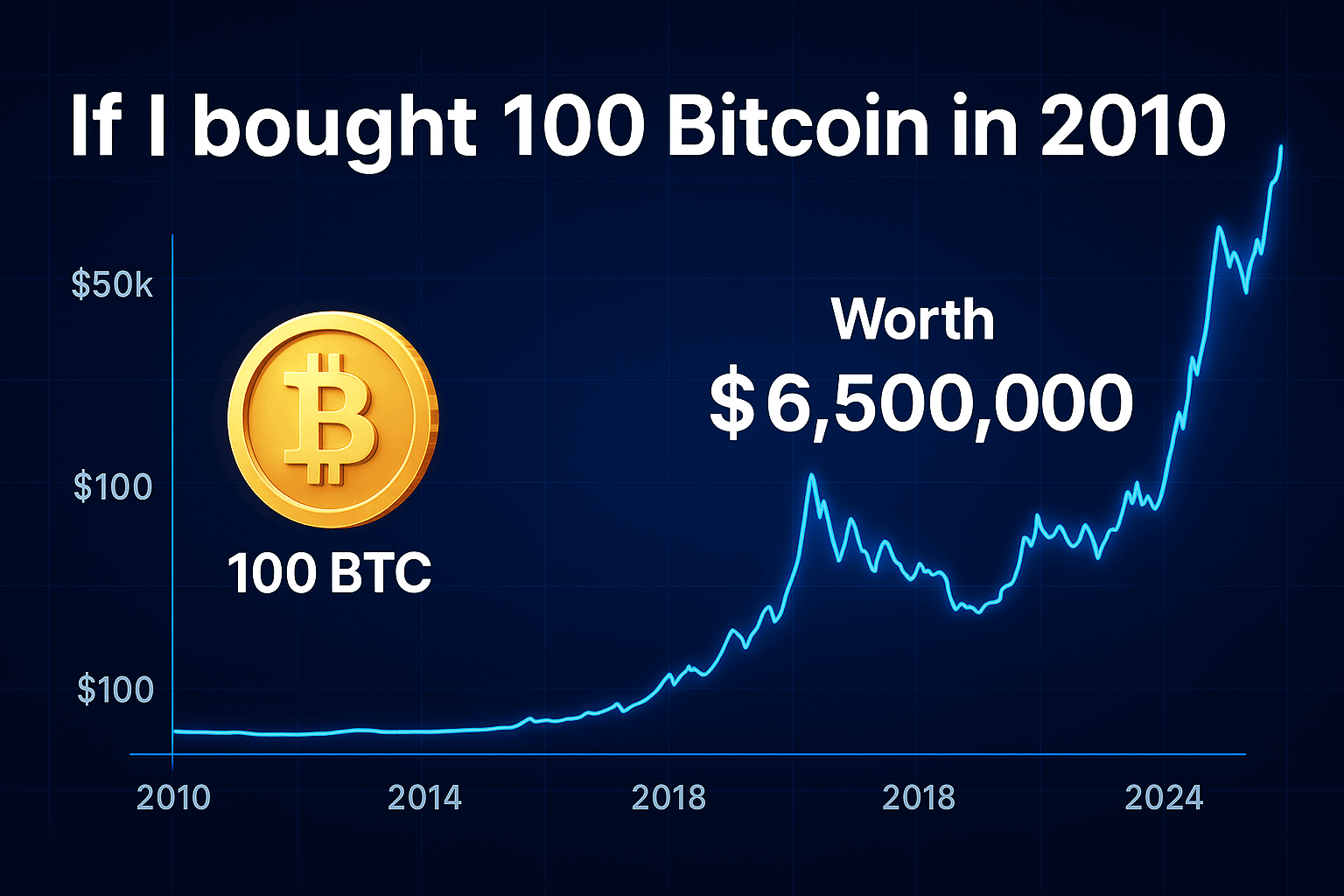
To understand the potential of $100 in Bitcoin, one must look at the historical trajectory. A decade ago, $100 would have purchased hundreds of Bitcoins. Five years ago, it would have purchased a significant fraction of one. Today, it buys a handful of Satoshis.
The “Money” perspective on Bitcoin is focused on the future of global liquidity. As institutional adoption grows through Spot ETFs and corporate balance sheet allocations, the “scarcity premium” of Bitcoin is expected to rise. While past performance is never a guarantee of future results, the mathematical framework of Bitcoin—a halving of new supply every four years—creates a supply-demand imbalance that has historically pushed prices upward.
A $100 investment today is more than just a financial transaction; it is an educational journey into the future of money. It teaches the investor about digital scarcity, decentralized networks, and the importance of self-sovereignty in finance. Whether that $100 turns into $1,000 or remains a modest entry point, the value of the financial literacy gained in the process often outweighs the dollar amount itself.
aViewFromTheCave is a participant in the Amazon Services LLC Associates Program, an affiliate advertising program designed to provide a means for sites to earn advertising fees by advertising and linking to Amazon.com. Amazon, the Amazon logo, AmazonSupply, and the AmazonSupply logo are trademarks of Amazon.com, Inc. or its affiliates. As an Amazon Associate we earn affiliate commissions from qualifying purchases.