
In the modern financial landscape, digital transactions and peer-to-peer payment apps have become the standard for daily commerce. However, there are still specific, high-stakes scenarios—such as closing on a home, purchasing a vehicle from a private seller, or satisfying a legal settlement—where a standard personal check or a digital transfer simply will not suffice. In these instances, a bank check, more formally known as a cashier’s check, becomes an essential financial tool.
For customers of Bank of America, one of the largest financial institutions in the United States, understanding the costs, requirements, and procedures for obtaining a bank check is vital for seamless financial management. Currently, the standard fee for a cashier’s check at Bank of America is $15. While this may seem like a straightforward administrative cost, the nuances of account tiers, delivery methods, and the inherent security of the instrument merit a deeper exploration.
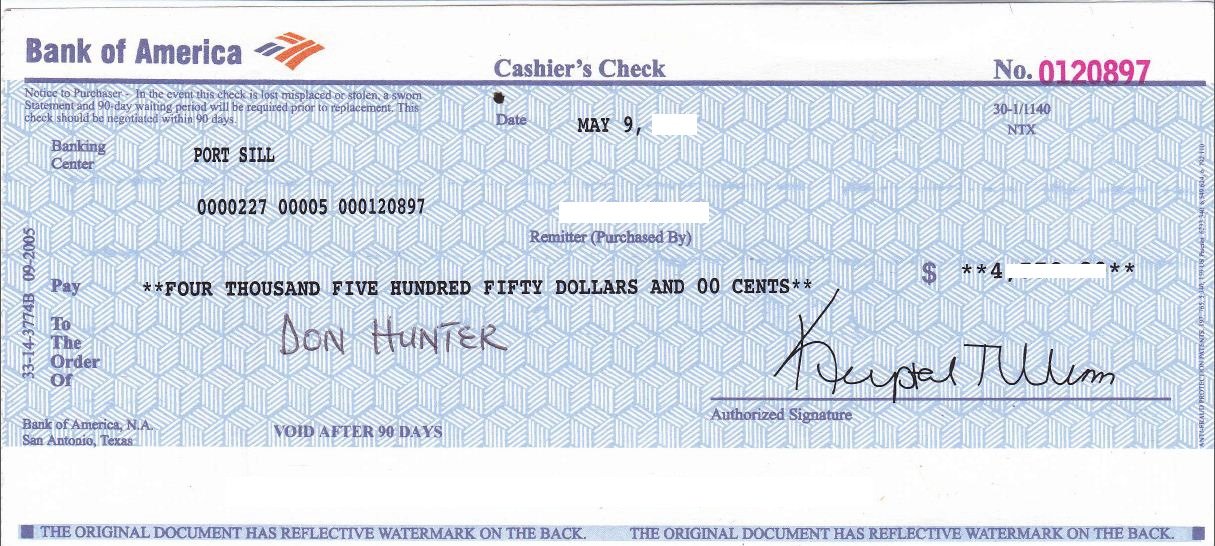
Understanding the Cost Structure and Account Tier Benefits
The $15 fee for a cashier’s check at Bank of America is a standard industry rate, comparable to other “Big Four” banks. This fee covers the bank’s guarantee of funds, the administrative labor of the teller, and the specialized paper and printing technology used to prevent forgery. However, personal finance is rarely “one size fits all,” and Bank of America offers several paths to mitigate or waive this cost entirely based on your relationship with the institution.
The Advantage Banking Tiers
Bank of America’s primary checking product, Bank of America Advantage Banking, is divided into three distinct tiers. Each has different rules regarding cashier’s check fees:
-
Advantage SafeBalance Banking: This is a low-cost, checkless account designed for those who want to avoid overdraft fees. Because it is a basic tier, users typically pay the full $15 fee for any cashier’s check requested.
-
Advantage Plus Banking: As the most common account type, it offers more flexibility. However, for the majority of users in this tier, the $15 fee still applies unless they meet specific Preferred Rewards criteria.
-
Advantage Relationship Banking: This is the premium tier for clients who maintain higher balances. One of the primary perks of this account is the waiver of fees for certain banking services, including the issuance of cashier’s checks. If you maintain a combined balance of $10,000 or more across your accounts, this $15 fee is typically waived, making it a valuable tool for those frequently involved in high-value transactions.
The Impact of the Preferred Rewards Program
For long-term clients, the Preferred Rewards program is the most effective way to eliminate bank check fees. By maintaining a three-month average combined balance of $20,000 or more in Bank of America accounts and/or Merrill investment accounts, customers can enter the Gold, Platinum, or Platinum Honors tiers. At these levels, the bank often waives fees for cashier’s checks as part of a broader suite of “no-fee” banking services.
How to Obtain a Bank Check: In-Person vs. Online
Bank of America provides two primary channels for obtaining a bank check. The choice between these methods depends on your urgency and your proximity to a physical branch.
Ordering at a Financial Center
The most common method is visiting a Bank of America financial center. This provides the benefit of immediacy. When you walk into a branch, a teller or personal banker will verify your identity and ensure that your account has sufficient “available funds” to cover both the check amount and the fee.
It is important to distinguish between “account balance” and “available balance.” If you have recently deposited a large check that is still under a hold, those funds cannot be used to issue a cashier’s check. Once the funds are cleared, the bank withdraws the money from your account immediately and moves it into its own internal account. The bank then issues a check signed by a bank representative, rather than the account holder, which is why it is considered “guaranteed funds.”
Ordering Through Online Banking
For those who cannot visit a branch, Bank of America allows customers to order cashier’s checks via the online banking portal or the mobile app. This is a convenient feature, but it requires foresight.
-
Delivery Times: Online orders are sent via USPS or overnight mail. If you choose standard delivery, it can take several business days. Overnight delivery is available for an additional fee, which is often significantly higher than the $15 check fee itself.
-
Limits: There are often daily and transaction limits for online orders to prevent fraud. If you need a check for an exceptionally large amount—such as $100,000 for a down payment—you may be required to visit a branch in person for enhanced verification.
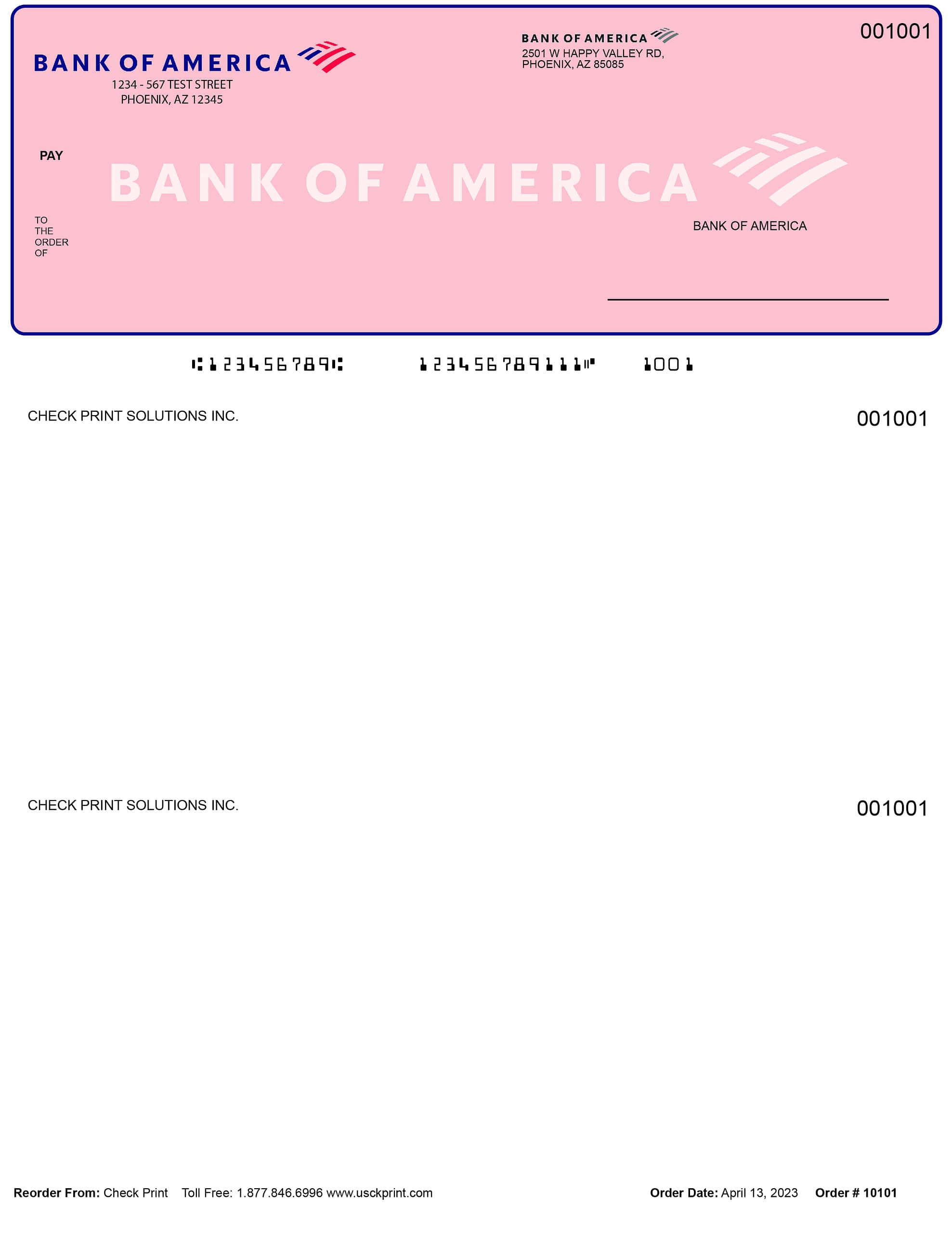
Cashier’s Checks vs. Other Payment Methods
A common point of confusion in personal finance is the difference between a cashier’s check, a certified check, and a money order. While they all serve as alternatives to personal checks, their costs and security levels vary.
Cashier’s Checks vs. Money Orders
While Bank of America issues cashier’s checks for any amount (up to your available balance), money orders are typically capped at $1,000. Money orders are also cheaper—often costing around $5 at a bank or even less at a post office or grocery store. However, many institutions, particularly in real estate or the legal sector, will not accept money orders because they lack the high-level security features and the direct bank guarantee associated with a cashier’s check.
Cashier’s Checks vs. Certified Checks
A certified check is a personal check that the bank “certifies.” The bank stamps the check and confirms that the signature is genuine and that the funds are available. However, the money remains in your account until the check is cashed. In contrast, for a cashier’s check, the bank takes the money out immediately. Bank of America, like most major national banks, has largely moved away from certified checks in favor of cashier’s checks because the latter offers a higher level of security for the recipient.
Cashier’s Checks vs. Wire Transfers
When speed is the priority, especially for international transactions, a wire transfer is the standard choice. While a bank check at Bank of America costs $15, an outgoing domestic wire transfer typically costs $30, and an international wire can cost $45 or more. While more expensive, wire transfers are nearly instantaneous and do not require physical delivery of a paper document. For a local transaction, the $15 bank check is usually the more cost-effective “guaranteed fund” option.
Security Features and Fraud Prevention
The primary reason a seller or institution requests a bank check is the elimination of “non-sufficient funds” (NSF) risk. Because the bank has already moved the money into its own accounts, the check cannot bounce. However, this high level of trust also makes cashier’s checks a target for sophisticated fraud.
Verification Measures
Bank of America employs several security measures on their checks, including watermarks, security threads, and specialized ink that reacts to chemical alteration. If you are receiving a bank check from someone else, it is a best practice to call the issuing bank or visit a branch to verify its authenticity before releasing goods or services.
The Difficulty of Stopping Payment
One of the most critical things to understand about a Bank of America cashier’s check is that you cannot easily “stop payment” on it as you would with a personal check. Because the check represents a guarantee by the bank, the Uniform Commercial Code (UCC) makes it difficult to cancel.
If a bank check is lost, stolen, or destroyed, Bank of America typically requires the purchaser to provide a “Declaration of Loss.” Even then, the bank is often legally allowed to wait up to 90 days before reissuing the funds to ensure the original check isn’t presented for payment. This 90-day waiting period can be a massive financial burden, which is why it is imperative to keep these checks in a secure location and send them via tracked mail.
Strategic Financial Management: Minimizing Fees
While $15 may seem like a minor expense, the savvy financial consumer looks to optimize every aspect of their banking relationship. If you find yourself needing bank checks multiple times a year, the costs can add up.
To minimize these expenses at Bank of America, consider the following strategies:
-
Consolidate Assets: If you have investment accounts at other firms, moving them to Merrill (Bank of America’s investment arm) can help you reach the $20,000 threshold for Preferred Rewards, which triggers the fee waivers.
-
Account Migration: If you currently have an Advantage SafeBalance account but maintain a higher balance, speak with a banker about moving to Advantage Relationship Banking to access free cashier’s checks.
-
Utilize Zelle for Mid-Range Transfers: For amounts up to a few thousand dollars, many recipients who previously required “guaranteed funds” are now willing to accept Zelle, which is free and instant within the Bank of America app. However, check your daily Zelle limits, as they are much lower than the potential limit of a cashier’s check.
In conclusion, while the baseline cost of a bank check at Bank of America is $15, it represents more than just a piece of paper; it is a premium financial instrument that facilitates the most important transactions in a person’s life. By understanding the fee structure, leveraging account tiers, and respecting the security protocols involved, you can navigate high-value commerce with confidence and professional precision.
aViewFromTheCave is a participant in the Amazon Services LLC Associates Program, an affiliate advertising program designed to provide a means for sites to earn advertising fees by advertising and linking to Amazon.com. Amazon, the Amazon logo, AmazonSupply, and the AmazonSupply logo are trademarks of Amazon.com, Inc. or its affiliates. As an Amazon Associate we earn affiliate commissions from qualifying purchases.