
Deciding to close a credit card account is rarely a simple administrative task; it is a significant financial move that can influence your credit score, your reward strategy, and your overall relationship with one of the world’s largest financial institutions. Whether you are looking to trim annual fees from your budget, streamline your wallet, or move away from debt, canceling a Chase credit card requires a calculated approach. In the world of personal finance, the “how” is often less important than the “when” and the “why.”
Chase is known for its robust ecosystem of rewards cards, particularly the Sapphire and Freedom suites. Because these cards are often deeply integrated into a user’s broader financial life, closing one can have ripple effects. This guide explores the strategic nuances of canceling a Chase card, the step-by-step procedures to follow, and the essential alternatives that might serve your financial goals better than a full cancellation.
Evaluating Your Decision: When and Why to Cancel a Chase Card
Before picking up the phone or logging into your portal, it is vital to audit your motivations. In personal finance, every account contributes to your “credit profile,” which lenders use to determine your reliability. Closing an account—especially a long-standing one—can alter this profile significantly.
High Annual Fees vs. Diminishing Rewards
The most common reason for canceling a Chase card is the burden of an annual fee that no longer justifies the card’s benefits. For instance, the Chase Sapphire Reserve carries a premium fee that is offset by travel credits, lounge access, and point multipliers. If your lifestyle has shifted away from frequent travel, the math might no longer work in your favor. When the cost of holding the card exceeds the value you derive from its perks and rewards, it becomes a liability rather than an asset.
Consolidating Financial Accounts
Many consumers find themselves overwhelmed by the sheer number of accounts they manage. Financial “clutter” can lead to missed payments or a lack of oversight regarding fraudulent charges. If you have multiple Chase cards—perhaps a Freedom Flex, a Freedom Unlimited, and a Sapphire Preferred—you may find that the overlap in categories makes one card redundant. Consolidating your spending into fewer accounts can simplify your personal accounting and ensure you are maximizing rewards on a single platform.
Debt Management and Overspending
For those struggling with credit card debt, the psychological and practical benefit of closing a line of credit cannot be overstated. If a specific card serves as a gateway to overspending due to its high limit or tempting promotional offers, canceling it can be a proactive step toward financial discipline. While closing the account may temporarily impact your credit utilization, the long-term benefit of avoiding high-interest debt is a superior financial outcome.
Step-by-Step Guide: How to Cancel Your Chase Card
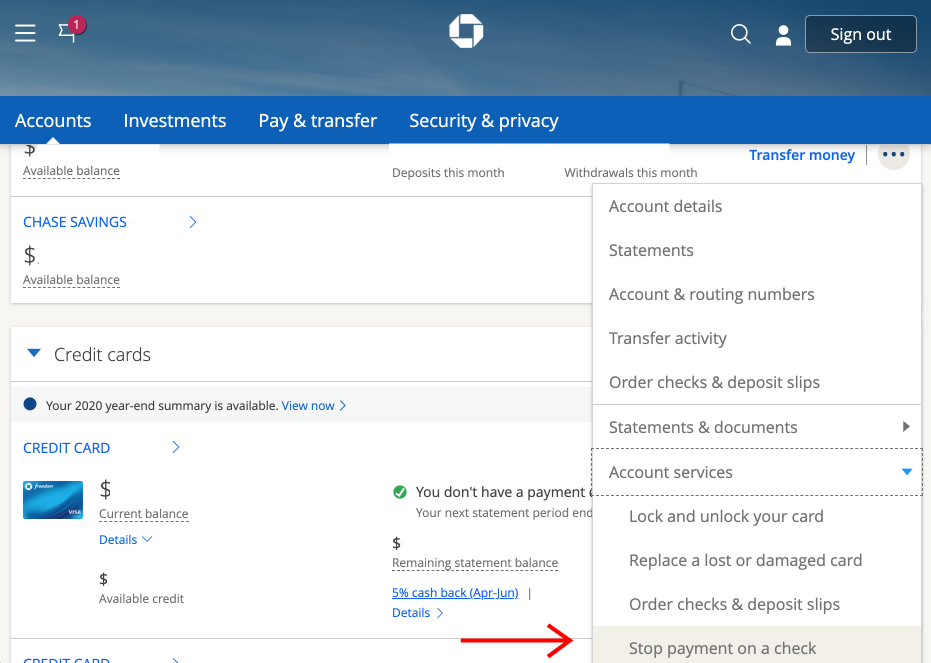
Once you have determined that cancellation is the right path, you must execute the process correctly to protect your rewards and your credit standing. Chase does not make the “cancel” button prominent, as they prefer to retain customers, so you must be prepared for a specific workflow.
Preparing Your Account: The Rewards Audit
The single biggest mistake consumers make when canceling a Chase card is losing their accumulated Ultimate Rewards (UR) points. Chase points are incredibly flexible, but they are tied to your active accounts.
-
Redeem or Transfer: Before you initiate the cancellation, you must either spend your points, cash them out, or transfer them. If you have another Chase card that earns Ultimate Rewards, you can move your points to that card instantly through the “Combine Points” feature in the Chase portal.
-
The “Partner” Strategy: If you have a Sapphire card, you can transfer points to travel partners like United Airlines or Hyatt. Do this before you call to cancel, as once the account is closed, those points are typically forfeited immediately.
Initiating the Cancellation: Phone vs. Secure Message
Chase offers two primary ways to close an account: via the customer service line or through the Secure Message Center on their website/app.
-
The Phone Call: Calling the number on the back of your card is the most direct method. This connects you with a representative who will likely transfer you to the “Retention Department.” This is a specialized team tasked with keeping you as a customer.
-
The Secure Message: If you prefer to avoid a sales pitch, you can send a secure message through your online banking portal. Simply state that you wish to close the account ending in [last four digits]. While effective, Chase may still request that you call them to finalize the process.
Handling Retention Offers
When you speak to a retention specialist, they may offer you an incentive to keep the card. This could be a statement credit that covers the annual fee, a lower interest rate, or a “spend-to-get” bonus (e.g., “Spend $1,000 in the next 30 days and get 10,000 points”). From a personal finance perspective, you should evaluate these offers objectively. If the retention offer offsets the annual fee entirely, it may be worth keeping the card for another year to maintain your credit age and total limit.
The Financial Aftermath: Impact on Your Credit Score

Canceling a credit card is not a neutral event for your credit report. It influences several key factors that FICO and other scoring models use to calculate your creditworthiness.
Credit Utilization Ratio
Your credit utilization ratio is the amount of debt you owe compared to your total available credit across all cards. It accounts for roughly 30% of your credit score. When you cancel a Chase card, you are effectively removing a portion of your “available credit.” If you carry balances on other cards, your utilization ratio will spike, which can cause an immediate drop in your credit score. To mitigate this, ensure your other balances are paid down before closing the account.
Length of Credit History
The age of your oldest account and the average age of all your accounts contribute to 15% of your score. If the Chase card you are canceling is one of your oldest accounts, closing it will eventually lower the average age of your accounts. While closed accounts in good standing can stay on your credit report for up to 10 years, the loss of that “anchor” account will eventually be felt.
The “Closed by Consumer” Notation
There is a common myth that having an account “Closed by Grantor” (the bank) is significantly worse than “Closed by Consumer.” While “Closed by Consumer” looks slightly better to manual underwriters (as it shows you were in control of the decision), both have a similar impact on automated scoring models. The most important factor is that the account was in good standing (no late payments) at the time of closure.
Alternatives to Cancellation: The Power of the Product Change
In many cases, a full cancellation is a “nuclear option” that isn’t necessary. Chase offers a flexible “Product Change” (PC) policy that allows you to shift your account from one card to another within the same brand family.
Downgrading to a No-Fee Card
If your primary issue is the annual fee, you can request a downgrade. For example, a Chase Sapphire Preferred ($95 fee) can be downgraded to a Chase Freedom Unlimited ($0 fee). This allows you to:
-
Eliminate the annual fee.
-
Keep your credit line open (preserving your utilization ratio).
-
Maintain the age of the account.
-
Keep your Ultimate Rewards points active.
Moving Credit Limits
If you are determined to close the card but worried about your credit utilization, you can ask Chase to “reallocate” your credit limit. Before closing the card, ask the representative to move the majority of the credit limit from the card you are closing to another Chase card you plan to keep. For instance, if you have a $10,000 limit on a card you’re closing and a $5,000 limit on a card you’re keeping, you can often move $9,500 over, leaving you with a $14,500 limit on the remaining card. This neutralizes the impact on your utilization ratio.
Managing Post-Cancellation Obligations
The process doesn’t end the moment you hang up the phone. There are several administrative and financial “loose ends” to secure.
Final Statements and Residual Interest
Even after an account is closed, you are responsible for any remaining balance. Furthermore, “residual interest” (interest that accrued between your last statement and the date you paid the balance) may appear on a final statement a month later. Failing to pay this small remaining amount can lead to late fees and credit damage. Monitor your Chase portal for at least two billing cycles after cancellation to ensure the balance is zero.
Updating Recurring Payments
In our modern subscription economy, many of us have dozens of automated payments tied to our cards—streaming services, insurance, utilities, and gym memberships. Before canceling, audit your last three months of statements and migrate those recurring charges to a new payment method. A single missed insurance payment due to a canceled card can result in a lapse in coverage or costly penalties.
Physical Disposal
Finally, once the account is officially closed, dispose of the physical card properly. Most modern Chase cards, especially the Sapphire line, contain metal. These cannot be easily shredded in home machines. You can usually return these to a local Chase branch for secure destruction or request a prepaid envelope from Chase to mail the card back for recycling.
Strategically managing your credit portfolio is a hallmark of financial literacy. While canceling a Chase card can simplify your life and save you money on fees, it must be done with an understanding of the broader implications for your credit health and rewards strategy. By following a structured approach—auditing rewards, considering downgrades, and monitoring the final transition—you ensure that your move away from a specific financial product strengthens, rather than weakens, your overall financial position.
aViewFromTheCave is a participant in the Amazon Services LLC Associates Program, an affiliate advertising program designed to provide a means for sites to earn advertising fees by advertising and linking to Amazon.com. Amazon, the Amazon logo, AmazonSupply, and the AmazonSupply logo are trademarks of Amazon.com, Inc. or its affiliates. As an Amazon Associate we earn affiliate commissions from qualifying purchases.