
In the dynamic world of cryptocurrency, Bitcoin stands as the undisputed titan, a digital asset that has captivated investors, technologists, and economists alike. Its meteoric rise and pronounced volatility often lead to questions about its accessibility and real-world value, particularly for those considering an entry point that doesn’t involve purchasing an entire coin. The question “how much is 0.1 Bitcoin?” is far more than a simple arithmetic query; it’s an inquiry into market dynamics, investment strategy, and the very nature of fractional ownership in a decentralized financial system. This article delves into understanding the value, implications, and strategic considerations surrounding a tenth of a Bitcoin, providing a professional and insightful guide for anyone navigating the fascinating landscape of digital finance.
Understanding Bitcoin’s Market Dynamics and Valuation
To accurately gauge the value of 0.1 Bitcoin, one must first grasp the fundamental forces that dictate Bitcoin’s price. Unlike traditional currencies backed by governments or commodities, Bitcoin’s value is primarily determined by market sentiment, supply and demand, and its perceived utility as a digital asset.
The Volatility Factor: Why Bitcoin’s Price Fluctuates
Bitcoin is renowned for its price volatility. A single day can see significant swings, making its valuation a moving target. This volatility stems from several factors:
- Nascent Market: Compared to traditional financial markets, the cryptocurrency market is relatively young and less mature, making it more susceptible to speculative trading and rapid price movements.
- 24/7 Trading: Bitcoin exchanges operate continuously, without the market closures typical of stock exchanges. This constant trading can amplify price changes.
- News and Sentiment: Regulatory announcements, technological developments, macroeconomic news, and even social media trends can trigger immediate and often dramatic price reactions. A positive development or a major institutional adoption can send prices soaring, while a perceived threat or a significant hack can cause them to plummet.
- Liquidity: While Bitcoin is highly liquid, sudden large trades can still impact prices, especially on smaller exchanges.
Supply and Demand: Core Economic Principles at Play
At its heart, Bitcoin’s value adheres to the classic economic principles of supply and demand.
- Limited Supply: Bitcoin has a hard cap of 21 million coins that will ever be mined. This scarcity, enshrined in its protocol, makes it a deflationary asset, contrasting sharply with fiat currencies that can be printed infinitely. The diminishing rate of new Bitcoin creation through “halving” events further reinforces this scarcity.
- Growing Demand: Demand is driven by several factors, including its use as a speculative investment, a hedge against inflation, a medium of exchange, and increasingly, as a store of value (“digital gold”). Institutional adoption by major corporations, asset managers, and even sovereign states has significantly boosted demand, alongside continuous interest from retail investors globally.
Macroeconomic Influences and Global Events
Bitcoin does not exist in a vacuum. Its price is increasingly influenced by broader macroeconomic trends and global events:
- Inflation Concerns: During periods of high inflation in traditional economies, Bitcoin often gains traction as investors seek alternative assets to preserve purchasing power.
- Interest Rates: Changes in interest rates by central banks can affect investor appetite for risk assets like Bitcoin. Higher rates might make safer investments more attractive, potentially drawing capital away from crypto.
- Geopolitical Stability: In times of geopolitical uncertainty or conflict, Bitcoin can be viewed both as a safe haven asset (due to its decentralized nature) and as a risk asset, depending on the specific circumstances and investor sentiment.
- Regulatory Environment: Clarity or uncertainty surrounding cryptocurrency regulations in major economies can significantly impact investor confidence and, consequently, Bitcoin’s price.
Calculating the Real-Time Value of 0.1 Bitcoin
Given Bitcoin’s fluctuating price, the value of 0.1 Bitcoin is never static. It’s a snapshot in time, requiring a simple calculation against the current market rate.
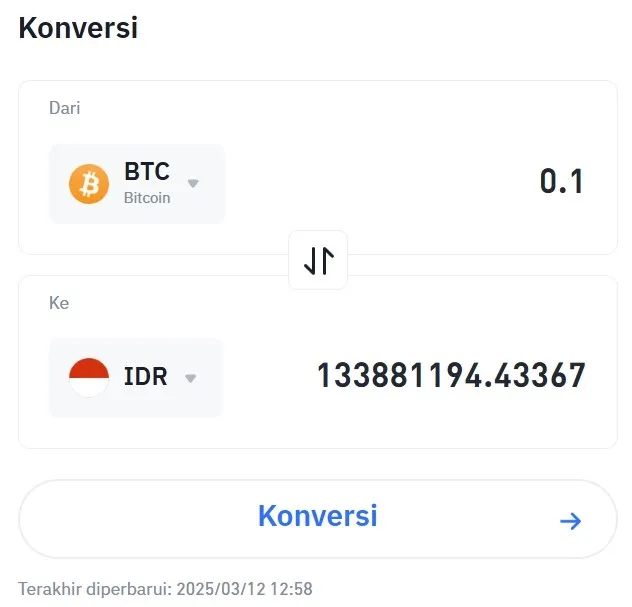
The Simple Calculation: Current Price x 0.1
To determine the precise value of 0.1 Bitcoin at any given moment, you need to know the current market price of one full Bitcoin. The calculation is straightforward:
- Value of 0.1 BTC = (Current Market Price of 1 BTC) x 0.1
For example, if one Bitcoin is trading at $65,000, then 0.1 Bitcoin would be worth $6,500. If the price rises to $70,000, your 0.1 Bitcoin would then be worth $7,000.
Where to Find Accurate Real-Time Bitcoin Prices
Access to reliable, real-time price data is crucial. Numerous platforms provide this information:
- Cryptocurrency Exchanges: Major exchanges like Coinbase, Binance, Kraken, and Gemini display live prices. These are often the most direct source if you’re actively trading.
- Financial Data Websites: Reputable financial news outlets and data providers (e.g., CoinMarketCap, CoinGecko, TradingView, Bloomberg Crypto) aggregate data from multiple exchanges, offering a comprehensive view.
- Crypto Wallets: Many digital wallets integrate real-time price tracking, allowing you to see the current value of your holdings.
It’s advisable to cross-reference prices across a few sources, especially during periods of high volatility, as slight variations can occur between platforms due to differences in order books and liquidity.
Accounting for Transaction Fees and Spreads
While the direct calculation provides the nominal value, the actual amount you’d receive or pay when converting 0.1 Bitcoin into fiat currency (or vice versa) will be slightly affected by:
- Transaction Fees: Exchanges charge fees for buying, selling, and withdrawing cryptocurrency. These can be a percentage of the transaction value or a flat fee.
- Spread: This is the difference between the bid (buy) price and the ask (sell) price. Market makers profit from this spread, meaning you might buy at a slightly higher price and sell at a slightly lower price than the quoted “mid-market” rate.
- Network Fees: When you move Bitcoin between wallets, a small fee is paid to the Bitcoin miners to process and confirm your transaction on the blockchain. This is separate from exchange fees.
These costs, though often small, are important to factor into your financial planning, especially for frequent traders or when dealing with smaller amounts.
The Significance of Fractional Bitcoin Ownership
The ability to own a fraction of a Bitcoin, down to eight decimal places (satoshi), is a cornerstone of its accessibility and investment appeal. This capability profoundly impacts how individuals and institutions can engage with the asset.
Accessibility: Lowering the Barrier to Entry for Investors
One of the most significant advantages of fractional ownership is that it democratizes access to Bitcoin. Given Bitcoin’s high per-unit price, buying an entire coin is beyond the reach of many individuals. Fractional ownership allows anyone to invest in Bitcoin with as little as a few dollars, enabling broader participation in the cryptocurrency market. This lowers the barrier to entry, fostering inclusivity and making Bitcoin a viable investment option for a wider demographic.
Dollar-Cost Averaging (DCA) with Fractional Buys
Fractional ownership is perfectly suited for the dollar-cost averaging (DCA) strategy. DCA involves investing a fixed amount of money at regular intervals, regardless of the asset’s price. For example, instead of buying a large chunk of Bitcoin at once, an investor might choose to buy $50 worth of Bitcoin every week.
- Mitigating Volatility Risk: DCA helps mitigate the risk associated with Bitcoin’s volatility by averaging out the purchase price over time. When the price is high, your fixed dollar amount buys less Bitcoin; when the price is low, it buys more.
- Disciplined Investing: It encourages a disciplined approach to investing, removing the emotional element of trying to time the market.
- Long-Term Growth: For long-term investors, DCA is a proven strategy for accumulating an asset like Bitcoin steadily over time, potentially leading to a lower average cost per unit.
Portfolio Diversification with Smaller Allocations
Even a small fraction like 0.1 Bitcoin can play a role in portfolio diversification. Traditional investment wisdom suggests spreading investments across different asset classes to reduce overall risk. Bitcoin, with its unique characteristics—decentralized, global, digitally scarce—offers a distinct alternative to stocks, bonds, and real estate.
- Asymmetric Upside Potential: Many investors view Bitcoin as an asset with asymmetric upside potential, meaning it could offer significant returns while only representing a small portion of a well-diversified portfolio.
- Inflation Hedge: For some, it serves as a modern hedge against inflation or economic uncertainty, providing an uncorrelated asset class that might perform differently from traditional markets.
- Risk Management: By allocating a small, manageable percentage of one’s portfolio to Bitcoin (e.g., 1-5%), investors can gain exposure to its potential growth without over-exposing themselves to its inherent volatility.
Strategic Considerations for Investing in 0.1 Bitcoin
Investing in Bitcoin, whether a full coin or a fraction, requires careful thought and a strategic approach. It’s crucial to align your investment with your personal financial situation and goals.
Defining Your Investment Goals and Risk Tolerance
Before investing in 0.1 Bitcoin, ask yourself:
- What are my goals? Am I seeking short-term gains, long-term wealth accumulation, or simply exposure to a new asset class?
- What is my risk tolerance? Can I comfortably withstand significant price drops, or would such volatility cause undue stress? Bitcoin is a high-risk, high-reward investment. Only invest what you can afford to lose.
- What is my investment horizon? Am I planning to hold for months, years, or even decades? A longer horizon often helps smooth out short-term market fluctuations.
Security Measures for Holding Your Bitcoin
The decentralized nature of Bitcoin means you are your own bank, which comes with significant responsibility regarding security.
- Wallet Choice: For 0.1 Bitcoin, a hardware wallet (like Ledger or Trezor) offers the highest level of security for long-term holding by keeping your private keys offline. Software wallets (desktop or mobile) and exchange wallets are more convenient but generally less secure for larger amounts or long-term storage.
- Seed Phrase Management: Your seed phrase (a series of words) is the master key to your Bitcoin. Keep it secure, offline, and never share it. Loss of this phrase means permanent loss of your funds.
- Two-Factor Authentication (2FA): Always enable 2FA on any exchange accounts or software wallets you use to prevent unauthorized access.
- Beware of Scams: The crypto space is rife with scams. Be vigilant against phishing attempts, fake investment schemes, and unsolicited offers.
Long-Term Potential vs. Short-Term Speculation
While 0.1 Bitcoin can be used for short-term trading, its fractional nature makes it particularly appealing for long-term accumulation.
- Long-Term Potential: Many believe Bitcoin’s long-term value will continue to appreciate due to its scarcity, increasing adoption, and role in a future digital economy. Holding 0.1 Bitcoin for years could yield substantial returns if this thesis holds true.
- Short-Term Speculation: Engaging in short-term trading with 0.1 Bitcoin can be challenging due to transaction fees and the potential for rapid price swings to erode profits quickly. It requires deep market understanding, technical analysis skills, and robust risk management. For most, a “buy and hold” or DCA strategy is more suitable.
Beyond the Price Tag: The Broader Implications of Bitcoin
While the immediate question is “how much is 0.1 Bitcoin?”, understanding its value extends beyond its current market price to its broader societal and technological implications.
Bitcoin as a Digital Store of Value
Bitcoin has increasingly been recognized as a digital store of value, akin to gold, but with superior characteristics for the digital age:
- Portability: Easily transferable across borders and accessible with just a private key.
- Divisibility: Can be divided into tiny units (satoshis), making it suitable for micro-transactions or fractional ownership.
- Scarcity: Its fixed supply provides a hedge against inflation.
- Censorship Resistance: Transactions cannot be easily blocked or reversed by third parties.
This role as “digital gold” is a key driver of its long-term investment thesis, attracting those concerned about fiat currency devaluation or seeking an alternative to traditional financial systems.
The Future of Decentralized Finance (DeFi)
Bitcoin laid the groundwork for the entire cryptocurrency ecosystem and the burgeoning field of Decentralized Finance (DeFi). While Bitcoin’s blockchain primarily facilitates secure value transfer, the underlying principles of decentralization, transparency, and immutability have inspired thousands of other cryptocurrencies and DeFi applications. These innovations are reshaping financial services, offering new ways to lend, borrow, trade, and earn yield without traditional intermediaries. Investing in Bitcoin, even a fraction, is an investment in this pioneering technology and the future of finance it represents.

Regulatory Landscape and Adoption Trends
The future trajectory of Bitcoin’s value is also tied to its evolving regulatory landscape and global adoption trends.
- Regulatory Clarity: As governments worldwide grapple with how to regulate cryptocurrencies, clearer frameworks could reduce uncertainty, attract more institutional capital, and foster greater mainstream adoption. Conversely, restrictive regulations could temper growth.
- Institutional Adoption: The continued embrace of Bitcoin by major financial institutions, corporations, and even nation-states (e.g., El Salvador making Bitcoin legal tender) legitimizes its status as a serious asset class and expands its reach.
- Technological Advancements: Ongoing developments in scalability (like the Lightning Network) and interoperability will enhance Bitcoin’s utility and efficiency, further solidifying its position in the global financial system.
In conclusion, “how much is 0.1 Bitcoin?” is a question whose answer is as fluid as the market itself, but its significance is profound. It represents an accessible gateway to a revolutionary asset class, enabling individuals to participate in a global, decentralized financial movement. Whether viewed as a speculative asset, an inflation hedge, or a strategic long-term investment, even a tenth of a Bitcoin holds substantial potential and underscores the transformative power of fractional ownership in the digital age. Understanding its value requires not just a glance at a price chart, but an appreciation of the complex interplay of economic forces, technological innovation, and evolving market sentiment that define the cryptocurrency landscape.
aViewFromTheCave is a participant in the Amazon Services LLC Associates Program, an affiliate advertising program designed to provide a means for sites to earn advertising fees by advertising and linking to Amazon.com. Amazon, the Amazon logo, AmazonSupply, and the AmazonSupply logo are trademarks of Amazon.com, Inc. or its affiliates. As an Amazon Associate we earn affiliate commissions from qualifying purchases.