
For most individuals, a mortgage represents the single largest financial commitment they will undertake in their lifetime. It’s a powerful tool, enabling homeownership and wealth creation, yet it comes with a significant cost: interest. Understanding “how much interest do I pay on my mortgage?” is not merely a matter of curiosity; it’s a fundamental aspect of financial literacy that can save homeowners tens, or even hundreds, of thousands of dollars over the loan’s lifetime. Far beyond the simple monthly payment, the true cost of borrowing for a home is deeply intertwined with the interest rate, the loan term, and the amortization schedule. This comprehensive guide will dissect the mechanics of mortgage interest, illuminate the factors that influence it, and provide actionable strategies to manage and potentially reduce this substantial expense. By gaining a clear perspective on your mortgage interest, you empower yourself to make informed decisions that align with your long-term financial goals, ultimately transforming a complex financial product into a predictable and manageable part of your personal finance strategy.

Understanding the Fundamentals of Mortgage Interest
To truly grasp the total interest paid on a mortgage, one must first build a foundational understanding of what mortgage interest is, how it’s applied, and the different forms it can take. It’s not just an arbitrary fee; it’s the cost of borrowing a large sum of money for an extended period, reflecting the lender’s risk and the opportunity cost of providing capital.
What is Mortgage Interest?
At its core, mortgage interest is the fee charged by a lender for the use of borrowed money. When you take out a mortgage, you’re essentially renting capital from a financial institution. The interest rate is expressed as a percentage of the principal balance, and it dictates how much you pay for this privilege. Unlike other types of loans, mortgage interest is typically front-loaded, meaning that in the early years of your loan term, a larger portion of your monthly payment goes towards interest, with a smaller portion reducing the principal balance. This structure can be surprising to new homeowners who expect their principal to shrink rapidly, highlighting the importance of understanding the amortization process. The interest compensates the lender for inflation, the risk of default, and the time value of money, ensuring they earn a return on their investment.
Fixed vs. Adjustable Interest Rates
The type of interest rate you secure dramatically impacts your payments and total interest paid. The two primary categories are fixed-rate and adjustable-rate mortgages (ARMs). A fixed-rate mortgage means your interest rate remains constant for the entire duration of the loan. This provides predictability and stability, as your principal and interest payment will never change, regardless of market fluctuations. For many homeowners, the security of a fixed payment for 15 or 30 years offers invaluable peace of mind, making budgeting straightforward and shielding them from rising interest rates.
Conversely, an adjustable-rate mortgage (ARM) features an interest rate that can change periodically after an initial fixed-rate period. For example, a 5/1 ARM will have a fixed rate for the first five years, after which the rate adjusts annually based on a pre-selected financial index plus a margin. While ARMs often start with a lower interest rate than fixed-rate mortgages, offering potentially lower initial payments, they introduce interest rate risk. If market rates increase, your monthly payments could rise significantly. ARMs can be suitable for borrowers who plan to sell or refinance before the adjustable period begins or those who are comfortable with potential payment volatility and can absorb higher costs.
The Amortization Schedule Explained
The amortization schedule is the roadmap of your mortgage, illustrating precisely how your monthly payments are allocated between principal and interest over the life of the loan. It’s a table that breaks down each payment, showing the amount that goes to interest, the amount that goes to principal, and the remaining loan balance. As mentioned, amortization is typically front-loaded, meaning interest comprises the bulk of early payments. For example, on a 30-year fixed-rate mortgage, you might pay significantly more in interest during the first 10-15 years than you do towards the principal. As the principal balance gradually decreases, the interest portion of your payment also declines, and a larger share of each subsequent payment is applied to the principal. Understanding this schedule is crucial because it reveals the slow initial pace of principal reduction and underscores the impact of making extra principal payments to accelerate equity growth and reduce total interest.
Key Factors Influencing Your Interest Payments
The total amount of interest you’ll pay on your mortgage isn’t determined by a single factor, but rather a complex interplay of several variables. Each element contributes significantly to the overall cost of borrowing, making it essential for prospective and current homeowners to understand how these components interact.
Principal Loan Amount
This is perhaps the most straightforward factor: the larger the amount you borrow, the more interest you will pay. Mortgage interest is calculated as a percentage of the outstanding principal balance. Therefore, a loan of $400,000 will naturally accrue more interest over its lifetime than a loan of $200,000, assuming the same interest rate and loan term. This highlights the financial advantage of making a larger down payment, as it directly reduces the principal loan amount, thereby lowering both your monthly payments and the total interest paid over the life of the loan. Even a seemingly small difference in the principal can translate into substantial savings over 15 or 30 years.
Interest Rate and APR
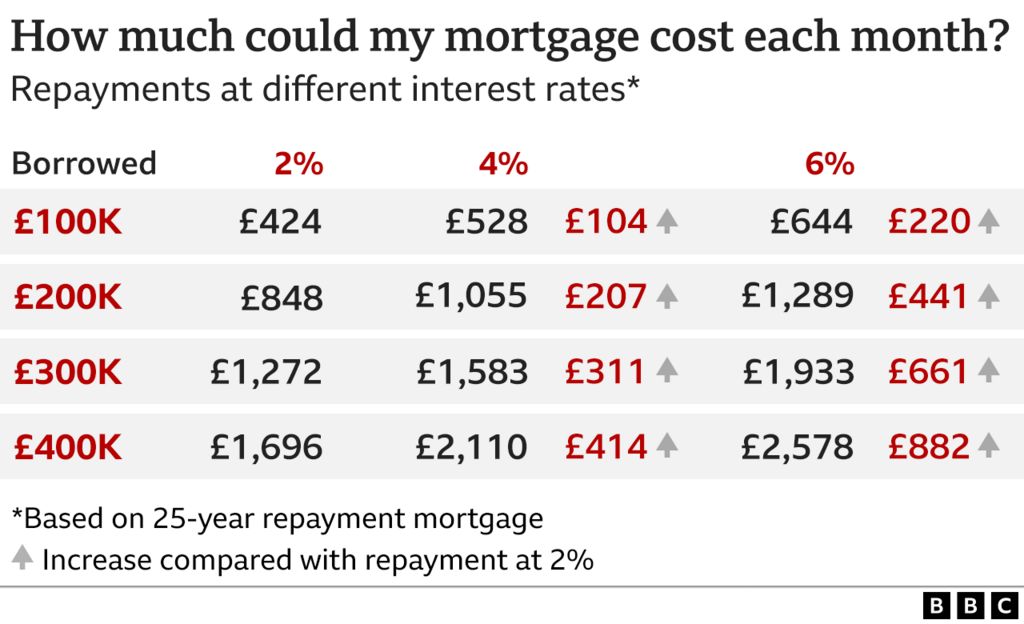
The interest rate is the percentage charged by the lender for borrowing the principal. It’s the most visible and frequently discussed factor influencing mortgage costs. A lower interest rate directly translates to lower monthly payments and less total interest paid over the loan term. For instance, a 30-year fixed mortgage at 6% will cost significantly more in interest than the same loan at 5%, even if the difference seems minor on a monthly basis.
However, it’s crucial to look beyond just the nominal interest rate and consider the Annual Percentage Rate (APR). The APR represents the true annual cost of your loan, including the interest rate plus certain fees and charges you pay to get the loan (like origination fees, discount points, mortgage insurance, and other closing costs). While the interest rate is what determines your principal and interest payment, the APR provides a more comprehensive measure of the loan’s total cost, making it a better tool for comparing different loan offers. A loan with a lower interest rate but higher fees might have a higher APR than a loan with a slightly higher interest rate but fewer fees, making the latter potentially cheaper overall.
Loan Term Length
The length of your mortgage loan term has a profound impact on the total interest paid. Common terms include 15-year and 30-year mortgages, though other options exist. A longer loan term (e.g., 30 years) results in lower monthly payments because the principal is spread out over more payments. However, this convenience comes at a significant cost: you pay substantially more interest over the life of the loan. The extra years allow interest to accrue for a longer period, and the initial low principal reduction means you carry a higher balance for longer.
Conversely, a shorter loan term (e.g., 15 years) typically comes with a slightly lower interest rate and significantly higher monthly payments, but you pay dramatically less interest overall. The accelerated principal reduction means you build equity faster and pay off the loan in half the time, saving hundreds of thousands of dollars in interest. The choice between a shorter and longer term often boils down to a trade-off between affordability (lower monthly payments) and overall cost (total interest paid).
Impact of Down Payment and Credit Score
Your down payment not only reduces the principal loan amount but also influences the interest rate you qualify for. Lenders view a larger down payment as a sign of financial stability and reduced risk, often rewarding borrowers with more favorable interest rates. A down payment of 20% or more also typically allows you to avoid Private Mortgage Insurance (PMI), another significant cost that adds to your monthly housing expense, although it’s not interest.
Similarly, your credit score is a critical determinant of the interest rate you receive. Lenders use credit scores to assess your creditworthiness and the likelihood of you defaulting on the loan. Borrowers with excellent credit scores (typically 760 or higher) are offered the lowest interest rates because they are considered low-risk. Conversely, lower credit scores signal higher risk to lenders, resulting in higher interest rates. Investing time in improving your credit score before applying for a mortgage can yield substantial long-term savings on interest payments. Lenders assess risk based on your financial history, and a strong credit profile minimizes that perceived risk, leading to better terms.
Calculating Your Mortgage Interest: Practical Approaches
Understanding the theoretical aspects of mortgage interest is one thing; calculating and verifying it for your specific situation is another. Thankfully, you don’t need to be a math wizard to estimate or track your mortgage interest. Several practical methods can help you monitor this crucial financial component.
Manual Calculation Basics
While cumbersome for an entire loan term, understanding the basic manual calculation for a single month’s interest payment provides clarity on how it works. Your monthly interest is calculated based on your current outstanding principal balance, not the original loan amount. The formula is:
Monthly Interest Payment = (Outstanding Principal Balance × Annual Interest Rate) / 12
For example, if you have an outstanding principal balance of $300,000 and an annual interest rate of 6% (or 0.06), your interest for that month would be:
($300,000 × 0.06) / 12 = $1,500
This $1,500 is the interest portion of your monthly mortgage payment for that specific month. The remainder of your payment goes towards reducing your principal. In the next month, because your principal balance is slightly lower, the interest calculated will also be slightly lower, and a larger portion of your fixed monthly payment will then go towards the principal. This iterative process is the essence of amortization. While you won’t manually calculate every payment for 30 years, this basic formula demystifies where your money goes each month.
Utilizing Online Mortgage Calculators
For practical, real-world calculations, online mortgage calculators are invaluable tools. They instantly perform complex amortization calculations, providing estimates for monthly payments, total interest paid over the loan term, and even detailed amortization schedules. These calculators allow you to input various scenarios – different interest rates, loan terms, and down payments – to see their immediate impact on your payments and overall interest costs.

Key features to look for in a good online calculator include:
- Amortization Schedule Generation: This feature will show you a payment-by-payment breakdown of principal vs. interest.
- Total Interest Calculation: It should clearly display the total interest paid over the life of the loan.
- Comparison Tools: Some advanced calculators allow you to compare different loan scenarios side-by-side, such as a 15-year vs. a 30-year loan.
- Extra Payment Scenarios: The best calculators allow you to input extra principal payments to see how much faster you can pay off your mortgage and how much interest you can save.
These tools are widely available on financial institution websites, real estate portals, and independent financial planning sites, offering a quick and efficient way to model your mortgage finances.
Reviewing Your Mortgage Statement
Perhaps the most accurate way to understand how much interest you are actually paying is to regularly review your monthly mortgage statement. Your lender is required to provide a detailed statement that breaks down your payment into its components: principal, interest, escrow (for property taxes and homeowner’s insurance), and any other fees.
By examining your statement, you can:
- Verify Payment Allocation: Confirm how much of your payment went towards interest and how much towards principal.
- Track Principal Reduction: See your current outstanding loan balance and how it’s decreasing over time.
- Identify Escrow Changes: Understand adjustments to your property taxes or insurance premiums.
- Monitor Year-to-Date Totals: Many statements provide year-to-date totals for interest paid, which is crucial for tax purposes.
If you ever have questions about the figures on your statement, don’t hesitate to contact your mortgage servicer. Regularly reviewing this document empowers you to stay on top of your largest expense and quickly identify any discrepancies.
Strategies to Reduce Your Total Interest Paid
While mortgage interest is an unavoidable cost of homeownership, it doesn’t mean you’re powerless to influence the total amount you pay over the long run. Strategic financial planning and proactive measures can significantly reduce your interest burden, freeing up capital for other investments or financial goals.
Making Extra Principal Payments
This is arguably the most effective and accessible strategy for reducing total interest paid. By making additional payments directly to your loan’s principal balance, you accelerate the amortization process. Since interest is calculated on the outstanding principal, a lower principal balance immediately translates to less interest accruing in subsequent months. Even small, consistent extra payments can yield dramatic savings.
Consider these approaches:
- One-time lump sum payments: Tax refunds, bonuses, or inheritances can be directed towards the principal.
- Adding a fixed amount to each monthly payment: Even an extra $50 or $100 per month can shave years off your loan and save thousands in interest.
- Applying an entire extra payment annually: If your budget allows, making a 13th mortgage payment each year (split into monthly increments or as a lump sum) can cut years off a 30-year mortgage.
Before making extra payments, always confirm with your lender that the additional funds will be applied directly to the principal and not merely held for future payments.
Refinancing Your Mortgage
Refinancing involves taking out a new mortgage to pay off your existing one, often to secure a lower interest rate, change the loan term, or convert an adjustable-rate mortgage to a fixed-rate one. If market interest rates have dropped significantly since you originated your loan, or if your credit score has improved substantially, refinancing can be a powerful tool to reduce your monthly interest payments and the total interest paid over the life of the loan.
However, refinancing comes with its own costs, including closing fees and potentially appraisal fees, which can amount to thousands of dollars. It’s crucial to calculate the break-even point – how long it will take for the savings from a lower interest rate to offset the refinancing costs. A good rule of thumb is that if you plan to stay in your home for at least two to three years beyond the break-even point, refinancing is likely a financially sound decision.
Bi-Weekly Payment Plans
A bi-weekly payment plan involves making half of your monthly mortgage payment every two weeks, rather than a full payment once a month. Since there are 52 weeks in a year, this results in 26 half-payments, which equates to 13 full monthly payments per year instead of 12. This subtle strategy has a significant impact:
- Accelerated Principal Reduction: The extra “payment” each year goes entirely towards the principal, much like making an additional payment.
- Reduced Interest: By making payments more frequently and slightly accelerating principal reduction, you reduce the time over which interest accrues.
Many lenders offer bi-weekly payment options, or you can manually implement this strategy by dividing your monthly payment by 12 and adding that amount to each of your 12 monthly payments, essentially making one extra payment per year. It’s a disciplined yet effective way to shave years and significant interest off your mortgage.
The Power of a Shorter Loan Term
Choosing a shorter loan term from the outset, such as a 15-year mortgage instead of a 30-year one, is perhaps the most direct way to drastically reduce total interest paid. While the monthly payments will be higher, the total interest saved can be immense. For instance, a $300,000 mortgage at 6% over 30 years might accrue over $340,000 in interest, whereas the same loan over 15 years might accrue less than $150,000 in interest, representing a saving of nearly $200,000.
If a 15-year term is initially out of reach due to higher payments, consider starting with a 30-year mortgage for affordability and then aggressively making extra principal payments as if it were a 15-year loan. This strategy offers flexibility: if financial difficulties arise, you can revert to the lower 30-year payment, but during periods of stability, you can actively work towards the significant interest savings of a shorter term. This combines the best of both worlds – the security of lower minimum payments with the financial benefits of accelerated payoff.
Beyond the Monthly Payment: Tax Implications and Long-Term Planning
Understanding “how much interest do I pay on my mortgage” extends beyond the simple monthly outgoing. It involves recognizing the broader financial implications, including potential tax benefits and how your mortgage plays into your overall long-term wealth-building strategy. A mortgage is not just a debt; it’s a dynamic financial instrument with various facets that can impact your financial health for decades.
Mortgage Interest Deduction
One of the most significant financial advantages of homeownership, particularly for those with substantial mortgage debt, is the mortgage interest deduction. Under current tax laws, homeowners can often deduct the interest paid on their mortgage from their taxable income. This deduction can significantly lower your tax liability, effectively reducing the net cost of your mortgage interest. For example, if you pay $10,000 in mortgage interest during a year and are in a 22% tax bracket, the deduction could save you $2,200 on your federal income taxes.
It’s important to note that the rules for the mortgage interest deduction have evolved. The Tax Cuts and Jobs Act of 2017 limited the deduction to interest paid on up to $750,000 of qualified residence loan debt ($375,000 for married individuals filing separately) for loans originated after December 15, 2017. Loans originated before this date are subject to a $1 million limit ($500,000 for married filing separately). Additionally, you must itemize your deductions to claim the mortgage interest deduction, which may not be beneficial for everyone, especially with the increased standard deduction. Consulting a qualified tax professional is always recommended to understand how this deduction applies to your specific financial situation.
Building Home Equity
While interest payments are an expense, the principal portion of your mortgage payment contributes directly to building home equity. Equity is the portion of your home that you truly own, calculated as your home’s current market value minus your outstanding mortgage balance. As you pay down your principal and your home potentially appreciates in value, your equity grows.
Building equity is a crucial component of long-term financial planning and wealth accumulation. Equity can be a source of funds in the future, accessible through a home equity loan, a home equity line of credit (HELOC), or a cash-out refinance. It also provides a significant asset that can be passed down to heirs or liquidated upon sale for retirement or other major life events. Understanding the relationship between your interest payments and principal reduction reveals the pace at which you’re accumulating this valuable asset. The faster you pay down principal (and thus reduce total interest), the faster you build equity.
Financial Planning for Mortgage Payoff
Having a clear strategy for managing and eventually paying off your mortgage is a cornerstone of robust financial planning. For many, becoming mortgage-free is a significant financial milestone, freeing up substantial cash flow that can be redirected towards retirement savings, investments, education, or discretionary spending.
Your long-term financial plan should consider:
- Your risk tolerance: Are you comfortable with a shorter, higher-payment term for faster payoff, or do you prioritize lower monthly obligations?
- Investment opportunities: Should you aggressively pay down your mortgage, or would your money generate a higher return invested elsewhere, especially if your mortgage interest rate is low? This is often a nuanced decision requiring a comparison of your mortgage interest rate vs. potential investment returns.
- Future income and expenses: How might your income grow or shrink? Are there major life events (like children’s college tuition or retirement) that will impact your ability to make extra payments?
By actively planning for your mortgage’s trajectory – whether through aggressive principal payments, strategic refinancing, or simply adhering to the original amortization schedule – you take control of one of your largest liabilities. Ultimately, understanding “how much interest do I pay on my mortgage” is not just about counting dollars, but about strategically managing your finances to achieve enduring financial security and freedom.
aViewFromTheCave is a participant in the Amazon Services LLC Associates Program, an affiliate advertising program designed to provide a means for sites to earn advertising fees by advertising and linking to Amazon.com. Amazon, the Amazon logo, AmazonSupply, and the AmazonSupply logo are trademarks of Amazon.com, Inc. or its affiliates. As an Amazon Associate we earn affiliate commissions from qualifying purchases.