
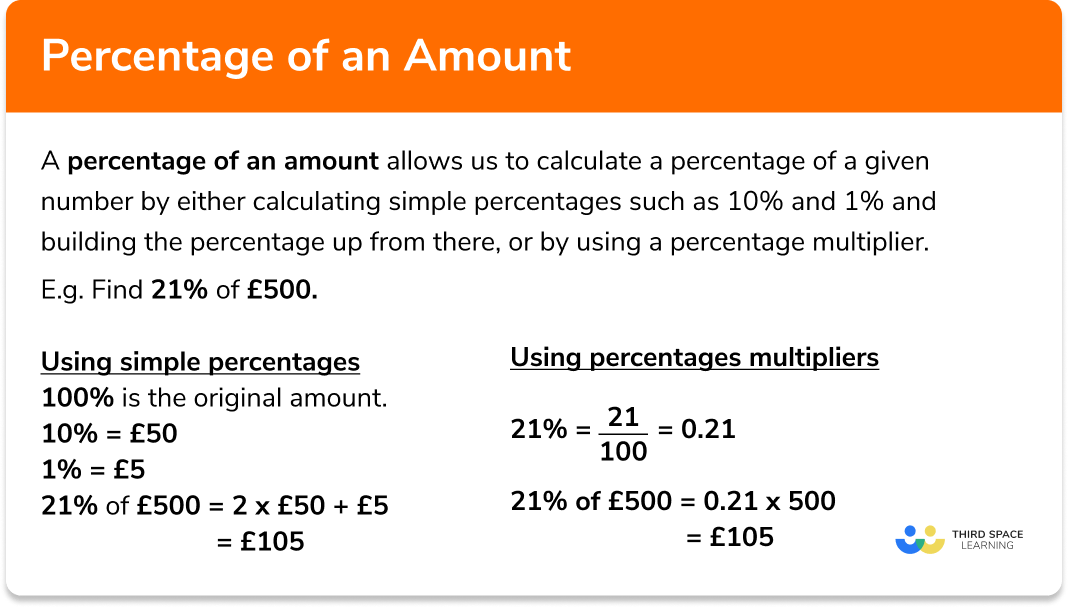
In the intricate world of finance, few metrics are as ubiquitous, versatile, and fundamental as percentages. From the daily budgeting decisions of individuals to the grand investment strategies of corporations, percentages provide a universal language for comparison, growth, decline, allocation, and risk. They transform raw numbers into meaningful proportions, offering clarity and context that absolute figures alone often fail to convey. Understanding “how much in percentage” is not merely a mathematical exercise; it is a critical skill for making informed financial decisions, optimizing wealth, and interpreting the complex interplay of economic forces. This article delves into the profound role percentages play across personal finance, investing, and business, equipping you with the insights needed to master this essential quantitative tool.
The Ubiquity of Percentages in Personal Finance
Personal finance is perhaps where the power of percentages is most immediately felt by individuals. Every financial choice, from saving for a down payment to managing credit card debt, is often framed and understood through the lens of percentages. They provide the bedrock for budgeting, goal setting, and assessing financial health.
Budgeting and the 50/30/20 Rule
One of the most popular and practical applications of percentages in personal finance is the 50/30/20 budgeting rule. This guideline suggests allocating your after-tax income into three distinct categories: 50% for needs, 30% for wants, and 20% for savings and debt repayment.
- Needs (50%): This encompasses essential expenses like housing (rent or mortgage), utilities, groceries, transportation, insurance, and minimum loan payments.
- Wants (30%): These are discretionary expenses that improve your quality of life but aren’t strictly necessary, such as dining out, entertainment, hobbies, travel, and subscriptions.
- Savings & Debt Repayment (20%): This crucial portion is dedicated to building an emergency fund, contributing to retirement accounts, making extra debt payments, or saving for specific goals like a house or education.
This percentage-based framework offers a simple yet effective way to manage cash flow, ensuring that essential expenses are covered, enjoyment is factored in, and future financial security is prioritized. Without percentages, creating and adhering to such a balanced financial plan would be significantly more challenging.
Savings Goals and Compound Growth
Percentages are central to understanding how your savings grow over time, especially through the magic of compound interest. When you earn interest on your initial principal and on the accumulated interest from previous periods, your money grows exponentially. The annual percentage yield (APY) quoted on savings accounts, certificates of deposit (CDs), and money market accounts directly dictates the rate at which your money multiplies.
For instance, a savings account offering a 3% APY means your initial deposit will grow by 3% each year, compounding on the new, larger balance. While 3% might seem modest, over decades, consistent savings combined with compounding returns can lead to substantial wealth accumulation. Understanding these percentage rates allows you to compare different financial products and project how long it will take to reach specific savings goals, whether it’s a 10% down payment on a house or a 15% contribution rate to your retirement fund.
Debt Management and Interest Rates
On the flip side, percentages play a critical—and often burdensome—role in debt. Interest rates on credit cards, mortgages, personal loans, and student loans are all expressed as percentages. A credit card with an annual percentage rate (APR) of 20% means that for every dollar you owe, you’re accruing 20 cents in interest over a year if you don’t pay it off.
Managing debt effectively often involves prioritizing high-interest debts. By identifying which debts carry the highest percentage rates, you can formulate strategies like the “debt avalanche method,” where you tackle the debt with the highest APR first, saving significant amounts of money in interest payments over time. Similarly, understanding your debt-to-income (DTI) ratio, expressed as a percentage, is crucial for securing new loans, as lenders use it to assess your ability to manage additional debt.
Investment Strategies and Percentage-Based Metrics
In the world of investing, percentages are the language of performance, risk, and portfolio construction. They enable investors to compare assets, evaluate returns, and tailor strategies to their financial objectives and risk tolerance.
Understanding Return on Investment (ROI)
The most fundamental percentage in investing is the Return on Investment (ROI). ROI measures the profitability of an investment relative to its cost, expressed as a percentage. It’s calculated as (Net Profit / Cost of Investment) * 100. A stock that you bought for $100 and sold for $120, yielding a $20 profit, has an ROI of 20%.
ROI allows investors to compare the efficiency of different investments. For example, if Investment A generated a 15% ROI and Investment B generated a 10% ROI over the same period, Investment A was more profitable. However, it’s important to consider other factors like time horizon and risk. Investors also track compound annual growth rate (CAGR), which measures the annual growth rate of an investment over a specified period, assuming profits are reinvested. This percentage provides a smoother, more accurate picture of average annual return, especially for investments held over multiple years.
Asset Allocation for Risk Management
Asset allocation, the strategy of dividing an investment portfolio among different asset categories such as stocks, bonds, and cash, is entirely based on percentages. The ideal percentage mix depends on an investor’s age, financial goals, and risk tolerance. A common rule of thumb, though simplistic, is to subtract your age from 100 (or 110 or 120) to determine the percentage of your portfolio that should be allocated to stocks, with the remainder in bonds. For example, a 30-year-old might allocate 70% to stocks and 30% to bonds.
- Stocks: Generally offer higher potential returns but come with higher risk and volatility.
- Bonds: Typically provide lower returns but offer more stability and income.
- Cash/Cash Equivalents: Offer liquidity and safety but usually yield minimal returns.
By carefully adjusting these percentages, investors can create a diversified portfolio that aims to maximize returns while managing risk. Rebalancing the portfolio periodically, to bring the percentages back to the target allocation, is also a key strategy.
The Impact of Expense Ratios
While focusing on returns is crucial, savvy investors also pay close attention to the costs associated with their investments, often expressed as expense ratios. An expense ratio is the annual fee charged by a mutual fund or exchange-traded fund (ETF) for management and operational expenses, expressed as a percentage of the fund’s total assets. Even a seemingly small expense ratio, like 0.50% versus 0.10%, can have a substantial impact on long-term returns due to compounding.
For example, if you invest $100,000 with an average annual return of 7% over 30 years:
- With a 0.10% expense ratio, your investment could grow to approximately $758,000.
- With a 0.50% expense ratio, your investment could grow to approximately $708,000.
That seemingly minor 0.40% difference in expense ratio amounts to a $50,000 difference in your final nest egg. Understanding and minimizing these percentage-based costs is a powerful strategy for enhancing net returns.
Business & Entrepreneurship: Profitability and Growth
For businesses, percentages are the lifeblood of financial analysis, informing everything from pricing strategies and operational efficiency to growth projections and investor relations. Every aspect of a company’s financial health and performance can be distilled into percentage figures.
Deciphering Profit Margins
Profit margins are perhaps the most critical percentage metrics for any business, indicating how much profit a company makes for every dollar of revenue. There are several types:
- Gross Profit Margin: (Revenue – Cost of Goods Sold) / Revenue * 100. This shows the percentage of revenue left after accounting for the direct costs of producing goods or services. A high gross margin indicates efficient production.
- Operating Profit Margin: (Operating Income / Revenue) * 100. This reveals the percentage of revenue remaining after covering both cost of goods sold and operating expenses (like salaries, rent, marketing). It reflects the efficiency of a company’s core operations.
- Net Profit Margin: (Net Income / Revenue) * 100. This is the ultimate bottom line, showing the percentage of revenue left after all expenses, including taxes and interest, have been deducted. It’s a comprehensive measure of a company’s overall profitability.
Businesses constantly monitor these percentages to assess their financial performance, benchmark against competitors, and identify areas for cost reduction or pricing adjustments. A healthy and improving profit margin is a strong indicator of a sustainable business model.
Revenue Growth and Market Share
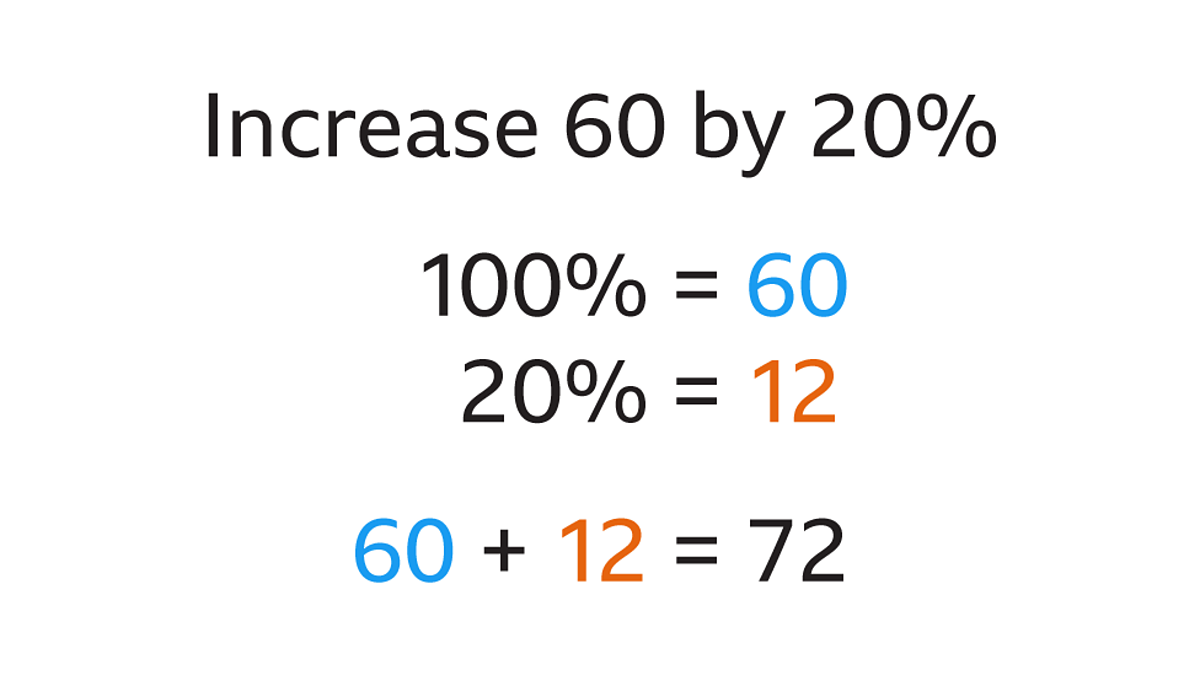
Beyond profitability, businesses use percentages to measure growth and market position. Revenue growth rate, expressed as a percentage, indicates how much a company’s sales have increased (or decreased) over a specific period. A consistent, high percentage growth rate is attractive to investors and signals a thriving business.
Market share, another crucial percentage, represents the portion of total sales in an industry generated by a particular company. For example, if a company has $100 million in sales in an industry with $1 billion in total sales, its market share is 10%. Increasing market share is often a primary strategic goal, as it can lead to economies of scale, greater brand recognition, and stronger competitive advantage. These percentages are vital for strategic planning, competitive analysis, and demonstrating value to stakeholders.
Operational Efficiency in Percentages
Operational efficiency is frequently measured using various percentage metrics. For instance, inventory turnover ratio (Cost of Goods Sold / Average Inventory) is often annualized and its inverse expressed as a percentage to show how efficiently a company is managing its inventory. Employee turnover rate (Number of Separations / Average Number of Employees * 100) indicates the percentage of employees leaving a company over a period, providing insights into workplace satisfaction and recruitment costs.
Furthermore, capacity utilization rate—the percentage of total production capacity that is being used—is critical for manufacturing businesses. A high utilization rate suggests efficient use of assets, while a low rate may indicate idle resources or over-investment. By meticulously tracking these and other operational percentages, businesses can identify bottlenecks, optimize resource allocation, reduce waste, and ultimately improve their bottom line.
The Psychology and Practicality of Percentage Thinking
The true power of percentages lies not just in their mathematical precision but in their ability to contextualize and simplify complex financial data, fostering clearer decision-making.
Relative Value vs. Absolute Figures
Percentages excel at providing relative value, which is often more informative than absolute figures. Consider a scenario where two individuals receive a pay raise: one gets $5,000, and the other gets $2,000. In absolute terms, the first person received a larger raise. However, if the first person’s salary was $100,000 (a 5% raise) and the second person’s salary was $40,000 (a 5% raise), then relatively, their raises were equivalent in impact. Percentages allow for meaningful comparisons across different scales, making them invaluable for benchmarking and understanding proportional change. They help us understand “how much” something has changed in relation to its starting point.
Benchmarking and Performance Metrics
In finance, benchmarking is the process of comparing an organization’s performance with the best practices of other leading companies. Percentages are the universal language for this comparison. Investors compare their portfolio’s percentage return against market indices (e.g., S&P 500’s percentage gain). Businesses compare their profit margins, revenue growth percentages, or customer retention rates against industry averages or top-performing competitors. This percentage-based comparison helps identify areas of strength and weakness, driving continuous improvement and strategic adjustments. Without a standardized percentage metric, such comparisons would be unwieldy and less actionable.
Avoiding Percentage Pitfalls
While powerful, percentages can also be misleading if not interpreted correctly. For example, a “50% off” sale sounds impressive, but if the original price was artificially inflated, the actual savings might be minimal. Similarly, a small percentage increase on a very large number can be a substantial absolute amount, while a large percentage increase on a small number might still result in a modest absolute figure. The concept of “basis points” (one hundredth of a percentage point) is often used in finance to describe small changes in interest rates or yields more precisely, avoiding ambiguity. Always consider the base from which the percentage is calculated and the absolute values involved to gain a complete and accurate understanding.

Conclusion
From managing personal budgets and orchestrating investment portfolios to steering corporate strategy and analyzing market trends, percentages are an indispensable quantitative tool in the financial world. They provide the necessary context, enable meaningful comparisons, and distill complex data into digestible insights. Mastering “how much in percentage” empowers individuals and businesses alike to make more informed decisions, achieve financial goals, and navigate the ever-evolving economic landscape with greater confidence and precision. Embrace the power of percentages, and unlock a deeper understanding of your financial reality.
aViewFromTheCave is a participant in the Amazon Services LLC Associates Program, an affiliate advertising program designed to provide a means for sites to earn advertising fees by advertising and linking to Amazon.com. Amazon, the Amazon logo, AmazonSupply, and the AmazonSupply logo are trademarks of Amazon.com, Inc. or its affiliates. As an Amazon Associate we earn affiliate commissions from qualifying purchases.