
For the modern professional, entrepreneur, or family planner, the question of “how much for health insurance” is rarely met with a simple dollar figure. Instead, it represents one of the most significant and complex line items in a personal or business budget. Health insurance is not merely a monthly bill; it is a critical component of risk management and long-term financial stability. Understanding the true cost of health insurance requires a deep dive into premiums, out-of-pocket maximums, and the hidden variables that can swing a financial plan by thousands of dollars annually.
Understanding the Core Components of Health Insurance Pricing
When evaluating the cost of health insurance, many individuals make the mistake of looking solely at the monthly premium. However, in the world of personal finance, the “sticker price” is only the beginning. To understand how much you are truly paying, you must analyze the total cost of care.
Premiums vs. Out-of-Pocket Costs
The premium is the fixed amount you pay every month to keep your policy active, regardless of whether you use medical services. This is your “baseline” cost. However, the true financial impact of a plan is often found in the out-of-pocket costs. These are the expenses you incur when you actually receive care. A low-premium plan may seem attractive on paper, but if it carries a high out-of-pocket burden, a single minor injury could result in a massive financial shock.
The Role of Deductibles, Copayments, and Coinsurance
To calculate your potential financial exposure, you must master three terms:
- Deductible: This is the amount you must pay out-of-pocket before your insurance provider begins to chip in. In the current market, deductibles can range from $0 to over $7,000 for individuals.
- Copayment (Copay): A fixed fee (e.g., $30) for a specific service, like a doctor’s visit or a prescription.
- Coinsurance: Your share of the costs of a covered health care service, calculated as a percent (e.g., 20%) of the allowed amount for the service.
The interplay between these factors determines your “effective cost.” A professional financial strategy involves balancing a premium you can afford monthly against a deductible that won’t bankrupt your emergency fund if an accident occurs.
Key Factors That Influence Your Monthly Premium
The cost of health insurance is not arbitrary. Under the regulatory frameworks of most modern economies, specifically the Affordable Care Act (ACA) in the United States, insurance companies are limited in what factors they can use to set prices. Understanding these variables allows you to predict your costs more accurately.
Age and Household Size
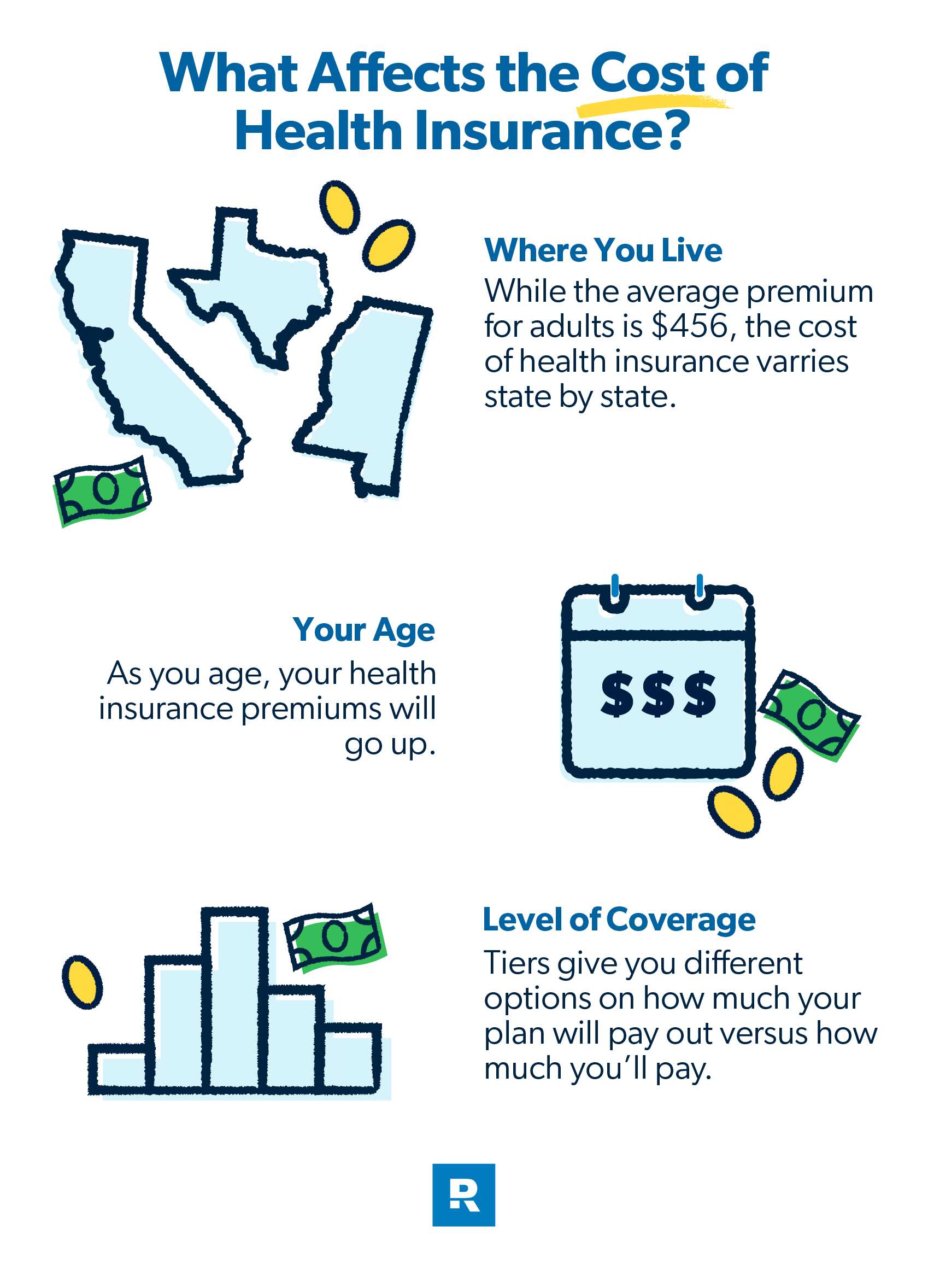
Age is perhaps the most significant legal factor in premium pricing. Generally, older individuals are charged more than younger individuals because their projected healthcare utilization is higher. Most regions use a “3:1 ratio,” meaning an older adult can be charged up to three times the premium of a younger adult for the exact same plan. Additionally, total household size dictates the cumulative premium, though many family plans offer a tiered structure that becomes more cost-effective as more members are added.
Location and State-Level Regulations
Where you live significantly dictates what you pay. Health insurance costs vary by state, and even by county, due to differences in local competition among insurers, the cost of living, and state-mandated benefits. In some regions, a lack of provider competition leads to higher premiums, while urban centers with multiple hospital systems may offer more competitive rates.
Plan Metal Tiers (Bronze, Silver, Gold, Platinum)
In the marketplace, plans are categorized into “Metal Tiers” which represent how you and your insurer share costs.
- Bronze plans typically have the lowest monthly premiums but the highest costs when you need care.
- Silver plans sit in the middle and are often the only plans eligible for cost-sharing reductions.
- Gold and Platinum plans have high monthly premiums but very low deductibles and copays.
Choosing the right tier is a math problem: if you see a doctor frequently, a Gold plan might actually save you money annually compared to a “cheaper” Bronze plan.
The Financial Impact of Different Insurance Models

The vehicle through which you obtain insurance is just as important as the plan itself. Whether you are an employee, a freelancer, or a business owner, the “how much” is dictated by your institutional leverage.
Employer-Sponsored vs. Individual Marketplace Plans
For most people, employer-sponsored insurance remains the most cost-effective option. Employers typically subsidize 70% to 85% of the premium cost, and these payments are made with pre-tax dollars, reducing your overall taxable income.
Conversely, the individual marketplace is for the self-employed or those whose employers do not offer coverage. Here, the costs are transparent and often higher, but they offer more portability. If you are an entrepreneur, your health insurance premiums are often 100% tax-deductible, which is a vital consideration for your business’s bottom line.
High-Deductible Health Plans (HDHPs) and HSAs
A popular financial tool for the healthy and investment-minded is the High-Deductible Health Plan (HDHP) paired with a Health Savings Account (HSA). An HSA is a “triple-tax-advantaged” account: contributions are tax-deductible, growth is tax-free, and withdrawals for medical expenses are tax-free. For those looking to optimize their money, paying a lower premium for an HDHP and funneling the savings into an HSA can create a significant long-term wealth-building engine.
Subsidies and Tax Credits (APTC)
For those using the individual marketplace, the “how much” is heavily influenced by the Advanced Premium Tax Credit (APTC). These subsidies are based on your estimated annual household income. If your income falls between 100% and 400% of the federal poverty level (and sometimes higher depending on current legislation), the government pays a portion of your premium directly to the insurer, drastically lowering your monthly out-of-pocket expense.
Strategic Ways to Optimize Your Healthcare Budget
Managing health insurance is an active financial process, not a “set it and forget it” task. To minimize waste, you must look at how you consume healthcare services.
Leveraging Preventative Care and In-Network Providers
Most modern plans are required to cover preventative care—such as annual physicals, screenings, and immunizations—at 100% with no out-of-pocket cost to you. Utilizing these services is a “financial gain” because it prevents more expensive, catastrophic health events down the line. Furthermore, staying “in-network” is the difference between paying a $40 copay and a $2,000 unnegotiated bill. Always verify that your preferred specialists and hospitals are within your plan’s contracted network before signing up.
Evaluating Annual Enrollment and Life Events
Every year during Open Enrollment, you have the opportunity to recalibrate. Financial circumstances change; perhaps you have more liquid savings now and can afford a higher deductible, or perhaps you anticipate a major medical event (like surgery or childbirth) and should move to a Gold plan. Additionally, “Qualifying Life Events” (marriage, birth of a child, loss of other coverage) allow you to change your plan outside of the standard window. Treating these windows as a financial audit can save you thousands of dollars in unnecessary premiums.
Long-Term Financial Planning and Health Insurance
Finally, health insurance must be viewed through the lens of a multi-decade financial plan. It is not just a monthly expense; it is the primary shield protecting your assets from the number one cause of bankruptcy: medical debt.
Projecting Future Healthcare Costs in Retirement
As you build your investment portfolio, you must account for the reality that healthcare costs generally rise faster than the standard rate of inflation. For those planning for early retirement (FIRE movement), health insurance is often the most difficult variable to solve for. You must account for the “bridge years” between leaving an employer and becoming eligible for Medicare at age 65.

Health Insurance as Risk Management
Ultimately, the answer to “how much for health insurance” is a calculation of risk tolerance. If you have low cash reserves, you should pay a higher premium for a plan that limits your maximum out-of-pocket exposure. If you have a robust emergency fund and a healthy lifestyle, you can leverage lower-premium plans to increase your monthly cash flow for investments.
In conclusion, health insurance is a cornerstone of personal finance. By understanding the levers of premiums, deductibles, and tax-advantaged accounts, you can transform a confusing expense into a strategic asset. Whether you are paying $200 or $1,200 a month, the goal remains the same: ensuring that a health crisis never becomes a financial crisis.
aViewFromTheCave is a participant in the Amazon Services LLC Associates Program, an affiliate advertising program designed to provide a means for sites to earn advertising fees by advertising and linking to Amazon.com. Amazon, the Amazon logo, AmazonSupply, and the AmazonSupply logo are trademarks of Amazon.com, Inc. or its affiliates. As an Amazon Associate we earn affiliate commissions from qualifying purchases.