
Determining how much of a loan you can qualify for is one of the most critical steps in financial planning. Whether you are looking to purchase a primary residence, fund a business venture, or consolidate existing high-interest debt, your borrowing capacity is the gatekeeper to your goals. However, the answer to “how much can I get?” is not a single number but a variable calculated through a complex intersection of your income, creditworthiness, current liabilities, and the specific requirements of the lender.
In the world of personal and business finance, understanding the mechanics of lending allows you to position yourself as a low-risk borrower, thereby securing higher loan amounts at more favorable interest rates. This guide explores the fundamental pillars that determine your loan eligibility and provides a framework for maximizing your financial leverage.

The Foundations of Borrowing Power: Income and Credit
Lenders operate on the principle of risk mitigation. To them, every dollar lent is a risk that must be balanced by the probability of repayment. Two primary metrics serve as the foundation of this assessment: your credit profile and your verified income.
The Critical Role of Credit Scores and History
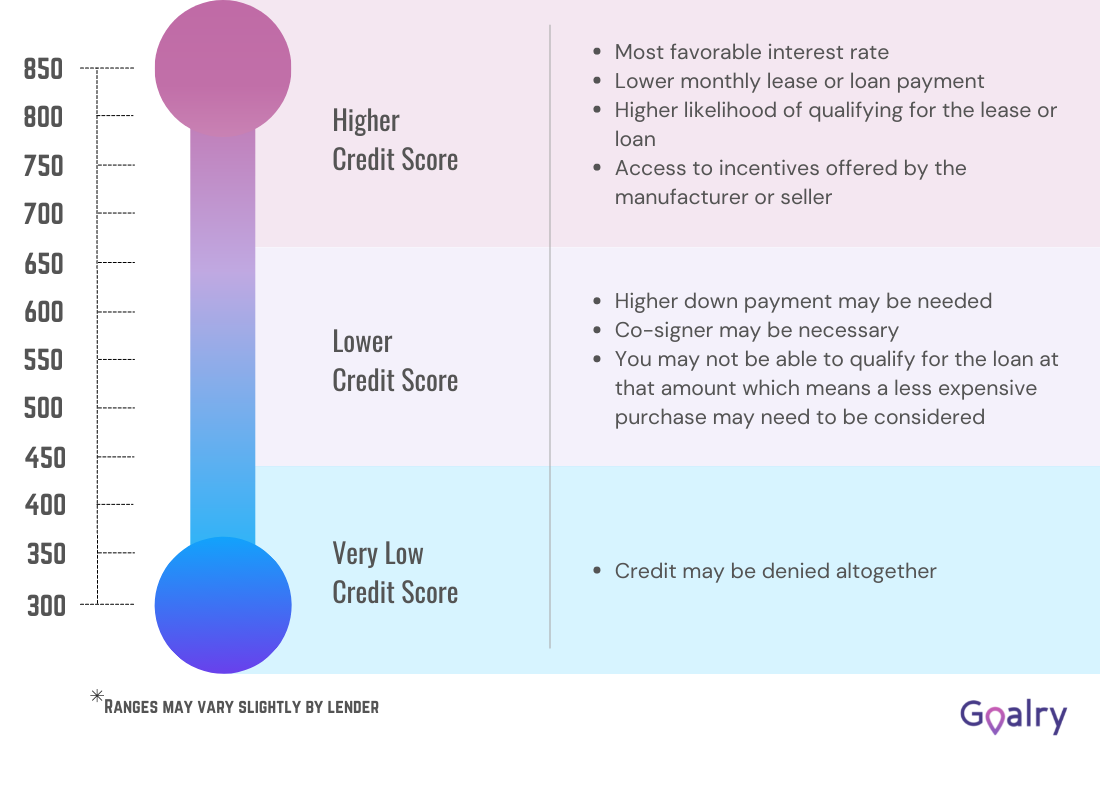
Your credit score is often the first filter a lender applies. In the United States, FICO scores ranging from 300 to 850 are the standard. A score above 740 is generally considered “excellent” and opens the door to the maximum loan amounts and the lowest interest rates.
A high credit score signals to the lender that you have a disciplined history of managing debt. If your score is in the “fair” or “poor” range (below 670), lenders may either cap the total amount they are willing to lend or require significant collateral to offset the risk. Beyond the three-digit score, lenders look at your credit report for “derogatory marks,” such as bankruptcies, foreclosures, or recent late payments, which can drastically reduce your borrowing ceiling regardless of your current income.
Verified Income and Employment Stability
While credit determines the likelihood of repayment, your income determines the capacity for repayment. Lenders typically require “verified” income, which means they want to see W-2s, tax returns, or audited financial statements.
For those with traditional employment, lenders look for a minimum of two years of steady history in the same field. For entrepreneurs or those with significant “side hustle” income, the scrutiny is higher. Lenders often average the last two years of net income from tax returns. If your income is trending upward, they might use an average; if it is declining, they may use the lower, more recent figure to determine your maximum loan amount.
The Debt-to-Income (DTI) Ratio Explained
The Debt-to-Income ratio is perhaps the most influential mathematical formula in the lending world. It is calculated by dividing your total monthly debt obligations (including the proposed new loan payment) by your gross monthly income.
Most lenders prefer a DTI ratio below 36%, though some mortgage programs allow for a DTI as high as 43% to 50%. If you earn $10,000 a month and your current debts total $2,000, you have $1,600 to $2,300 of “room” left for a new loan payment before you hit common DTI ceilings. Reducing existing debt is often the fastest way to increase the amount of a new loan you can qualify for.
Navigating Different Loan Types and Their Specific Limits
Not all loans are created equal. The amount you can get depends heavily on the purpose of the loan and whether the debt is secured or unsecured.
Understanding Mortgage Borrowing Limits
Mortgages are secured by the property itself, which allows for much higher loan amounts than unsecured debt. However, the maximum amount is often governed by “conforming loan limits” set by agencies like Fannie Mae and Freddie Mac. In many parts of the country, these limits are updated annually to reflect housing market trends.
Lenders also use the “Front-End Ratio” for mortgages, which specifically looks at the percentage of your income going toward housing costs (Principal, Interest, Taxes, and Insurance). Typically, this should not exceed 28% of your gross monthly income. If you are looking for a “Jumbo Loan”—a loan that exceeds conforming limits—you will face much stricter requirements for down payments and cash reserves.
Personal Loans: Unsecured vs. Secured
Personal loans are versatile and can be used for anything from home improvement to debt consolidation. Because these are often unsecured (meaning no collateral is required), the maximum loan amounts are typically lower than mortgages, ranging from $1,000 to $100,000.
Your maximum personal loan amount is heavily dependent on your “disposable income” after all other bills are paid. Lenders want to see that you have a “cushion” in your budget. If you opt for a secured personal loan—using a savings account or a vehicle as collateral—you may be able to borrow a higher percentage of the asset’s value.
Business Loans: Scalability and Revenue Requirements
For entrepreneurs, the question of “how much” is tied to the business’s health rather than just personal assets. Small Business Administration (SBA) loans can offer up to $5 million, but eligibility is based on the business’s Debt Service Coverage Ratio (DSCR).
The DSCR measures the business’s annual net operating income against its total annual debt payments. A ratio of 1.25 or higher is usually required, meaning the business generates 25% more cash than is needed to cover its debts. If you are a startup, your personal credit and “skin in the game” (down payment) will be the primary factors in determining the initial loan amount.
The Mathematical Framework: How Lenders Calculate Your Max
Lenders don’t just guess; they use specific financial ratios to ensure the loan is “sustainable.” Understanding these formulas allows you to pre-calculate your own borrowing limit.
The 28/36 Rule
This is the gold standard for personal finance. It suggests that a household should spend no more than 28% of its gross monthly income on housing expenses and no more than 36% on total debt service. To find your max loan amount using this rule:
- Multiply your gross monthly income by 0.36.
- Subtract your current monthly debt payments (car loans, student loans, credit card minimums).
- The remaining number is the maximum monthly payment you can afford.
- Use a loan calculator to reverse-engineer that monthly payment into a total loan amount based on current interest rates.
Loan-to-Value (LTV) Ratios
The LTV ratio compares the amount of the loan you’re requesting to the appraised value of the asset you are buying. For a home, an LTV of 80% is standard (requiring a 20% down payment). If the asset is valued at $500,000, the maximum loan at an 80% LTV is $400,000. While some programs allow for 95% or even 100% LTV (like VA loans), these often come with the added cost of Private Mortgage Insurance (PMI), which reduces the total loan amount you can afford by increasing your monthly cost.
The Impact of Interest Rates on Borrowing Power
It is vital to recognize that your borrowing capacity is inversely related to interest rates. When interest rates rise, the cost of borrowing increases, which means a larger portion of your monthly payment goes toward interest rather than principal. Consequently, a $2,500 monthly payment might support a $500,000 loan at a 3% interest rate, but only a $375,000 loan at a 7% interest rate.
Strategies to Increase Your Borrowing Capacity
If the initial numbers you receive from a lender are lower than what you need, there are several strategic moves you can make to improve your financial profile.
Optimizing Your Credit Profile
Short-term fixes can have a significant impact. Paying down credit card balances to keep your credit utilization below 10% can boost your score within a single billing cycle. Additionally, ensuring there are no errors on your credit report is paramount. A single incorrectly reported late payment can shave 50 to 100 points off your score, significantly lowering your loan ceiling.
Increasing Liquid Reserves
Lenders feel more comfortable offering larger loans to borrowers who have “reserves”—cash or liquid assets available after the loan closes. Showing that you have 6 to 12 months of mortgage or loan payments in a savings account proves that you can handle financial shocks without defaulting on the loan. This “liquidity” can sometimes persuade a lender to stretch their DTI requirements slightly in your favor.
Utilizing a Co-signer or Co-borrower
In cases where your income is insufficient for the desired loan amount, adding a co-signer with a strong credit history and high income can bridge the gap. The lender will consider the combined income and debts of both parties. However, this is a significant responsibility for the co-signer, as they become legally liable for the entire debt if you fail to pay.
Responsible Borrowing: Beyond “How Much Can I Get?”
Just because a lender approves you for a specific amount does not mean you should take it. There is a distinct difference between “maximum borrowing capacity” and “comfortable borrowing capacity.”
Assessing Monthly Cash Flow
Lenders look at “gross” income, but you live on “net” (after-tax) income. Before accepting a maximum loan amount, create a detailed budget that includes lifestyle costs—groceries, utilities, entertainment, and emergency savings. If a maximum loan leaves you “house poor” or unable to save for retirement, it may be wiser to borrow less than the maximum allowed.
Evaluating Opportunity Cost
Every dollar spent on debt repayment is a dollar that cannot be invested in the stock market, a retirement account, or a business. In a low-interest-rate environment, borrowing more might make sense if the capital can be deployed to earn a higher return elsewhere. In a high-interest-rate environment, the “cost” of the loan might outweigh the benefits of the purchase.

The Long-Term Impact of Amortization
Finally, consider the total cost of the loan over its entire life. A larger loan not only means higher monthly payments but also thousands of dollars more in total interest paid. Using an amortization schedule to see how much of your early payments go purely toward interest can be a sobering and helpful exercise in deciding your true borrowing limit.
In conclusion, the amount of a loan you can get is a dynamic figure based on your financial discipline, your income stability, and the current economic climate. By understanding the ratios lenders use and taking proactive steps to clean up your credit and reduce existing liabilities, you can maximize your borrowing power and secure the funding necessary to achieve your financial objectives.
aViewFromTheCave is a participant in the Amazon Services LLC Associates Program, an affiliate advertising program designed to provide a means for sites to earn advertising fees by advertising and linking to Amazon.com. Amazon, the Amazon logo, AmazonSupply, and the AmazonSupply logo are trademarks of Amazon.com, Inc. or its affiliates. As an Amazon Associate we earn affiliate commissions from qualifying purchases.