
Understanding the cost of tax preparation is a perennial concern for individuals and businesses alike. As the tax code grows more intricate and financial lives become increasingly complex, many opt for professional assistance rather than tackling their returns themselves. However, the price tag for this expertise can vary dramatically, ranging from free online tools to several thousand dollars for specialized corporate or high-net-worth individual returns. This article delves into the various factors that influence tax preparation costs, explores the different types of services available, and provides insights on how to choose the right preparer to ensure accuracy, maximize deductions, and secure peace of mind.

Deconstructing the Factors Influencing Tax Preparation Fees
The seemingly simple question of “how much does tax preparation cost?” unlocks a multifaceted answer, primarily because the service itself is highly customizable and dependent on numerous variables. Several key factors converge to determine the final price you’ll pay.
The Intricacy of Your Financial Situation
This is arguably the most significant determinant of cost. A simple W-2 employee with no dependents, a standard deduction, and minimal investments will naturally incur a lower fee than a self-employed individual running a small business, managing rental properties, multiple investment accounts, and navigating complex deductions or international income. Each additional form, schedule, or calculation adds to the preparer’s time and effort, directly impacting the fee. For instance, a basic Form 1040 might be relatively inexpensive, but adding a Schedule C (for self-employment), Schedule D (for capital gains and losses), Schedule E (for rental income), or international tax forms significantly increases the complexity and, consequently, the cost. Tax preparers often assess the number and type of forms required, as well as the volume of transactions, as their initial gauge for pricing.
The Expertise and Credentials of Your Preparer
Just like in other professional fields, the level of expertise and credentials held by your tax preparer plays a crucial role in pricing.
- Online Tax Software: These are the most budget-friendly options, often free for simple returns, and typically cap out at under $200 for more complex scenarios. You’re paying for the software’s algorithms, not a human expert’s direct time, although many offer paid access to tax professionals for guidance.
- Retail Tax Chains (e.g., H&R Block, Jackson Hewitt): These firms generally offer a middle-ground price point. Their preparers are trained, but may not always hold advanced certifications like a CPA or EA. They are excellent for straightforward to moderately complex returns.
- Certified Public Accountants (CPAs) and Enrolled Agents (EAs): These are the most highly qualified professionals. CPAs are licensed by state boards of accountancy and have a broad knowledge of accounting and tax law. EAs are federally licensed by the IRS and specialize specifically in taxation. Both are authorized to represent taxpayers before the IRS. Their extensive training, ongoing education requirements, and ability to handle the most intricate tax situations, including tax planning and audit representation, command higher fees. They are typically sought out for business taxes, high-net-worth individuals, complex investment portfolios, trust and estate taxes, and international tax issues.
Geographic Location and Market Dynamics
The cost of living and the competitive landscape in your region can also influence tax preparation fees. Preparers in major metropolitan areas with higher operating costs (rent, salaries, etc.) typically charge more than those in rural or less expensive locales. Furthermore, areas with a high concentration of tax professionals might see more competitive pricing, while areas with fewer options could have higher rates due to demand.
Scope of Services Beyond Basic Filing
Many tax preparers offer a suite of services beyond simply filling out and submitting your annual return. These additional services, while invaluable, will naturally add to the overall cost. Such services might include:
- Tax Planning: Proactive advice throughout the year to minimize future tax liabilities.
- Audit Representation: Standing with you if your return is selected for an IRS audit.
- Amended Returns: Correcting previously filed tax returns.
- Prior Year Filings: Helping catch up on unfiled returns.
- Business Consultation: Advising on tax implications for business decisions.
- State and Local Tax Filings: Preparing returns for multiple jurisdictions.
Each of these can be an additional charge, and it’s essential to clarify what’s included in the quoted price.
A Spectrum of Tax Preparation Options and Their Price Points
Navigating the landscape of tax preparation services reveals a clear hierarchy of options, each tailored to different levels of complexity and offering distinct price points.
DIY Tax Software: Empowerment for the Simple Return
Cost Range: Free to $150 (approx.)
For many taxpayers with straightforward financial situations, do-it-yourself (DIY) tax software is a powerful and cost-effective solution. Companies like TurboTax, H&R Block Online, TaxAct, and FreeTaxUSA offer user-friendly interfaces that guide you step-by-step through the filing process.
- Free Versions: Typically cover very basic returns, like a simple Form 1040 with W-2 income and standard deductions. Ideal for students or those with minimal financial complexity.
- Paid Versions: As your tax situation becomes more intricate (e.g., itemized deductions, investments, self-employment income, rental properties), you’ll need to upgrade to more advanced versions. These usually range from $30 to $150, often with additional fees for state filings.
Pros: Most affordable, convenient (can be done anytime, anywhere), offers a sense of control.
Cons: Requires a good understanding of your finances, no personalized advice, potential for missed deductions if unfamiliar with the tax code, limited audit support.
Retail Tax Chains: Convenience and Accessibility
Cost Range: $100 to $500 (approx.)
Retail tax preparation chains such as H&R Block, Jackson Hewitt, and Liberty Tax Service occupy the middle ground. They offer in-person assistance from trained preparers at accessible locations, often with extended hours during tax season. These services are popular for individuals and families with moderately complex returns who prefer human interaction over software, but don’t require the specialized expertise of a CPA.
Pros: In-person help, reasonable cost for many situations, often good for standard deductions, dependents, and basic self-employment. Many offer guarantees for accuracy and limited audit support.
Cons: Preparer expertise can vary, less suited for highly complex tax situations, fees can add up with many forms, may not offer in-depth tax planning.
Certified Public Accountants (CPAs) and Enrolled Agents (EAs): Expertise for Complex Needs
Cost Range: $200 to $1,000+ (approx.)
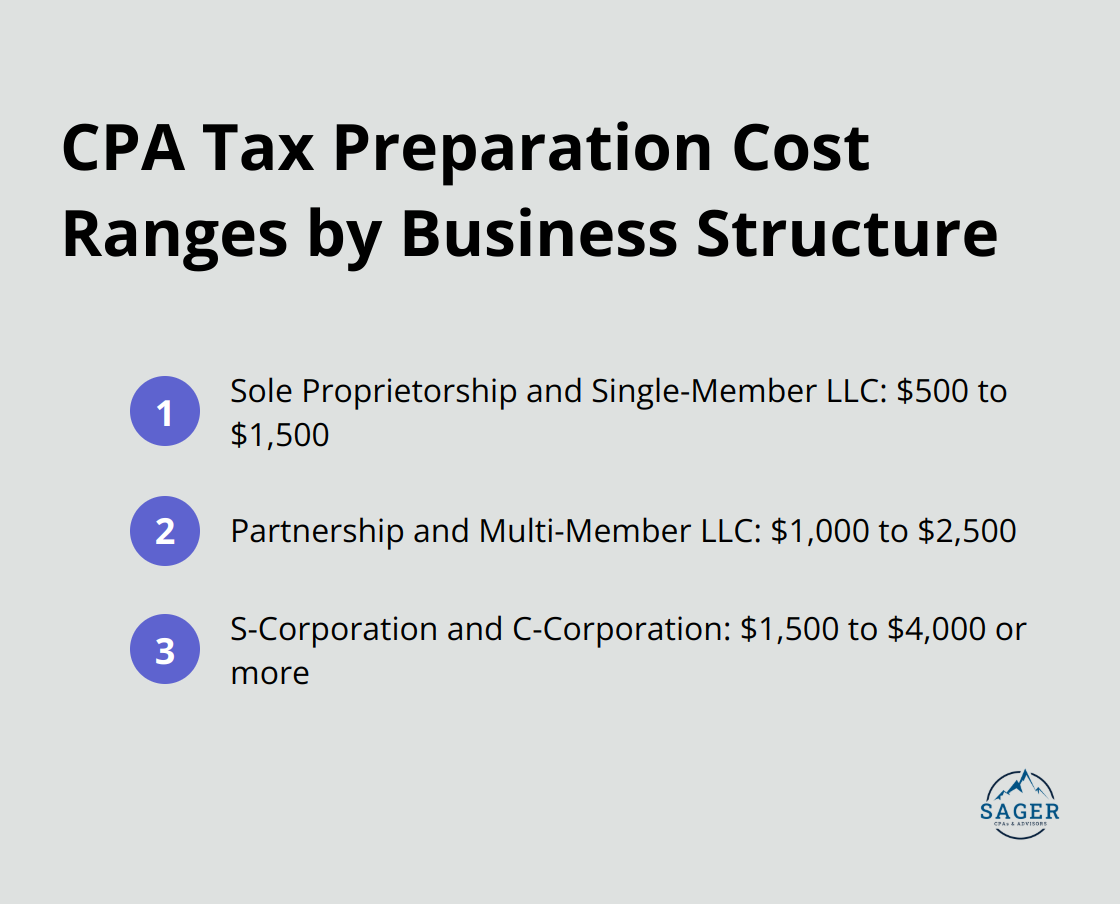
For individuals with high net worth, significant investments, complex business structures, international income, or those requiring comprehensive tax planning and advisory services, CPAs and EAs are the preferred choice. Their fees are generally higher due to their advanced qualifications, specialized knowledge, and the complexity of the returns they handle. Business tax returns (e.g., S-Corps, Partnerships, C-Corps) are almost always handled by CPAs and EAs, with costs typically ranging from several hundred to several thousand dollars depending on the business size and complexity.
Pros: Highest level of expertise, comprehensive tax planning, audit representation, personalized advice, can handle virtually any tax situation, help identify obscure deductions and credits.
Cons: Highest cost, may require more effort on your part to gather detailed documentation.
Financial Advisors Offering Tax Services
Some financial advisors, especially those with a strong focus on holistic financial planning, may also offer tax preparation services. This can be convenient as they already have an intimate understanding of your financial situation. However, not all financial advisors are licensed tax preparers, so it’s crucial to confirm their credentials (CPA or EA). If they are, their pricing might be integrated into broader financial planning fees or charged separately, often comparable to what a standalone CPA would charge.
Understanding Fee Structures and What You’re Paying For
Beyond the type of preparer, the method by which they charge can also influence your overall cost and how you perceive value. Transparency in fee structures is paramount to avoid surprises.
Flat Fees vs. Hourly Rates
Most tax preparers primarily use one of two pricing models:
- Flat Fees: This is the most common approach for individual tax returns. The preparer quotes a fixed price for preparing your return, often based on a tiered system (e.g., basic, moderate, complex) or a per-form charge. For instance, a basic Form 1040 might cost $X, adding a Schedule C would be an additional $Y, and so on. This provides predictability, as you know the exact cost upfront.
- Hourly Rates: CPAs and EAs, particularly for very complex individual returns, business taxes, tax planning, or audit representation, may charge an hourly rate. These rates can range from $100 to $400+ per hour, depending on location and expertise. While this reflects the actual time spent, it can be less predictable for the client. It’s crucial to ask for an estimated time commitment and potential cost range if engaging an hourly preparer.
Value-Added Services and Potential Hidden Costs
When comparing fees, it’s essential to understand what’s included. A lower upfront price might not include state tax filings, e-filing fees, or any form of audit assistance.
- Included Services: Ask if the quoted price covers federal and state returns, e-filing, and a review of prior year returns.
- Additional Charges: Be aware of potential extra fees for things like multiple state filings, amending a previous return, calculating estimated taxes, or providing a detailed tax planning report. Some preparers charge for answering follow-up questions or providing copies of documents outside the initial engagement. Always request a detailed fee schedule or a clear written estimate before committing.
The True Value Proposition: Beyond Just the Number
While cost is an important consideration, it shouldn’t be the sole deciding factor. The value of a professional tax preparer extends far beyond the number on their invoice.
- Accuracy and Compliance: A good preparer ensures your return is accurate and fully compliant with current tax laws, minimizing the risk of errors and penalties.
- Maximizing Deductions and Credits: Professionals are adept at identifying all eligible deductions and credits, potentially saving you far more than their fee. They stay updated on often-changing tax legislation that average taxpayers might miss.
- Time Savings and Stress Reduction: For many, the mental burden and time commitment of preparing taxes are reason enough to outsource. A professional handles the heavy lifting, freeing you up for other priorities.
- Audit Protection and Representation: Knowing you have an expert who can represent you before the IRS in case of an audit provides immense peace of mind.
- Strategic Tax Planning: A great preparer doesn’t just look backward at your past year’s income; they look forward, offering insights and strategies to optimize your tax situation for future years. This proactive approach can lead to significant long-term savings.
Maximizing Value: Tips for Choosing a Tax Preparer and Managing Costs
Making an informed decision about tax preparation can save you money, time, and stress. Here are actionable tips to help you navigate the process effectively.
Vetting Potential Preparers: Credentials and Reputation
Don’t choose a tax preparer solely on price. Thoroughly vet candidates:
- Check Credentials: Verify if they are a CPA (licensed by your state’s Board of Accountancy) or an EA (searchable via the IRS PTIN directory). These credentials signify rigorous testing, ethical standards, and ongoing education.
- Experience and Specialization: Does the preparer have experience with your specific financial situation (e.g., small business, real estate, stock options, foreign income)?
- Reputation: Look for online reviews, testimonials, and ask for referrals from trusted friends or colleagues. Check with the Better Business Bureau.
- Communication Style: Schedule a brief introductory call. Do they communicate clearly, answer your questions patiently, and seem like someone you can work with?
- Fee Transparency: Ensure they provide a clear, written fee schedule or estimate upfront. Avoid preparers who base their fee on a percentage of your refund, as this can incentivize questionable practices.
Organizing Your Financial Records: A Key to Efficiency
One of the easiest ways to manage costs, especially with hourly preparers, is to come prepared.
- Gather All Documents: Collect all W-2s, 1099s, K-1s, interest statements, dividend statements, mortgage interest statements, charitable contribution receipts, medical expense records, property tax statements, and any other relevant financial documents before your appointment.
- Categorize and Summarize: If you have business expenses or numerous deductions, categorize them clearly (e.g., mileage, office supplies, software subscriptions). Providing a summarized spreadsheet can save your preparer time compared to sifting through shoeboxes of receipts.
- Answer Questions Promptly: Be responsive to your preparer’s requests for additional information. Delays can prolong the process and potentially increase costs if they charge hourly.
When to Consider Free or Low-Cost Options
For those with limited income or very simple tax situations, several excellent options can help you file for free:
- IRS Free File: If your adjusted gross income (AGI) is below a certain threshold (changes annually), you can use commercial tax software for free through the IRS Free File program.
- VITA and TCE Programs: The IRS’s Volunteer Income Tax Assistance (VITA) and Tax Counseling for the Elderly (TCE) programs offer free tax help to qualified individuals. VITA generally serves people who make $64,000 or less, persons with disabilities, and limited English-speaking taxpayers. TCE primarily assists taxpayers who are 60 years of age or older. These services are provided by IRS-certified volunteers.
- Basic Online Software: As mentioned, many commercial tax software providers offer free versions for the simplest federal returns.
The Long-Term Benefits of Strategic Tax Planning
While the focus is often on the immediate cost of preparing a return, consider the long-term benefits of a professional relationship. A good tax preparer isn’t just a data entry specialist; they are a financial advisor who can help you make informed decisions throughout the year to minimize future tax liabilities. This includes advising on retirement contributions, investment strategies, business structure, and significant life changes (marriage, home purchase, starting a family). The savings generated from effective tax planning can far outweigh the annual preparation fee.
Conclusion: Investing in Peace of Mind and Financial Accuracy
The cost of tax preparation is a dynamic figure, influenced by the complexity of your finances, the expertise of your chosen professional, and the scope of services you require. From the empowering affordability of DIY software to the sophisticated advisory services of a CPA, a solution exists for every financial situation. While it’s natural to seek cost-effective options, it’s crucial to view tax preparation as an investment in accuracy, compliance, and ultimately, your financial well-being. By understanding the fee structures, carefully vetting your preparer, and being organized, you can make an informed decision that ensures your taxes are handled correctly, maximizes your financial position, and provides invaluable peace of mind.
aViewFromTheCave is a participant in the Amazon Services LLC Associates Program, an affiliate advertising program designed to provide a means for sites to earn advertising fees by advertising and linking to Amazon.com. Amazon, the Amazon logo, AmazonSupply, and the AmazonSupply logo are trademarks of Amazon.com, Inc. or its affiliates. As an Amazon Associate we earn affiliate commissions from qualifying purchases.