
In an era dominated by a handful of monolithic social media giants, the question “What is Mastodon?” is becoming increasingly pertinent. As users grow weary of algorithmic manipulation, intrusive advertising, and opaque data privacy practices, many are seeking alternatives. Mastodon emerges as a compelling, albeit different, proposition – a decentralized, open-source social network that champions user control and community-driven governance. While it may not offer the instant, ubiquitous reach of its commercial counterparts, it presents a refreshing paradigm shift for those interested in technology trends, the evolution of online communities, and perhaps even a more sustainable approach to digital interaction.
Understanding the Core: Decentralization and the Fediverse
At its heart, Mastodon is a social networking platform, but its fundamental architecture sets it apart. Instead of a single, centralized server owned and operated by a corporation, Mastodon is built upon a network of independent servers, known as “instances.” This decentralized model is the cornerstone of Mastodon’s appeal and differentiates it significantly from platforms like Twitter, Facebook, or Instagram.
The Power of the Instance Model
Imagine the internet before the World Wide Web. Information existed, but it was siloed and difficult to share. Mastodon operates on a similar, yet more sophisticated, concept for social networking. Each instance is essentially a self-contained community with its own rules, moderation policies, and often, a specific focus or theme. Users choose which instance to join based on these factors. This means that while you might be tweeting on Twitter, on Mastodon, you are “tooting” on a specific instance.
This model offers several key advantages:
- User Control and Choice: Users are not beholden to the whims of a single corporate entity. They can choose instances that align with their values, interests, or desired community atmosphere. If an instance’s rules or moderation become unsatisfactory, users can, in theory, migrate to another.
- Resilience and Censorship Resistance: Because there’s no single point of failure, Mastodon is more resilient to outages and censorship attempts. Shutting down one instance doesn’t bring down the entire network. This is a significant draw for those concerned about free speech and the potential for platform-level censorship.
- Community Focus: Many instances are built around specific interests, professions, or geographical locations. This allows for the formation of more niche and focused communities, fostering deeper connections and more relevant conversations. Think of it as a collection of highly specialized online clubs, all able to communicate with each other.
The Fediverse: A Network of Networks
Mastodon is not an isolated island. It’s part of a larger ecosystem known as the “Fediverse” (federated universe). The Fediverse is a collection of decentralized social networks that can interoperate using a common protocol, most notably ActivityPub. This means that users on Mastodon can, under certain circumstances, interact with users on other Fediverse platforms like PeerTube (video sharing), Pixelfed (photo sharing), and even some email-like services.
This interoperability is a game-changer. It breaks down the walled gardens that have characterized much of the mainstream internet, allowing for a more fluid and interconnected digital experience. A Mastodon user might follow a Pixelfed user, and see their photos appear in their Mastodon feed, or vice-versa. This expands the reach and potential for discovery beyond the confines of a single platform.
Navigating Mastodon: Features and Functionality
While the underlying technology is complex, the user experience on Mastodon is designed to be familiar to those accustomed to modern social media. The core functionality revolves around creating posts (toots), following other users, and engaging in conversations.
The “Toot” and its Ecosystem
A “toot” is Mastodon’s equivalent of a tweet. These are short messages, typically with a character limit (though this can vary by instance, often around 500 characters, compared to Twitter’s 280). Toots can include text, images, videos, links, and polls. They can be public, unlisted (visible only to those who have the link), or direct (visible only to specified users).
Beyond the basic toot, Mastodon offers features that cater to a more conscious and intentional social media experience:
- Content Warnings (CWs): A powerful tool for managing sensitive or potentially triggering content. Users can apply CWs to their toots, requiring others to explicitly click to reveal the content. This is invaluable for discussions on sensitive topics, spoilers, or even just potentially overwhelming amounts of information.
- Content Moderation: Each instance has its own set of moderation rules and administrators. This allows communities to define their acceptable behavior and enforce it, creating safer and more welcoming environments. This stands in stark contrast to the often inconsistent and opaque moderation policies of centralized platforms.
- Timeline Variety: Mastodon offers multiple timeline views:
- Home Timeline: Shows posts from users you follow.
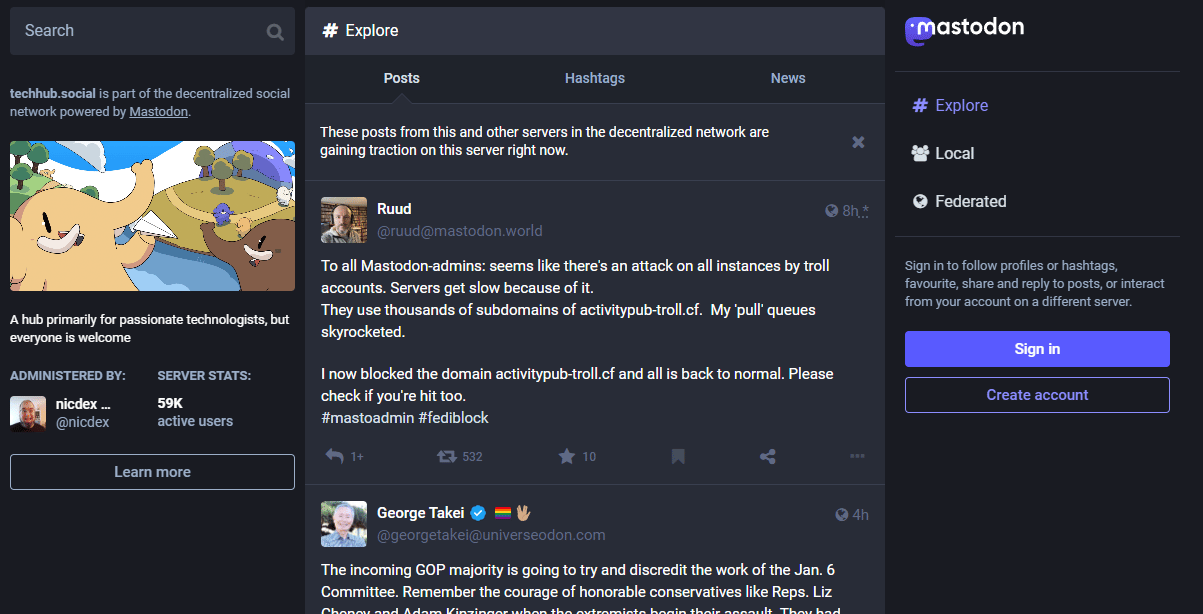
- Local Timeline: Displays all public posts from users on your chosen instance. This is a great way to discover content and connect with your immediate community.
- Federated Timeline: Shows public posts from users on your instance and from users on other instances that your instance knows about. This provides a broader view of the Fediverse.
User Interface and Accessibility

Mastodon interfaces can vary as different clients and web UIs are developed for the platform. However, the core experience is generally intuitive. Many users find the visual style and layout similar to other microblogging platforms, making the transition relatively smooth. There are also numerous third-party Mastodon clients available for desktop and mobile devices, offering further customization and feature sets.
Mastodon in the Context of Tech Trends and Brand Evolution
The rise of Mastodon is not an isolated phenomenon. It aligns with several significant tech trends and offers a compelling case study for how brands might adapt to a decentralized digital landscape.
The Shifting Landscape of Digital Platforms
Mastodon represents a growing desire for more open, transparent, and user-centric digital spaces. This echoes broader trends:
- The Decentralization Movement: Beyond social media, decentralization is influencing areas like cryptocurrency, file storage, and even operating systems. Users are seeking to regain control over their data and digital identities.
- Data Privacy Concerns: As data breaches and concerns about how personal information is collected and used become more prominent, decentralized platforms that emphasize user ownership and minimal data collection become more attractive.
- Community-Centric Online Experiences: The limitations of algorithmic feeds and the desire for more authentic connections are driving a search for platforms that foster genuine community interaction, rather than just passive consumption.
Implications for Brands and Personal Branding
For brands and individuals looking to establish a presence online, Mastodon presents a different strategic challenge and opportunity:
- Building Authentic Community: Instead of broad-stroke marketing, brands on Mastodon are encouraged to engage with specific instances and contribute to their communities. This requires a more nuanced and authentic approach, focusing on providing value and fostering genuine relationships.
- Brand Identity in Decentralization: A brand’s identity on Mastodon is tied to the instance it chooses to operate on and how it engages within that community. This requires careful consideration of which instances align with the brand’s values and target audience.
- Marketing Beyond Algorithms: On Mastodon, discovery is often driven by community engagement and shared interests, rather than opaque algorithms. This shifts the focus from “gaming the algorithm” to building genuine connections and creating shareable, valuable content.
- Case Studies in Community Building: Brands that successfully integrate into Mastodon instances can serve as powerful case studies for community-driven marketing. Their success would hinge on genuine participation and contribution, not just broadcast messages.
Mastodon and the Future of Online Finance and Income
While Mastodon itself isn’t a direct platform for financial transactions or income generation in the same way as some other online services, its decentralized nature and community focus have indirect implications for the world of money and online income.
Supporting Open Source and Decentralized Projects
Many users who are drawn to Mastodon are also passionate about supporting open-source technology and decentralized initiatives. This can translate into:
- Donations and Funding: Instances are often run by volunteers or funded through donations. Users can choose to financially support their preferred instances, contributing to the sustainability of the platform.
- Gig Work and Freelancing in the Decentralized Space: As the decentralized web grows, so does the demand for developers, designers, community managers, and content creators who understand and can contribute to these new platforms. Mastodon can be a place where individuals with these skills network and find opportunities within the broader Web3 and decentralized ecosystem.
- Building Niche Audiences for Digital Products: For creators and entrepreneurs, Mastodon’s instances offer targeted communities. A developer creating a new productivity app might find an audience on a tech-focused instance. A personal finance influencer could engage with users on an instance dedicated to economic discussions. This allows for more precise audience engagement than on a massive, generalized platform.
Exploring Alternative Economic Models
The existence of decentralized platforms like Mastodon encourages thinking about alternative economic models for online interaction:
- Less Reliance on Ad Revenue: The decentralized nature of Mastodon means that its sustainability doesn’t rely on the same intrusive advertising models that fuel many mainstream social networks. This can lead to a cleaner, more user-friendly experience and encourages a shift towards direct user support or alternative monetization strategies for content creators.
- The Potential for Creator Economies: While not fully developed on Mastodon yet, the underlying principles of decentralization and community ownership could pave the way for new forms of creator economies where users have more direct ownership and control over their content and the revenue it generates.
Conclusion: Embracing the Decentralized Social Frontier
Mastodon is more than just another social media app; it’s a testament to a growing movement towards a more decentralized, user-controlled internet. It offers a compelling alternative for those seeking authentic community, greater control over their online experience, and a departure from the data-hungry, algorithm-driven behemoths. While it may require a slight learning curve and a shift in mindset from the convenience of centralized platforms, the rewards – a more robust, resilient, and community-focused digital space – are substantial. As the digital landscape continues to evolve, understanding “What is Mastodon?” is not just about knowing a new platform, but about understanding the future of how we connect, share, and build communities online.
aViewFromTheCave is a participant in the Amazon Services LLC Associates Program, an affiliate advertising program designed to provide a means for sites to earn advertising fees by advertising and linking to Amazon.com. Amazon, the Amazon logo, AmazonSupply, and the AmazonSupply logo are trademarks of Amazon.com, Inc. or its affiliates. As an Amazon Associate we earn affiliate commissions from qualifying purchases.